

Fruit juice blend, 100% juice
Common food
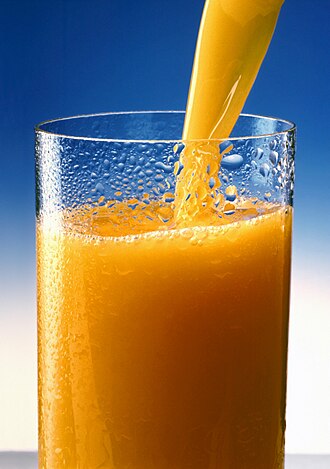
Photo: Wikipedia
A vibrant, smooth liquid blend of multiple fruit juices, typically offering a balanced, sweet-tart flavor profile with a refreshing, slightly viscous texture. Nutritionally, it's a concentrated source of quick-energy carbohydrates, primarily from natural fruit sugars, with negligible fat or protein. It provides a convenient way to consume fruit-derived nutrients like vitamin C and potassium, though in a more concentrated form than whole fruit.
Calorie split: 1% protein · 97% carbs · 2% fat
↓ Full nutrition💚 Why it's loved
People love it for its immediate, refreshing burst of natural fruit sweetness and the convenience of getting a multi-fruit experience in one sip. It's a versatile base for smoothies, cocktails, and mocktails, and often evokes nostalgic feelings of breakfast or summer refreshment.
⚠️ Watch-outs & how to enjoy it better
The high natural sugar content can cause rapid blood-sugar spikes, making it less ideal for those managing diabetes or seeking sustained energy. To counteract this, pair it with a source of protein (like Greek yogurt) or healthy fat (like nuts) to slow sugar absorption, and practice strict portion control. It lacks the fiber of whole fruit, so it's less filling.
Key benefits
- Provides quick, natural energy from fruit sugars.
- Can be a good source of vitamin C and potassium, depending on the fruits used.
- Offers hydration with more flavor and nutrients than plain water.
- Convenient and portable way to consume fruit servings.
🍽️ Popular dishes
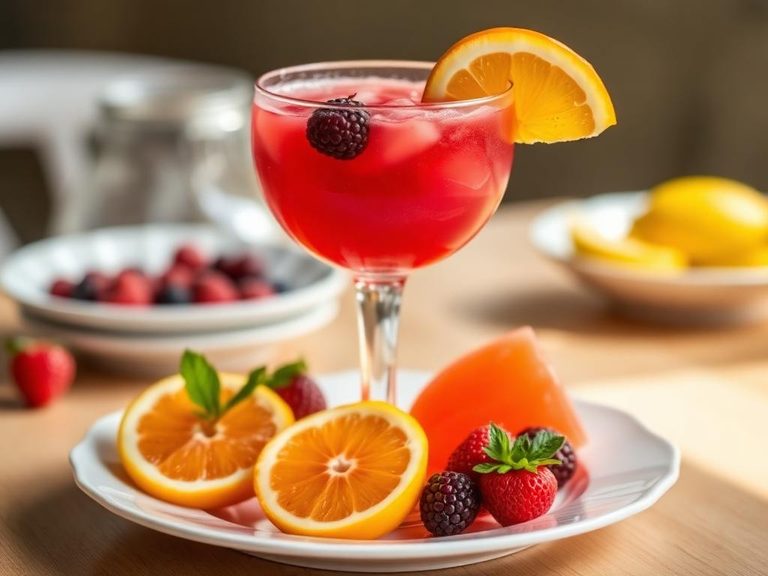
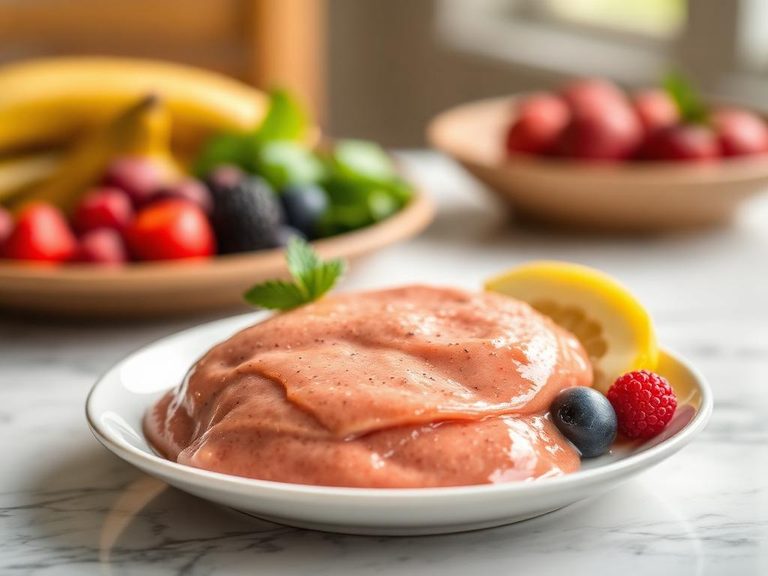
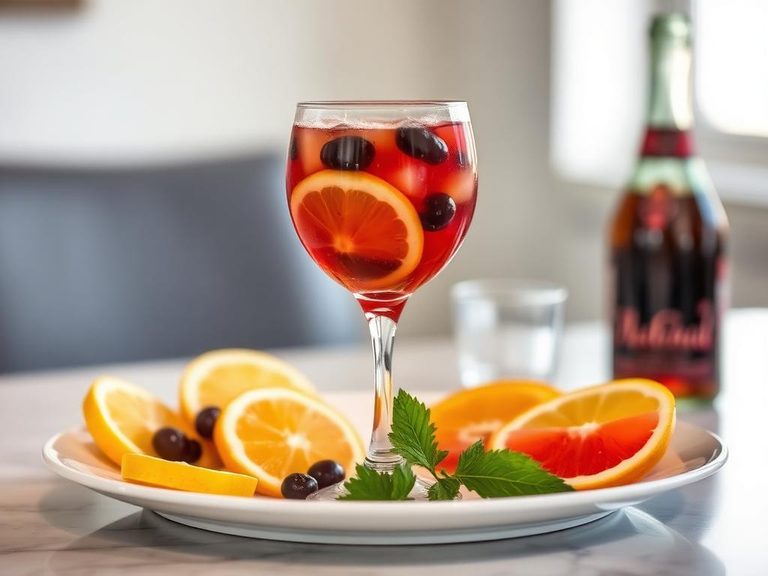
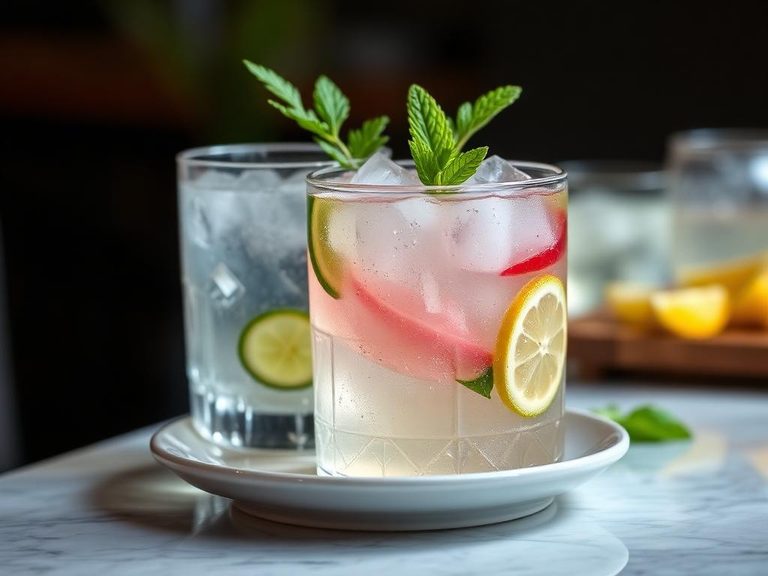
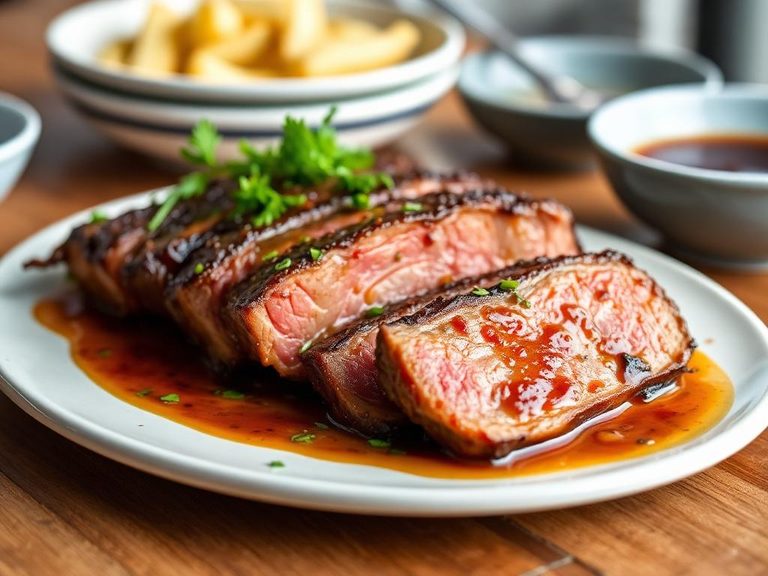
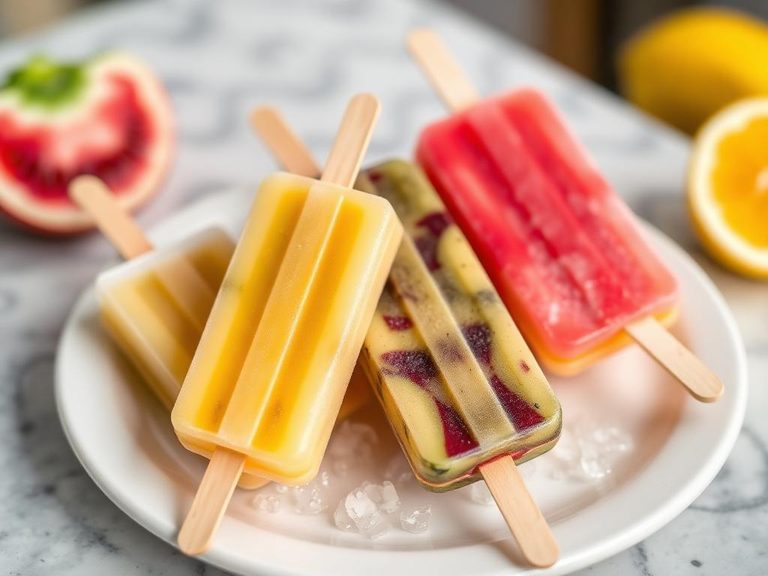
🌍 Where it's eaten
💡 Did you know?
The process for making shelf-stable 100% fruit juice often involves pasteurization and sometimes 'water-extracted' concentrates, where water is removed and later added back, a method developed in the early 20th century to preserve seasonal fruit harvests year-round.
Full nutrition (USDA data · scales with serving)
| Water | 87.0 g |
| Energy | 50.0 kcal |
| Protein | 0.16 g |
| Total lipid (fat) | 0.12 g |
| Carbohydrate, by difference | 12.5 g |
| Fiber, total dietary | 0.20 g |
| Total Sugars | 10.9 g |
| Calcium, Ca | 11.0 mg |
| Iron, Fe | 0.11 mg |
| Magnesium, Mg | 7.0 mg |
| Phosphorus, P | 9.0 mg |
| Potassium, K | 96.0 mg |
| Sodium, Na | 7.0 mg |
| Zinc, Zn | 0.05 mg |
| Copper, Cu | 0.01 mg |
| Selenium, Se | 0.10 ug |
| Vitamin C, total ascorbic acid | 28.2 mg |
| Thiamin | 0.01 mg |
| Riboflavin | 0.01 mg |
| Niacin | 0.09 mg |
| Vitamin B-6 | 0.02 mg |
| Folate, total | 0.00 ug |
| Folic acid | 0.00 ug |
| Folate, food | 0.00 ug |
| Folate, DFE | 0.00 ug |
| Choline, total | 2.4 mg |
| Vitamin B-12 | 0.00 ug |
| Vitamin B-12, added | 0.00 ug |
| Vitamin A, RAE | 0.00 ug |
| Retinol | 0.00 ug |
| Carotene, beta | 2.0 ug |
| Carotene, alpha | 0.00 ug |
| Cryptoxanthin, beta | 0.00 ug |
| Lycopene | 0.00 ug |
| Lutein + zeaxanthin | 33.0 ug |
| Vitamin E (alpha-tocopherol) | 0.01 mg |
| Vitamin E, added | 0.00 mg |
| Vitamin D (D2 + D3) | 0.00 ug |
| Vitamin K (phylloquinone) | 0.20 ug |
| Alcohol, ethyl | 0.00 g |
| Caffeine | 0.00 mg |
| Theobromine | 0.00 mg |
Fat & fatty acid profile (per 100g)
| Fatty acids, total saturated | 0.02 g |
| SFA 4:0 | 0.00 g |
| SFA 6:0 | 0.00 g |
| SFA 8:0 | 0.00 g |
| SFA 10:0 | 0.00 g |
| SFA 12:0 | 0.00 g |
| SFA 14:0 | 0.00 g |
| SFA 16:0 | 0.02 g |
| SFA 18:0 | 0.00 g |
| Fatty acids, total monounsaturated | 0.01 g |
| MUFA 16:1 | 0.00 g |
| MUFA 18:1 | 0.00 g |
| MUFA 20:1 | 0.00 g |
| MUFA 22:1 | 0.00 g |
| Fatty acids, total polyunsaturated | 0.03 g |
| PUFA 18:2 | 0.03 g |
| PUFA 18:3 | 0.01 g |
| PUFA 18:4 | 0.00 g |
| PUFA 20:4 | 0.00 g |
| PUFA 20:5 n-3 (EPA) | 0.00 g |
| PUFA 22:5 n-3 (DPA) | 0.00 g |
| PUFA 22:6 n-3 (DHA) | 0.00 g |
| Cholesterol | 0.00 mg |
Amino acid profile (per 100g)
Estimated from Babyfood, juice treats, fruit medley, toddler — USDA does not publish this profile for Fruit juice blend.
| Tryptophan | 0.00 g |
| Threonine | 0.00 g |
| Isoleucine | 0.00 g |
| Leucine | 0.00 g |
| Lysine | 0.00 g |
| Methionine | 0.00 g |
| Cystine | 0.00 g |
| Phenylalanine | 0.00 g |
| Tyrosine | 0.00 g |
| Valine | 0.00 g |
| Arginine | 0.00 g |
| Histidine | 0.00 g |
| Alanine | 0.00 g |
| Aspartic acid | 0.00 g |
| Glutamic acid | 0.00 g |
| Glycine | 0.00 g |
| Proline | 0.00 g |
| Serine | 0.00 g |
FAQ
Is fruit juice blend as healthy as eating whole fruit?
No. While it contains vitamins and minerals from fruit, it lacks the dietary fiber of whole fruit, which helps regulate sugar absorption and promotes fullness. The juicing process also concentrates the natural sugars.
Why does the label say '100% juice' if it's a blend?
'100% juice' means all the liquid in the product comes from fruit, with no added water, sugars, or preservatives. A 'blend' simply indicates it's made from the juice of more than one type of fruit.
Can I use this in cooking or baking?
Absolutely. It's excellent for making glazes, reducing into syrups, adding moisture and flavor to cakes or muffins, or as a base for savory sauces and marinades, especially for poultry or pork.
Nutrient density (calculated · NRF9.3)
Nutrient Rich Foods index: beneficial nutrients (protein, fiber, vitamins, minerals) minus saturated fat, added sugar & sodium, per 100 kcal.
NRF9.3 index — Fulgoni, Keast & Drewnowski, 2009. Computed from USDA nutrients.
Weight-loss friendliness (composite index)
Energy density 0.50 kcal/g · 1% calories from protein · 0.2 g fiber · 10.9 g sugar per 100 g.
Composite of energy density (Rolls et al., 1999), protein & fiber satiety, minus sugar. A calculated heuristic — ranks satiety-per-calorie, not a clinical measure.
Dietary load (calculated from USDA values)
Potential renal acid load. Positive = acid-forming, negative = alkaline-forming.
Sodium-to-potassium ratio: 0.07 (lower is better — aim for ≤ 1)
Sodium:potassium per WHO potassium guidance. Computed from USDA nutrients.