

Leavening agents, baking powder, low-sodium
Whole food · Baked Products
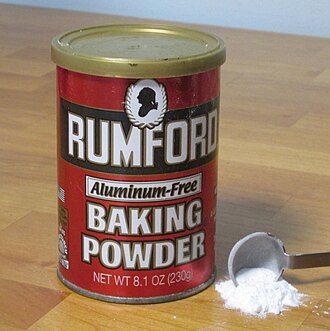
Photo: Wikipedia
Low-sodium baking powder is a dry chemical leavening agent, a fine white powder that reacts with moisture and heat to produce carbon dioxide gas, causing batters and doughs to rise. It typically has a neutral, slightly salty taste that is masked in final baked goods, contributing to a light, airy texture. Nutritionally, it is almost entirely carbohydrate (46.9g per 100g) from its starch filler, with negligible protein, fat, or fiber.
Calorie split: 0% protein · 98% carbs · 2% fat
↓ Full nutrition💚 Why it's loved
People love it for its magical ability to transform dense batters into fluffy, tender cakes and breads in minutes, making home baking accessible and fast. Its versatility is unmatched, working in everything from delicate muffins to hearty cornbread.
⚠️ Watch-outs & how to enjoy it better
The primary downside is its high carbohydrate content (mostly starch), which can contribute to blood-sugar spikes if used in large quantities in sugary baked goods. For those on strict low-carb or keto diets, the starch filler is a concern. To counteract this, use it in recipes that incorporate protein (like eggs or nut flours) and healthy fats (like avocado or nuts) to slow glucose absorption, and practice portion control with the final baked item.
Key benefits
- Reduces sodium intake compared to regular baking powder
- Enables leavening without yeast fermentation time
- Provides consistent, reliable rise in baked goods
- Essential for quick breads, cakes, and pancakes
🍽️ Popular dishes


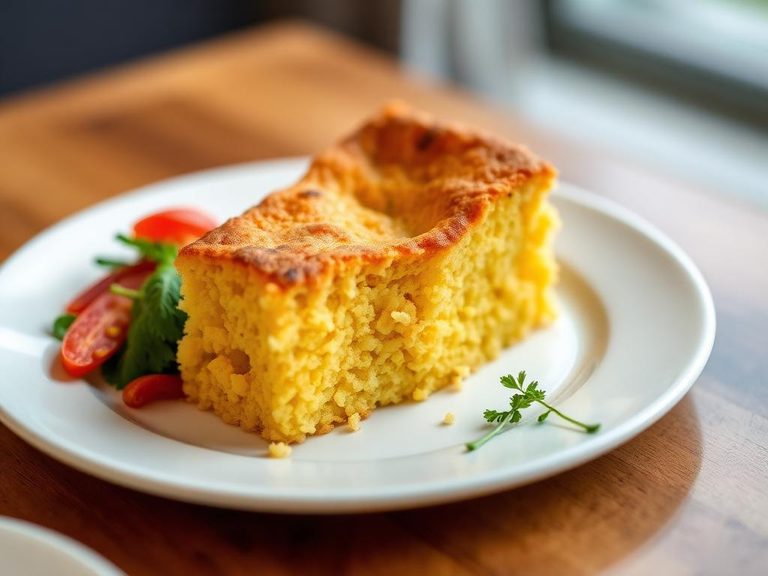

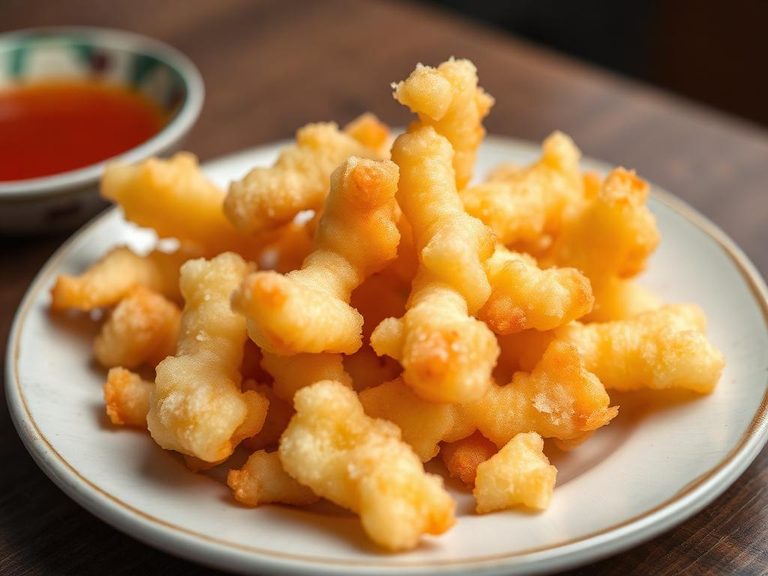
🌍 Where it's eaten
💡 Did you know?
The 'double-acting' in many modern baking powders means it releases gas twice: once when mixed with liquid and again when heated, giving bakers a crucial window of time before putting the batter in the oven.
Full nutrition (USDA data · scales with serving)
| Water | 6.2 g |
| Energy | 97.0 kcal |
| Energy | 406 kj |
| Protein | 0.10 g |
| Total lipid (fat) | 0.40 g |
| Ash | 46.4 g |
| Carbohydrate, by difference | 46.9 g |
| Fiber, total dietary | 2.2 g |
| Total Sugars | 0.00 g |
| Calcium, Ca | 4332 mg |
| Iron, Fe | 8.2 mg |
| Magnesium, Mg | 29.0 mg |
| Phosphorus, P | 6869 mg |
| Potassium, K | 10100 mg |
| Sodium, Na | 90.0 mg |
| Zinc, Zn | 0.72 mg |
| Copper, Cu | 0.02 mg |
| Manganese, Mn | 0.42 mg |
| Selenium, Se | 0.20 ug |
| Vitamin C, total ascorbic acid | 0.00 mg |
| Thiamin | 0.00 mg |
| Riboflavin | 0.00 mg |
| Niacin | 0.00 mg |
| Pantothenic acid | 0.00 mg |
| Vitamin B-6 | 0.00 mg |
| Folate, total | 0.00 ug |
| Folic acid | 0.00 ug |
| Folate, food | 0.00 ug |
| Folate, DFE | 0.00 ug |
| Choline, total | 0.00 mg |
| Betaine | 0.00 mg |
| Vitamin B-12 | 0.00 ug |
| Vitamin B-12, added | 0.00 ug |
| Vitamin A, RAE | 0.00 ug |
| Retinol | 0.00 ug |
| Carotene, beta | 0.00 ug |
| Carotene, alpha | 0.00 ug |
| Cryptoxanthin, beta | 0.00 ug |
| Vitamin A, IU | 0.00 iu |
| Lycopene | 0.00 ug |
| Lutein + zeaxanthin | 0.00 ug |
| Vitamin E (alpha-tocopherol) | 0.00 mg |
| Vitamin E, added | 0.00 mg |
| Vitamin D (D2 + D3), International Units | 0.00 iu |
| Vitamin D (D2 + D3) | 0.00 ug |
| Vitamin K (phylloquinone) | 0.00 ug |
| Alcohol, ethyl | 0.00 g |
| Caffeine | 0.00 mg |
| Theobromine | 0.00 mg |
Fat & fatty acid profile (per 100g)
| Fatty acids, total saturated | 0.07 g |
| SFA 4:0 | 0.00 g |
| SFA 6:0 | 0.00 g |
| SFA 8:0 | 0.00 g |
| SFA 10:0 | 0.00 g |
| SFA 12:0 | 0.01 g |
| SFA 14:0 | 0.00 g |
| SFA 16:0 | 0.05 g |
| SFA 18:0 | 0.01 g |
| Fatty acids, total monounsaturated | 0.01 g |
| MUFA 16:1 | 0.00 g |
| MUFA 18:1 | 0.00 g |
| MUFA 20:1 | 0.00 g |
| MUFA 22:1 | 0.00 g |
| Fatty acids, total polyunsaturated | 0.12 g |
| PUFA 18:2 | 0.09 g |
| PUFA 18:3 | 0.03 g |
| PUFA 18:4 | 0.00 g |
| PUFA 20:4 | 0.00 g |
| PUFA 20:5 n-3 (EPA) | 0.00 g |
| PUFA 22:5 n-3 (DPA) | 0.00 g |
| PUFA 22:6 n-3 (DHA) | 0.00 g |
| Cholesterol | 0.00 mg |
Amino acid profile (per 100g)
Estimated from Leavening agents, yeast, baker's, compressed — USDA does not publish this profile for Leavening agents.
| Tryptophan | 0.11 g |
| Threonine | 0.43 g |
| Isoleucine | 0.48 g |
| Leucine | 0.67 g |
| Lysine | 0.69 g |
| Methionine | 0.17 g |
| Cystine | 0.11 g |
| Phenylalanine | 0.41 g |
| Tyrosine | 0.34 g |
| Valine | 0.51 g |
| Arginine | 0.46 g |
| Histidine | 0.22 g |
| Alanine | 0.55 g |
| Aspartic acid | 0.85 g |
| Glutamic acid | 1.2 g |
| Glycine | 0.41 g |
| Proline | 0.36 g |
| Serine | 0.41 g |
FAQ
What's the difference between low-sodium and regular baking powder?
Regular baking powder often uses sodium bicarbonate (baking soda) as its acid-reacting base, which contains sodium. Low-sodium versions replace some or all of the sodium bicarbonate with a non-sodium base like potassium bicarbonate, reducing the sodium content per teaspoon.
Can I substitute low-sodium baking powder 1:1 for regular?
Yes, in most recipes. The leavening power is similar, but the taste profile can be slightly different due to the potassium base, which some describe as having a faint metallic aftertaste. For best results, use it in recipes with strong flavors like chocolate or spices.
Why is it mostly carbs if it's not a food I eat by itself?
The active chemical agents (like sodium/potassium bicarbonate and an acid salt) make up only a small percentage. The bulk of the powder is a neutral starch filler, usually cornstarch, which prevents the chemicals from reacting prematurely in the can and helps with even dispersion in dry mixes.
Nutrient density (calculated · NRF9.3)
Nutrient Rich Foods index: beneficial nutrients (protein, fiber, vitamins, minerals) minus saturated fat, added sugar & sodium, per 100 kcal.
NRF9.3 index — Fulgoni, Keast & Drewnowski, 2009. Computed from USDA nutrients.
Weight-loss friendliness (composite index)
Energy density 0.97 kcal/g · 0% calories from protein · 2.2 g fiber · 0.0 g sugar per 100 g.
Composite of energy density (Rolls et al., 1999), protein & fiber satiety, minus sugar. A calculated heuristic — ranks satiety-per-calorie, not a clinical measure.
Dietary load (calculated from USDA values)
Potential renal acid load. Positive = acid-forming, negative = alkaline-forming.
Sodium-to-potassium ratio: 0.01 (lower is better — aim for ≤ 1)
Sodium:potassium per WHO potassium guidance. Computed from USDA nutrients.