

Hominy, canned, white
Whole food · Cereal Grains and Pasta

Photo: Wikipedia
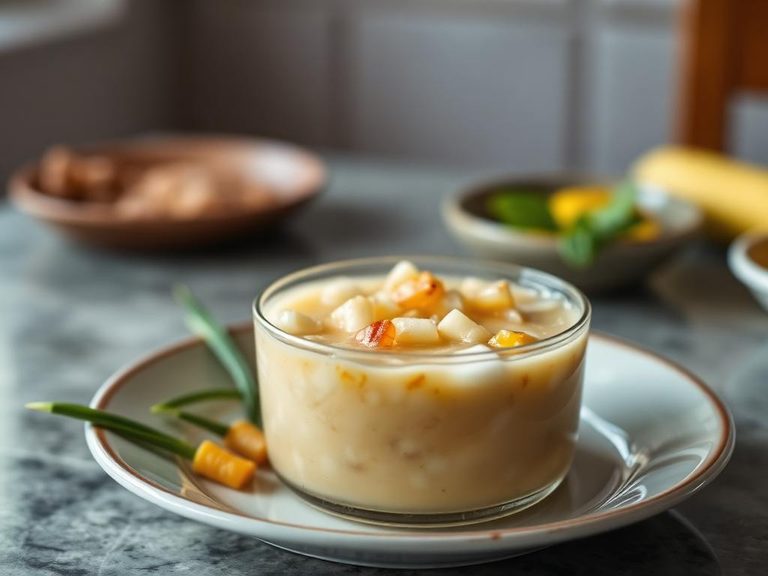
Hominy is the hearty, puffy kernel of corn that has been nixtamalized—soaked and cooked in an alkaline solution like lime. This process gives it a distinctive, tender yet chewy texture and a mild, earthy, slightly sweet corn flavor. Nutritionally, it's a good source of complex carbohydrates and fiber, providing sustained energy with a low fat content.
Calorie split: 8% protein · 80% carbs · 11% fat
↓ Full nutrition💚 Why it's loved
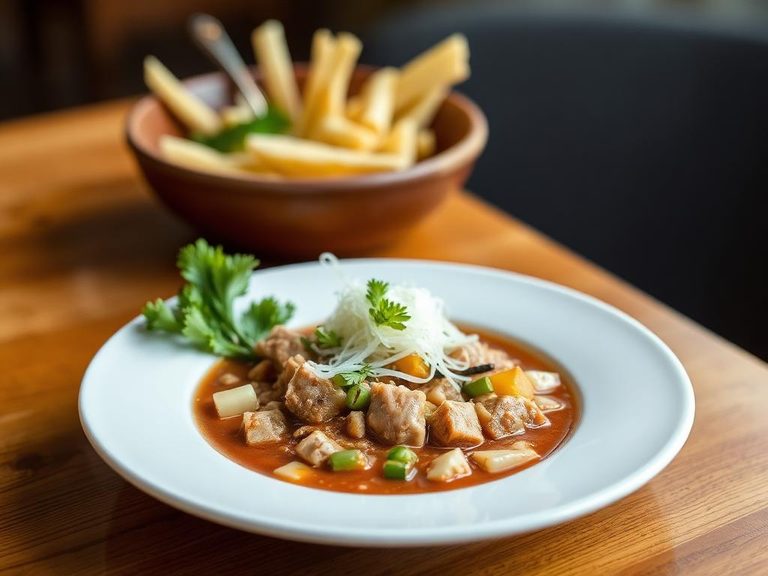
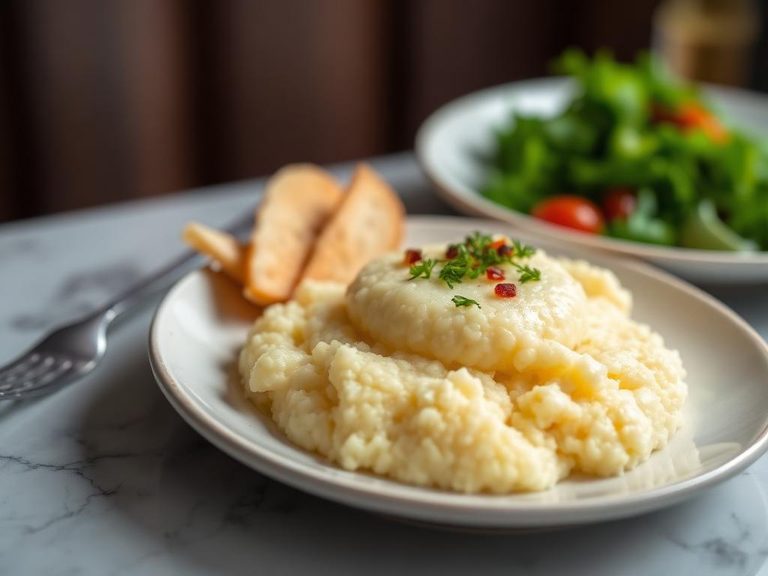
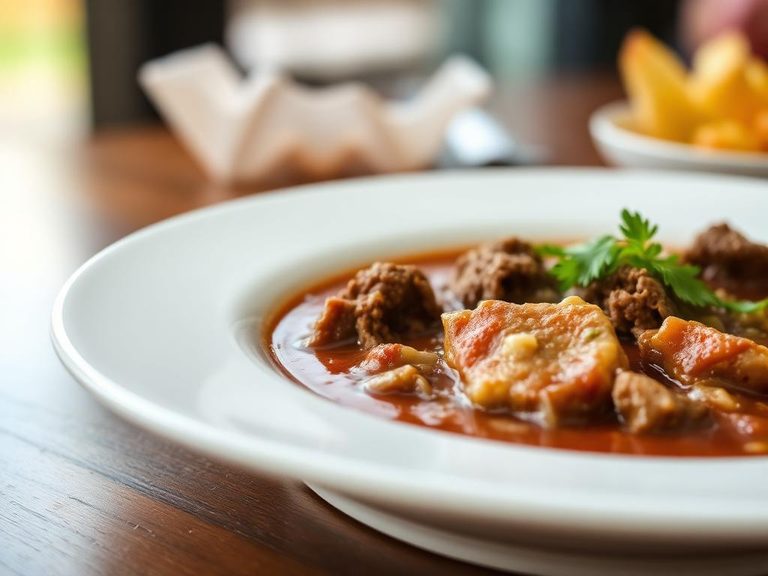
People love hominy for its satisfying, meaty chew and its ability to absorb the flavors of broths, chiles, and spices it's cooked with. It's a beloved staple in Mexican and Southern U.S. cuisines, forming the comforting base of iconic dishes like pozole and grits.
⚠️ Watch-outs & how to enjoy it better
Canned hominy can be high in sodium, which may be a concern for those monitoring blood pressure. To counteract this, rinse the kernels thoroughly under cold water before use. Its high carbohydrate content can also cause blood sugar spikes; pairing it with protein (like pork or chicken) and healthy fats helps moderate the glycemic response.
Key benefits
- Good source of dietary fiber for digestive health.
- Provides complex carbohydrates for steady energy.
- Low in fat and naturally cholesterol-free.
- Nixtamalization increases availability of niacin (vitamin B3).
- A gluten-free grain option for diverse diets.
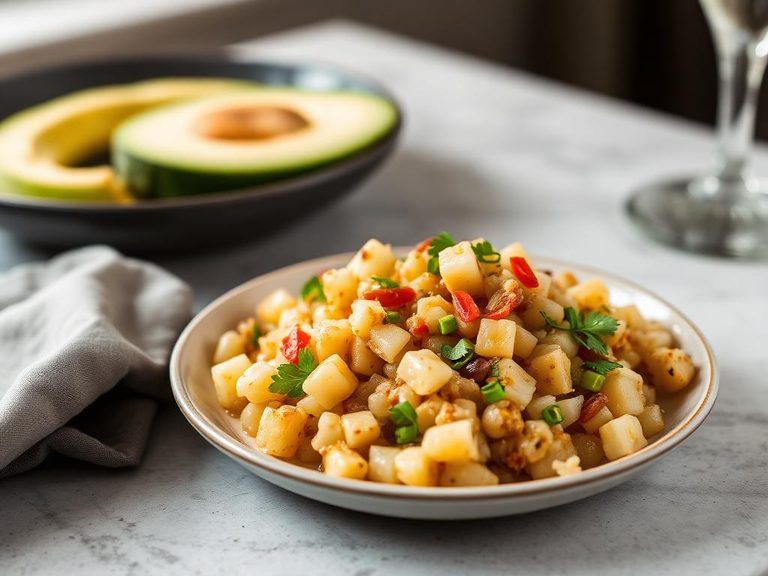
🍽️ Popular dishes
🌍 Where it's eaten
💡 Did you know?
The nixtamalization process that creates hominy was a revolutionary Mesoamerican invention that unlocked the nutritional power of corn, preventing pellagra (niacin deficiency) in cultures where corn became a dietary staple.
Full nutrition (USDA data · scales with serving)
| Water | 82.5 g |
| Energy | 72.0 kcal |
| Energy | 301 kj |
| Protein | 1.5 g |
| Total lipid (fat) | 0.88 g |
| Ash | 0.86 g |
| Carbohydrate, by difference | 14.3 g |
| Fiber, total dietary | 2.5 g |
| Total Sugars | 1.5 g |
| Calcium, Ca | 10.0 mg |
| Iron, Fe | 0.62 mg |
| Magnesium, Mg | 16.0 mg |
| Phosphorus, P | 35.0 mg |
| Potassium, K | 9.0 mg |
| Sodium, Na | 267 mg |
| Zinc, Zn | 1.1 mg |
| Copper, Cu | 0.03 mg |
| Manganese, Mn | 0.07 mg |
| Selenium, Se | 3.0 ug |
| Vitamin C, total ascorbic acid | 0.30 mg |
| Thiamin | 0.00 mg |
| Riboflavin | 0.01 mg |
| Niacin | 0.03 mg |
| Pantothenic acid | 0.15 mg |
| Vitamin B-6 | 0.01 mg |
| Folate, total | 1.0 ug |
| Folic acid | 0.00 ug |
| Folate, food | 1.0 ug |
| Folate, DFE | 1.0 ug |
| Choline, total | 3.1 mg |
| Vitamin B-12 | 0.00 ug |
| Vitamin B-12, added | 0.00 ug |
| Vitamin A, RAE | 0.00 ug |
| Retinol | 0.00 ug |
| Carotene, beta | 0.00 ug |
| Carotene, alpha | 0.00 ug |
| Cryptoxanthin, beta | 0.00 ug |
| Vitamin A, IU | 1.0 iu |
| Lycopene | 0.00 ug |
| Lutein + zeaxanthin | 30.0 ug |
| Vitamin E (alpha-tocopherol) | 0.05 mg |
| Vitamin E, added | 0.00 mg |
| Vitamin D (D2 + D3), International Units | 0.00 iu |
| Vitamin D (D2 + D3) | 0.00 ug |
| Vitamin K (phylloquinone) | 0.20 ug |
| Alcohol, ethyl | 0.00 g |
| Caffeine | 0.00 mg |
| Theobromine | 0.00 mg |
Fat & fatty acid profile (per 100g)
| Fatty acids, total saturated | 0.12 g |
| SFA 4:0 | 0.00 g |
| SFA 6:0 | 0.00 g |
| SFA 8:0 | 0.00 g |
| SFA 10:0 | 0.00 g |
| SFA 12:0 | 0.00 g |
| SFA 14:0 | 0.00 g |
| SFA 16:0 | 0.10 g |
| SFA 18:0 | 0.01 g |
| Fatty acids, total monounsaturated | 0.23 g |
| MUFA 16:1 | 0.00 g |
| MUFA 18:1 | 0.23 g |
| MUFA 20:1 | 0.00 g |
| MUFA 22:1 | 0.00 g |
| Fatty acids, total polyunsaturated | 0.40 g |
| PUFA 18:2 | 0.39 g |
| PUFA 18:3 | 0.01 g |
| PUFA 18:4 | 0.00 g |
| PUFA 20:4 | 0.00 g |
| PUFA 20:5 n-3 (EPA) | 0.00 g |
| PUFA 22:5 n-3 (DPA) | 0.00 g |
| PUFA 22:6 n-3 (DHA) | 0.00 g |
| Fatty acids, total trans | 0.00 g |
| Cholesterol | 0.00 mg |
Amino acid profile (per 100g)
| Tryptophan | 0.01 g |
| Threonine | 0.05 g |
| Isoleucine | 0.06 g |
| Leucine | 0.20 g |
| Lysine | 0.03 g |
| Methionine | 0.03 g |
| Cystine | 0.03 g |
| Phenylalanine | 0.08 g |
| Tyrosine | 0.06 g |
| Valine | 0.08 g |
| Arginine | 0.07 g |
| Histidine | 0.04 g |
| Alanine | 0.11 g |
| Aspartic acid | 0.12 g |
| Glutamic acid | 0.30 g |
| Glycine | 0.05 g |
| Proline | 0.14 g |
| Serine | 0.07 g |
FAQ
What's the difference between hominy and corn?
Hominy is corn that has been treated with an alkali (like lime) in a process called nixtamalization. This removes the hull and germ, softens the kernel, and changes its flavor, texture, and nutritional profile, making it more digestible and increasing its vitamin B3 content.
Is canned hominy already cooked?
Yes, canned hominy is fully cooked and preserved in a brine. It can be eaten straight from the can but is typically rinsed and then heated or added to recipes to absorb other flavors.
What is the texture of hominy?
Hominy has a unique texture: the kernels are plump, tender, and slightly chewy, with a soft, almost meaty bite that holds up well in soups and stews.
Nutrient density (calculated · NRF9.3)
Nutrient Rich Foods index: beneficial nutrients (protein, fiber, vitamins, minerals) minus saturated fat, added sugar & sodium, per 100 kcal.
NRF9.3 index — Fulgoni, Keast & Drewnowski, 2009. Computed from USDA nutrients.
Weight-loss friendliness (composite index)
Energy density 0.72 kcal/g · 8% calories from protein · 2.5 g fiber · 1.5 g sugar per 100 g.
Composite of energy density (Rolls et al., 1999), protein & fiber satiety, minus sugar. A calculated heuristic — ranks satiety-per-calorie, not a clinical measure.
Dietary load (calculated from USDA values)
Potential renal acid load. Positive = acid-forming, negative = alkaline-forming.
Sodium-to-potassium ratio: 29.67 (lower is better — aim for ≤ 1)
Sodium:potassium per WHO potassium guidance. Computed from USDA nutrients.