

Game meat, goat, cooked, roasted
Whole food · Lamb, Veal, and Game Products

Photo: Wikipedia
Roasted goat meat is a lean, deeply savory red meat prized for its firm texture and rich, slightly gamey flavor that is less fatty than lamb. With an impressive 27.1g of protein per 100g and virtually no carbohydrates, it is a powerhouse of high-quality, low-fat nutrition. Its dense, satisfying bite makes it a staple in hearty stews, slow-roasted platters, and traditional festive meals across the globe.
Calorie split: 80% protein · 0% carbs · 20% fat
↓ Full nutrition💚 Why it's loved
People love roasted goat for its intense, earthy flavor that stands up beautifully to bold spices and slow-cooking methods. It is a culturally significant centerpiece in many cuisines, often served during celebrations, family gatherings, and traditional feasts.
⚠️ Watch-outs & how to enjoy it better
The meat can be tough and dry if overcooked or not prepared with sufficient moisture, which may deter those accustomed to more marbled cuts. To counteract this, it is best cooked low and slow (braising, stewing, or slow-roasting) and paired with a flavorful sauce, marinade, or side of healthy fats like avocado or olive oil to enhance tenderness and mouthfeel.
Key benefits
- Exceptionally high in protein with very low fat content
- Naturally zero carbohydrates and sugar, ideal for low-carb diets
- Rich in essential minerals like iron, zinc, and potassium
- Lower in saturated fat compared to beef or lamb
- A lean alternative for muscle-building and weight management
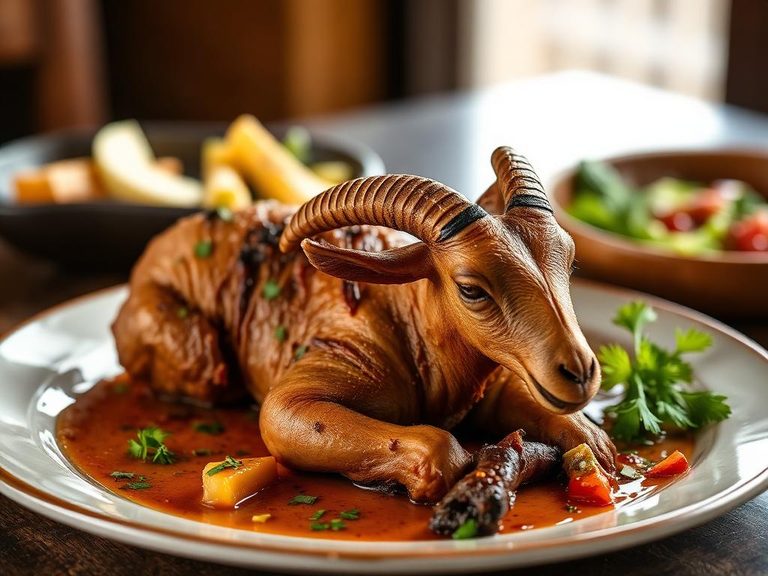
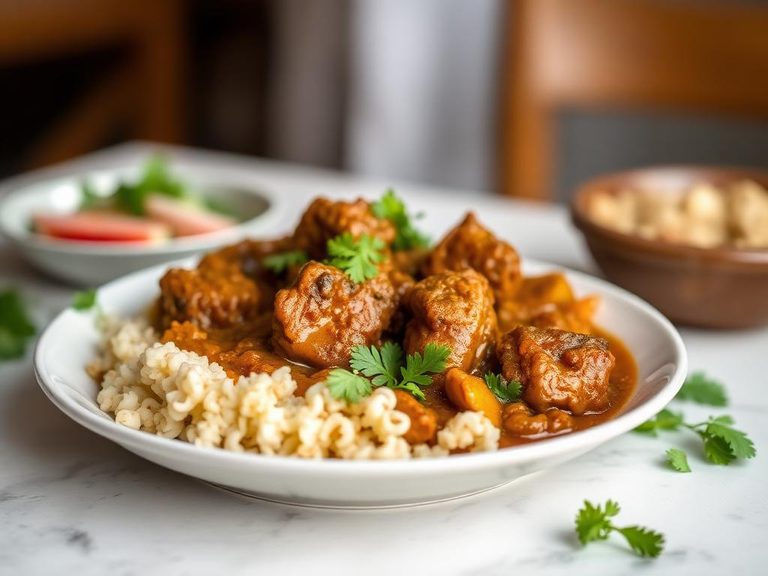
🍽️ Popular dishes
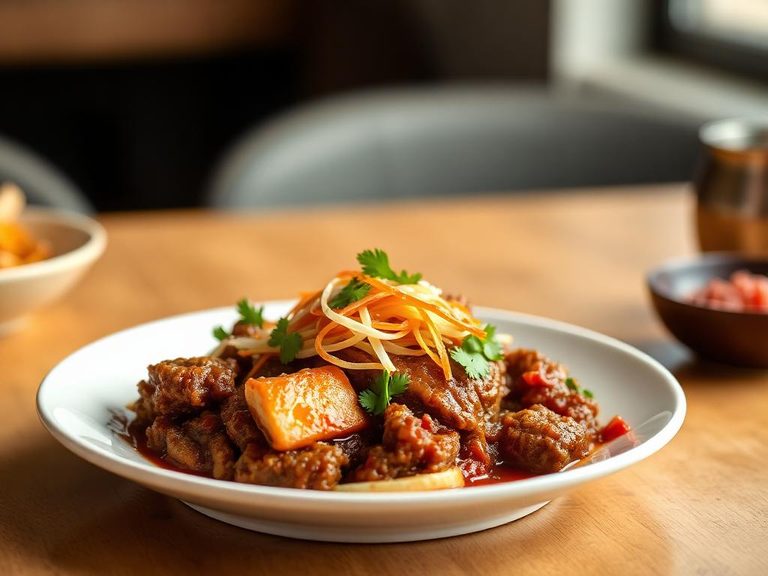
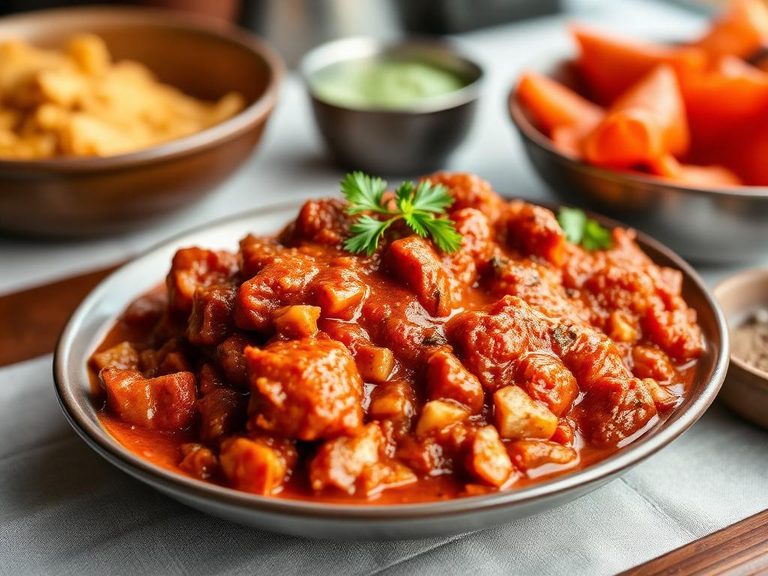
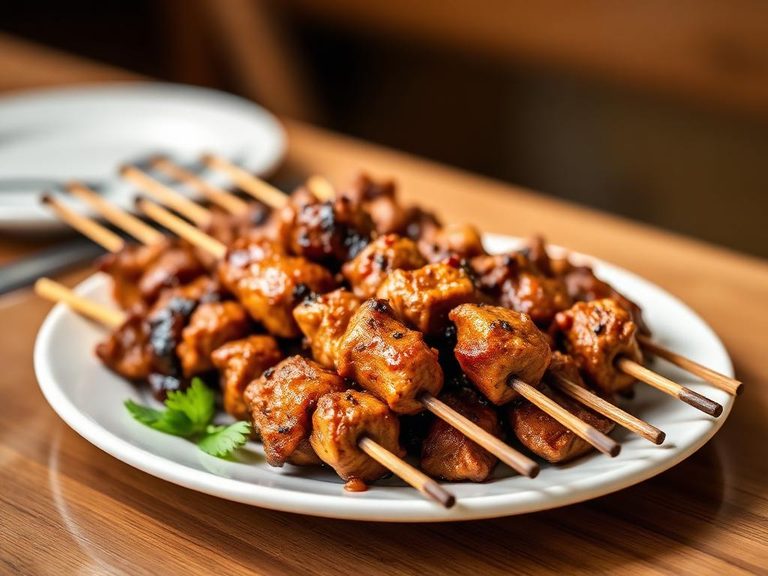
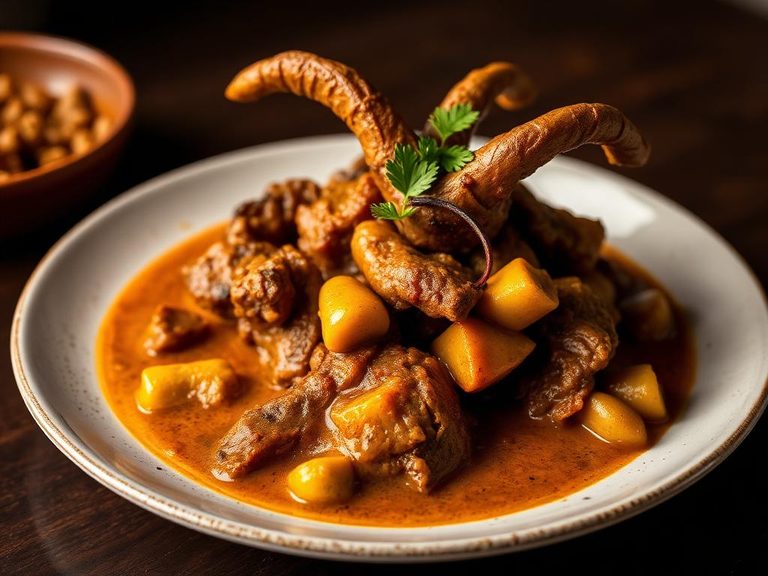
🌍 Where it's eaten
💡 Did you know?
Goat meat is the most widely consumed red meat in the world, accounting for about 63% of all red meat eaten globally.
Full nutrition (USDA data · scales with serving)
| Water | 68.2 g |
| Energy | 143 kcal |
| Energy | 599 kj |
| Protein | 27.1 g |
| Total lipid (fat) | 3.0 g |
| Ash | 1.5 g |
| Carbohydrate, by difference | 0.00 g |
| Fiber, total dietary | 0.00 g |
| Total Sugars | 0.00 g |
| Calcium, Ca | 17.0 mg |
| Iron, Fe | 3.7 mg |
| Magnesium, Mg | 0.00 mg |
| Phosphorus, P | 201 mg |
| Potassium, K | 405 mg |
| Sodium, Na | 86.0 mg |
| Zinc, Zn | 5.3 mg |
| Copper, Cu | 0.30 mg |
| Manganese, Mn | 0.04 mg |
| Selenium, Se | 11.8 ug |
| Vitamin C, total ascorbic acid | 0.00 mg |
| Thiamin | 0.09 mg |
| Riboflavin | 0.61 mg |
| Niacin | 4.0 mg |
| Vitamin B-6 | 0.00 mg |
| Folate, total | 5.0 ug |
| Folic acid | 0.00 ug |
| Folate, food | 5.0 ug |
| Folate, DFE | 5.0 ug |
| Choline, total | 106 mg |
| Betaine | 14.0 mg |
| Vitamin B-12 | 1.2 ug |
| Vitamin B-12, added | 0.00 ug |
| Vitamin A, RAE | 0.00 ug |
| Retinol | 0.00 ug |
| Carotene, beta | 0.00 ug |
| Carotene, alpha | 0.00 ug |
| Cryptoxanthin, beta | 0.00 ug |
| Vitamin A, IU | 0.00 iu |
| Lycopene | 0.00 ug |
| Lutein + zeaxanthin | 0.00 ug |
| Vitamin E (alpha-tocopherol) | 0.34 mg |
| Vitamin E, added | 0.00 mg |
| Vitamin D (D2 + D3), International Units | 0.00 iu |
| Vitamin D (D2 + D3) | 0.00 ug |
| Vitamin D3 (cholecalciferol) | 0.00 ug |
| Vitamin K (phylloquinone) | 1.2 ug |
| Vitamin K (Dihydrophylloquinone) | 0.00 ug |
| Alcohol, ethyl | 0.00 g |
| Caffeine | 0.00 mg |
| Theobromine | 0.00 mg |
Fat & fatty acid profile (per 100g)
| Fatty acids, total saturated | 0.93 g |
| SFA 4:0 | 0.00 g |
| SFA 6:0 | 0.00 g |
| SFA 8:0 | 0.00 g |
| SFA 10:0 | 0.00 g |
| SFA 12:0 | 0.00 g |
| SFA 14:0 | 0.04 g |
| SFA 16:0 | 0.43 g |
| SFA 18:0 | 0.43 g |
| Fatty acids, total monounsaturated | 1.4 g |
| MUFA 16:1 | 0.06 g |
| MUFA 18:1 | 1.2 g |
| MUFA 20:1 | 0.00 g |
| MUFA 22:1 | 0.00 g |
| Fatty acids, total polyunsaturated | 0.23 g |
| PUFA 18:2 | 0.13 g |
| PUFA 18:3 | 0.02 g |
| PUFA 18:4 | 0.00 g |
| PUFA 20:4 | 0.08 g |
| PUFA 20:5 n-3 (EPA) | 0.00 g |
| PUFA 22:5 n-3 (DPA) | 0.00 g |
| PUFA 22:6 n-3 (DHA) | 0.00 g |
| Cholesterol | 75.0 mg |
Amino acid profile (per 100g)
| Tryptophan | 0.40 g |
| Threonine | 1.3 g |
| Isoleucine | 1.4 g |
| Leucine | 2.3 g |
| Lysine | 2.0 g |
| Methionine | 0.73 g |
| Cystine | 0.32 g |
| Phenylalanine | 0.94 g |
| Tyrosine | 0.83 g |
| Valine | 1.5 g |
| Arginine | 2.0 g |
| Histidine | 0.56 g |
FAQ
Is goat meat healthier than beef?
Yes, goat meat is generally leaner than beef, with less fat and fewer calories per serving while providing similar levels of protein and iron.
How do I make roasted goat tender?
Use slow-cooking methods like braising or roasting at low temperatures for several hours, and marinate the meat beforehand to break down fibers.
What does goat meat taste like?
Goat meat has a rich, slightly gamey flavor that is less fatty than lamb, with a firm texture that absorbs spices and sauces well.
Nutrient density (calculated · NRF9.3)
Nutrient Rich Foods index: beneficial nutrients (protein, fiber, vitamins, minerals) minus saturated fat, added sugar & sodium, per 100 kcal.
NRF9.3 index — Fulgoni, Keast & Drewnowski, 2009. Computed from USDA nutrients.
Weight-loss friendliness (composite index)
Energy density 1.43 kcal/g · 76% calories from protein · 0.0 g fiber · 0.0 g sugar per 100 g.
Composite of energy density (Rolls et al., 1999), protein & fiber satiety, minus sugar. A calculated heuristic — ranks satiety-per-calorie, not a clinical measure.
Dietary load (calculated from USDA values)
Potential renal acid load. Positive = acid-forming, negative = alkaline-forming.
Sodium-to-potassium ratio: 0.21 (lower is better — aim for ≤ 1)
Sodium:potassium per WHO potassium guidance. Computed from USDA nutrients.