

Fish, raw
Common food

Photo: Wikipedia
Raw fish, in its purest form, is a delicate canvas of oceanic flavor, offering a clean, briny sweetness and a tender, buttery texture that melts on the tongue. It's a powerhouse of lean, high-quality protein with virtually no carbohydrates, making it a cornerstone of many health-conscious and traditional cuisines worldwide.
Calorie split: 77% protein · 0% carbs · 23% fat
↓ Full nutrition💚 Why it's loved
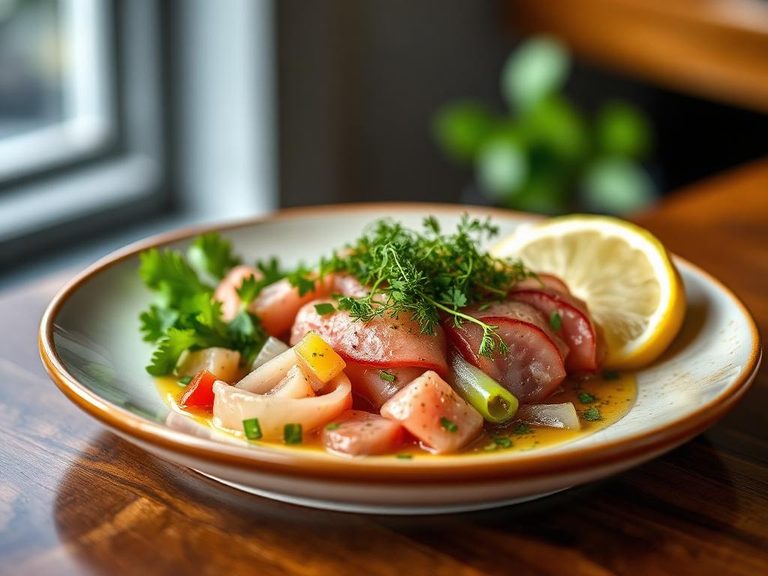
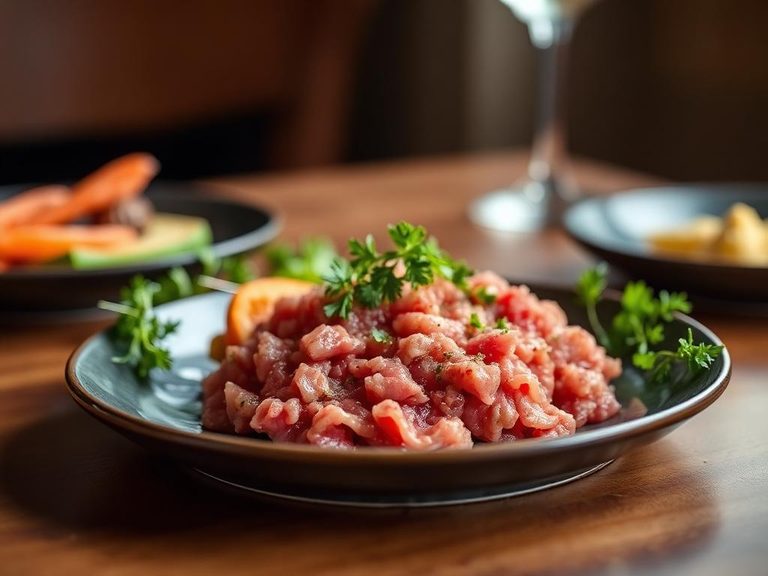
People cherish raw fish for its pristine, unadulterated flavor that highlights the quality of the seafood itself. Its versatility allows it to be the star of elegant sashimi, vibrant poke bowls, or zesty ceviche, deeply embedded in culinary traditions from Japan to Peru.
⚠️ Watch-outs & how to enjoy it better
The primary concern is the risk of foodborne pathogens and parasites, which is why it must be prepared from 'sushi-grade' or previously frozen fish from a trusted source. Individuals with compromised immune systems, pregnant women, or young children are often advised to avoid it. To mitigate risk, always source from reputable suppliers who follow strict safety protocols.
Key benefits
- Excellent source of complete, lean protein for muscle maintenance.
- Naturally very low in carbohydrates and sugar.
- Rich in essential omega-3 fatty acids (EPA & DHA) for heart and brain health.
- Provides key nutrients like selenium, vitamin D, and B12.
🍽️ Popular dishes
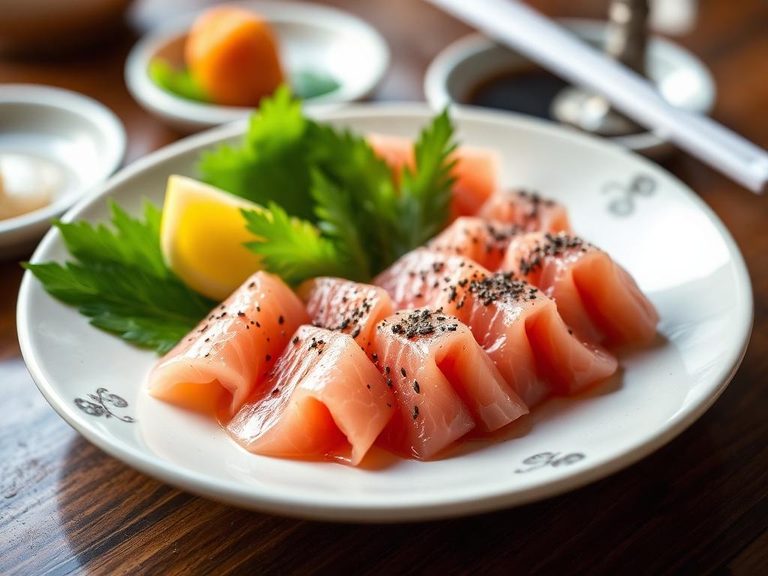
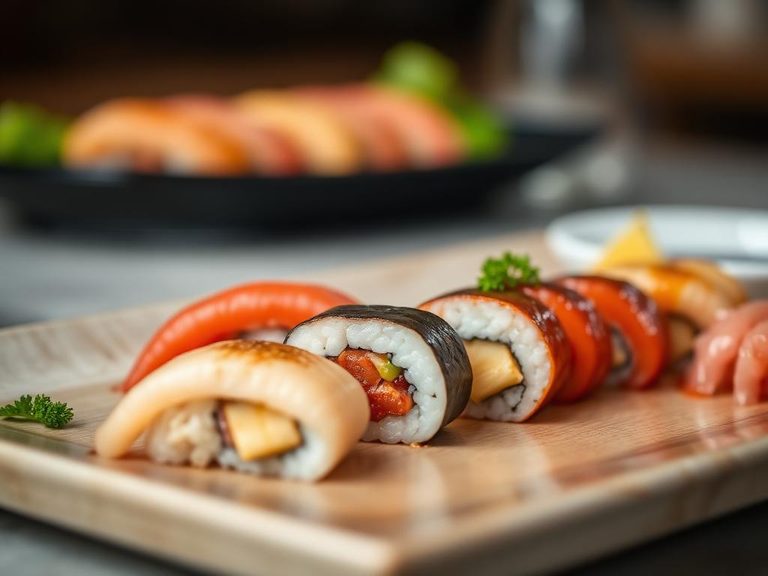
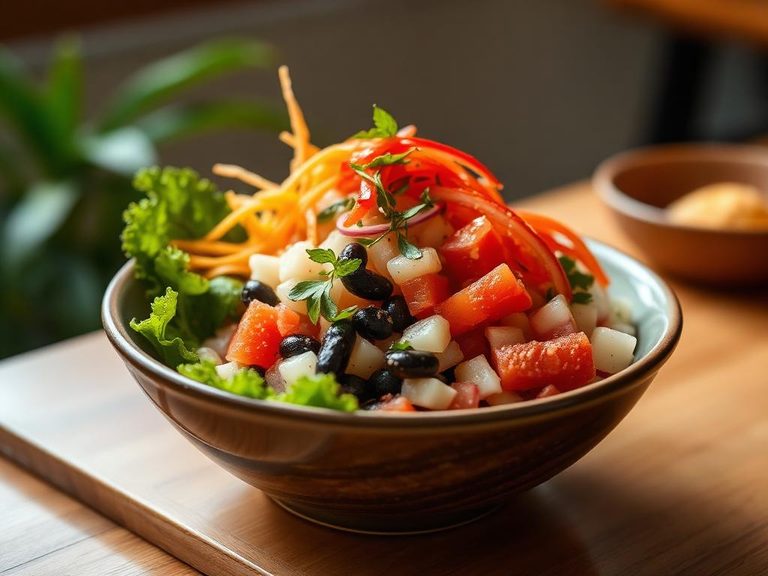
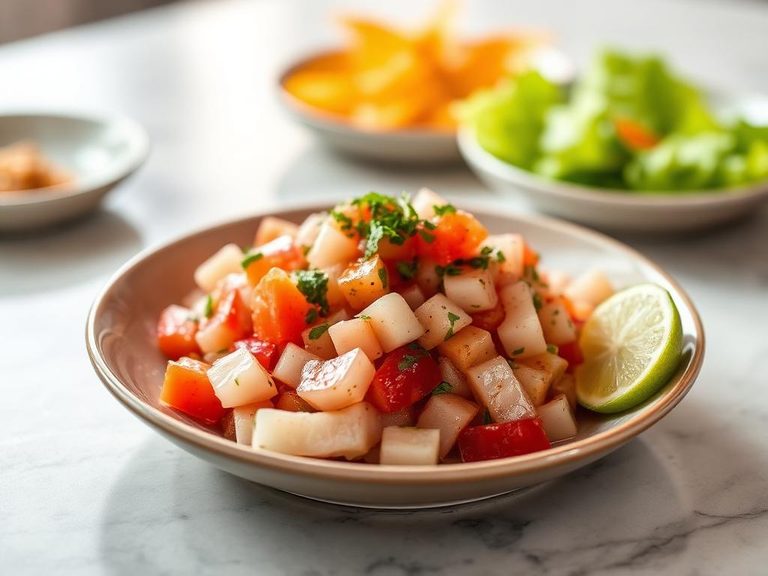
🌍 Where it's eaten
💡 Did you know?
The practice of 'curing' raw fish in citrus juice for ceviche, which 'cooks' it by denaturing proteins, dates back to pre-Columbian civilizations in the Inca Empire.
Full nutrition (USDA data · scales with serving)
| Water | 80.3 g |
| Energy | 94.0 kcal |
| Protein | 17.2 g |
| Total lipid (fat) | 2.3 g |
| Carbohydrate, by difference | 0.00 g |
| Fiber, total dietary | 0.00 g |
| Total Sugars | 0.00 g |
| Calcium, Ca | 18.0 mg |
| Iron, Fe | 0.32 mg |
| Magnesium, Mg | 22.0 mg |
| Phosphorus, P | 219 mg |
| Potassium, K | 272 mg |
| Sodium, Na | 83.0 mg |
| Zinc, Zn | 0.50 mg |
| Copper, Cu | 0.04 mg |
| Selenium, Se | 26.2 ug |
| Vitamin C, total ascorbic acid | 0.00 mg |
| Thiamin | 0.04 mg |
| Riboflavin | 0.06 mg |
| Niacin | 2.1 mg |
| Vitamin B-6 | 0.15 mg |
| Folate, total | 14.0 ug |
| Folic acid | 0.00 ug |
| Folate, food | 14.0 ug |
| Folate, DFE | 14.0 ug |
| Choline, total | 59.4 mg |
| Vitamin B-12 | 2.2 ug |
| Vitamin B-12, added | 0.00 ug |
| Vitamin A, RAE | 8.0 ug |
| Retinol | 8.0 ug |
| Carotene, beta | 0.00 ug |
| Carotene, alpha | 0.00 ug |
| Cryptoxanthin, beta | 0.00 ug |
| Lycopene | 0.00 ug |
| Lutein + zeaxanthin | 0.00 ug |
| Vitamin E (alpha-tocopherol) | 0.51 mg |
| Vitamin E, added | 0.00 mg |
| Vitamin D (D2 + D3) | 1.3 ug |
| Vitamin K (phylloquinone) | 0.90 ug |
| Alcohol, ethyl | 0.00 g |
| Caffeine | 0.00 mg |
| Theobromine | 0.00 mg |
Fat & fatty acid profile (per 100g)
| Fatty acids, total saturated | 0.56 g |
| SFA 4:0 | 0.00 g |
| SFA 6:0 | 0.00 g |
| SFA 8:0 | 0.00 g |
| SFA 10:0 | 0.00 g |
| SFA 12:0 | 0.00 g |
| SFA 14:0 | 0.04 g |
| SFA 16:0 | 0.39 g |
| SFA 18:0 | 0.11 g |
| Fatty acids, total monounsaturated | 0.86 g |
| MUFA 16:1 | 0.08 g |
| MUFA 18:1 | 0.73 g |
| MUFA 20:1 | 0.03 g |
| MUFA 22:1 | 0.00 g |
| Fatty acids, total polyunsaturated | 0.52 g |
| PUFA 18:2 | 0.25 g |
| PUFA 18:3 | 0.04 g |
| PUFA 18:4 | 0.01 g |
| PUFA 20:4 | 0.04 g |
| PUFA 20:5 n-3 (EPA) | 0.04 g |
| PUFA 22:5 n-3 (DPA) | 0.02 g |
| PUFA 22:6 n-3 (DHA) | 0.09 g |
| Cholesterol | 55.0 mg |
Amino acid profile (per 100g)
Estimated from Fish, fish sticks, frozen, prepared — USDA does not publish this profile for Fish.
| Tryptophan | 0.12 g |
| Threonine | 0.37 g |
| Isoleucine | 0.43 g |
| Leucine | 0.85 g |
| Lysine | 0.80 g |
| Methionine | 0.30 g |
| Phenylalanine | 0.47 g |
| Tyrosine | 0.29 g |
| Valine | 0.50 g |
| Arginine | 0.59 g |
| Histidine | 0.23 g |
| Alanine | 0.55 g |
| Aspartic acid | 0.82 g |
| Glutamic acid | 2.3 g |
| Glycine | 0.47 g |
| Proline | 0.78 g |
| Serine | 0.49 g |
| Hydroxyproline | 0.00 g |
FAQ
What makes fish 'sushi-grade' or safe to eat raw?
'Sushi-grade' is a marketing term, not a strict regulation. The key safety step is that the fish has been commercially flash-frozen to specific temperatures (-31°F/-35°C for 15 hours or -4°F/-20°C for 7 days) to kill parasites. Always buy from a reputable fishmonger who can confirm this process.
Can I use any fish from the grocery store for sushi at home?
No. Never use standard 'fresh' fish from the supermarket case for raw consumption. It has not undergone the required parasite-killing freeze cycle and is at high risk for bacteria. Only use fish explicitly labeled for raw consumption or confirmed to have been commercially frozen.
How should I store raw fish if I plan to eat it that day?
Keep it coldest part of your refrigerator (usually the bottom shelf at the back), on a plate or in a sealed container to prevent cross-contamination. Use it within 24 hours of purchase for optimal safety and quality.
Nutrient density (calculated · NRF9.3)
Nutrient Rich Foods index: beneficial nutrients (protein, fiber, vitamins, minerals) minus saturated fat, added sugar & sodium, per 100 kcal.
NRF9.3 index — Fulgoni, Keast & Drewnowski, 2009. Computed from USDA nutrients.
Weight-loss friendliness (composite index)
Energy density 0.94 kcal/g · 73% calories from protein · 0.0 g fiber · 0.0 g sugar per 100 g.
Composite of energy density (Rolls et al., 1999), protein & fiber satiety, minus sugar. A calculated heuristic — ranks satiety-per-calorie, not a clinical measure.
Dietary load (calculated from USDA values)
Potential renal acid load. Positive = acid-forming, negative = alkaline-forming.
Sodium-to-potassium ratio: 0.31 (lower is better — aim for ≤ 1)
Sodium:potassium per WHO potassium guidance. Computed from USDA nutrients.