

Fish, halibut, Greenland, raw
Whole food · Finfish and Shellfish Products

Photo: Wikipedia
Greenland halibut is a cold-water flatfish prized for its firm, meaty texture and rich, buttery flavor that holds up beautifully to various cooking methods. Its deep, white flesh is notably high in healthy fats, making it a satisfying and nutrient-dense choice for seafood lovers. With a robust profile, it offers a substantial source of protein and essential omega-3 fatty acids in every serving.
Calorie split: 32% protein · 0% carbs · 68% fat
↓ Full nutrition💚 Why it's loved
People love its firm, steak-like texture and sweet, mild flavor that doesn't taste overly 'fishy,' making it a gateway fish for many. Its versatility shines in everything from simple pan-searing to elegant poaching, and it's a staple in Nordic and Arctic cuisines where it's celebrated for its richness.
⚠️ Watch-outs & how to enjoy it better
As a larger, longer-lived fish, it can contain higher levels of mercury, so pregnant women and young children should consume it in moderation. To mitigate this, opt for smaller portions and pair it with antioxidant-rich vegetables like leafy greens or cruciferous vegetables to help counteract potential heavy metal exposure.
Key benefits
- Excellent source of high-quality protein for muscle maintenance.
- Rich in omega-3 fatty acids, which support heart and brain health.
- Provides essential vitamins like B12 and D, along with selenium.
- Naturally low in carbohydrates, making it suitable for low-carb diets.
🍽️ Popular dishes
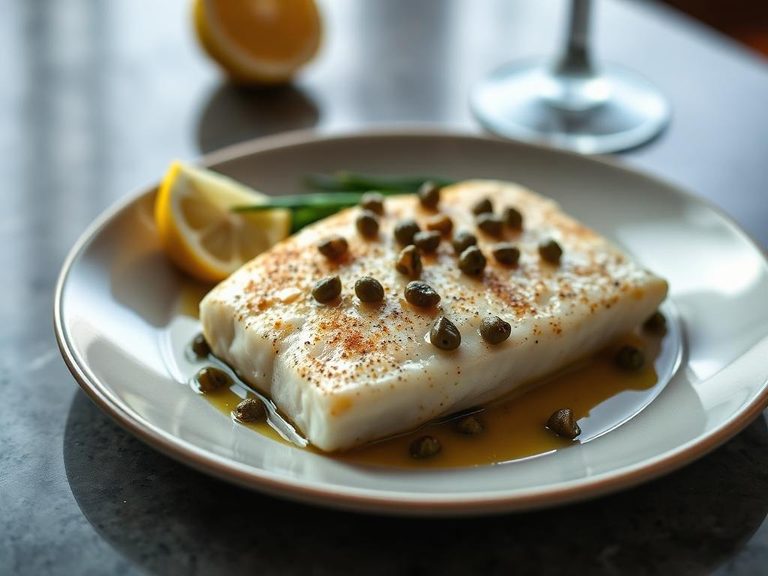
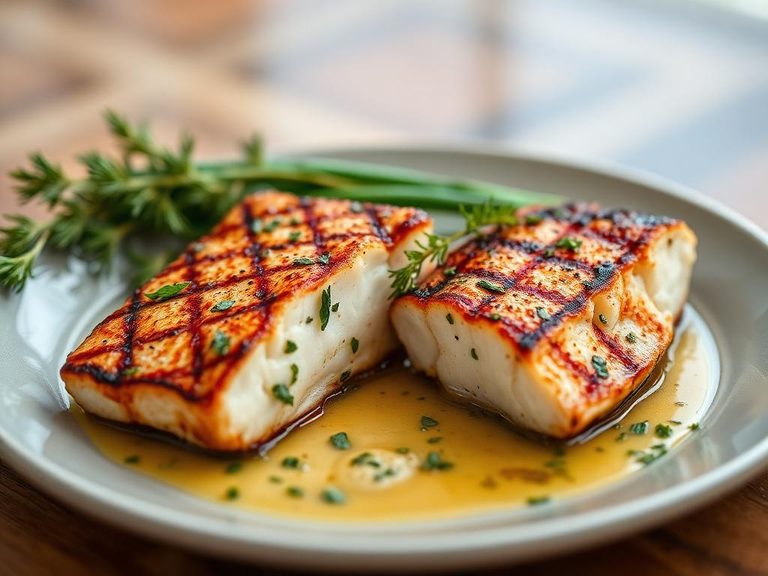
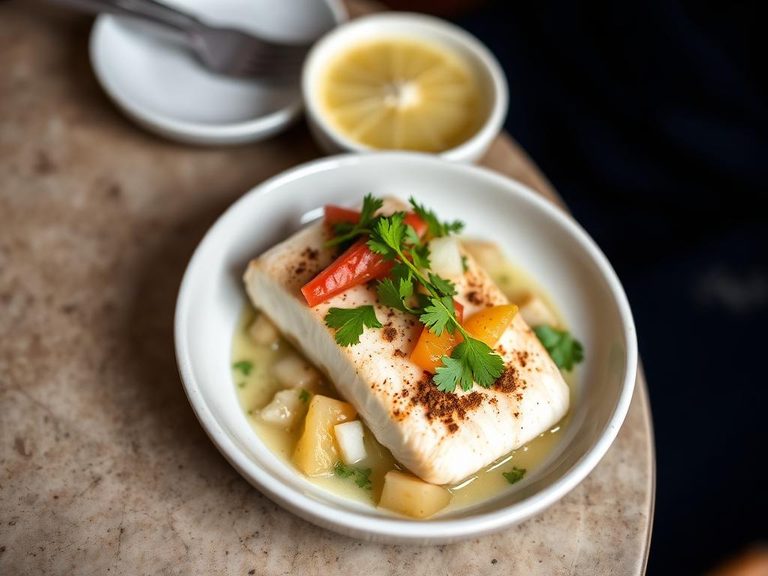
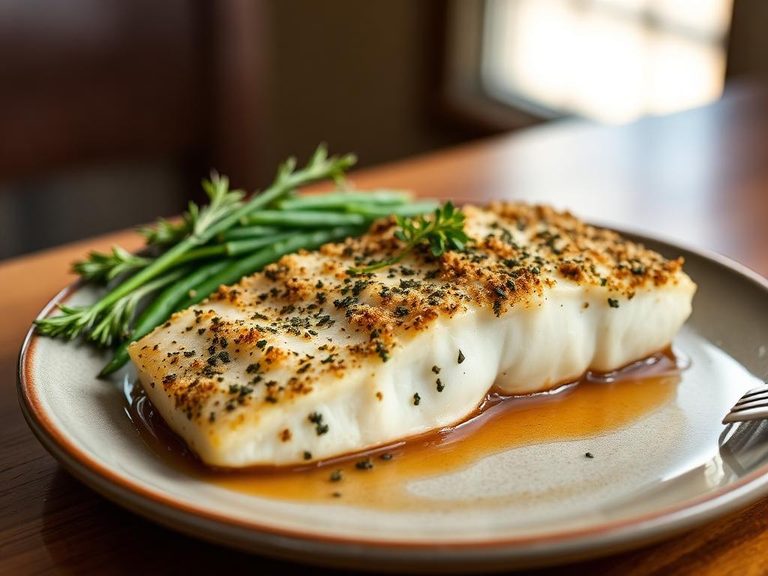
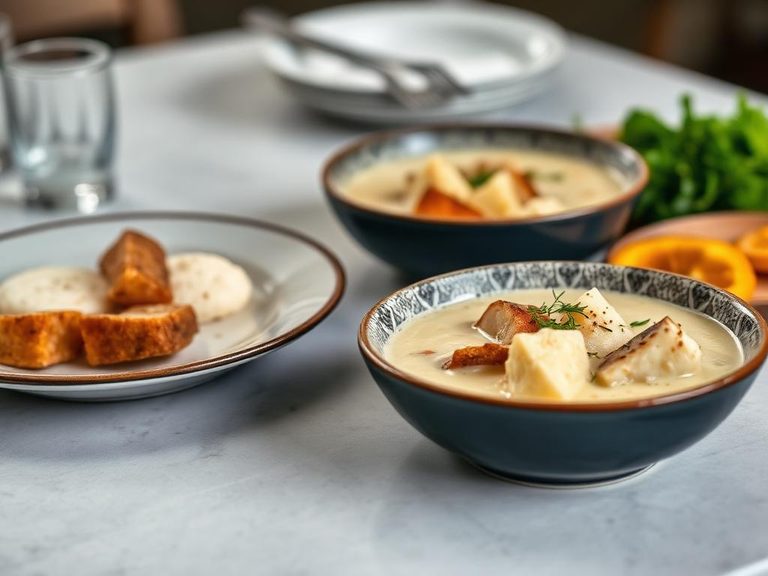
🌍 Where it's eaten
💡 Did you know?
Greenland halibut is one of the few flatfish that can live in near-freezing waters, and some specimens have been recorded at depths exceeding 2,000 meters, making it one of the deepest-dwelling commercial fish species.
Full nutrition (USDA data · scales with serving)
| Water | 70.3 g |
| Energy | 186 kcal |
| Energy | 778 kj |
| Protein | 14.4 g |
| Total lipid (fat) | 13.8 g |
| Ash | 1.0 g |
| Carbohydrate, by difference | 0.00 g |
| Fiber, total dietary | 0.00 g |
| Total Sugars | 0.00 g |
| Calcium, Ca | 3.0 mg |
| Iron, Fe | 0.66 mg |
| Magnesium, Mg | 26.0 mg |
| Phosphorus, P | 164 mg |
| Potassium, K | 268 mg |
| Sodium, Na | 80.0 mg |
| Zinc, Zn | 0.40 mg |
| Copper, Cu | 0.03 mg |
| Manganese, Mn | 0.01 mg |
| Selenium, Se | 36.5 ug |
| Vitamin C, total ascorbic acid | 0.00 mg |
| Thiamin | 0.06 mg |
| Riboflavin | 0.08 mg |
| Niacin | 1.5 mg |
| Pantothenic acid | 0.25 mg |
| Vitamin B-6 | 0.42 mg |
| Folate, total | 1.0 ug |
| Folic acid | 0.00 ug |
| Folate, food | 1.0 ug |
| Folate, DFE | 1.0 ug |
| Choline, total | 61.8 mg |
| Vitamin B-12 | 1.0 ug |
| Vitamin B-12, added | 0.00 ug |
| Vitamin A, RAE | 14.0 ug |
| Retinol | 14.0 ug |
| Carotene, beta | 0.00 ug |
| Carotene, alpha | 0.00 ug |
| Cryptoxanthin, beta | 0.00 ug |
| Vitamin A, IU | 47.0 iu |
| Lycopene | 0.00 ug |
| Lutein + zeaxanthin | 0.00 ug |
| Vitamin E (alpha-tocopherol) | 0.73 mg |
| Vitamin E, added | 0.00 mg |
| Vitamin D (D2 + D3), International Units | 1097 iu |
| Vitamin D (D2 + D3) | 27.4 ug |
| Vitamin D3 (cholecalciferol) | 27.4 ug |
| Vitamin K (phylloquinone) | 0.10 ug |
| Alcohol, ethyl | 0.00 g |
| Caffeine | 0.00 mg |
| Theobromine | 0.00 mg |
Fat & fatty acid profile (per 100g)
| Fatty acids, total saturated | 2.4 g |
| SFA 4:0 | 0.00 g |
| SFA 6:0 | 0.00 g |
| SFA 8:0 | 0.00 g |
| SFA 10:0 | 0.00 g |
| SFA 12:0 | 0.01 g |
| SFA 14:0 | 0.75 g |
| SFA 16:0 | 1.4 g |
| SFA 18:0 | 0.19 g |
| Fatty acids, total monounsaturated | 8.4 g |
| MUFA 16:1 | 1.8 g |
| MUFA 18:1 | 2.4 g |
| MUFA 20:1 | 2.2 g |
| MUFA 22:1 | 2.0 g |
| Fatty acids, total polyunsaturated | 1.4 g |
| PUFA 18:2 | 0.12 g |
| PUFA 18:3 | 0.04 g |
| PUFA 18:4 | 0.13 g |
| PUFA 20:4 | 0.06 g |
| PUFA 20:5 n-3 (EPA) | 0.53 g |
| PUFA 22:5 n-3 (DPA) | 0.09 g |
| PUFA 22:6 n-3 (DHA) | 0.39 g |
| Cholesterol | 46.0 mg |
Amino acid profile (per 100g)
| Tryptophan | 0.16 g |
| Threonine | 0.63 g |
| Isoleucine | 0.66 g |
| Leucine | 1.2 g |
| Lysine | 1.3 g |
| Methionine | 0.42 g |
| Cystine | 0.15 g |
| Phenylalanine | 0.56 g |
| Tyrosine | 0.48 g |
| Valine | 0.74 g |
| Arginine | 0.86 g |
| Histidine | 0.42 g |
| Alanine | 0.87 g |
| Aspartic acid | 1.5 g |
| Glutamic acid | 2.1 g |
| Glycine | 0.69 g |
| Proline | 0.51 g |
| Serine | 0.59 g |
FAQ
How does Greenland halibut differ from Atlantic halibut?
Greenland halibut is generally smaller, with a slightly sweeter and more delicate flavor, while Atlantic halibut is larger and has a firmer, meatier texture. Both are excellent, but Greenland halibut is often preferred for its richer fat content.
What is the best way to cook Greenland halibut to preserve its texture?
Pan-searing, grilling, or baking at moderate heat (around 375°F/190°C) works best, as it keeps the flesh moist and flaky without overcooking. Avoid boiling, which can make it dry and rubbery.
Is Greenland halibut sustainable to eat?
Sustainability varies by region and fishing method; look for certifications like MSC (Marine Stewardship Council) or check local fisheries reports. In general, it's considered a sustainable choice when sourced responsibly from cold-water fisheries.
Nutrient density (calculated · NRF9.3)
Nutrient Rich Foods index: beneficial nutrients (protein, fiber, vitamins, minerals) minus saturated fat, added sugar & sodium, per 100 kcal.
NRF9.3 index — Fulgoni, Keast & Drewnowski, 2009. Computed from USDA nutrients.
Weight-loss friendliness (composite index)
Energy density 1.86 kcal/g · 31% calories from protein · 0.0 g fiber · 0.0 g sugar per 100 g.
Composite of energy density (Rolls et al., 1999), protein & fiber satiety, minus sugar. A calculated heuristic — ranks satiety-per-calorie, not a clinical measure.
Dietary load (calculated from USDA values)
Potential renal acid load. Positive = acid-forming, negative = alkaline-forming.
Sodium-to-potassium ratio: 0.30 (lower is better — aim for ≤ 1)
Sodium:potassium per WHO potassium guidance. Computed from USDA nutrients.