

Figs, canned, light syrup pack, solids and liquids
Whole food · Fruits and Fruit Juices

Photo: Wikipedia
Canned figs in light syrup are tender, jammy jewels that offer a concentrated burst of honeyed sweetness with a delicate, floral aroma. Their soft, yielding texture and the surrounding syrup make them a ready-to-eat treat or a versatile pantry staple for both sweet and savory dishes. Nutritionally, they are a standout source of dietary fiber, providing over 6% of the daily value per 100g.
Calorie split: 2% protein · 97% carbs · 1% fat
↓ Full nutrition💚 Why it's loved
People love them for their luscious, jam-like texture and deep, honeyed sweetness that feels like a natural candy. Their versatility is key—they shine equally in a simple yogurt bowl, a sophisticated cheese plate, or as a glaze for roasted meats.
⚠️ Watch-outs & how to enjoy it better
The light syrup pack adds significant added sugar (16.15g per 100g), which can cause blood sugar spikes, especially for those with insulin sensitivity. To counteract this, pair them with protein or healthy fats (like Greek yogurt, nuts, or cheese) to slow sugar absorption, and practice portion control by using them as a garnish rather than the main event.
Key benefits
- Excellent source of dietary fiber for digestive health.
- Provides essential minerals like potassium and manganese.
- Contains antioxidants like polyphenols.
- Offers a quick source of natural energy from carbohydrates.
- Convenient and shelf-stable with no preparation needed.
🍽️ Popular dishes



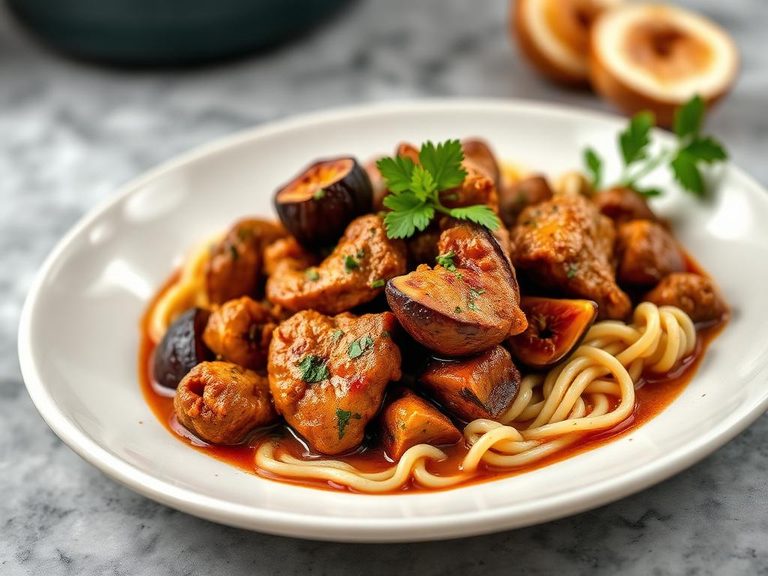
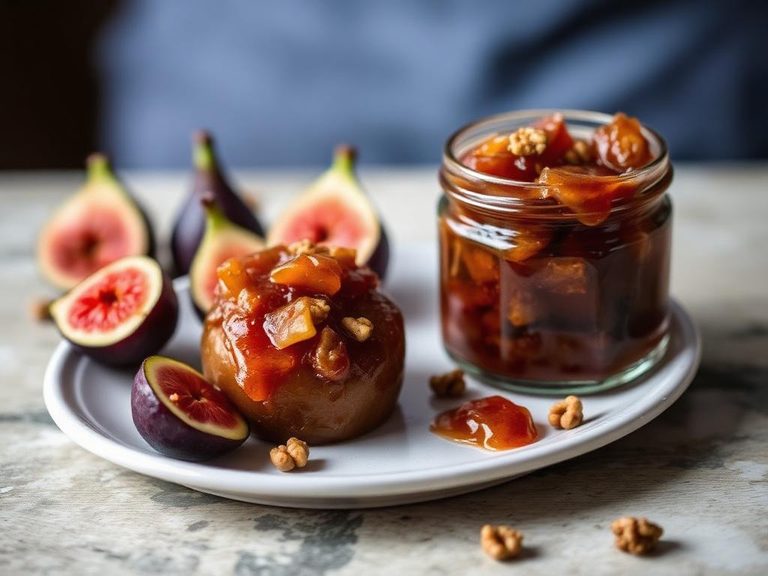

🌍 Where it's eaten
💡 Did you know?
The common fig is one of the first plants cultivated by humans, with fossilized figs dating back to 9400–9200 BC found in the Jordan Valley.
Full nutrition (USDA data · scales with serving)
| Water | 81.3 g |
| Energy | 69.0 kcal |
| Energy | 289 kj |
| Protein | 0.39 g |
| Total lipid (fat) | 0.10 g |
| Ash | 0.30 g |
| Carbohydrate, by difference | 17.9 g |
| Fiber, total dietary | 1.8 g |
| Total Sugars | 16.1 g |
| Calcium, Ca | 27.0 mg |
| Iron, Fe | 0.29 mg |
| Magnesium, Mg | 10.0 mg |
| Phosphorus, P | 10.0 mg |
| Potassium, K | 102 mg |
| Sodium, Na | 1.0 mg |
| Zinc, Zn | 0.11 mg |
| Copper, Cu | 0.11 mg |
| Manganese, Mn | 0.09 mg |
| Selenium, Se | 0.20 ug |
| Vitamin C, total ascorbic acid | 1.0 mg |
| Thiamin | 0.02 mg |
| Riboflavin | 0.04 mg |
| Niacin | 0.44 mg |
| Pantothenic acid | 0.07 mg |
| Vitamin B-6 | 0.07 mg |
| Folate, total | 2.0 ug |
| Folic acid | 0.00 ug |
| Folate, food | 2.0 ug |
| Folate, DFE | 2.0 ug |
| Choline, total | 4.2 mg |
| Vitamin B-12 | 0.00 ug |
| Vitamin B-12, added | 0.00 ug |
| Vitamin A, RAE | 2.0 ug |
| Retinol | 0.00 ug |
| Carotene, beta | 22.0 ug |
| Carotene, alpha | 0.00 ug |
| Cryptoxanthin, beta | 0.00 ug |
| Vitamin A, IU | 37.0 iu |
| Lycopene | 0.00 ug |
| Lutein + zeaxanthin | 8.0 ug |
| Vitamin E (alpha-tocopherol) | 0.10 mg |
| Vitamin E, added | 0.00 mg |
| Vitamin D (D2 + D3), International Units | 0.00 iu |
| Vitamin D (D2 + D3) | 0.00 ug |
| Vitamin K (phylloquinone) | 4.2 ug |
| Alcohol, ethyl | 0.00 g |
| Caffeine | 0.00 mg |
| Theobromine | 0.00 mg |
Fat & fatty acid profile (per 100g)
| Fatty acids, total saturated | 0.02 g |
| SFA 4:0 | 0.00 g |
| SFA 6:0 | 0.00 g |
| SFA 8:0 | 0.00 g |
| SFA 10:0 | 0.00 g |
| SFA 12:0 | 0.00 g |
| SFA 14:0 | 0.00 g |
| SFA 16:0 | 0.01 g |
| SFA 18:0 | 0.00 g |
| Fatty acids, total monounsaturated | 0.02 g |
| MUFA 16:1 | 0.00 g |
| MUFA 18:1 | 0.02 g |
| MUFA 20:1 | 0.00 g |
| MUFA 22:1 | 0.00 g |
| Fatty acids, total polyunsaturated | 0.05 g |
| PUFA 18:2 | 0.05 g |
| PUFA 18:3 | 0.00 g |
| PUFA 18:4 | 0.00 g |
| PUFA 20:4 | 0.00 g |
| PUFA 20:5 n-3 (EPA) | 0.00 g |
| PUFA 22:5 n-3 (DPA) | 0.00 g |
| PUFA 22:6 n-3 (DHA) | 0.00 g |
| Fatty acids, total trans | 0.00 g |
| Cholesterol | 0.00 mg |
Amino acid profile (per 100g)
| Tryptophan | 0.00 g |
| Threonine | 0.01 g |
| Isoleucine | 0.01 g |
| Leucine | 0.02 g |
| Lysine | 0.02 g |
| Methionine | 0.00 g |
| Cystine | 0.01 g |
| Phenylalanine | 0.01 g |
| Tyrosine | 0.02 g |
| Valine | 0.01 g |
| Arginine | 0.01 g |
| Histidine | 0.01 g |
| Alanine | 0.02 g |
| Aspartic acid | 0.09 g |
| Glutamic acid | 0.04 g |
| Glycine | 0.01 g |
| Proline | 0.03 g |
| Serine | 0.02 g |
FAQ
What's the difference between canned figs in light syrup and heavy syrup?
Light syrup has a lower sugar concentration (about 18-20% sugar) compared to heavy syrup (about 40-50% sugar). Canned figs in light syrup will be less sweet and have fewer calories per serving than those packed in heavy syrup.
Can I use the syrup from canned figs in other recipes?
Absolutely. The fig-infused syrup is delicious as a sweetener for cocktails, a glaze for ham or roasted vegetables, a drizzle over pancakes or ice cream, or as a base for a simple fruit sauce.
How long do canned figs last after opening?
Once opened, transfer the figs and syrup to an airtight container and refrigerate. They will keep well for 5 to 7 days.
Nutrient density (calculated · NRF9.3)
Nutrient Rich Foods index: beneficial nutrients (protein, fiber, vitamins, minerals) minus saturated fat, added sugar & sodium, per 100 kcal.
NRF9.3 index — Fulgoni, Keast & Drewnowski, 2009. Computed from USDA nutrients.
Weight-loss friendliness (composite index)
Energy density 0.69 kcal/g · 2% calories from protein · 1.8 g fiber · 16.1 g sugar per 100 g.
Composite of energy density (Rolls et al., 1999), protein & fiber satiety, minus sugar. A calculated heuristic — ranks satiety-per-calorie, not a clinical measure.
Dietary load (calculated from USDA values)
Potential renal acid load. Positive = acid-forming, negative = alkaline-forming.
Sodium-to-potassium ratio: 0.01 (lower is better — aim for ≤ 1)
Sodium:potassium per WHO potassium guidance. Computed from USDA nutrients.