

Emu, top loin, cooked, broiled
Whole food · Poultry Products

Photo: Wikipedia
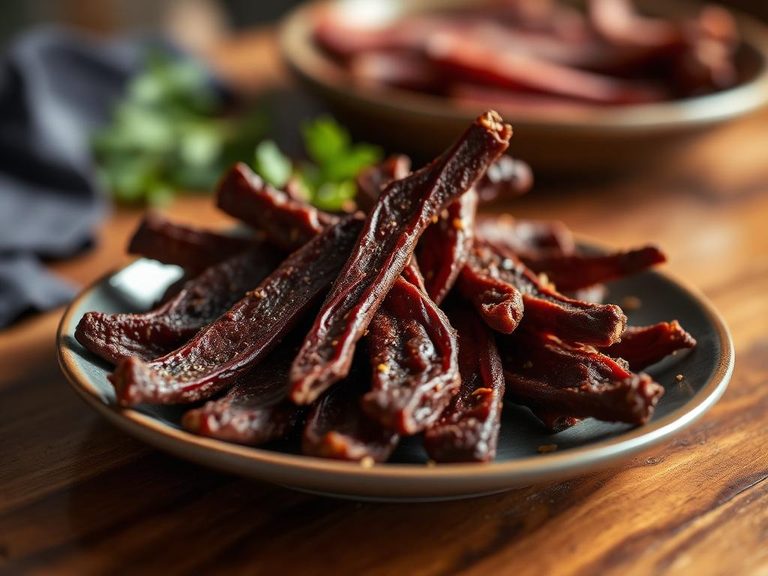
Emu top loin is a lean, deep-red game meat with a rich, beef-like flavor and a firm, fine-grained texture. When broiled, it develops a savory crust while remaining tender and juicy inside. It is exceptionally high in protein and very low in fat, making it a powerhouse for muscle-building diets.
Calorie split: 80% protein · 0% carbs · 20% fat
↓ Full nutrition💚 Why it's loved
People love emu for its deep, beefy flavor that's slightly sweeter and less gamey than kangaroo, with a satisfying, meaty chew. It's prized for its versatility—it can be grilled, stir-fried, or slow-cooked—and its ability to absorb marinades beautifully.
⚠️ Watch-outs & how to enjoy it better
The meat can become tough and dry if overcooked due to its low fat content, which can be a challenge for inexperienced cooks. To counteract this, use a meat thermometer to cook to medium-rare (135°F/57°C) and let it rest for 5-10 minutes before slicing against the grain.
Key benefits
- Extremely high in protein (29g per 100g)
- Very low in fat (3.13g per 100g)
- Zero carbohydrates or sugars
- Rich in iron and B vitamins
🍽️ Popular dishes
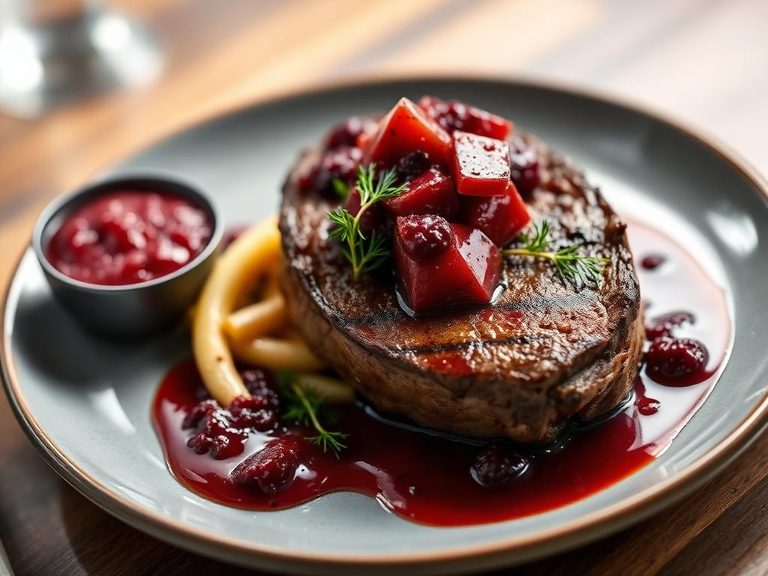
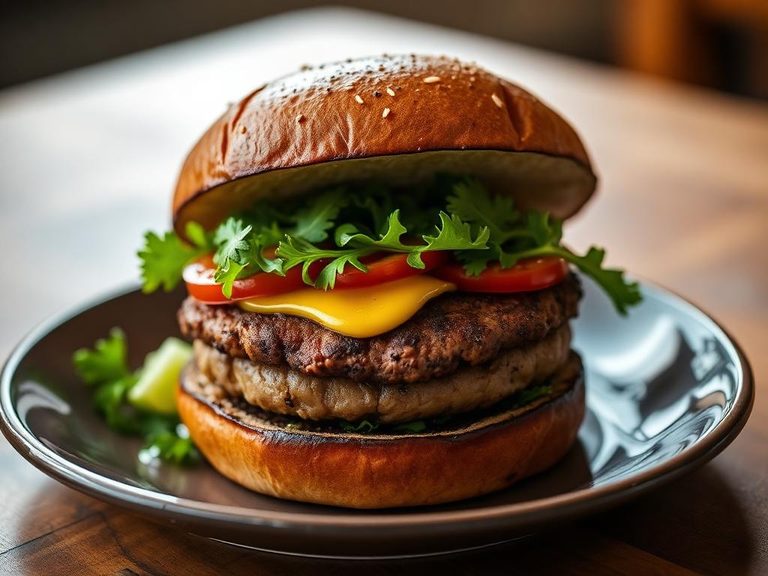
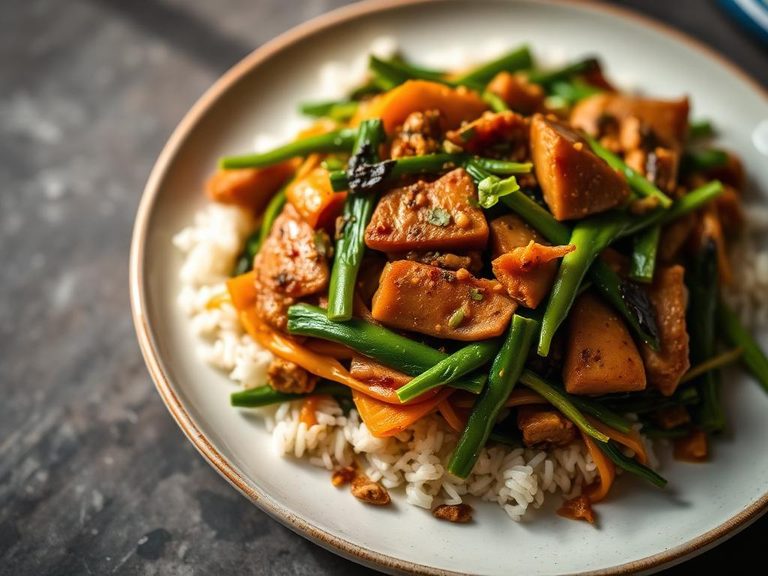
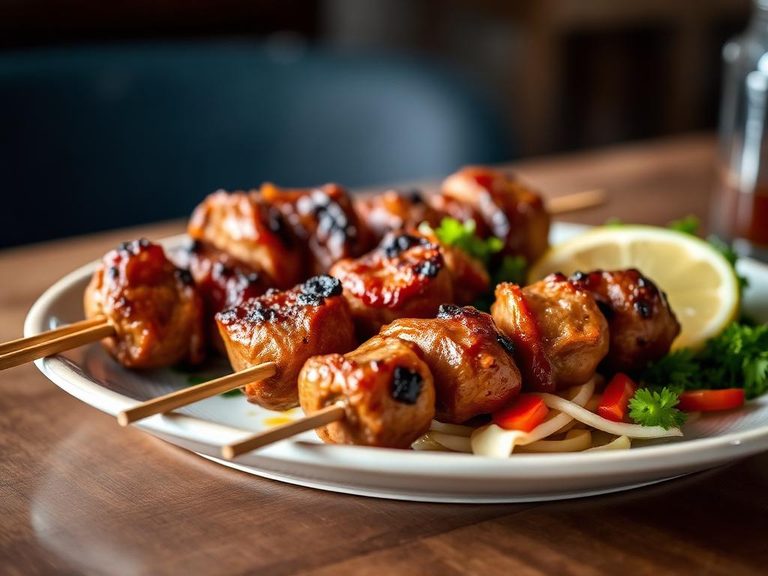
🌍 Where it's eaten
💡 Did you know?
Emu meat is so lean that it's often compared to ostrich in texture, but it has a distinct, slightly sweet flavor that sets it apart from other game meats.
Full nutrition (USDA data · scales with serving)
| Water | 67.4 g |
| Energy | 152 kcal |
| Energy | 638 kj |
| Protein | 29.1 g |
| Total lipid (fat) | 3.1 g |
| Ash | 1.3 g |
| Carbohydrate, by difference | 0.00 g |
| Fiber, total dietary | 0.00 g |
| Total Sugars | 0.00 g |
| Calcium, Ca | 9.0 mg |
| Iron, Fe | 5.1 mg |
| Magnesium, Mg | 30.0 mg |
| Phosphorus, P | 274 mg |
| Potassium, K | 374 mg |
| Sodium, Na | 58.0 mg |
| Zinc, Zn | 3.4 mg |
| Copper, Cu | 0.28 mg |
| Manganese, Mn | 0.03 mg |
| Selenium, Se | 43.5 ug |
| Vitamin C, total ascorbic acid | 0.00 mg |
| Thiamin | 0.33 mg |
| Riboflavin | 0.56 mg |
| Niacin | 9.1 mg |
| Pantothenic acid | 3.1 mg |
| Vitamin B-6 | 0.85 mg |
| Folate, total | 9.0 ug |
| Folic acid | 0.00 ug |
| Folate, food | 9.0 ug |
| Folate, DFE | 9.0 ug |
| Vitamin B-12 | 8.7 ug |
| Vitamin A, RAE | 0.00 ug |
| Retinol | 0.00 ug |
| Carotene, beta | 0.00 ug |
| Carotene, alpha | 0.00 ug |
| Cryptoxanthin, beta | 0.00 ug |
| Vitamin A, IU | 0.00 iu |
| Lycopene | 0.00 ug |
| Lutein + zeaxanthin | 0.00 ug |
| Vitamin E (alpha-tocopherol) | 0.23 mg |
| Alcohol, ethyl | 0.00 g |
| Caffeine | 0.00 mg |
| Theobromine | 0.00 mg |
Fat & fatty acid profile (per 100g)
| Fatty acids, total saturated | 0.79 g |
| SFA 8:0 | 0.00 g |
| SFA 10:0 | 0.00 g |
| SFA 12:0 | 0.00 g |
| SFA 14:0 | 0.01 g |
| SFA 15:0 | 0.00 g |
| SFA 16:0 | 0.51 g |
| SFA 17:0 | 0.00 g |
| SFA 18:0 | 0.27 g |
| SFA 20:0 | 0.00 g |
| SFA 22:0 | 0.00 g |
| Fatty acids, total monounsaturated | 1.2 g |
| MUFA 14:1 | 0.00 g |
| MUFA 15:1 | 0.00 g |
| MUFA 16:1 | 0.10 g |
| MUFA 17:1 | 0.00 g |
| MUFA 18:1 | 1.1 g |
| MUFA 20:1 | 0.01 g |
| Fatty acids, total polyunsaturated | 0.43 g |
| PUFA 18:2 | 0.32 g |
| PUFA 18:3 | 0.02 g |
| PUFA 18:3 n-6 c,c,c | 0.00 g |
| PUFA 20:2 n-6 c,c | 0.01 g |
| PUFA 20:3 | 0.00 g |
| PUFA 20:4 | 0.09 g |
| Cholesterol | 88.0 mg |
Amino acid profile (per 100g)
| Tryptophan | 0.19 g |
| Threonine | 0.83 g |
| Isoleucine | 0.94 g |
| Leucine | 1.6 g |
| Lysine | 1.7 g |
| Methionine | 0.55 g |
| Cystine | 0.21 g |
| Phenylalanine | 0.83 g |
| Tyrosine | 0.62 g |
| Valine | 0.97 g |
| Arginine | 1.3 g |
| Histidine | 0.64 g |
| Alanine | 1.1 g |
| Aspartic acid | 2.5 g |
| Glutamic acid | 2.8 g |
| Glycine | 0.92 g |
| Proline | 1.2 g |
| Serine | 0.69 g |
| Hydroxyproline | 0.19 g |
FAQ
What does emu meat taste like?
Emu meat has a rich, beef-like flavor that is slightly sweeter and less gamey than kangaroo. It has a firm, fine-grained texture that is tender when cooked properly.
How do I cook emu meat to keep it tender?
Cook emu to medium-rare (135°F/57°C) and let it rest for 5-10 minutes before slicing. Because it's very low in fat, overcooking can make it tough and dry.
Is emu meat healthy?
Yes, emu meat is very healthy. It's high in protein, low in fat, and contains no carbs or sugars. It's also a good source of iron and B vitamins.
Nutrient density (calculated · NRF9.3)
Nutrient Rich Foods index: beneficial nutrients (protein, fiber, vitamins, minerals) minus saturated fat, added sugar & sodium, per 100 kcal.
NRF9.3 index — Fulgoni, Keast & Drewnowski, 2009. Computed from USDA nutrients.
Weight-loss friendliness (composite index)
Energy density 1.52 kcal/g · 77% calories from protein · 0.0 g fiber · 0.0 g sugar per 100 g.
Composite of energy density (Rolls et al., 1999), protein & fiber satiety, minus sugar. A calculated heuristic — ranks satiety-per-calorie, not a clinical measure.
Dietary load (calculated from USDA values)
Potential renal acid load. Positive = acid-forming, negative = alkaline-forming.
Sodium-to-potassium ratio: 0.16 (lower is better — aim for ≤ 1)
Sodium:potassium per WHO potassium guidance. Computed from USDA nutrients.