

Cowpeas, common (blackeyes, crowder, southern), mature seeds, raw
Whole food · Legumes and Legume Products

Photo: Wikipedia
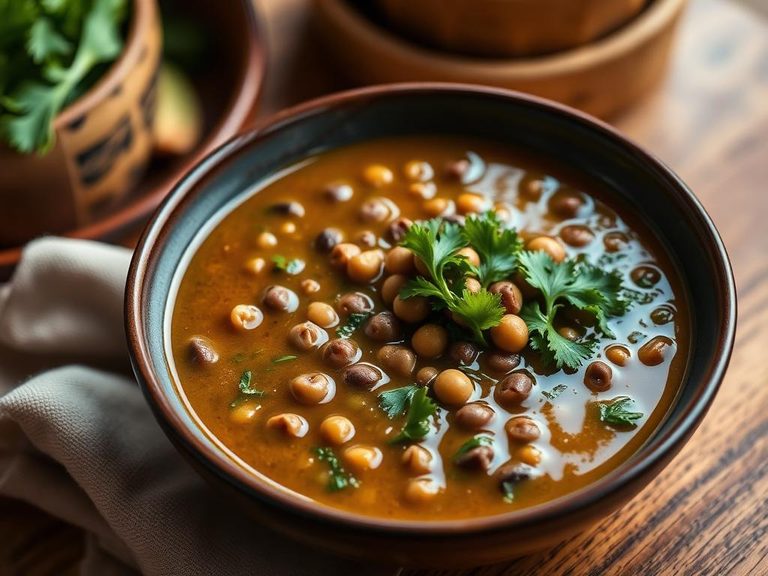
Cowpeas, commonly known as black-eyed peas, are creamy, earthy legumes with a distinctive 'eye' that soften into a velvety texture when cooked. They are a nutritional powerhouse, packing a substantial 23.52g of protein and 10.6g of fiber per 100g, making them a staple for plant-based diets. Their mild, slightly nutty flavor makes them incredibly versatile, absorbing spices and seasonings beautifully.
Calorie split: 27% protein · 69% carbs · 3% fat
↓ Full nutrition💚 Why it's loved
People love cowpeas for their ability to absorb rich, savory flavors in stews and soups, and for their cultural significance in dishes like Hoppin' John, symbolizing good luck. Their creamy texture and mild, nutty taste make them a comforting and versatile staple in many cuisines.
⚠️ Watch-outs & how to enjoy it better
Cowpeas contain oligosaccharides, which can cause gas and bloating in some individuals, and their high fiber content may be challenging for those with sensitive digestive systems. To counteract this, soak them thoroughly before cooking, use digestive spices like ginger or cumin, and introduce them gradually into your diet while pairing with other proteins or fats to slow digestion.
Key benefits
- Excellent source of plant-based protein (23.52g per 100g).
- High in dietary fiber (10.6g per 100g) for digestive health.
- Rich in complex carbohydrates for sustained energy.
- Low in fat (1.26g per 100g), supporting heart-healthy diets.
- Good source of essential minerals like iron and folate.
🍽️ Popular dishes
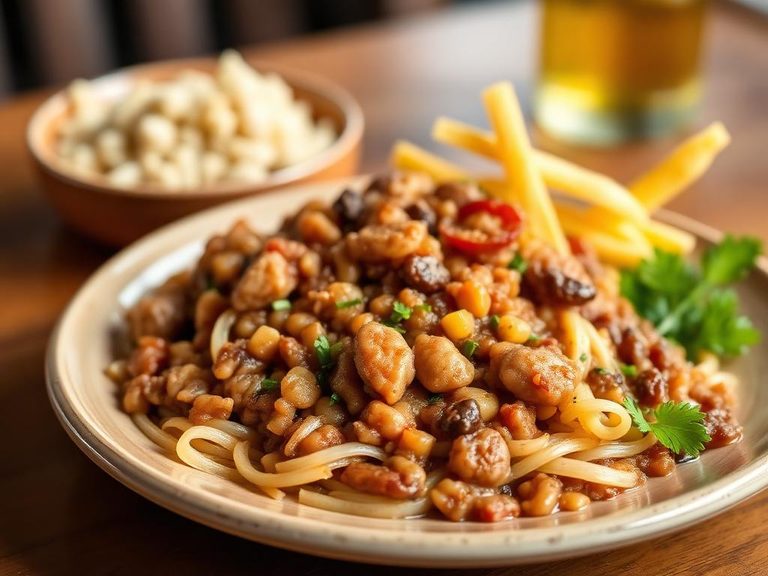
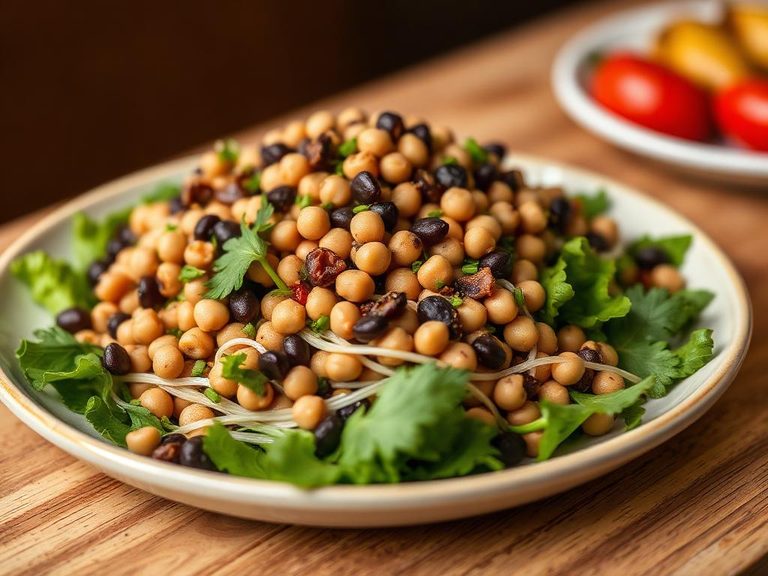
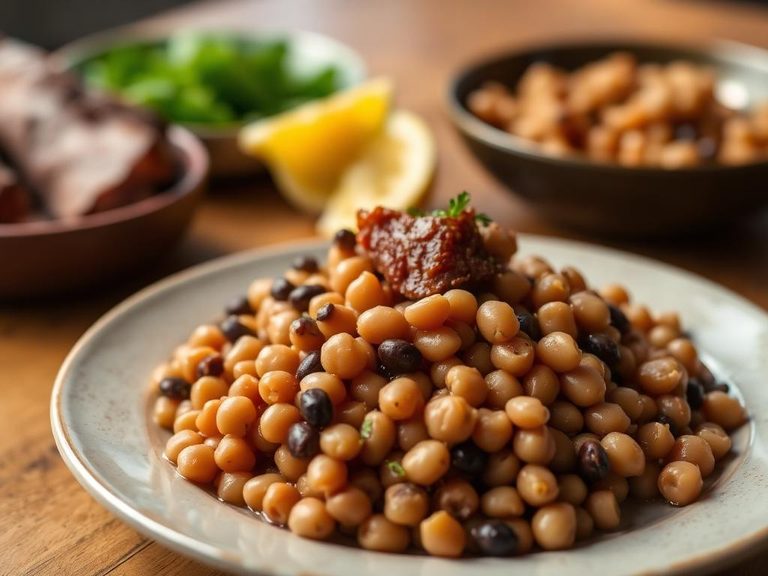
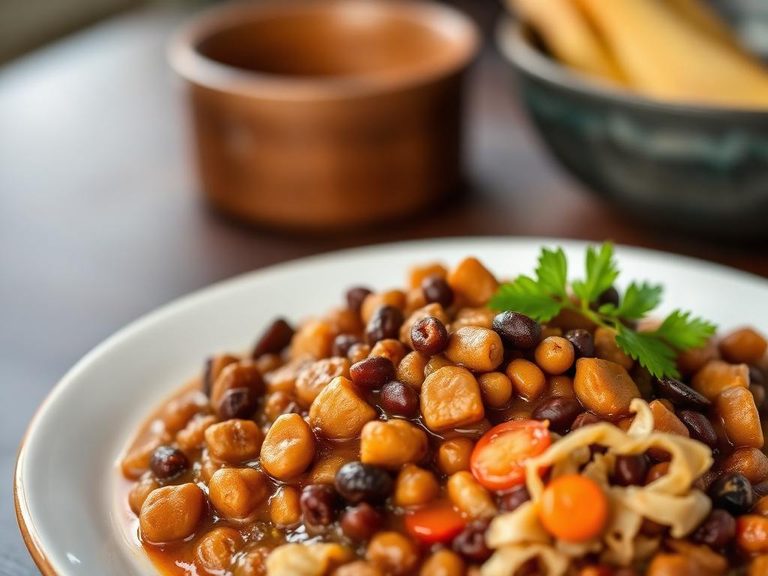

🌍 Where it's eaten
💡 Did you know?
Cowpeas are one of the oldest cultivated legumes, with evidence of their use dating back over 3,000 years in West Africa, and they were a critical food source during the transatlantic slave trade.
Full nutrition (USDA data · scales with serving)
| Water | 11.9 g |
| Energy | 336 kcal |
| Energy | 1406 kj |
| Protein | 23.5 g |
| Total lipid (fat) | 1.3 g |
| Ash | 3.2 g |
| Carbohydrate, by difference | 60.0 g |
| Fiber, total dietary | 10.6 g |
| Total Sugars | 6.9 g |
| Calcium, Ca | 110 mg |
| Iron, Fe | 8.3 mg |
| Magnesium, Mg | 184 mg |
| Phosphorus, P | 424 mg |
| Potassium, K | 1112 mg |
| Sodium, Na | 16.0 mg |
| Zinc, Zn | 3.4 mg |
| Copper, Cu | 0.84 mg |
| Manganese, Mn | 1.5 mg |
| Selenium, Se | 9.0 ug |
| Vitamin C, total ascorbic acid | 1.5 mg |
| Thiamin | 0.85 mg |
| Riboflavin | 0.23 mg |
| Niacin | 2.1 mg |
| Pantothenic acid | 1.5 mg |
| Vitamin B-6 | 0.36 mg |
| Folate, total | 633 ug |
| Folic acid | 0.00 ug |
| Folate, food | 633 ug |
| Folate, DFE | 633 ug |
| Choline, total | 94.7 mg |
| Vitamin B-12 | 0.00 ug |
| Vitamin B-12, added | 0.00 ug |
| Vitamin A, RAE | 3.0 ug |
| Retinol | 0.00 ug |
| Carotene, beta | 30.0 ug |
| Carotene, alpha | 0.00 ug |
| Cryptoxanthin, beta | 0.00 ug |
| Vitamin A, IU | 50.0 iu |
| Lycopene | 0.00 ug |
| Lutein + zeaxanthin | 0.00 ug |
| Vitamin E (alpha-tocopherol) | 0.39 mg |
| Vitamin E, added | 0.00 mg |
| Vitamin D (D2 + D3), International Units | 0.00 iu |
| Vitamin D (D2 + D3) | 0.00 ug |
| Vitamin K (phylloquinone) | 5.0 ug |
| Alcohol, ethyl | 0.00 g |
| Caffeine | 0.00 mg |
| Theobromine | 0.00 mg |
Fat & fatty acid profile (per 100g)
| Fatty acids, total saturated | 0.33 g |
| SFA 4:0 | 0.00 g |
| SFA 6:0 | 0.00 g |
| SFA 8:0 | 0.00 g |
| SFA 10:0 | 0.00 g |
| SFA 12:0 | 0.00 g |
| SFA 14:0 | 0.00 g |
| SFA 16:0 | 0.25 g |
| SFA 18:0 | 0.05 g |
| Fatty acids, total monounsaturated | 0.11 g |
| MUFA 16:1 | 0.00 g |
| MUFA 18:1 | 0.09 g |
| MUFA 20:1 | 0.00 g |
| MUFA 22:1 | 0.01 g |
| Fatty acids, total polyunsaturated | 0.54 g |
| PUFA 18:2 | 0.34 g |
| PUFA 18:3 | 0.20 g |
| PUFA 18:4 | 0.00 g |
| PUFA 20:4 | 0.00 g |
| PUFA 20:5 n-3 (EPA) | 0.00 g |
| PUFA 22:5 n-3 (DPA) | 0.00 g |
| PUFA 22:6 n-3 (DHA) | 0.00 g |
| Fatty acids, total trans | 0.00 g |
| Cholesterol | 0.00 mg |
Amino acid profile (per 100g)
| Tryptophan | 0.29 g |
| Threonine | 0.90 g |
| Isoleucine | 0.96 g |
| Leucine | 1.8 g |
| Lysine | 1.6 g |
| Methionine | 0.34 g |
| Cystine | 0.26 g |
| Phenylalanine | 1.4 g |
| Tyrosine | 0.76 g |
| Valine | 1.1 g |
| Arginine | 1.6 g |
| Histidine | 0.73 g |
| Alanine | 1.1 g |
| Aspartic acid | 2.8 g |
| Glutamic acid | 4.5 g |
| Glycine | 0.97 g |
| Proline | 1.1 g |
| Serine | 1.2 g |
FAQ
Are cowpeas the same as black-eyed peas?
Yes, cowpeas are the family name for several varieties, including black-eyed peas, crowder peas, and southern peas, which are all nutritionally similar.
How should I store dried cowpeas?
Store dried cowpeas in an airtight container in a cool, dark place for up to a year, and always rinse them before cooking to remove any debris.
Can cowpeas be eaten raw?
No, cowpeas must be cooked thoroughly to be digestible and safe to eat, as raw legumes contain compounds that can cause digestive upset.
Nutrient density (calculated · NRF9.3)
Nutrient Rich Foods index: beneficial nutrients (protein, fiber, vitamins, minerals) minus saturated fat, added sugar & sodium, per 100 kcal.
NRF9.3 index — Fulgoni, Keast & Drewnowski, 2009. Computed from USDA nutrients.
Weight-loss friendliness (composite index)
Energy density 3.36 kcal/g · 28% calories from protein · 10.6 g fiber · 6.9 g sugar per 100 g.
Composite of energy density (Rolls et al., 1999), protein & fiber satiety, minus sugar. A calculated heuristic — ranks satiety-per-calorie, not a clinical measure.
Dietary load (calculated from USDA values)
Potential renal acid load. Positive = acid-forming, negative = alkaline-forming.
Sodium-to-potassium ratio: 0.01 (lower is better — aim for ≤ 1)
Sodium:potassium per WHO potassium guidance. Computed from USDA nutrients.