

Cowpeas, common (blackeyes, crowder, southern), mature seeds, cooked, boiled, without salt
Whole food · Legumes and Legume Products

Photo: Wikipedia
Cowpeas, commonly known as black-eyed peas, are creamy, earthy legumes with a mild, slightly nutty flavor and a soft, starchy texture when boiled. They are a nutritional powerhouse, offering a solid 7.73g of protein and an impressive 6.5g of fiber per 100g, making them a satisfying, low-fat staple. Their distinctive black "eye" on the cream-colored seed makes them instantly recognizable.
Calorie split: 26% protein · 70% carbs · 4% fat
↓ Full nutrition💚 Why it's loved
People love them for their hearty, comforting texture and ability to absorb savory flavors in stews and soups. They are a cultural cornerstone in many cuisines, symbolizing good luck and prosperity, especially when eaten on New Year's Day.
⚠️ Watch-outs & how to enjoy it better
Like many legumes, they can cause gas or bloating in some individuals, especially if not accustomed to high-fiber foods. To counteract this, introduce them gradually into your diet, ensure they are thoroughly cooked, and consider soaking dried beans overnight. Their mild flavor can also be bland if under-seasoned.
Key benefits
- Excellent source of plant-based protein for muscle maintenance.
- High in dietary fiber to support digestive health and promote fullness.
- Naturally low in fat and a good source of complex carbohydrates.
- Contains important minerals like folate, iron, and manganese.
🍽️ Popular dishes
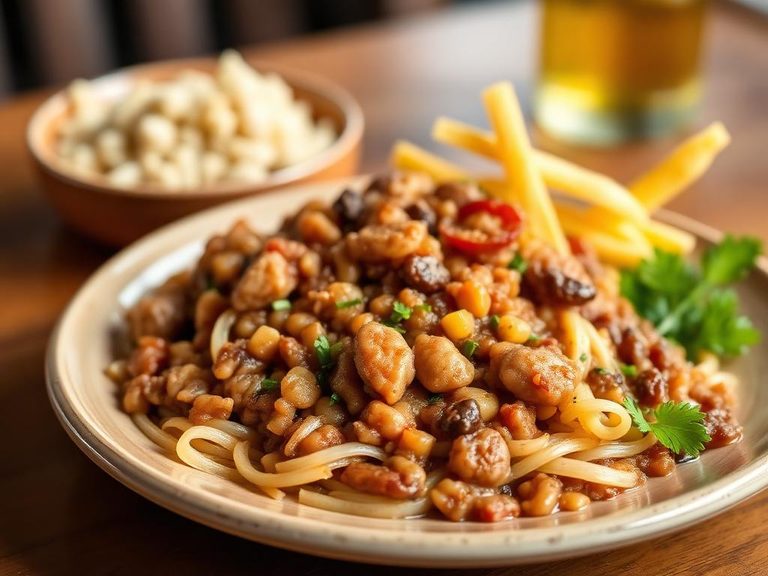

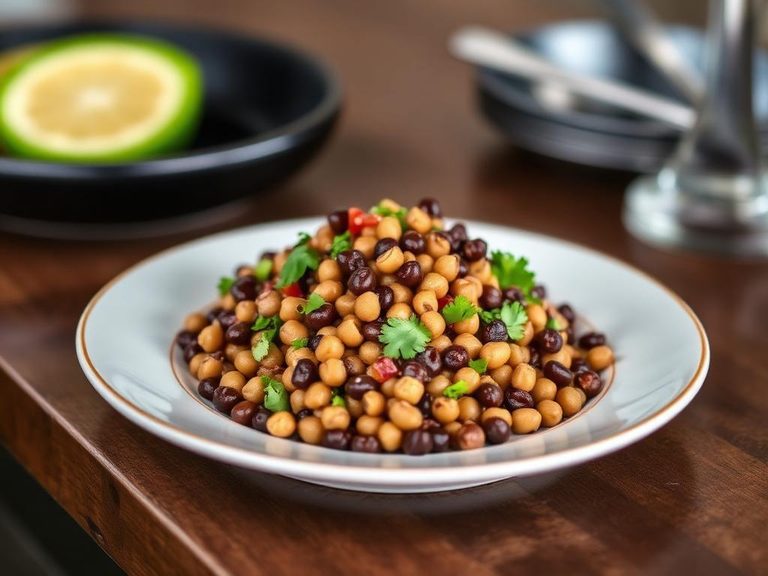


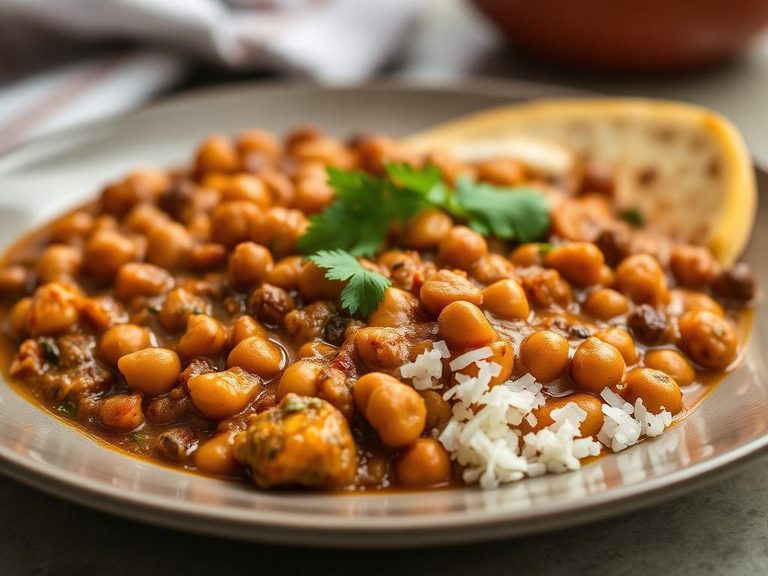
🌍 Where it's eaten
💡 Did you know?
The tradition of eating black-eyed peas on New Year's Day for good luck is particularly strong in the American South, where they are often cooked with a coin hidden in the pot for extra fortune.
Full nutrition (USDA data · scales with serving)
| Water | 70.0 g |
| Energy | 116 kcal |
| Energy | 484 kj |
| Protein | 7.7 g |
| Total lipid (fat) | 0.53 g |
| Ash | 0.94 g |
| Carbohydrate, by difference | 20.8 g |
| Fiber, total dietary | 6.5 g |
| Total Sugars | 3.3 g |
| Calcium, Ca | 24.0 mg |
| Iron, Fe | 2.5 mg |
| Magnesium, Mg | 53.0 mg |
| Phosphorus, P | 156 mg |
| Potassium, K | 278 mg |
| Sodium, Na | 4.0 mg |
| Zinc, Zn | 1.3 mg |
| Copper, Cu | 0.27 mg |
| Manganese, Mn | 0.47 mg |
| Selenium, Se | 2.5 ug |
| Vitamin C, total ascorbic acid | 0.40 mg |
| Thiamin | 0.20 mg |
| Riboflavin | 0.06 mg |
| Niacin | 0.49 mg |
| Pantothenic acid | 0.41 mg |
| Vitamin B-6 | 0.10 mg |
| Folate, total | 208 ug |
| Folic acid | 0.00 ug |
| Folate, food | 208 ug |
| Folate, DFE | 208 ug |
| Choline, total | 32.2 mg |
| Vitamin B-12 | 0.00 ug |
| Vitamin B-12, added | 0.00 ug |
| Vitamin A, RAE | 1.0 ug |
| Retinol | 0.00 ug |
| Carotene, beta | 9.0 ug |
| Carotene, alpha | 0.00 ug |
| Cryptoxanthin, beta | 0.00 ug |
| Vitamin A, IU | 15.0 iu |
| Lycopene | 0.00 ug |
| Lutein + zeaxanthin | 0.00 ug |
| Vitamin E (alpha-tocopherol) | 0.28 mg |
| Vitamin E, added | 0.00 mg |
| Vitamin D (D2 + D3), International Units | 0.00 iu |
| Vitamin D (D2 + D3) | 0.00 ug |
| Vitamin K (phylloquinone) | 1.7 ug |
| Alcohol, ethyl | 0.00 g |
| Caffeine | 0.00 mg |
| Theobromine | 0.00 mg |
Fat & fatty acid profile (per 100g)
| Fatty acids, total saturated | 0.14 g |
| SFA 4:0 | 0.00 g |
| SFA 6:0 | 0.00 g |
| SFA 8:0 | 0.00 g |
| SFA 10:0 | 0.00 g |
| SFA 12:0 | 0.00 g |
| SFA 14:0 | 0.00 g |
| SFA 16:0 | 0.11 g |
| SFA 18:0 | 0.02 g |
| Fatty acids, total monounsaturated | 0.04 g |
| MUFA 16:1 | 0.00 g |
| MUFA 18:1 | 0.04 g |
| MUFA 20:1 | 0.00 g |
| MUFA 22:1 | 0.01 g |
| Fatty acids, total polyunsaturated | 0.23 g |
| PUFA 18:2 | 0.14 g |
| PUFA 18:3 | 0.08 g |
| PUFA 18:4 | 0.00 g |
| PUFA 20:4 | 0.00 g |
| PUFA 20:5 n-3 (EPA) | 0.00 g |
| PUFA 22:5 n-3 (DPA) | 0.00 g |
| PUFA 22:6 n-3 (DHA) | 0.00 g |
| Fatty acids, total trans | 0.00 g |
| Cholesterol | 0.00 mg |
Amino acid profile (per 100g)
| Tryptophan | 0.10 g |
| Threonine | 0.29 g |
| Isoleucine | 0.31 g |
| Leucine | 0.59 g |
| Lysine | 0.52 g |
| Methionine | 0.11 g |
| Cystine | 0.09 g |
| Phenylalanine | 0.45 g |
| Tyrosine | 0.25 g |
| Valine | 0.37 g |
| Arginine | 0.54 g |
| Histidine | 0.24 g |
| Alanine | 0.35 g |
| Aspartic acid | 0.93 g |
| Glutamic acid | 1.5 g |
| Glycine | 0.32 g |
| Proline | 0.35 g |
| Serine | 0.39 g |
FAQ
What's the difference between black-eyed peas and regular peas?
They are not true peas (which are spherical and sweet) but are a type of bean or legume. They have a distinct bean-like shape, a creamy texture, and a savory, earthy flavor.
Are canned black-eyed peas as nutritious as dried?
Canned versions are convenient and retain most nutrients, but can be higher in sodium. Look for low-sodium or no-salt-added varieties, and rinse them well before use to reduce sodium content by up to 40%.
How do I store cooked black-eyed peas?
Store cooked, cooled peas in an airtight container in the refrigerator for up to 4 days, or freeze them for up to 6 months for longer storage.
Nutrient density (calculated · NRF9.3)
Nutrient Rich Foods index: beneficial nutrients (protein, fiber, vitamins, minerals) minus saturated fat, added sugar & sodium, per 100 kcal.
NRF9.3 index — Fulgoni, Keast & Drewnowski, 2009. Computed from USDA nutrients.
Weight-loss friendliness (composite index)
Energy density 1.16 kcal/g · 27% calories from protein · 6.5 g fiber · 3.3 g sugar per 100 g.
Composite of energy density (Rolls et al., 1999), protein & fiber satiety, minus sugar. A calculated heuristic — ranks satiety-per-calorie, not a clinical measure.
Dietary load (calculated from USDA values)
Potential renal acid load. Positive = acid-forming, negative = alkaline-forming.
Sodium-to-potassium ratio: 0.01 (lower is better — aim for ≤ 1)
Sodium:potassium per WHO potassium guidance. Computed from USDA nutrients.