

Couscous, cooked
Whole food · Cereal Grains and Pasta
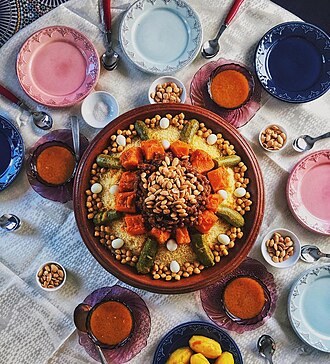
Photo: Wikipedia
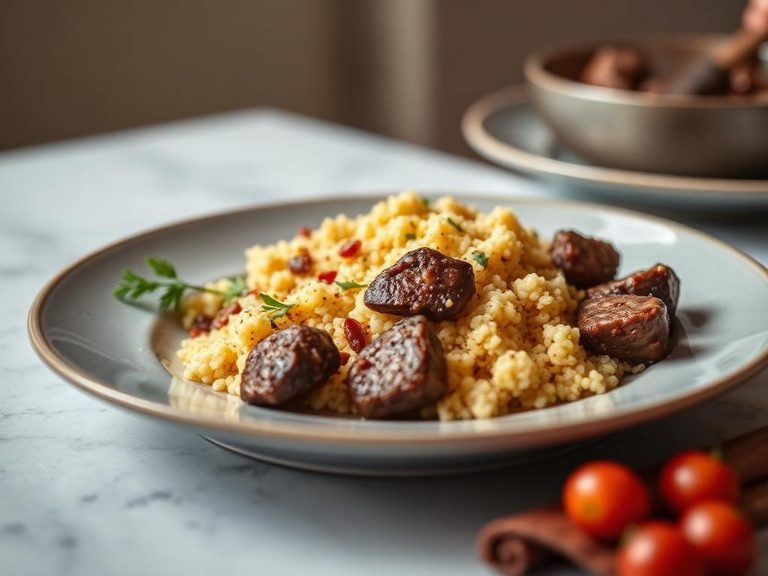
Couscous is a tiny, granular pasta made from semolina wheat, prized for its light, fluffy texture that absorbs flavors beautifully. It cooks in minutes, making it a staple for quick, satisfying meals. Nutritionally, it's a lean, low-fat carbohydrate source, providing a moderate protein boost.
Calorie split: 14% protein · 85% carbs · 1% fat
↓ Full nutrition💚 Why it's loved
People adore couscous for its incredible versatility—it acts as a neutral canvas for bold spices, hearty stews, and fresh salads. It's deeply woven into North African culture, where it's traditionally steamed and served communally, symbolizing hospitality.
⚠️ Watch-outs & how to enjoy it better
Couscous is primarily refined carbohydrates, which can cause blood sugar spikes if eaten alone. It's also a wheat product, making it unsuitable for those with celiac disease or gluten intolerance. To counteract this, always pair it with protein (like chickpeas or lamb) and healthy fats (like olive oil or nuts), and consider choosing whole-wheat couscous for a lower glycemic impact.
Key benefits
- Quick-cooking and convenient staple
- Good source of plant-based protein
- Low in fat and cholesterol-free
- Provides sustained energy from complex carbs
- Contains dietary fiber for digestive health
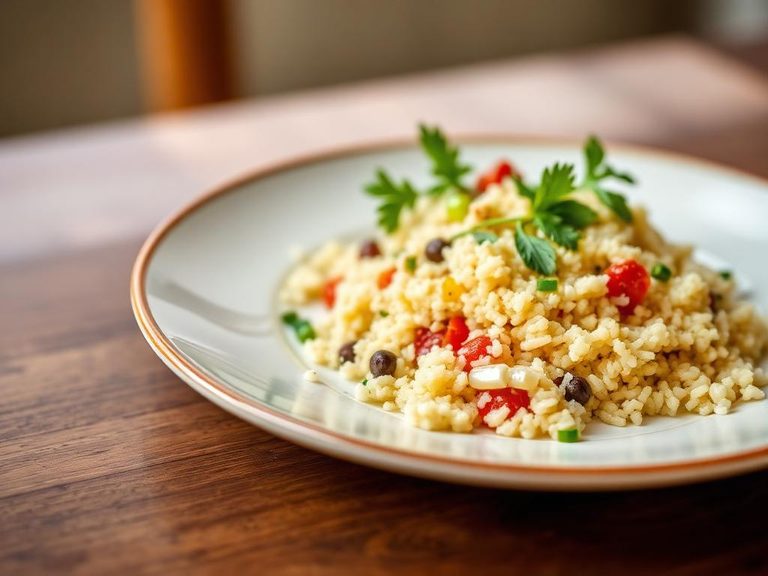
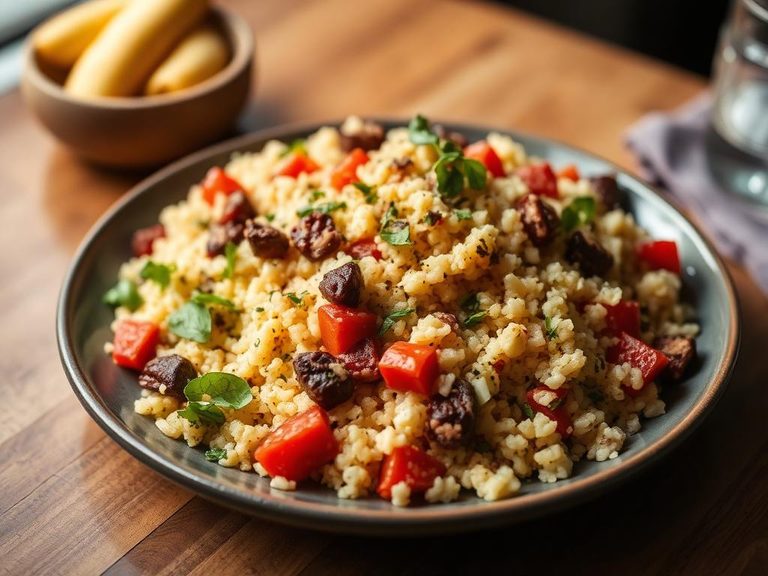
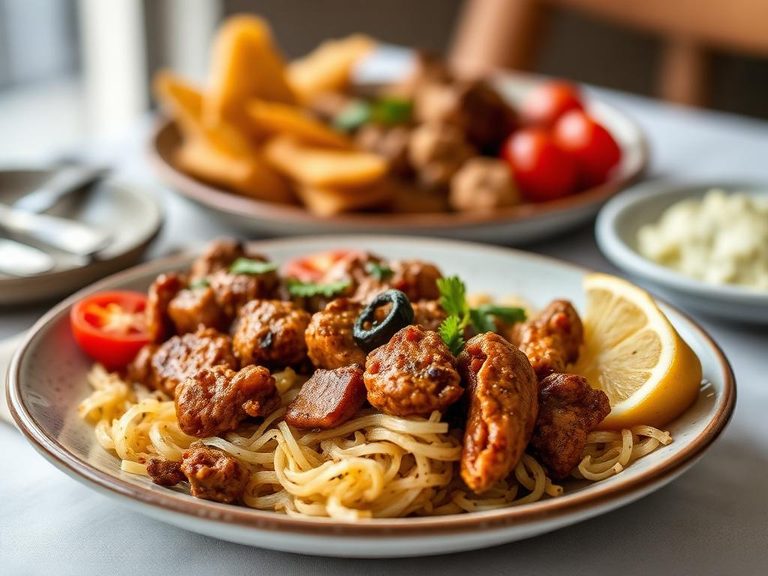
🍽️ Popular dishes

🌍 Where it's eaten
💡 Did you know?
The word 'couscous' comes from the Berber word 'seksu', meaning 'well rolled' or 'rounded', describing how the semolina grains are traditionally hand-rolled.
Full nutrition (USDA data · scales with serving)
| Water | 72.6 g |
| Energy | 112 kcal |
| Energy | 469 kj |
| Protein | 3.8 g |
| Total lipid (fat) | 0.16 g |
| Ash | 0.26 g |
| Carbohydrate, by difference | 23.2 g |
| Fiber, total dietary | 1.4 g |
| Total Sugars | 0.10 g |
| Calcium, Ca | 8.0 mg |
| Iron, Fe | 0.38 mg |
| Magnesium, Mg | 8.0 mg |
| Phosphorus, P | 22.0 mg |
| Potassium, K | 58.0 mg |
| Sodium, Na | 5.0 mg |
| Zinc, Zn | 0.26 mg |
| Copper, Cu | 0.04 mg |
| Manganese, Mn | 0.08 mg |
| Selenium, Se | 27.5 ug |
| Vitamin C, total ascorbic acid | 0.00 mg |
| Thiamin | 0.06 mg |
| Riboflavin | 0.03 mg |
| Niacin | 0.98 mg |
| Pantothenic acid | 0.37 mg |
| Vitamin B-6 | 0.05 mg |
| Folate, total | 15.0 ug |
| Folic acid | 0.00 ug |
| Folate, food | 15.0 ug |
| Folate, DFE | 15.0 ug |
| Choline, total | 3.3 mg |
| Vitamin B-12 | 0.00 ug |
| Vitamin B-12, added | 0.00 ug |
| Vitamin A, RAE | 0.00 ug |
| Retinol | 0.00 ug |
| Carotene, beta | 0.00 ug |
| Carotene, alpha | 0.00 ug |
| Cryptoxanthin, beta | 0.00 ug |
| Vitamin A, IU | 0.00 iu |
| Lycopene | 0.00 ug |
| Lutein + zeaxanthin | 25.0 ug |
| Vitamin E (alpha-tocopherol) | 0.13 mg |
| Vitamin E, added | 0.00 mg |
| Vitamin D (D2 + D3), International Units | 0.00 iu |
| Vitamin D (D2 + D3) | 0.00 ug |
| Vitamin K (phylloquinone) | 0.10 ug |
| Alcohol, ethyl | 0.00 g |
| Caffeine | 0.00 mg |
| Theobromine | 0.00 mg |
Fat & fatty acid profile (per 100g)
| Fatty acids, total saturated | 0.03 g |
| SFA 4:0 | 0.00 g |
| SFA 6:0 | 0.00 g |
| SFA 8:0 | 0.00 g |
| SFA 10:0 | 0.00 g |
| SFA 12:0 | 0.00 g |
| SFA 14:0 | 0.00 g |
| SFA 16:0 | 0.03 g |
| SFA 18:0 | 0.00 g |
| Fatty acids, total monounsaturated | 0.02 g |
| MUFA 16:1 | 0.00 g |
| MUFA 18:1 | 0.02 g |
| MUFA 20:1 | 0.00 g |
| MUFA 22:1 | 0.00 g |
| Fatty acids, total polyunsaturated | 0.06 g |
| PUFA 18:2 | 0.06 g |
| PUFA 18:3 | 0.00 g |
| PUFA 18:4 | 0.00 g |
| PUFA 20:4 | 0.00 g |
| PUFA 20:5 n-3 (EPA) | 0.00 g |
| PUFA 22:5 n-3 (DPA) | 0.00 g |
| PUFA 22:6 n-3 (DHA) | 0.00 g |
| Cholesterol | 0.00 mg |
Amino acid profile (per 100g)
| Tryptophan | 0.05 g |
| Threonine | 0.10 g |
| Isoleucine | 0.15 g |
| Leucine | 0.26 g |
| Lysine | 0.07 g |
| Methionine | 0.06 g |
| Cystine | 0.11 g |
| Phenylalanine | 0.18 g |
| Tyrosine | 0.10 g |
| Valine | 0.16 g |
| Arginine | 0.14 g |
| Histidine | 0.08 g |
| Alanine | 0.11 g |
| Aspartic acid | 0.15 g |
| Glutamic acid | 1.4 g |
| Glycine | 0.12 g |
| Proline | 0.42 g |
| Serine | 0.18 g |
FAQ
Is couscous the same as quinoa?
No. Couscous is a type of pasta made from wheat semolina, while quinoa is a seed from a plant related to spinach. They have different textures, flavors, and nutritional profiles.
How do you make perfect fluffy couscous?
The key is the ratio and steaming. Use a 1:1.5 ratio of couscous to boiling water or broth. Pour the liquid over the couscous, cover tightly, and let it steam off the heat for 5-10 minutes. Fluff with a fork before serving.
Is couscous gluten-free?
Traditional couscous is made from wheat and contains gluten. For a gluten-free alternative, look for couscous made from corn, millet, or quinoa, though the texture will differ.
Nutrient density (calculated · NRF9.3)
Nutrient Rich Foods index: beneficial nutrients (protein, fiber, vitamins, minerals) minus saturated fat, added sugar & sodium, per 100 kcal.
NRF9.3 index — Fulgoni, Keast & Drewnowski, 2009. Computed from USDA nutrients.
Weight-loss friendliness (composite index)
Energy density 1.12 kcal/g · 14% calories from protein · 1.4 g fiber · 0.1 g sugar per 100 g.
Composite of energy density (Rolls et al., 1999), protein & fiber satiety, minus sugar. A calculated heuristic — ranks satiety-per-calorie, not a clinical measure.
Dietary load (calculated from USDA values)
Potential renal acid load. Positive = acid-forming, negative = alkaline-forming.
Sodium-to-potassium ratio: 0.09 (lower is better — aim for ≤ 1)
Sodium:potassium per WHO potassium guidance. Computed from USDA nutrients.