

Cookies, sugar wafer, with creme filling, sugar free
Whole food · Baked Products
A crisp, layered sugar-free wafer cookie sandwiched with a sweet, creamy filling, offering a satisfying crunch without the sugar. It delivers a classic cookie experience with a significant fiber boost (14.3g per 100g) and zero added sugar. The texture is light and airy, with the creme providing a smooth contrast to the brittle wafer layers.
Calorie split: 3% protein · 49% carbs · 48% fat
↓ Full nutrition💚 Why it's loved
People love it for delivering the nostalgic, comforting experience of a classic cream-filled wafer without the sugar, making it a guilt-free indulgence. Its portable, mess-free format and satisfying texture make it a popular choice for a quick snack or coffee companion.
⚠️ Watch-outs & how to enjoy it better
Despite being sugar-free, it is still calorie-dense (531 kcal per 100g) and high in fat (28.57g), so overconsumption can hinder weight management. The refined carbohydrates may still affect blood sugar in sensitive individuals. Pair it with a source of protein (like Greek yogurt) or healthy fat (like a handful of nuts) to improve satiety and blunt any glycemic response.
Key benefits
- Zero added sugar content.
- High in dietary fiber (14.3g per 100g).
- Provides a sweet treat without sugar spikes.
- Offers a satisfying crunch with a creamy center.
- Suitable for low-sugar or diabetic-friendly diets.
🍽️ Popular dishes
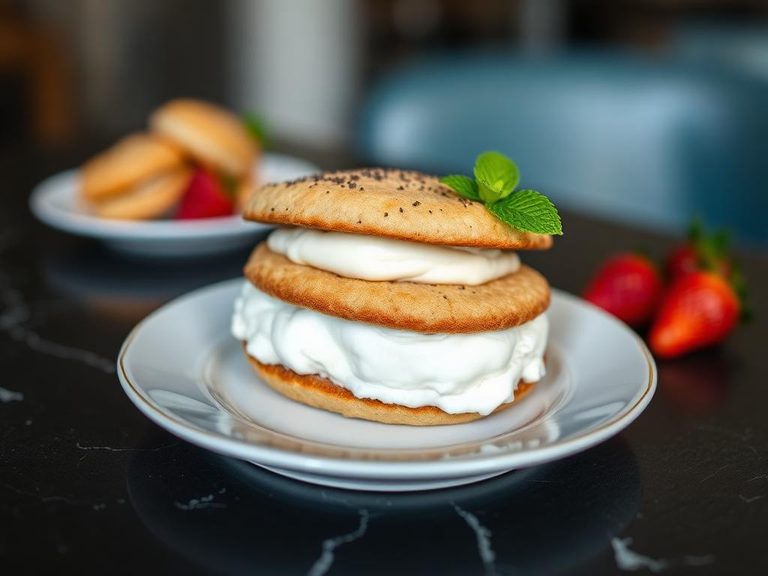
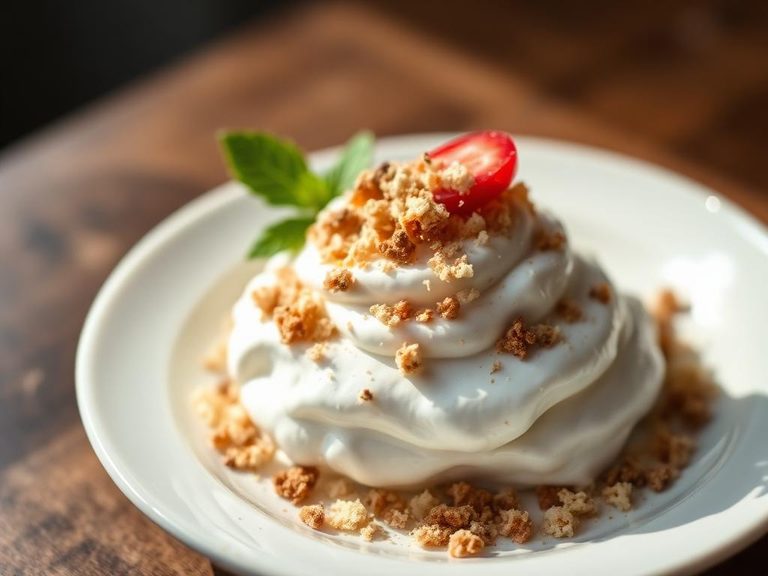
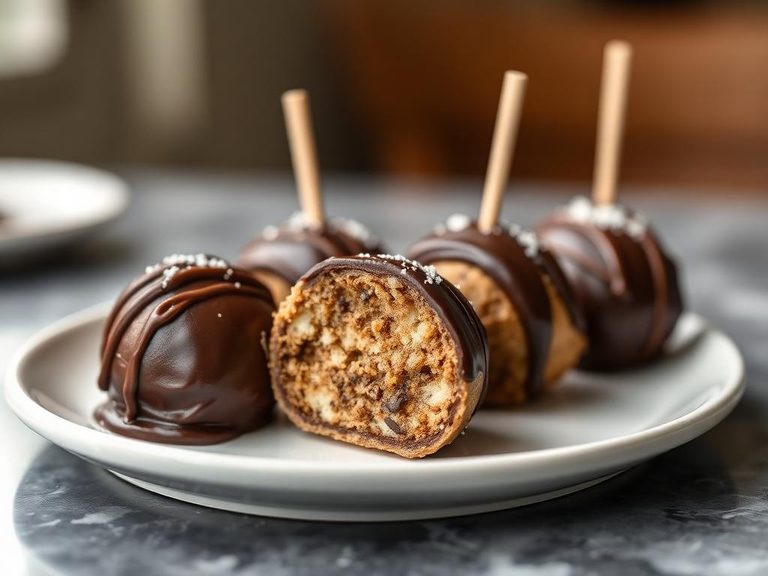
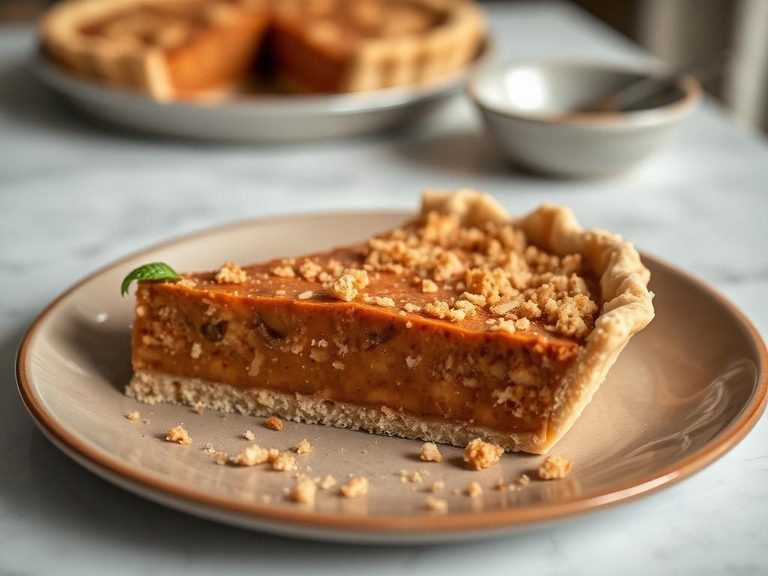
🌍 Where it's eaten
💡 Did you know?
The technology for producing thin, uniform wafer sheets was perfected in the 19th century, and the distinctive grid pattern on a wafer cookie is actually a functional design from the iron molds used to bake them, ensuring even cooking and easy release.
Full nutrition (USDA data · scales with serving)
| Water | 0.70 g |
| Energy | 531 kcal |
| Energy | 2221 kj |
| Protein | 3.6 g |
| Total lipid (fat) | 28.6 g |
| Ash | 0.90 g |
| Carbohydrate, by difference | 66.3 g |
| Fiber, total dietary | 14.3 g |
| Total Sugars | 0.00 g |
| Calcium, Ca | 0.00 mg |
| Iron, Fe | 1.3 mg |
| Magnesium, Mg | 7.0 mg |
| Phosphorus, P | 40.0 mg |
| Potassium, K | 57.0 mg |
| Sodium, Na | 71.0 mg |
| Zinc, Zn | 0.20 mg |
| Copper, Cu | 0.04 mg |
| Manganese, Mn | 0.25 mg |
| Selenium, Se | 6.3 ug |
| Vitamin C, total ascorbic acid | 0.00 mg |
| Thiamin | 0.24 mg |
| Riboflavin | 0.15 mg |
| Niacin | 1.8 mg |
| Pantothenic acid | 0.10 mg |
| Vitamin B-6 | 0.01 mg |
| Folate, total | 42.0 ug |
| Folic acid | 38.0 ug |
| Folate, food | 4.0 ug |
| Folate, DFE | 69.0 ug |
| Choline, total | 1.2 mg |
| Vitamin B-12 | 0.00 ug |
| Vitamin B-12, added | 0.00 ug |
| Vitamin A, RAE | 0.00 ug |
| Retinol | 0.00 ug |
| Carotene, beta | 0.00 ug |
| Carotene, alpha | 0.00 ug |
| Cryptoxanthin, beta | 0.00 ug |
| Vitamin A, IU | 1.0 iu |
| Lycopene | 0.00 ug |
| Lutein + zeaxanthin | 31.0 ug |
| Vitamin E (alpha-tocopherol) | 3.1 mg |
| Vitamin E, added | 0.00 mg |
| Vitamin D (D2 + D3), International Units | 0.00 iu |
| Vitamin D (D2 + D3) | 0.00 ug |
| Vitamin K (phylloquinone) | 2.6 ug |
| Alcohol, ethyl | 0.00 g |
| Caffeine | 0.00 mg |
| Theobromine | 0.00 mg |
Fat & fatty acid profile (per 100g)
| Fatty acids, total saturated | 4.3 g |
| SFA 4:0 | 0.00 g |
| SFA 6:0 | 0.00 g |
| SFA 8:0 | 0.00 g |
| SFA 10:0 | 0.00 g |
| SFA 12:0 | 0.00 g |
| SFA 14:0 | 0.03 g |
| SFA 16:0 | 2.8 g |
| SFA 18:0 | 1.4 g |
| Fatty acids, total monounsaturated | 12.1 g |
| MUFA 16:1 | 0.12 g |
| MUFA 18:1 | 12.0 g |
| MUFA 20:1 | 0.00 g |
| MUFA 22:1 | 0.00 g |
| Fatty acids, total polyunsaturated | 10.7 g |
| PUFA 18:2 | 10.0 g |
| PUFA 18:3 | 0.74 g |
| PUFA 18:4 | 0.00 g |
| PUFA 20:4 | 0.00 g |
| PUFA 20:5 n-3 (EPA) | 0.00 g |
| PUFA 22:5 n-3 (DPA) | 0.00 g |
| PUFA 22:6 n-3 (DHA) | 0.00 g |
| Fatty acids, total trans | 0.00 g |
| Cholesterol | 0.00 mg |
Amino acid profile (per 100g)
| Tryptophan | 0.04 g |
| Threonine | 0.09 g |
| Isoleucine | 0.12 g |
| Leucine | 0.21 g |
| Lysine | 0.11 g |
| Methionine | 0.05 g |
| Cystine | 0.07 g |
| Phenylalanine | 0.14 g |
| Tyrosine | 0.09 g |
| Valine | 0.14 g |
| Arginine | 0.12 g |
| Histidine | 0.06 g |
| Alanine | 0.09 g |
| Aspartic acid | 0.13 g |
| Glutamic acid | 1.0 g |
| Glycine | 0.10 g |
| Proline | 0.34 g |
| Serine | 0.16 g |
FAQ
How does it achieve sweetness without sugar?
It uses sugar alcohols (like maltitol) or high-intensity artificial sweeteners (like sucralose or aspartame) to mimic sugar's sweetness without the calories or glycemic impact.
Is the high fiber content from whole grains?
Likely not. The significant fiber is probably from added sources like polydextrose, inulin, or soluble corn fiber, which are used to boost fiber content and provide bulk in reduced-sugar baked goods.
Can I use this in baking recipes that call for regular wafers?
You can, but be aware that sugar-free products may behave differently when heated. They might not caramelize or brown the same way, and the texture could change. It's best for no-bake recipes like crusts or toppings.
Nutrient density (calculated · NRF9.3)
Nutrient Rich Foods index: beneficial nutrients (protein, fiber, vitamins, minerals) minus saturated fat, added sugar & sodium, per 100 kcal.
NRF9.3 index — Fulgoni, Keast & Drewnowski, 2009. Computed from USDA nutrients.
Weight-loss friendliness (composite index)
Energy density 5.31 kcal/g · 3% calories from protein · 14.3 g fiber · 0.0 g sugar per 100 g.
Composite of energy density (Rolls et al., 1999), protein & fiber satiety, minus sugar. A calculated heuristic — ranks satiety-per-calorie, not a clinical measure.
Dietary load (calculated from USDA values)
Potential renal acid load. Positive = acid-forming, negative = alkaline-forming.
Sodium-to-potassium ratio: 1.25 (lower is better — aim for ≤ 1)
Sodium:potassium per WHO potassium guidance. Computed from USDA nutrients.