

Chickpeas (garbanzo beans, bengal gram), mature seeds, canned, drained, rinsed in tap water
Whole food · Legumes and Legume Products
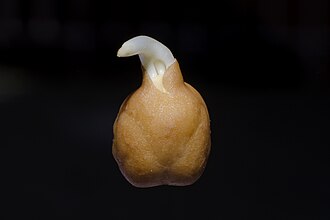
Photo: Wikipedia
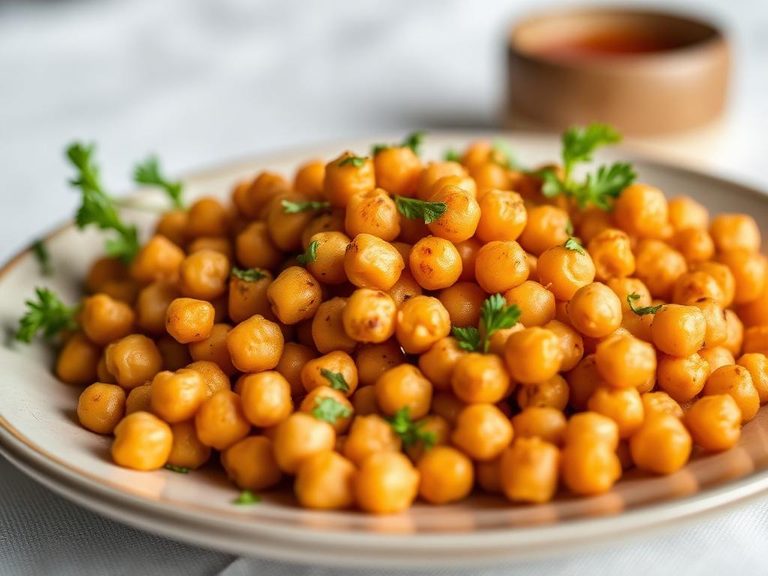
Canned chickpeas are the ultimate pantry hero: creamy, nutty, and slightly earthy, with a satisfyingly firm bite that holds up in salads, stews, and dips. Each 100g delivers a solid 7g of plant protein and over 6g of fiber, making them a powerhouse for satiety and digestive health. Draining and rinsing them in tap water is a simple step that reduces sodium and removes the starchy canning liquid, leaving you with a clean, versatile base for countless meals.
Calorie split: 20% protein · 64% carbs · 16% fat
↓ Full nutrition💚 Why it's loved
People adore chickpeas for their incredible versatility—they're equally at home in a creamy hummus, a spicy curry, or a crunchy salad. Their mild, nutty flavor and satisfying texture make them a beloved staple in cuisines worldwide, from Middle Eastern mezze to Indian chana masala.
⚠️ Watch-outs & how to enjoy it better
While nutritious, canned chickpeas can be high in sodium if not rinsed, and their carbohydrate content may cause blood-sugar spikes in sensitive individuals. To mitigate this, pair them with healthy fats (like olive oil) or protein (like yogurt) to slow digestion, and stick to a ½-cup (120g) portion to manage carb intake.
Key benefits
- High in plant-based protein (7g per 100g)
- Excellent source of dietary fiber (6.3g per 100g)
- Low in fat (2.47g per 100g)
- Good source of complex carbohydrates for sustained energy
- Convenient and shelf-stable with minimal preparation
🍽️ Popular dishes
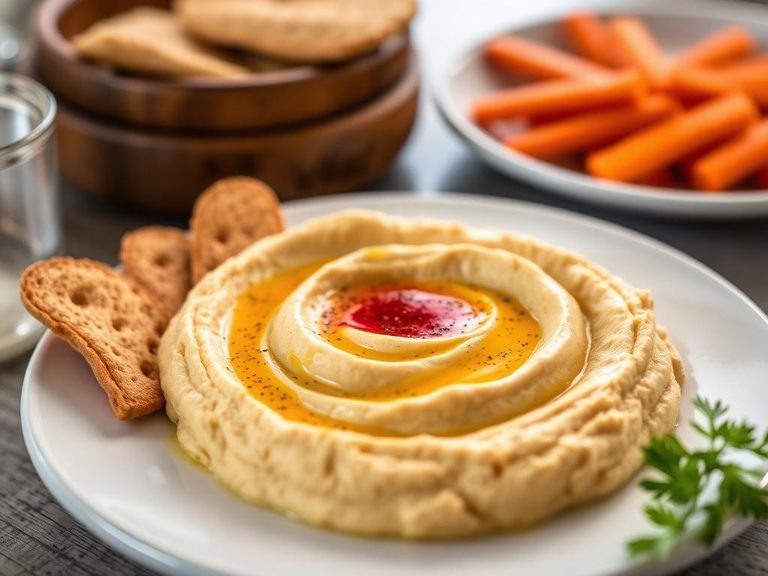
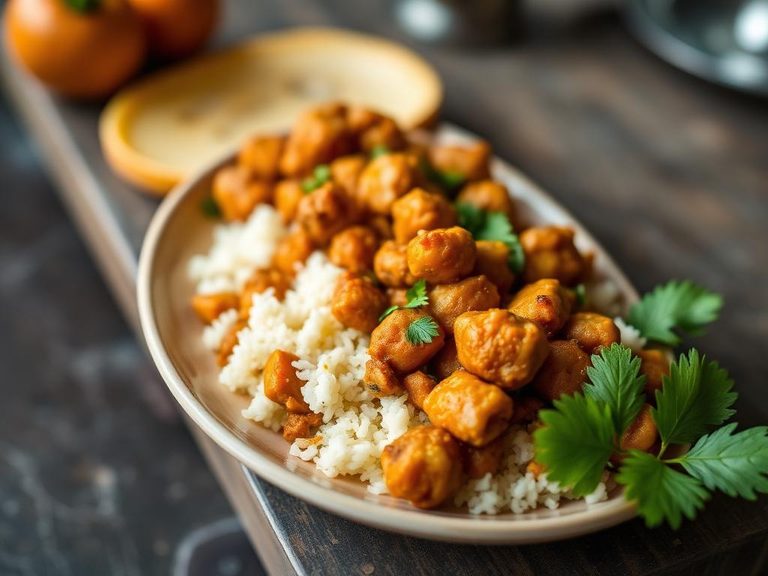
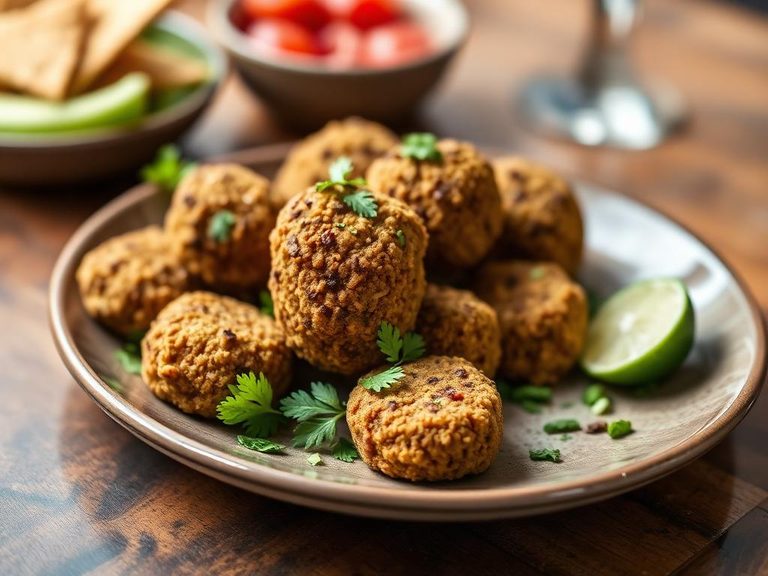


🌍 Where it's eaten
💡 Did you know?
Chickpeas are one of the oldest cultivated legumes, with evidence of their use dating back over 10,000 years in the Middle East.
Full nutrition (USDA data · scales with serving)
| Water | 66.9 g |
| Energy | 138 kcal |
| Energy | 578 kj |
| Protein | 7.0 g |
| Total lipid (fat) | 2.5 g |
| Ash | 0.74 g |
| Carbohydrate, by difference | 22.9 g |
| Fiber, total dietary | 6.3 g |
| Total Sugars | 4.0 g |
| Calcium, Ca | 43.0 mg |
| Iron, Fe | 0.98 mg |
| Magnesium, Mg | 24.0 mg |
| Phosphorus, P | 80.0 mg |
| Potassium, K | 109 mg |
| Sodium, Na | 212 mg |
| Zinc, Zn | 0.59 mg |
| Copper, Cu | 0.25 mg |
| Manganese, Mn | 0.80 mg |
| Selenium, Se | 3.1 ug |
| Vitamin C, total ascorbic acid | 0.10 mg |
| Thiamin | 0.03 mg |
| Riboflavin | 0.01 mg |
| Niacin | 0.13 mg |
| Vitamin B-6 | 0.12 mg |
| Folate, total | 41.0 ug |
| Folic acid | 0.00 ug |
| Folate, food | 41.0 ug |
| Folate, DFE | 41.0 ug |
| Vitamin B-12 | 0.00 ug |
| Vitamin A, RAE | 1.0 ug |
| Retinol | 0.00 ug |
| Carotene, beta | 13.0 ug |
| Carotene, alpha | 0.00 ug |
| Cryptoxanthin, beta | 0.00 ug |
| Vitamin A, IU | 22.0 iu |
| Lycopene | 0.00 ug |
| Lutein + zeaxanthin | 0.00 ug |
| Vitamin E (alpha-tocopherol) | 0.29 mg |
| Vitamin D (D2 + D3), International Units | 0.00 iu |
| Vitamin D (D2 + D3) | 0.00 ug |
| Vitamin K (phylloquinone) | 3.4 ug |
| Alcohol, ethyl | 0.00 g |
| Caffeine | 0.00 mg |
| Theobromine | 0.00 mg |
Fat & fatty acid profile (per 100g)
| Fatty acids, total saturated | 0.21 g |
| SFA 4:0 | 0.00 g |
| SFA 6:0 | 0.00 g |
| SFA 8:0 | 0.00 g |
| SFA 10:0 | 0.00 g |
| SFA 12:0 | 0.00 g |
| SFA 14:0 | 0.00 g |
| SFA 16:0 | 0.18 g |
| SFA 18:0 | 0.03 g |
| Fatty acids, total monounsaturated | 0.48 g |
| MUFA 16:1 | 0.00 g |
| MUFA 18:1 | 0.48 g |
| MUFA 20:1 | 0.00 g |
| MUFA 22:1 | 0.00 g |
| Fatty acids, total polyunsaturated | 0.96 g |
| PUFA 18:2 | 0.93 g |
| PUFA 18:3 | 0.04 g |
| PUFA 18:4 | 0.00 g |
| PUFA 20:4 | 0.00 g |
| PUFA 20:5 n-3 (EPA) | 0.00 g |
| PUFA 22:5 n-3 (DPA) | 0.00 g |
| PUFA 22:6 n-3 (DHA) | 0.00 g |
| Fatty acids, total trans | 0.00 g |
| Cholesterol | 0.00 mg |
Amino acid profile (per 100g)
| Tryptophan | 0.07 g |
| Threonine | 0.26 g |
| Isoleucine | 0.30 g |
| Leucine | 0.50 g |
| Lysine | 0.47 g |
| Methionine | 0.09 g |
| Cystine | 0.10 g |
| Phenylalanine | 0.38 g |
| Tyrosine | 0.18 g |
| Valine | 0.30 g |
| Arginine | 0.67 g |
| Histidine | 0.20 g |
| Alanine | 0.30 g |
| Aspartic acid | 0.83 g |
| Glutamic acid | 1.2 g |
| Glycine | 0.29 g |
| Proline | 0.29 g |
| Serine | 0.36 g |
FAQ
Do I need to rinse canned chickpeas?
Yes, rinsing canned chickpeas under tap water is recommended to reduce sodium content and remove the starchy, sometimes metallic-tasting liquid they're packed in.
How do canned chickpeas compare to dried chickpeas nutritionally?
Canned chickpeas are nutritionally similar to dried, but they may have slightly higher sodium and a softer texture. Dried chickpeas offer more control over cooking time and sodium levels.
Can I eat canned chickpeas straight from the can?
Yes, they are fully cooked and safe to eat, but rinsing them first improves flavor and reduces sodium. They're great in salads or as a quick snack.
Nutrient density (calculated · NRF9.3)
Nutrient Rich Foods index: beneficial nutrients (protein, fiber, vitamins, minerals) minus saturated fat, added sugar & sodium, per 100 kcal.
NRF9.3 index — Fulgoni, Keast & Drewnowski, 2009. Computed from USDA nutrients.
Weight-loss friendliness (composite index)
Energy density 1.38 kcal/g · 20% calories from protein · 6.3 g fiber · 4.0 g sugar per 100 g.
Composite of energy density (Rolls et al., 1999), protein & fiber satiety, minus sugar. A calculated heuristic — ranks satiety-per-calorie, not a clinical measure.
Dietary load (calculated from USDA values)
Potential renal acid load. Positive = acid-forming, negative = alkaline-forming.
Sodium-to-potassium ratio: 1.94 (lower is better — aim for ≤ 1)
Sodium:potassium per WHO potassium guidance. Computed from USDA nutrients.