

Chicken breast, rotisserie, skin eaten
Common food
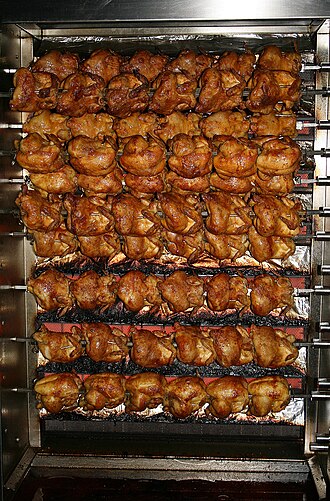
Photo: Wikipedia
Rotisserie chicken breast with the skin on is a succulent, savory cut of meat cooked slowly on a spit, resulting in a juicy, tender interior and a crisp, flavorful skin. The skin adds a rich, fatty mouthfeel that complements the lean, mild-flavored meat. Nutritionally, it's a powerhouse of high-quality protein with a moderate amount of fat, making it a satisfying and low-carb option.
Calorie split: 60% protein · 0% carbs · 39% fat
↓ Full nutrition💚 Why it's loved
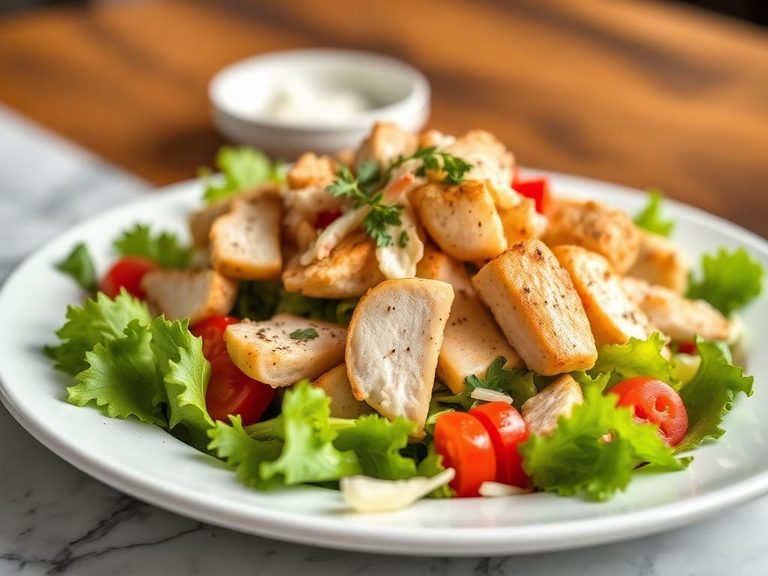
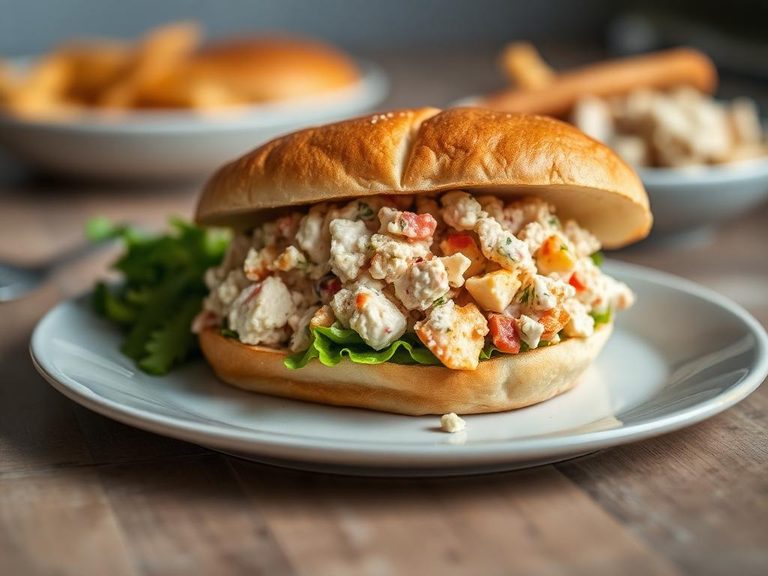
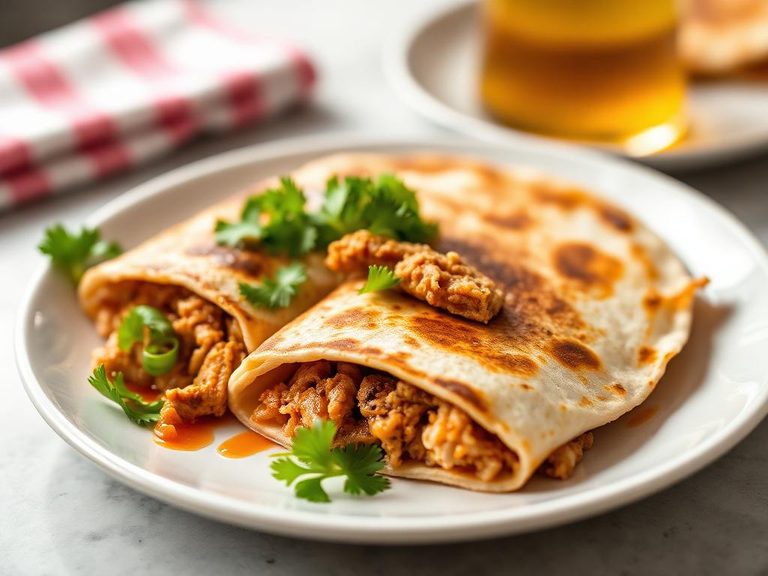
People love it for its incredible convenience and crowd-pleasing flavor—the rotisserie method self-bastes the meat, creating a perfect balance of juicy flesh and crispy, seasoned skin. It's a versatile staple that can be eaten hot as a main dish or shredded cold for salads, sandwiches, and wraps.
⚠️ Watch-outs & how to enjoy it better
The skin significantly increases the calorie and saturated fat content compared to skinless breast, which may be a concern for those monitoring fat intake or heart health. Additionally, rotisserie chickens are often high in sodium from seasoning blends. To counteract this, you can easily remove the skin before eating to cut fat, and rinse the meat lightly or pair it with unsalted sides like steamed vegetables or fresh salads to balance sodium intake.
Key benefits
- Excellent source of complete, high-quality protein for muscle maintenance and satiety.
- Very low in carbohydrates and sugars, suitable for low-carb and ketogenic diets.
- Provides essential B vitamins like niacin (B3) and B6 for energy metabolism.
- A good source of minerals such as selenium and phosphorus.
🍽️ Popular dishes
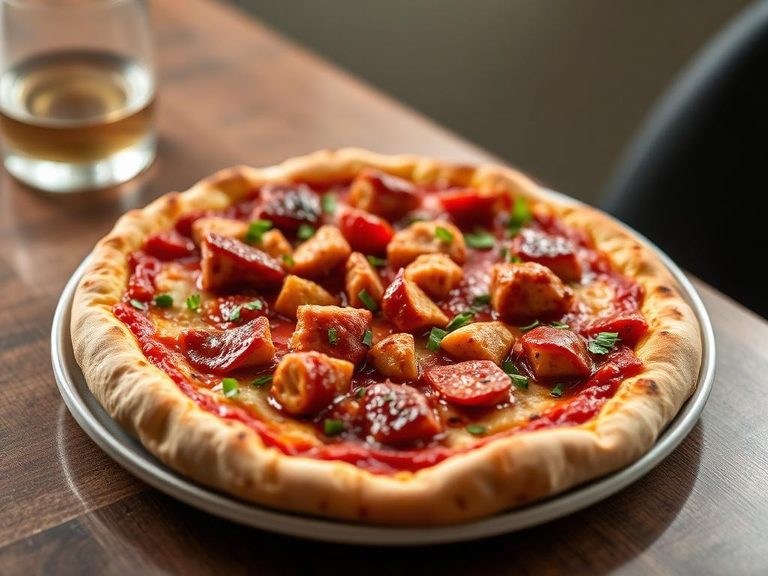
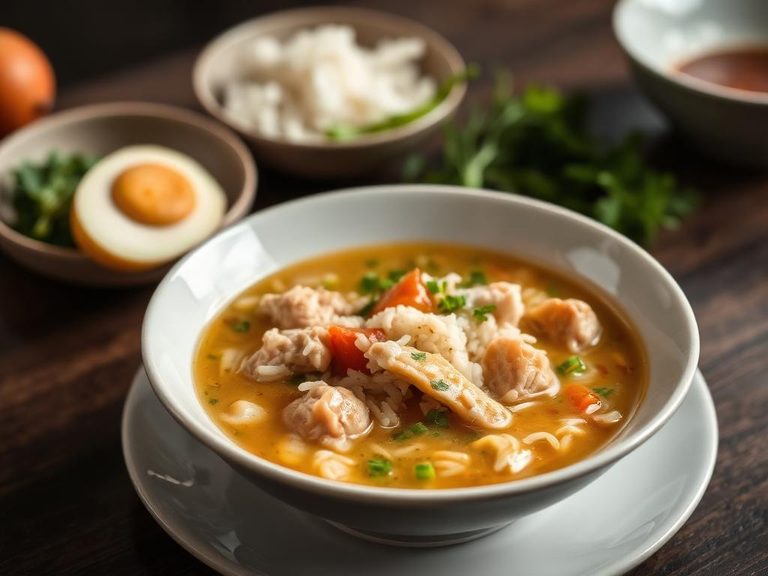
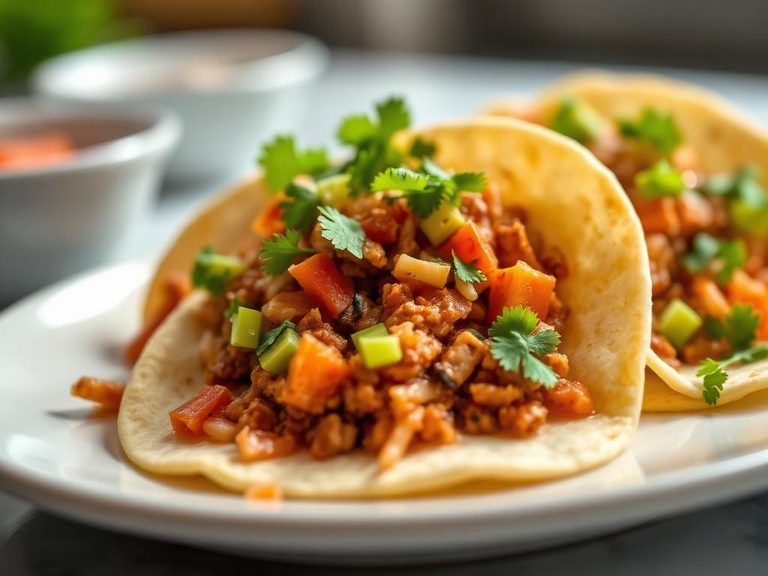
🌍 Where it's eaten
💡 Did you know?
The term 'rotisserie' comes from the French word for 'roasting place,' and the method of spit-roasting dates back to at least the 18th century, though the modern kitchen appliance was popularized in the 1950s.
Full nutrition (USDA data · scales with serving)
| Water | 65.2 g |
| Energy | 175 kcal |
| Protein | 26.4 g |
| Total lipid (fat) | 7.7 g |
| Carbohydrate, by difference | 0.09 g |
| Fiber, total dietary | 0.00 g |
| Total Sugars | 0.09 g |
| Calcium, Ca | 16.0 mg |
| Iron, Fe | 0.51 mg |
| Magnesium, Mg | 25.0 mg |
| Phosphorus, P | 244 mg |
| Potassium, K | 276 mg |
| Sodium, Na | 329 mg |
| Zinc, Zn | 0.86 mg |
| Copper, Cu | 0.04 mg |
| Selenium, Se | 22.3 ug |
| Vitamin C, total ascorbic acid | 0.00 mg |
| Thiamin | 0.08 mg |
| Riboflavin | 0.14 mg |
| Niacin | 9.3 mg |
| Vitamin B-6 | 0.31 mg |
| Folate, total | 11.0 ug |
| Folic acid | 0.00 ug |
| Folate, food | 8.0 ug |
| Folate, DFE | 8.0 ug |
| Choline, total | 57.1 mg |
| Vitamin B-12 | 0.30 ug |
| Vitamin B-12, added | 0.00 ug |
| Vitamin A, RAE | 11.0 ug |
| Retinol | 11.0 ug |
| Carotene, beta | 0.00 ug |
| Carotene, alpha | 0.00 ug |
| Cryptoxanthin, beta | 0.00 ug |
| Lycopene | 0.00 ug |
| Lutein + zeaxanthin | 0.00 ug |
| Vitamin E (alpha-tocopherol) | 0.33 mg |
| Vitamin E, added | 0.00 mg |
| Vitamin D (D2 + D3) | 0.00 ug |
| Vitamin K (phylloquinone) | 0.00 ug |
| Alcohol, ethyl | 0.00 g |
| Caffeine | 0.00 mg |
| Theobromine | 0.00 mg |
Fat & fatty acid profile (per 100g)
| Fatty acids, total saturated | 2.0 g |
| SFA 4:0 | 0.00 g |
| SFA 6:0 | 0.00 g |
| SFA 8:0 | 0.00 g |
| SFA 10:0 | 0.00 g |
| SFA 12:0 | 0.00 g |
| SFA 14:0 | 0.04 g |
| SFA 16:0 | 1.6 g |
| SFA 18:0 | 0.34 g |
| Fatty acids, total monounsaturated | 3.1 g |
| MUFA 16:1 | 0.50 g |
| MUFA 18:1 | 2.6 g |
| MUFA 20:1 | 0.02 g |
| MUFA 22:1 | 0.00 g |
| Fatty acids, total polyunsaturated | 0.94 g |
| PUFA 18:2 | 0.88 g |
| PUFA 18:3 | 0.05 g |
| PUFA 18:4 | 0.00 g |
| PUFA 20:4 | 0.01 g |
| PUFA 20:5 n-3 (EPA) | 0.00 g |
| PUFA 22:5 n-3 (DPA) | 0.00 g |
| PUFA 22:6 n-3 (DHA) | 0.00 g |
| Cholesterol | 90.0 mg |
Amino acid profile (per 100g)
Estimated from Chicken, broiler or fryers, breast, skinless, boneless, meat only, cooked, grilled — USDA does not publish this profile for Chicken breast.
| Tryptophan | 0.39 g |
| Threonine | 1.4 g |
| Isoleucine | 1.5 g |
| Leucine | 2.5 g |
| Lysine | 2.9 g |
| Methionine | 0.79 g |
| Cystine | 0.32 g |
| Phenylalanine | 1.2 g |
| Tyrosine | 1.1 g |
| Valine | 1.6 g |
| Arginine | 2.1 g |
| Histidine | 1.1 g |
| Alanine | 1.8 g |
| Aspartic acid | 2.9 g |
| Glutamic acid | 4.5 g |
| Glycine | 1.4 g |
| Proline | 0.97 g |
| Serine | 1.2 g |
FAQ
Is rotisserie chicken breast with skin healthier than fried chicken?
Generally, yes. Rotisserie cooking is a dry-heat method that doesn't require breading or deep-frying in oil, so it typically has less total fat and fewer calories than most fried chicken preparations, though the skin does add fat.
Can I eat the skin if I'm watching my calories?
You can, but be mindful of portion control. The skin is calorie-dense; removing it from a 100g serving can reduce the total calories by roughly 30-40%. Enjoying the skin occasionally or in smaller amounts is a common strategy.
How should I store leftover rotisserie chicken breast?
Remove the meat from the bone, store it in an airtight container in the refrigerator for up to 3-4 days, or freeze it for up to 3 months. For best quality, store the skin separately if you plan to reheat, as it will lose crispness.
Nutrient density (calculated · NRF9.3)
Nutrient Rich Foods index: beneficial nutrients (protein, fiber, vitamins, minerals) minus saturated fat, added sugar & sodium, per 100 kcal.
NRF9.3 index — Fulgoni, Keast & Drewnowski, 2009. Computed from USDA nutrients.
Weight-loss friendliness (composite index)
Energy density 1.75 kcal/g · 60% calories from protein · 0.0 g fiber · 0.1 g sugar per 100 g.
Composite of energy density (Rolls et al., 1999), protein & fiber satiety, minus sugar. A calculated heuristic — ranks satiety-per-calorie, not a clinical measure.
Dietary load (calculated from USDA values)
Potential renal acid load. Positive = acid-forming, negative = alkaline-forming.
Sodium-to-potassium ratio: 1.19 (lower is better — aim for ≤ 1)
Sodium:potassium per WHO potassium guidance. Computed from USDA nutrients.