

Carrots, baby, raw
Whole food · Vegetables and Vegetable Products
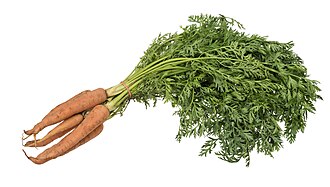
Photo: Wikipedia
Baby carrots are immature, tender carrots harvested early for their sweet flavor and crisp, bite-sized convenience. They offer a satisfying snap with a mild, earthy sweetness and are a powerhouse of beta-carotene, which the body converts to vitamin A.
Calorie split: 7% protein · 90% carbs · 3% fat
↓ Full nutrition💚 Why it's loved
People adore baby carrots for their perfect, snackable size and natural sweetness, making them a go-to healthy crunch. Their versatility shines from raw platters with dips to quick stir-fries and roasting.
⚠️ Watch-outs & how to enjoy it better
While nutritious, their natural sugars can cause a noticeable blood-sugar spike if eaten alone in large quantities, especially for those with insulin sensitivity. To counteract this, pair them with a protein or healthy fat like hummus, almond butter, or a handful of nuts to slow sugar absorption. Also, their crunchy texture can be a choking hazard for very young children if not cut appropriately.
Key benefits
- Excellent source of beta-carotene for eye health.
- High in dietary fiber, supporting digestion.
- Very low in calories and fat, ideal for weight management.
- Provides antioxidants that support immune function.
- Contains potassium, which helps regulate blood pressure.
🍽️ Popular dishes
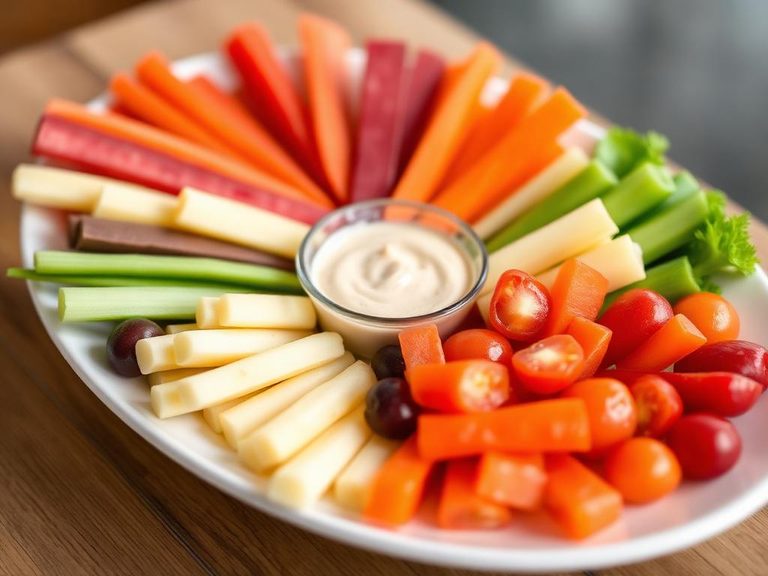
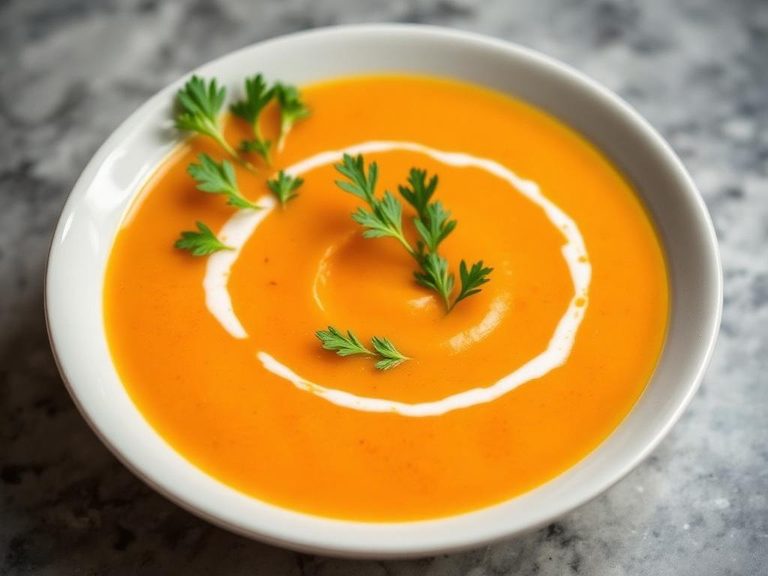
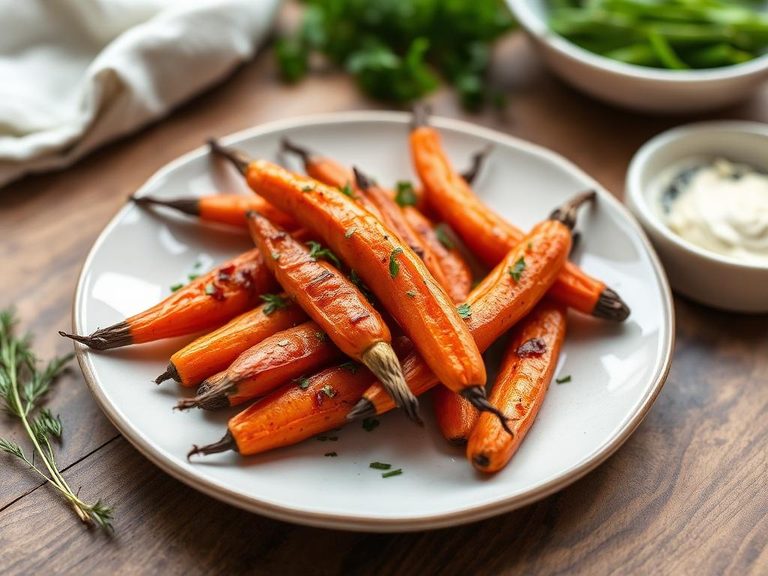
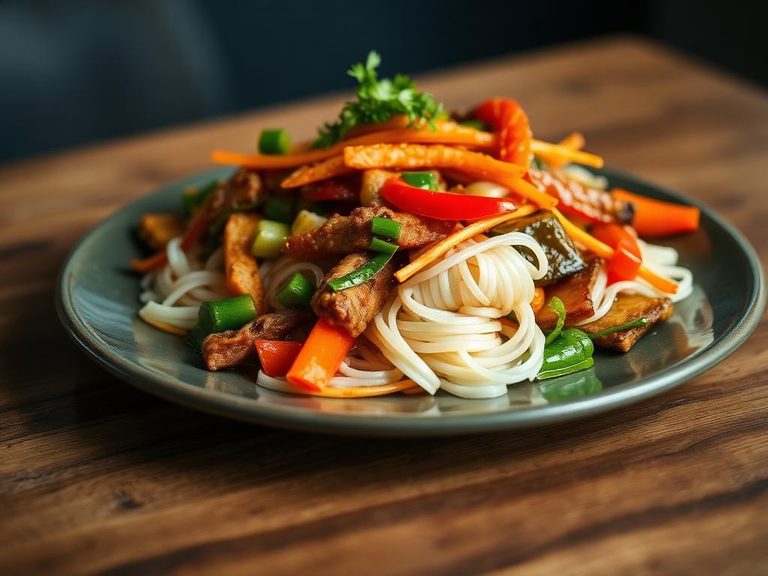
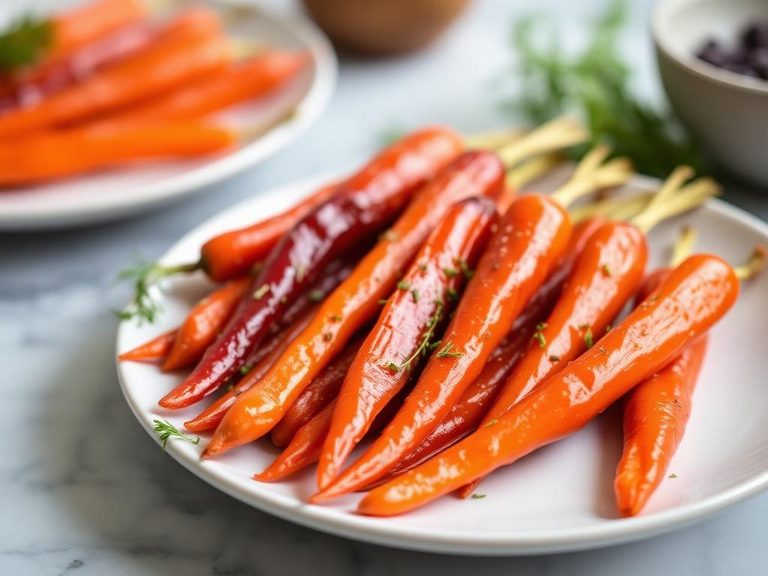
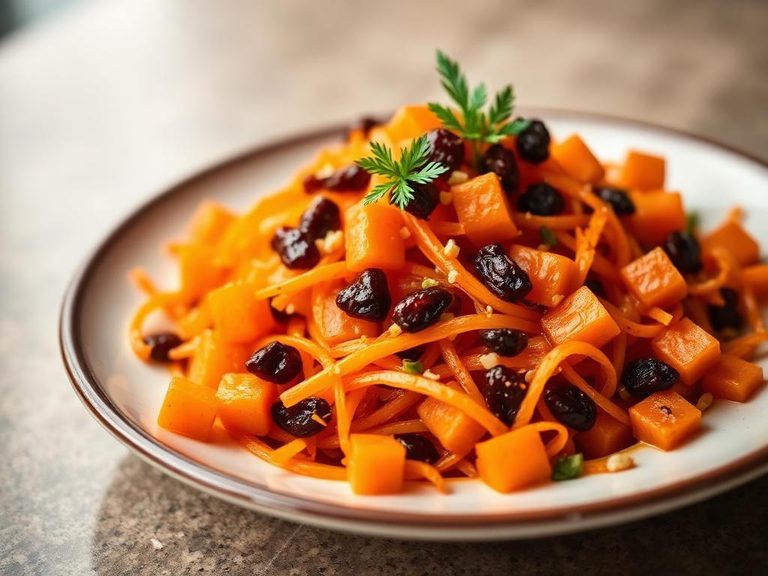
🌍 Where it's eaten
💡 Did you know?
The 'baby carrot' sold in most US supermarkets is actually a modern invention from the 1980s—a larger, imperfect carrot mechanically cut and polished into a uniform, smooth shape.
Full nutrition (USDA data · scales with serving)
| Water | 90.3 g |
| Energy | 35.0 kcal |
| Energy | 145 kj |
| Protein | 0.64 g |
| Total lipid (fat) | 0.13 g |
| Ash | 0.63 g |
| Carbohydrate, by difference | 8.2 g |
| Fiber, total dietary | 2.9 g |
| Total Sugars | 4.8 g |
| Sucrose | 2.7 g |
| Glucose | 1.0 g |
| Fructose | 1.0 g |
| Lactose | 0.00 g |
| Maltose | 0.00 g |
| Galactose | 0.00 g |
| Starch | 0.00 g |
| Calcium, Ca | 32.0 mg |
| Iron, Fe | 0.89 mg |
| Magnesium, Mg | 10.0 mg |
| Phosphorus, P | 28.0 mg |
| Potassium, K | 237 mg |
| Sodium, Na | 78.0 mg |
| Zinc, Zn | 0.17 mg |
| Copper, Cu | 0.10 mg |
| Manganese, Mn | 0.15 mg |
| Selenium, Se | 0.90 ug |
| Vitamin C, total ascorbic acid | 2.6 mg |
| Thiamin | 0.03 mg |
| Riboflavin | 0.04 mg |
| Niacin | 0.56 mg |
| Pantothenic acid | 0.40 mg |
| Vitamin B-6 | 0.10 mg |
| Folate, total | 27.0 ug |
| Folic acid | 0.00 ug |
| Folate, food | 27.0 ug |
| Folate, DFE | 27.0 ug |
| Choline, total | 7.5 mg |
| Betaine | 0.10 mg |
| Vitamin B-12 | 0.00 ug |
| Vitamin A, RAE | 690 ug |
| Retinol | 0.00 ug |
| Carotene, beta | 6391 ug |
| Carotene, alpha | 3767 ug |
| Cryptoxanthin, beta | 0.00 ug |
| Vitamin A, IU | 13790 iu |
| Lycopene | 0.00 ug |
| Lutein + zeaxanthin | 358 ug |
| Vitamin D (D2 + D3), International Units | 0.00 iu |
| Vitamin D (D2 + D3) | 0.00 ug |
| Vitamin K (phylloquinone) | 9.4 ug |
| Vitamin K (Dihydrophylloquinone) | 0.00 ug |
Fat & fatty acid profile (per 100g)
| Fatty acids, total saturated | 0.02 g |
| SFA 12:0 | 0.00 g |
| SFA 14:0 | 0.00 g |
| SFA 16:0 | 0.02 g |
| SFA 18:0 | 0.00 g |
| Fatty acids, total monounsaturated | 0.01 g |
| MUFA 16:1 | 0.00 g |
| MUFA 18:1 | 0.01 g |
| Fatty acids, total polyunsaturated | 0.07 g |
| PUFA 18:2 | 0.06 g |
| PUFA 18:3 | 0.01 g |
| Fatty acids, total trans | 0.00 g |
| Cholesterol | 0.00 mg |
Amino acid profile (per 100g)
| Tryptophan | 0.01 g |
| Threonine | 0.03 g |
| Isoleucine | 0.03 g |
| Leucine | 0.04 g |
| Lysine | 0.03 g |
| Methionine | 0.01 g |
| Cystine | 0.01 g |
| Phenylalanine | 0.03 g |
| Tyrosine | 0.02 g |
| Valine | 0.04 g |
| Arginine | 0.04 g |
| Histidine | 0.01 g |
| Alanine | 0.05 g |
| Aspartic acid | 0.11 g |
| Glutamic acid | 0.17 g |
| Glycine | 0.02 g |
| Proline | 0.02 g |
| Serine | 0.03 g |
FAQ
Are baby carrots just small, young carrots?
Not typically. Most 'baby-cut' carrots are full-sized carrots that have been trimmed and shaped by machines. True young carrots, called 'baby carrots' in the field, are less common in stores.
Why do my baby carrots get white and dry-looking?
This is called 'blush,' a harmless dehydration effect from exposure to air. To prevent it, store them submerged in water in the fridge or in a sealed bag with a damp paper towel.
Are they as nutritious as regular carrots?
Yes, nutritionally they are identical. The beta-carotene, fiber, and vitamin content are the same per gram, as they come from the same vegetable.
Nutrient density (calculated · NRF9.3)
Nutrient Rich Foods index: beneficial nutrients (protein, fiber, vitamins, minerals) minus saturated fat, added sugar & sodium, per 100 kcal.
NRF9.3 index — Fulgoni, Keast & Drewnowski, 2009. Computed from USDA nutrients.
Weight-loss friendliness (composite index)
Energy density 0.35 kcal/g · 7% calories from protein · 2.9 g fiber · 4.8 g sugar per 100 g.
Composite of energy density (Rolls et al., 1999), protein & fiber satiety, minus sugar. A calculated heuristic — ranks satiety-per-calorie, not a clinical measure.
Dietary load (calculated from USDA values)
Potential renal acid load. Positive = acid-forming, negative = alkaline-forming.
Sodium-to-potassium ratio: 0.33 (lower is better — aim for ≤ 1)
Sodium:potassium per WHO potassium guidance. Computed from USDA nutrients.