

Candies, caramels
Whole food · Sweets
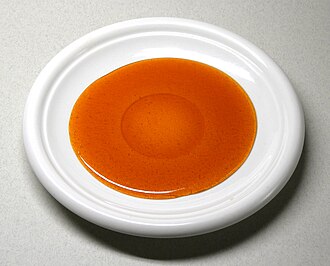
Photo: Wikipedia
Candies, caramels are chewy, buttery confections made by caramelizing sugar with milk or cream and butter, resulting in a rich, sweet flavor and a smooth, melt-in-your-mouth texture. Nutritionally, they are a dense source of quick energy, primarily from carbohydrates and sugar, with a small amount of fat contributing to their creamy mouthfeel.
Calorie split: 5% protein · 77% carbs · 18% fat
↓ Full nutrition💚 Why it's loved
People love caramels for their complex, buttery sweetness and satisfying chew, which evokes nostalgia and comfort. Their versatility makes them a beloved standalone treat, a baking ingredient, or a flavor base for desserts like apples and popcorn.
⚠️ Watch-outs & how to enjoy it better
Due to their high sugar (65.5g per 100g) and calorie content, they can cause rapid blood-sugar spikes and are not ideal for those managing diabetes or watching caloric intake. To counteract this, pair a small portion with a source of protein or fat (like nuts) to slow sugar absorption, and practice strict portion control.
Key benefits
- Provides a quick source of energy from carbohydrates.
- Contains a small amount of fat from butter or cream, adding satiety.
- Offers a moment of sensory pleasure and stress relief.
- Can be used as a quick morale booster or celebratory treat.
🍽️ Popular dishes



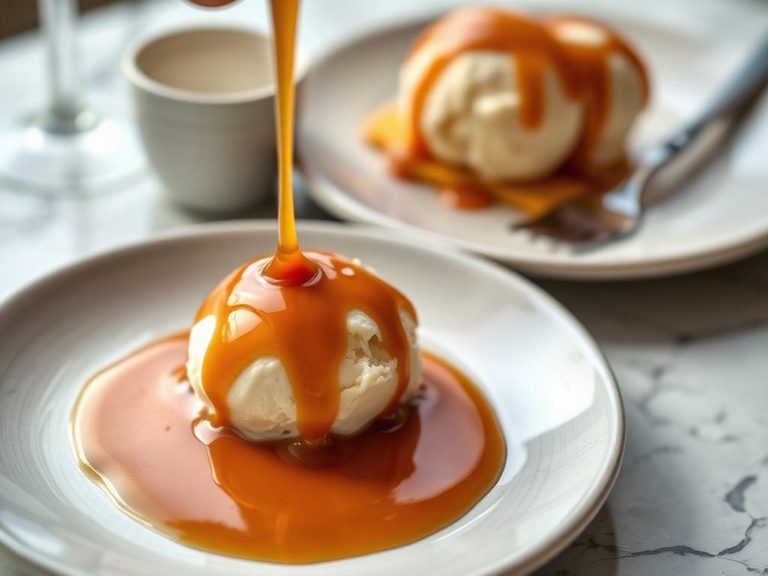
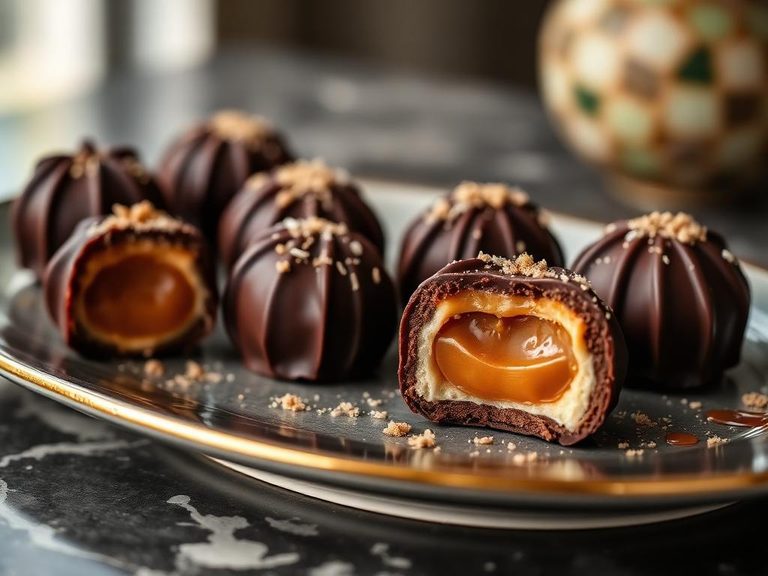
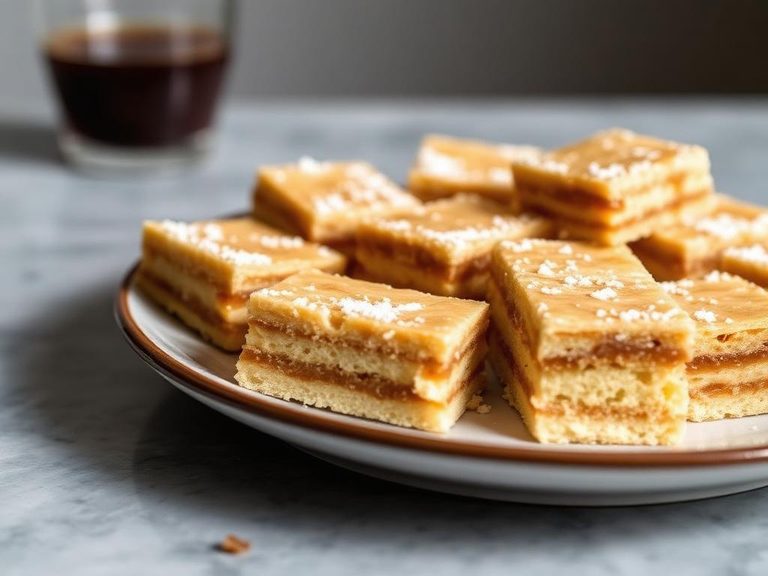
🌍 Where it's eaten
💡 Did you know?
The word 'caramel' likely derives from the Spanish 'caramelo,' which itself may come from the Arabic 'qandi' meaning candied, tracing its lineage back to ancient sugar confections.
Full nutrition (USDA data · scales with serving)
| Water | 8.5 g |
| Energy | 382 kcal |
| Energy | 1598 kj |
| Protein | 4.6 g |
| Total lipid (fat) | 8.1 g |
| Ash | 1.8 g |
| Carbohydrate, by difference | 77.0 g |
| Fiber, total dietary | 0.00 g |
| Total Sugars | 65.5 g |
| Calcium, Ca | 138 mg |
| Iron, Fe | 0.14 mg |
| Magnesium, Mg | 17.0 mg |
| Phosphorus, P | 114 mg |
| Potassium, K | 214 mg |
| Sodium, Na | 245 mg |
| Zinc, Zn | 0.44 mg |
| Copper, Cu | 0.02 mg |
| Manganese, Mn | 0.01 mg |
| Selenium, Se | 1.8 ug |
| Fluoride, F | 27.0 ug |
| Vitamin C, total ascorbic acid | 0.40 mg |
| Thiamin | 0.10 mg |
| Riboflavin | 0.26 mg |
| Niacin | 0.15 mg |
| Pantothenic acid | 0.62 mg |
| Vitamin B-6 | 0.06 mg |
| Folate, total | 4.0 ug |
| Folic acid | 0.00 ug |
| Folate, food | 4.0 ug |
| Folate, DFE | 4.0 ug |
| Choline, total | 8.0 mg |
| Vitamin B-12 | 0.30 ug |
| Vitamin B-12, added | 0.00 ug |
| Vitamin A, RAE | 12.0 ug |
| Retinol | 11.0 ug |
| Carotene, beta | 2.0 ug |
| Carotene, alpha | 0.00 ug |
| Cryptoxanthin, beta | 0.00 ug |
| Vitamin A, IU | 42.0 iu |
| Lycopene | 0.00 ug |
| Lutein + zeaxanthin | 0.00 ug |
| Vitamin E (alpha-tocopherol) | 0.46 mg |
| Vitamin E, added | 0.00 mg |
| Vitamin D (D2 + D3), International Units | 0.00 iu |
| Vitamin D (D2 + D3) | 0.00 ug |
| Vitamin K (phylloquinone) | 1.8 ug |
| Alcohol, ethyl | 0.00 g |
| Caffeine | 0.00 mg |
| Theobromine | 0.00 mg |
Fat & fatty acid profile (per 100g)
| Fatty acids, total saturated | 2.5 g |
| SFA 4:0 | 0.05 g |
| SFA 6:0 | 0.01 g |
| SFA 8:0 | 0.01 g |
| SFA 10:0 | 0.03 g |
| SFA 12:0 | 0.02 g |
| SFA 14:0 | 0.19 g |
| SFA 16:0 | 1.9 g |
| SFA 18:0 | 0.29 g |
| Fatty acids, total monounsaturated | 1.5 g |
| MUFA 16:1 | 0.10 g |
| MUFA 18:1 | 1.4 g |
| MUFA 20:1 | 0.00 g |
| MUFA 22:1 | 0.00 g |
| Fatty acids, total polyunsaturated | 3.5 g |
| PUFA 18:2 | 3.4 g |
| PUFA 18:3 | 0.03 g |
| PUFA 18:4 | 0.00 g |
| PUFA 20:4 | 0.01 g |
| PUFA 20:5 n-3 (EPA) | 0.00 g |
| PUFA 22:5 n-3 (DPA) | 0.00 g |
| PUFA 22:6 n-3 (DHA) | 0.00 g |
| Cholesterol | 7.0 mg |
Amino acid profile (per 100g)
| Tryptophan | 0.06 g |
| Threonine | 0.19 g |
| Isoleucine | 0.26 g |
| Leucine | 0.42 g |
| Lysine | 0.34 g |
| Methionine | 0.11 g |
| Cystine | 0.04 g |
| Phenylalanine | 0.20 g |
| Tyrosine | 0.20 g |
| Valine | 0.28 g |
| Arginine | 0.15 g |
| Histidine | 0.12 g |
| Alanine | 0.15 g |
| Aspartic acid | 0.32 g |
| Glutamic acid | 0.89 g |
| Glycine | 0.09 g |
| Proline | 0.41 g |
| Serine | 0.23 g |
FAQ
What's the difference between caramel and toffee?
Caramel is made by heating sugar with milk or cream and butter, resulting in a softer, chewier texture. Toffee is made by heating sugar with butter and sometimes water to a higher temperature, creating a harder, more brittle candy.
Why do some caramels get hard over time?
This is due to sugar crystallization. Over time, the sugar molecules can slowly reorganize into a crystalline structure, especially if the caramel was not cooked to the precise temperature or if it's exposed to humidity.
Can I make caramel without dairy?
Yes, you can use plant-based milks (like coconut milk) and vegan butter substitutes. The texture and flavor will be slightly different, but you can achieve a similar chewy, sweet result.
Nutrient density (calculated · NRF9.3)
Nutrient Rich Foods index: beneficial nutrients (protein, fiber, vitamins, minerals) minus saturated fat, added sugar & sodium, per 100 kcal.
NRF9.3 index — Fulgoni, Keast & Drewnowski, 2009. Computed from USDA nutrients.
Weight-loss friendliness (composite index)
Energy density 3.82 kcal/g · 5% calories from protein · 0.0 g fiber · 65.5 g sugar per 100 g.
Composite of energy density (Rolls et al., 1999), protein & fiber satiety, minus sugar. A calculated heuristic — ranks satiety-per-calorie, not a clinical measure.
Dietary load (calculated from USDA values)
Potential renal acid load. Positive = acid-forming, negative = alkaline-forming.
Sodium-to-potassium ratio: 1.14 (lower is better — aim for ≤ 1)
Sodium:potassium per WHO potassium guidance. Computed from USDA nutrients.