

Candies, butterscotch
Whole food · Sweets

Photo: Wikipedia
Butterscotch candy is a hard, amber-colored confection made primarily from brown sugar and butter, cooked to a firm crack stage. It offers a rich, toasty sweetness with deep notes of caramel and a smooth, glass-like texture that melts slowly on the tongue. Nutritionally, it is almost pure carbohydrate, providing a quick source of energy with negligible protein or fat.
Calorie split: 0% protein · 92% carbs · 8% fat
↓ Full nutrition💚 Why it's loved
People love butterscotch for its complex, buttery sweetness that is less sharp than plain caramel and more sophisticated than simple sugar candy. It evokes a sense of nostalgia and comfort, often associated with homemade desserts and classic candy shops.
⚠️ Watch-outs & how to enjoy it better
The extremely high sugar content (over 80g per 100g) can cause rapid blood-sugar spikes, making it unsuitable for those managing diabetes or insulin resistance. The hard, sticky texture also poses a dental risk by promoting cavities. To enjoy mindfully, pair a single piece with a source of protein or fat (like a handful of nuts) to slow sugar absorption, and rinse your mouth with water afterward to reduce dental exposure.
Key benefits
- Provides a rapid source of energy from simple carbohydrates.
- Contains small amounts of minerals like calcium and potassium from its dairy and sugar base.
- Can serve as a quick morale booster or treat during low-energy moments.
- Its hard texture can help stimulate saliva production, which may aid in oral comfort for some individuals.
🍽️ Popular dishes
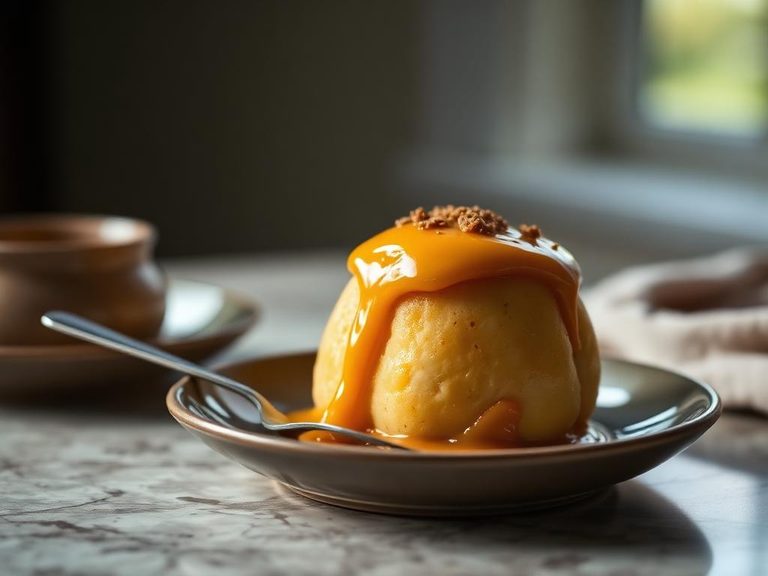
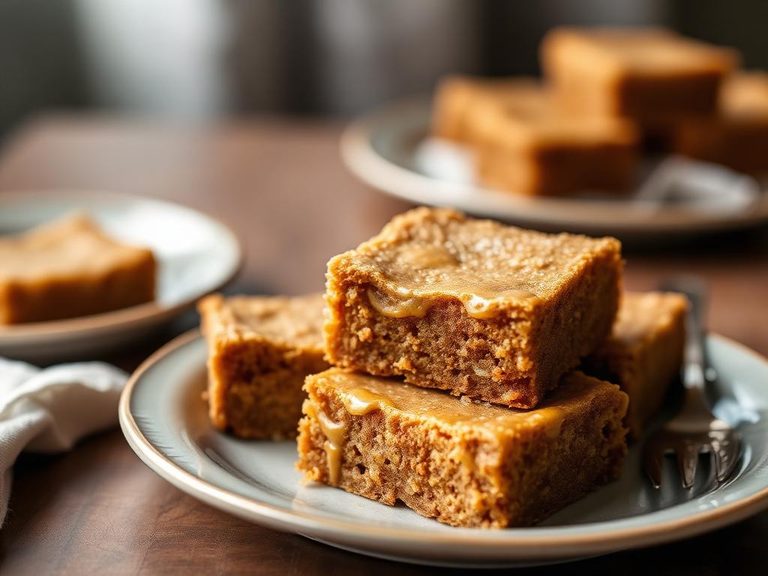
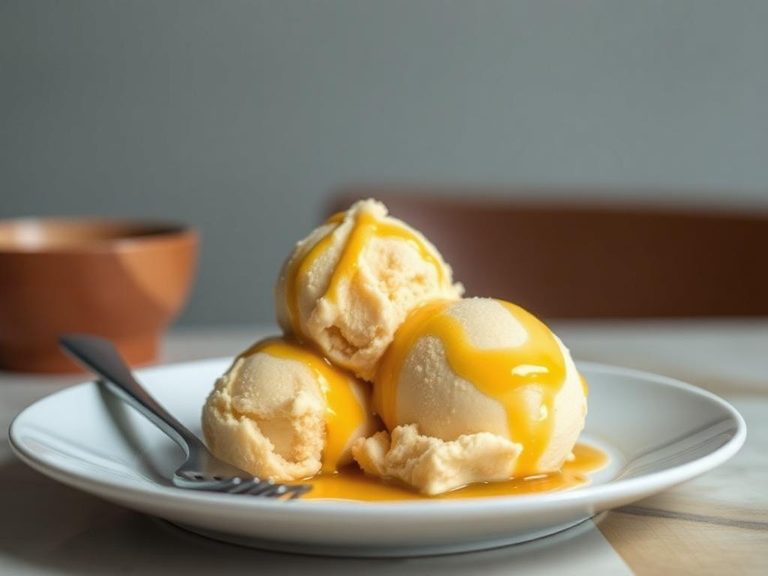
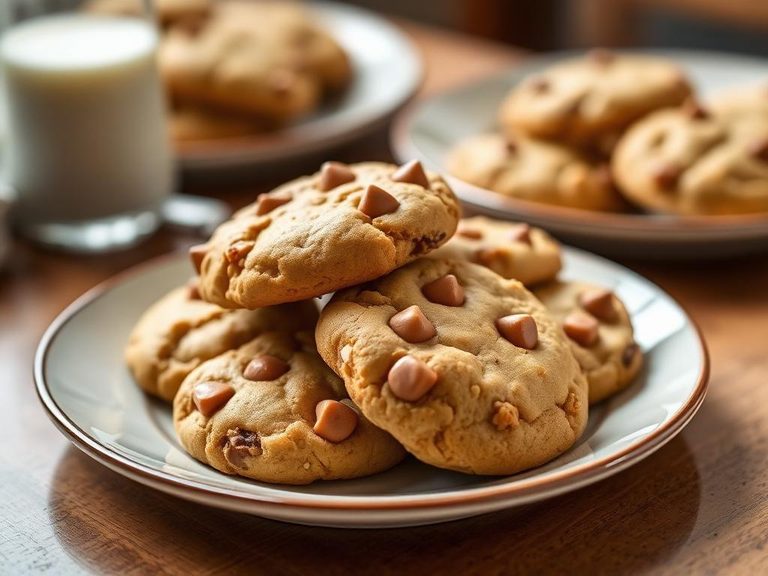
🌍 Where it's eaten
💡 Did you know?
The name 'butterscotch' may derive from 'scotched,' an old term meaning to score or cut, referring to how the candy was traditionally scored into squares while still warm.
Full nutrition (USDA data · scales with serving)
| Water | 5.3 g |
| Energy | 391 kcal |
| Energy | 1638 kj |
| Protein | 0.03 g |
| Total lipid (fat) | 3.3 g |
| Ash | 1.0 g |
| Carbohydrate, by difference | 90.4 g |
| Fiber, total dietary | 0.00 g |
| Total Sugars | 80.5 g |
| Calcium, Ca | 4.0 mg |
| Iron, Fe | 0.01 mg |
| Magnesium, Mg | 0.00 mg |
| Phosphorus, P | 1.0 mg |
| Potassium, K | 3.0 mg |
| Sodium, Na | 391 mg |
| Zinc, Zn | 0.09 mg |
| Copper, Cu | 0.00 mg |
| Manganese, Mn | 0.00 mg |
| Selenium, Se | 0.60 ug |
| Vitamin C, total ascorbic acid | 0.00 mg |
| Thiamin | 0.01 mg |
| Riboflavin | 0.02 mg |
| Niacin | 0.00 mg |
| Pantothenic acid | 0.00 mg |
| Vitamin B-6 | 0.00 mg |
| Folate, total | 0.00 ug |
| Folic acid | 0.00 ug |
| Folate, food | 0.00 ug |
| Folate, DFE | 0.00 ug |
| Choline, total | 0.80 mg |
| Vitamin B-12 | 0.00 ug |
| Vitamin B-12, added | 0.00 ug |
| Vitamin A, RAE | 28.0 ug |
| Retinol | 27.0 ug |
| Carotene, beta | 6.0 ug |
| Carotene, alpha | 0.00 ug |
| Cryptoxanthin, beta | 0.00 ug |
| Vitamin A, IU | 100 iu |
| Lycopene | 0.00 ug |
| Lutein + zeaxanthin | 0.00 ug |
| Vitamin E (alpha-tocopherol) | 0.09 mg |
| Vitamin E, added | 0.00 mg |
| Vitamin D (D2 + D3), International Units | 0.00 iu |
| Vitamin D (D2 + D3) | 0.00 ug |
| Vitamin K (phylloquinone) | 0.30 ug |
| Alcohol, ethyl | 0.00 g |
| Caffeine | 0.00 mg |
| Theobromine | 0.00 mg |
Fat & fatty acid profile (per 100g)
| Fatty acids, total saturated | 2.1 g |
| SFA 4:0 | 0.13 g |
| SFA 6:0 | 0.08 g |
| SFA 8:0 | 0.05 g |
| SFA 10:0 | 0.10 g |
| SFA 12:0 | 0.10 g |
| SFA 14:0 | 0.30 g |
| SFA 16:0 | 0.87 g |
| SFA 17:0 | 0.02 g |
| SFA 18:0 | 0.40 g |
| SFA 20:0 | 0.01 g |
| Fatty acids, total monounsaturated | 0.84 g |
| MUFA 16:1 | 0.04 g |
| MUFA 18:1 | 0.80 g |
| MUFA 20:1 | 0.00 g |
| MUFA 22:1 | 0.00 g |
| Fatty acids, total polyunsaturated | 0.12 g |
| PUFA 18:2 | 0.11 g |
| PUFA 18:3 | 0.01 g |
| PUFA 18:4 | 0.00 g |
| PUFA 20:4 | 0.00 g |
| PUFA 20:5 n-3 (EPA) | 0.00 g |
| PUFA 22:5 n-3 (DPA) | 0.00 g |
| PUFA 22:6 n-3 (DHA) | 0.00 g |
| Cholesterol | 9.0 mg |
Amino acid profile (per 100g)
Estimated from Candies, honey-combed, with peanut butter — USDA does not publish this profile for Candies.
| Tryptophan | 0.09 g |
| Threonine | 0.21 g |
| Isoleucine | 0.24 g |
| Leucine | 0.61 g |
| Lysine | 0.27 g |
| Methionine | 0.10 g |
| Cystine | 0.09 g |
| Phenylalanine | 0.47 g |
| Tyrosine | 0.33 g |
| Valine | 0.31 g |
| Arginine | 1.1 g |
| Histidine | 0.22 g |
| Alanine | 0.36 g |
| Aspartic acid | 1.2 g |
| Glutamic acid | 2.0 g |
| Glycine | 0.56 g |
| Proline | 0.55 g |
| Serine | 0.58 g |
FAQ
What's the difference between butterscotch and caramel?
While both are sugar confections, butterscotch is traditionally made with brown sugar and butter cooked to a higher temperature, giving it a harder texture and a more toasty, molasses-like flavor. Caramel often uses white sugar and cream, resulting in a softer, creamier consistency.
Is butterscotch candy gluten-free?
Most pure butterscotch candies are naturally gluten-free, as their core ingredients are sugar, butter, and flavorings. However, always check labels for potential cross-contamination or added ingredients if you have celiac disease or severe gluten sensitivity.
How should I store butterscotch candy?
Store it in an airtight container in a cool, dry place. Humidity can make the candy sticky and cause it to dissolve over time. Avoid refrigeration, as condensation can form when it's brought to room temperature.
Nutrient density (calculated · NRF9.3)
Nutrient Rich Foods index: beneficial nutrients (protein, fiber, vitamins, minerals) minus saturated fat, added sugar & sodium, per 100 kcal.
NRF9.3 index — Fulgoni, Keast & Drewnowski, 2009. Computed from USDA nutrients.
Weight-loss friendliness (composite index)
Energy density 3.91 kcal/g · 0% calories from protein · 0.0 g fiber · 80.5 g sugar per 100 g.
Composite of energy density (Rolls et al., 1999), protein & fiber satiety, minus sugar. A calculated heuristic — ranks satiety-per-calorie, not a clinical measure.
Dietary load (calculated from USDA values)
Potential renal acid load. Positive = acid-forming, negative = alkaline-forming.
Sodium-to-potassium ratio: 130.33 (lower is better — aim for ≤ 1)
Sodium:potassium per WHO potassium guidance. Computed from USDA nutrients.