

Cake, gingerbread, dry mix
Whole food · Baked Products

Photo: Wikipedia
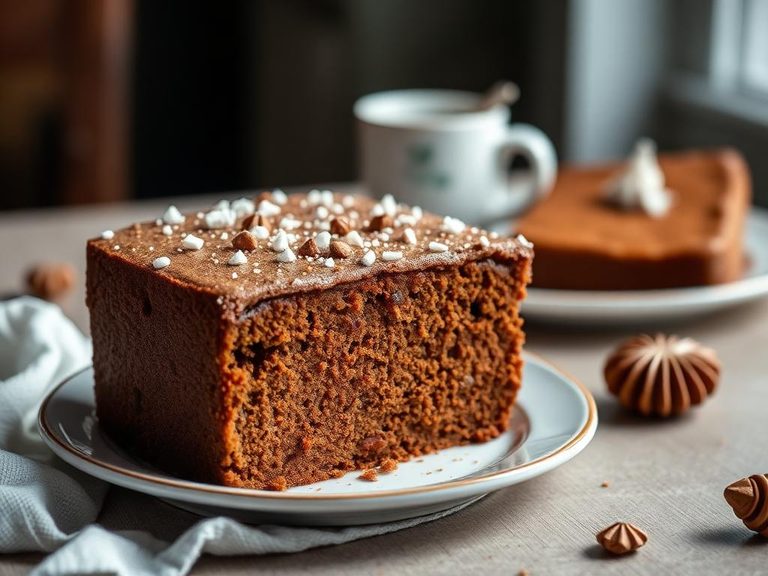
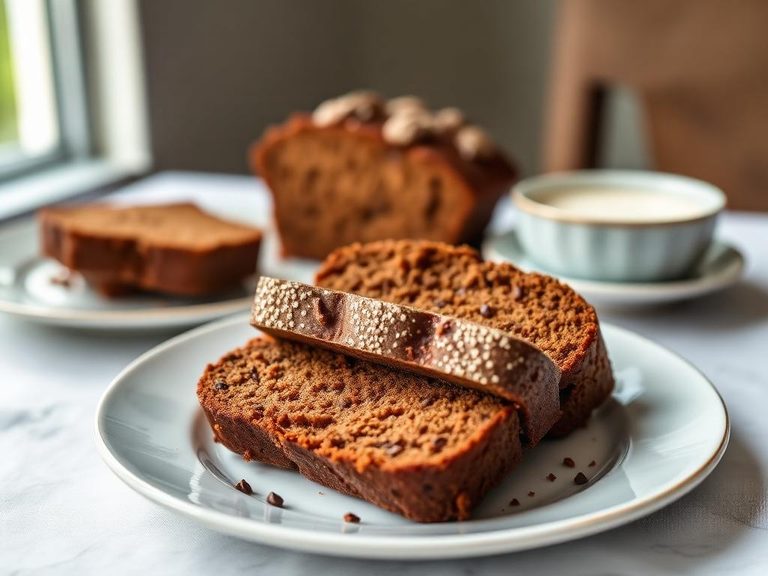
A dry, pre-measured blend of flour, sugar, and spices like ginger, cinnamon, and cloves, designed to be mixed with wet ingredients to create a moist, deeply flavored cake. The finished gingerbread has a dense, tender crumb with a warm, aromatic spice profile and a rich, molasses-like sweetness. Nutritionally, it's a high-energy treat, primarily delivering quick carbohydrates from its significant sugar content.
Calorie split: 4% protein · 68% carbs · 28% fat
↓ Full nutrition💚 Why it's loved
People adore its quintessential holiday warmth and nostalgic comfort, with the spicy-sweet flavor profile being both bold and familiar. Its versatility allows it to be shaped into everything from delicate cookies to sturdy architectural houses.
⚠️ Watch-outs & how to enjoy it better
The high sugar and refined carbohydrate content can lead to rapid blood-sugar spikes, making it a poor choice for those managing diabetes or seeking sustained energy. To counteract this, pair a small portion with a source of protein or healthy fat (like Greek yogurt or nuts) to slow sugar absorption, and practice strict portion control.
Key benefits
- Provides a quick source of energy from carbohydrates
- Contains some dietary fiber from flour and molasses
- Offers trace minerals like iron and manganese from spices
- Convenient base for homemade baked goods
- The spices may have antioxidant properties
🍽️ Popular dishes




🌍 Where it's eaten
💡 Did you know?
The tradition of elaborate gingerbread houses was popularized in Germany after the Brothers Grimm published 'Hansel and Gretel' in 1812, which featured a cottage made of bread, cake, and sugar.
Full nutrition (USDA data · scales with serving)
| Water | 4.4 g |
| Energy | 437 kcal |
| Energy | 1828 kj |
| Protein | 4.4 g |
| Total lipid (fat) | 13.8 g |
| Ash | 2.8 g |
| Carbohydrate, by difference | 74.6 g |
| Fiber, total dietary | 1.7 g |
| Total Sugars | 46.6 g |
| Calcium, Ca | 94.0 mg |
| Iron, Fe | 4.7 mg |
| Magnesium, Mg | 21.0 mg |
| Phosphorus, P | 226 mg |
| Potassium, K | 341 mg |
| Sodium, Na | 657 mg |
| Zinc, Zn | 0.36 mg |
| Copper, Cu | 0.25 mg |
| Manganese, Mn | 0.56 mg |
| Selenium, Se | 2.1 ug |
| Vitamin C, total ascorbic acid | 0.20 mg |
| Thiamin | 0.34 mg |
| Riboflavin | 0.24 mg |
| Niacin | 2.5 mg |
| Pantothenic acid | 0.23 mg |
| Vitamin B-6 | 0.04 mg |
| Folate, total | 51.0 ug |
| Folic acid | 37.0 ug |
| Folate, food | 14.0 ug |
| Folate, DFE | 77.0 ug |
| Choline, total | 10.7 mg |
| Vitamin B-12 | 0.00 ug |
| Vitamin B-12, added | 0.00 ug |
| Vitamin A, RAE | 0.00 ug |
| Retinol | 0.00 ug |
| Carotene, beta | 1.0 ug |
| Carotene, alpha | 0.00 ug |
| Cryptoxanthin, beta | 1.0 ug |
| Vitamin A, IU | 3.0 iu |
| Lycopene | 0.00 ug |
| Lutein + zeaxanthin | 3.0 ug |
| Vitamin E (alpha-tocopherol) | 0.20 mg |
| Vitamin E, added | 0.00 mg |
| Vitamin D (D2 + D3), International Units | 0.00 iu |
| Vitamin D (D2 + D3) | 0.00 ug |
| Vitamin K (phylloquinone) | 6.4 ug |
| Alcohol, ethyl | 0.00 g |
| Caffeine | 0.00 mg |
| Theobromine | 0.00 mg |
Fat & fatty acid profile (per 100g)
| Fatty acids, total saturated | 3.5 g |
| SFA 4:0 | 0.00 g |
| SFA 6:0 | 0.00 g |
| SFA 8:0 | 0.00 g |
| SFA 10:0 | 0.00 g |
| SFA 12:0 | 0.00 g |
| SFA 14:0 | 0.07 g |
| SFA 16:0 | 1.8 g |
| SFA 18:0 | 1.6 g |
| Fatty acids, total monounsaturated | 7.8 g |
| MUFA 16:1 | 0.00 g |
| MUFA 18:1 | 7.8 g |
| MUFA 20:1 | 0.00 g |
| MUFA 22:1 | 0.00 g |
| Fatty acids, total polyunsaturated | 1.8 g |
| PUFA 18:2 | 1.7 g |
| PUFA 18:3 | 0.09 g |
| PUFA 18:4 | 0.00 g |
| PUFA 20:4 | 0.00 g |
| PUFA 20:5 n-3 (EPA) | 0.00 g |
| PUFA 22:5 n-3 (DPA) | 0.00 g |
| PUFA 22:6 n-3 (DHA) | 0.00 g |
| Cholesterol | 0.00 mg |
Amino acid profile (per 100g)
| Tryptophan | 0.06 g |
| Threonine | 0.14 g |
| Isoleucine | 0.17 g |
| Leucine | 0.31 g |
| Lysine | 0.19 g |
| Methionine | 0.07 g |
| Cystine | 0.09 g |
| Phenylalanine | 0.21 g |
| Tyrosine | 0.13 g |
| Valine | 0.20 g |
| Arginine | 0.21 g |
| Histidine | 0.10 g |
| Alanine | 0.15 g |
| Aspartic acid | 0.28 g |
| Glutamic acid | 1.3 g |
| Glycine | 0.16 g |
| Proline | 0.41 g |
| Serine | 0.23 g |
FAQ
What is the difference between gingerbread cake and gingerbread cookies?
The dry mix is similar, but cake recipes use more liquid (like buttermilk) and leavening for a softer, more tender crumb. Cookie recipes use less liquid and often more flour for a stiffer dough that holds its shape when cut and baked.
Can I use this mix for anything other than cake or cookies?
Yes! It can be used as a flavorful base for muffins, scones, or even as a crumb topping for fruit crisps. You can also use it to make gingerbread-flavored pancakes or waffles by adjusting the liquid ratio.
Why does my gingerbread turn out too dense or tough?
Overmixing the batter is the most common cause. Mix the dry and wet ingredients just until combined; a few lumps are okay. Also, ensure your leavening agents (baking soda/powder) are fresh.
Nutrient density (calculated · NRF9.3)
Nutrient Rich Foods index: beneficial nutrients (protein, fiber, vitamins, minerals) minus saturated fat, added sugar & sodium, per 100 kcal.
NRF9.3 index — Fulgoni, Keast & Drewnowski, 2009. Computed from USDA nutrients.
Weight-loss friendliness (composite index)
Energy density 4.37 kcal/g · 4% calories from protein · 1.7 g fiber · 46.6 g sugar per 100 g.
Composite of energy density (Rolls et al., 1999), protein & fiber satiety, minus sugar. A calculated heuristic — ranks satiety-per-calorie, not a clinical measure.
Dietary load (calculated from USDA values)
Potential renal acid load. Positive = acid-forming, negative = alkaline-forming.
Sodium-to-potassium ratio: 1.93 (lower is better — aim for ≤ 1)
Sodium:potassium per WHO potassium guidance. Computed from USDA nutrients.