

Pfeffernüsse
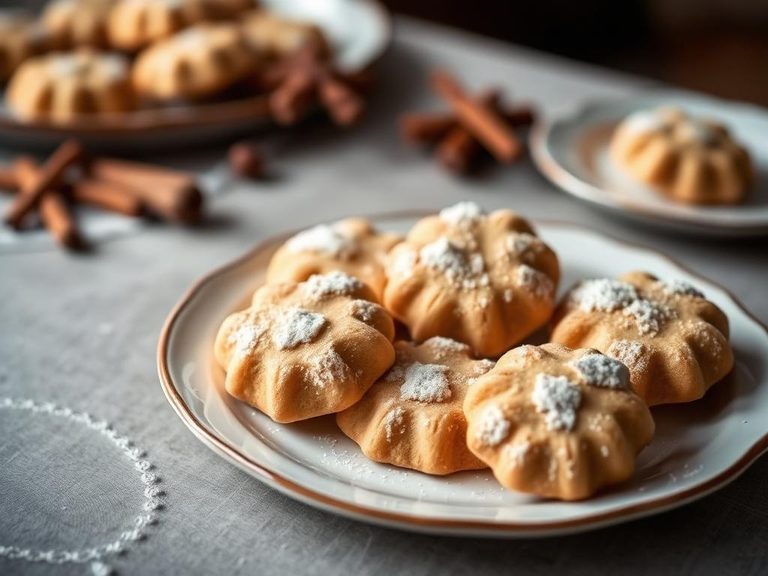
Pfeffernüsse, meaning 'pepper nuts' in German, are small, round, spice-forward cookies traditionally enjoyed during the Christmas season in Germany, Denmark, and the Netherlands. Their signature flavor comes from a blend of warm spices like cinnamon, cloves, and cardamom, often with a hint of black pepper, and they are typically made with molasses or honey and coated in a white sugar glaze or powdered sugar.
🍳 View the full Pfeffernüsse recipe →
🍽️ Nutrition at a glance
These cookies are high in carbohydrates and fat, with a moderate amount of sugar providing a quick energy boost. A typical serving of two small cookies contains roughly 120-150 calories, offering minimal protein but some iron and manganese from the spices and molasses.
Nutrition breakdown
| Calories | 160 kcal |
| Protein | 2.5 g |
| Carbs | 28 g |
| Fat | 5 g |
| Fiber | 1 g |
| Sugar | 16 g |
| Sodium | 80 mg |
| Iron | 1.5 mg |
| Calcium | 20 mg |
| Magnesium | 15 mg |
| Potassium | 60 mg |
| Phosphorus | 30 mg |
| Manganese | 0.3 mg |
| Copper | 0.1 mg |
| Vitamin B1 (Thiamine) | 0.05 mg |
Per 4 cookies (40 g) · estimated, varies by recipe
💡 What's interesting
Culturally, Pfeffernüsse are a staple of the German Christmas market ('Weihnachtsmarkt') tradition, often sold in paper cones. Nutritionally, their use of molasses and a complex spice blend provides trace minerals and antioxidants, making them a more flavor-dense treat compared to plain sugar cookies.
🍽️ Related dishes
AI estimate may be inaccurate · Terms