

Cabbage, green, cooked, fat added, NS as to fat type
Common food

Photo: Wikipedia
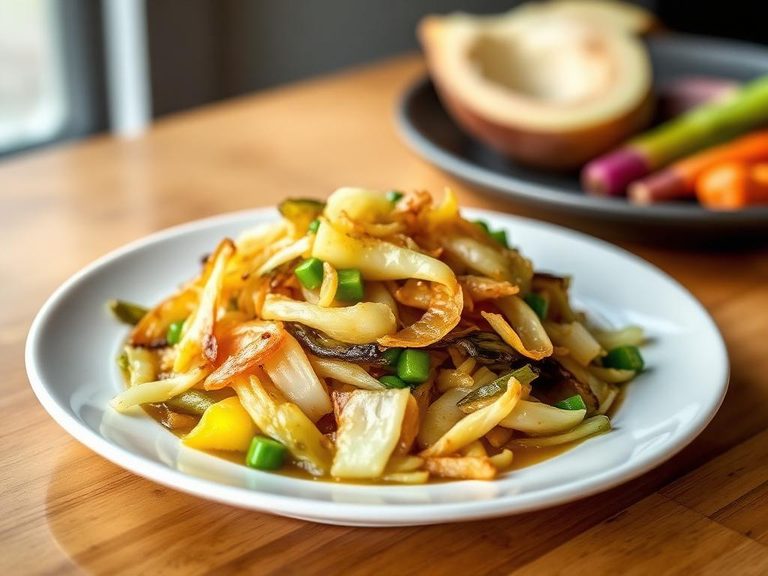
This is green cabbage that has been cooked with a small amount of added fat, resulting in a tender yet slightly crisp texture with a sweet, mild, and earthy flavor. The cooking process softens its fibrous leaves, making it a comforting and versatile side dish. Nutritionally, it's a low-calorie, high-fiber food that provides a good source of vitamin C and vitamin K.
Calorie split: 7% protein · 46% carbs · 47% fat
↓ Full nutrition💚 Why it's loved
People love it for its satisfying, sweet flavor that develops with cooking and its incredible versatility—it can be a simple side, a crunchy addition to stir-fries, or a hearty base for soups. It's a staple comfort food in many cultures, often evoking home cooking.
⚠️ Watch-outs & how to enjoy it better
Overcooking can lead to a sulfurous smell and mushy texture, which some find unappealing. To counteract this, cook it just until tender-crisp and avoid prolonged boiling. Those with thyroid conditions may want to moderate intake of very large, frequent portions of raw cruciferous vegetables, as compounds can interfere with iodine uptake; cooking significantly reduces this effect.
Key benefits
- Excellent source of dietary fiber for digestive health.
- Rich in vitamin C, an antioxidant that supports immune function.
- Contains vitamin K, essential for blood clotting and bone health.
- Low in calories, making it suitable for weight management.
- Provides beneficial plant compounds like sulforaphane.
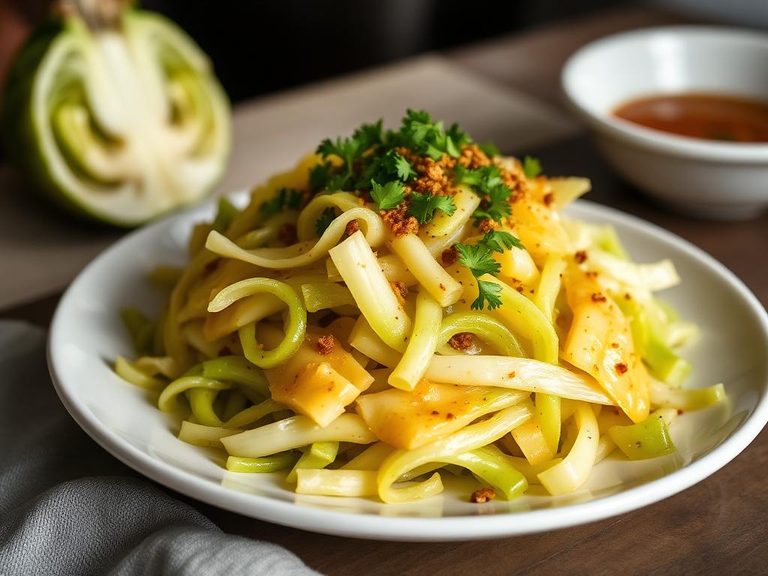
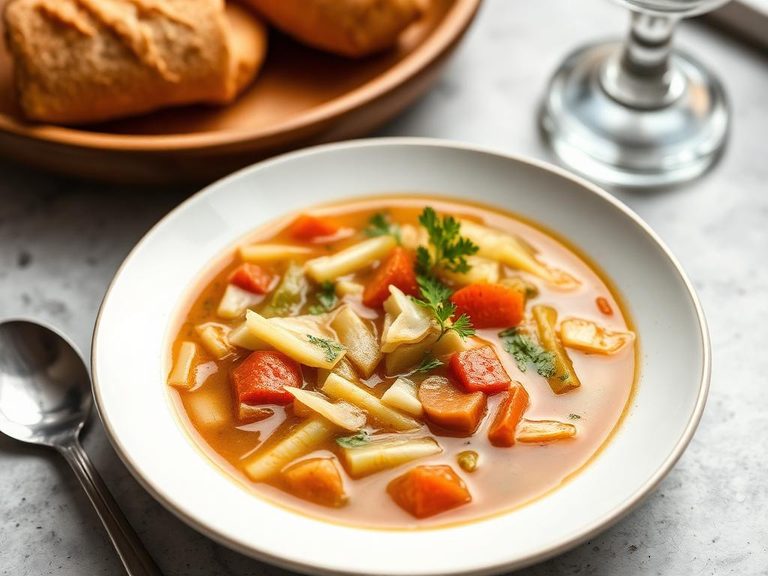
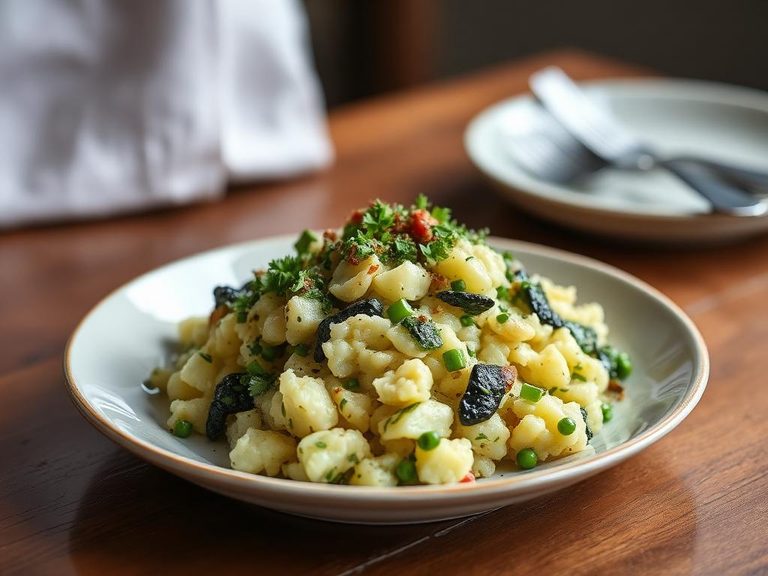
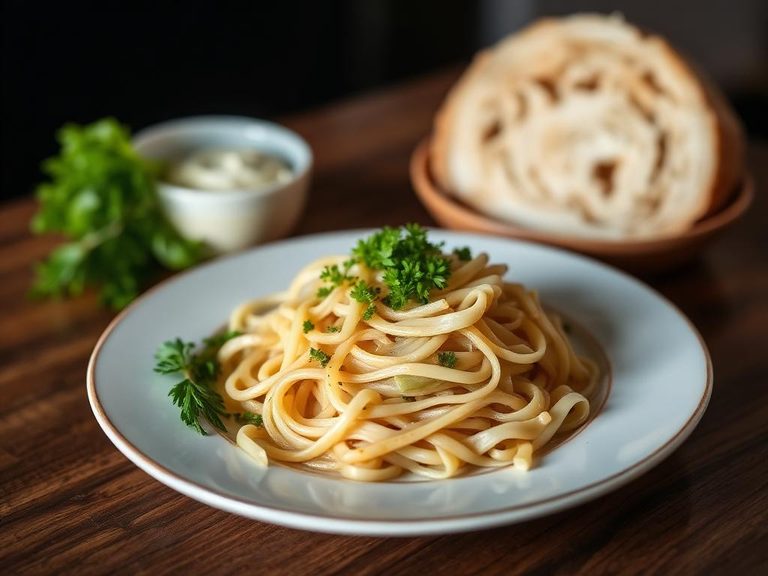
🍽️ Popular dishes
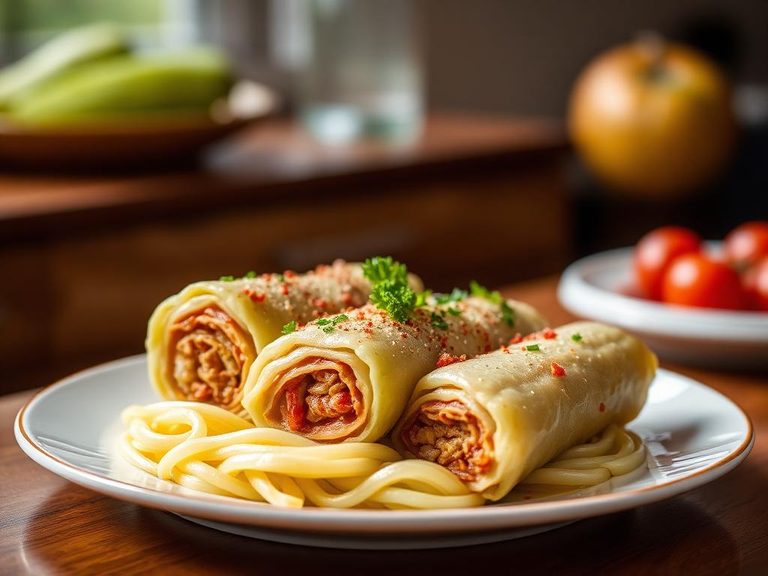
🌍 Where it's eaten
💡 Did you know?
The specific nutrient profile changes with cooking; while some vitamin C is lost, the bioavailability of other antioxidants and minerals like iron can increase.
Full nutrition (USDA data · scales with serving)
| Water | 88.8 g |
| Energy | 55.0 kcal |
| Protein | 0.98 g |
| Total lipid (fat) | 2.9 g |
| Carbohydrate, by difference | 6.4 g |
| Fiber, total dietary | 2.5 g |
| Total Sugars | 3.2 g |
| Calcium, Ca | 43.0 mg |
| Iron, Fe | 0.07 mg |
| Magnesium, Mg | 14.0 mg |
| Phosphorus, P | 28.0 mg |
| Potassium, K | 209 mg |
| Sodium, Na | 142 mg |
| Zinc, Zn | 0.21 mg |
| Copper, Cu | 0.00 mg |
| Selenium, Se | 0.30 ug |
| Vitamin C, total ascorbic acid | 34.5 mg |
| Thiamin | 0.06 mg |
| Riboflavin | 0.04 mg |
| Niacin | 0.22 mg |
| Vitamin B-6 | 0.14 mg |
| Folate, total | 37.0 ug |
| Folic acid | 0.00 ug |
| Folate, food | 37.0 ug |
| Folate, DFE | 37.0 ug |
| Choline, total | 11.0 mg |
| Vitamin B-12 | 0.00 ug |
| Vitamin B-12, added | 0.00 ug |
| Vitamin A, RAE | 17.0 ug |
| Retinol | 11.0 ug |
| Carotene, beta | 45.0 ug |
| Carotene, alpha | 32.0 ug |
| Cryptoxanthin, beta | 0.00 ug |
| Lycopene | 0.00 ug |
| Lutein + zeaxanthin | 29.0 ug |
| Vitamin E (alpha-tocopherol) | 0.55 mg |
| Vitamin E, added | 0.00 mg |
| Vitamin D (D2 + D3) | 0.00 ug |
| Vitamin K (phylloquinone) | 62.1 ug |
| Alcohol, ethyl | 0.00 g |
| Caffeine | 0.00 mg |
| Theobromine | 0.00 mg |
Fat & fatty acid profile (per 100g)
| Fatty acids, total saturated | 0.73 g |
| SFA 4:0 | 0.02 g |
| SFA 6:0 | 0.01 g |
| SFA 8:0 | 0.01 g |
| SFA 10:0 | 0.02 g |
| SFA 12:0 | 0.02 g |
| SFA 14:0 | 0.07 g |
| SFA 16:0 | 0.41 g |
| SFA 18:0 | 0.14 g |
| Fatty acids, total monounsaturated | 0.96 g |
| MUFA 16:1 | 0.01 g |
| MUFA 18:1 | 0.92 g |
| MUFA 20:1 | 0.01 g |
| MUFA 22:1 | 0.00 g |
| Fatty acids, total polyunsaturated | 0.78 g |
| PUFA 18:2 | 0.69 g |
| PUFA 18:3 | 0.08 g |
| PUFA 18:4 | 0.00 g |
| PUFA 20:4 | 0.00 g |
| PUFA 20:5 n-3 (EPA) | 0.00 g |
| PUFA 22:5 n-3 (DPA) | 0.00 g |
| PUFA 22:6 n-3 (DHA) | 0.00 g |
| Cholesterol | 2.0 mg |
Amino acid profile (per 100g)
Estimated from Cabbage, red, cooked, boiled, drained, with salt — USDA does not publish this profile for Cabbage.
| Tryptophan | 0.01 g |
| Threonine | 0.04 g |
| Isoleucine | 0.04 g |
| Leucine | 0.05 g |
| Lysine | 0.05 g |
| Methionine | 0.01 g |
| Cystine | 0.01 g |
| Phenylalanine | 0.04 g |
| Tyrosine | 0.02 g |
| Valine | 0.05 g |
| Arginine | 0.09 g |
| Histidine | 0.03 g |
| Alanine | 0.05 g |
| Aspartic acid | 0.14 g |
| Glutamic acid | 0.35 g |
| Glycine | 0.04 g |
| Proline | 0.06 g |
| Serine | 0.06 g |
FAQ
How is this different from raw cabbage?
Cooking with fat softens the texture, reduces volume, and develops a sweeter, less peppery flavor. It also makes some nutrients more digestible, though heat-sensitive vitamins like C may decrease.
What does 'NS as to fat type' mean?
It stands for 'Not Specified as to fat type,' meaning the nutritional data is an average for cabbage cooked with some added fat (like oil or butter), but the exact type and amount of fat aren't defined.
Is it still healthy with the added fat?
Yes, the added fat is modest (about 3g per 100g serving) and helps your body absorb fat-soluble vitamins like K and A. The dish remains low-calorie and nutrient-dense.
Nutrient density (calculated · NRF9.3)
Nutrient Rich Foods index: beneficial nutrients (protein, fiber, vitamins, minerals) minus saturated fat, added sugar & sodium, per 100 kcal.
NRF9.3 index — Fulgoni, Keast & Drewnowski, 2009. Computed from USDA nutrients.
Weight-loss friendliness (composite index)
Energy density 0.55 kcal/g · 7% calories from protein · 2.5 g fiber · 3.2 g sugar per 100 g.
Composite of energy density (Rolls et al., 1999), protein & fiber satiety, minus sugar. A calculated heuristic — ranks satiety-per-calorie, not a clinical measure.
Dietary load (calculated from USDA values)
Potential renal acid load. Positive = acid-forming, negative = alkaline-forming.
Sodium-to-potassium ratio: 0.68 (lower is better — aim for ≤ 1)
Sodium:potassium per WHO potassium guidance. Computed from USDA nutrients.