

Broadbeans (fava beans), mature seeds, raw
Whole food · Legumes and Legume Products

Photo: Wikipedia
The mature, dried seed of the fava bean, this hardy legume offers a hearty, earthy flavor and a dense, starchy texture when cooked. Nutritionally, it's a powerhouse, packing an exceptional 25g of fiber and over 26g of plant-based protein per 100g, making it a cornerstone of many hearty cuisines.
Calorie split: 30% protein · 66% carbs · 4% fat
↓ Full nutrition💚 Why it's loved
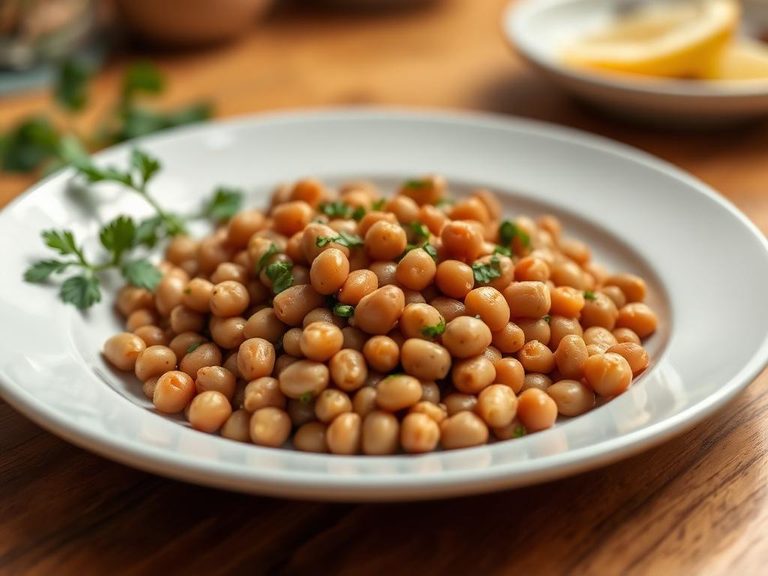
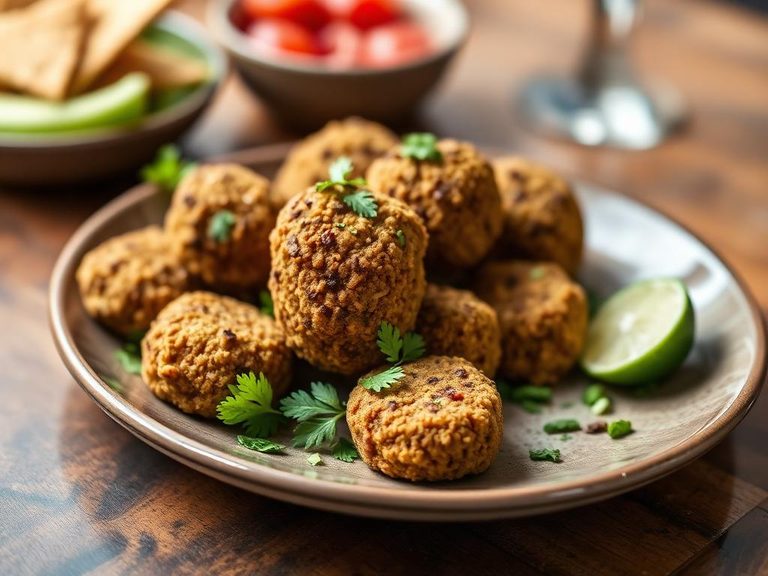
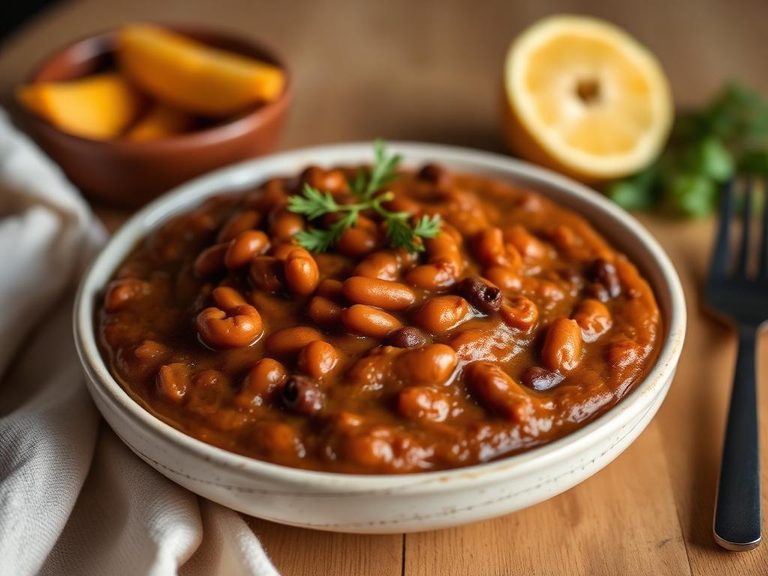
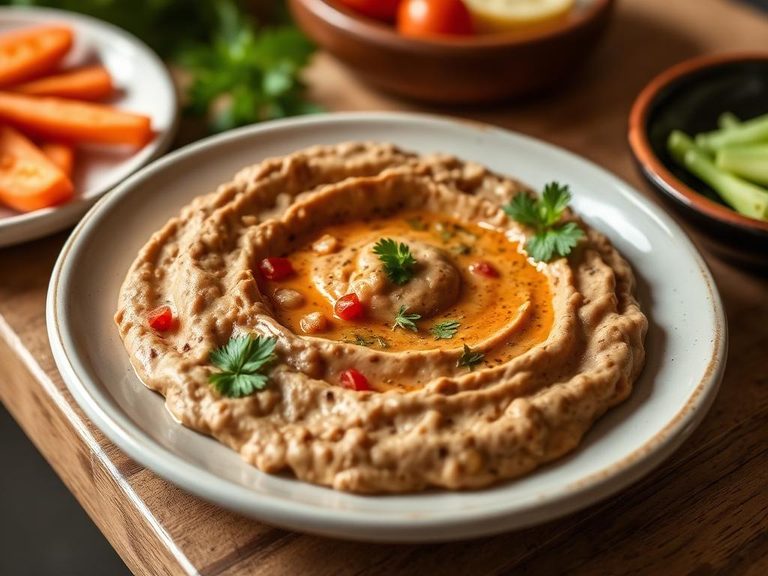
People cherish broad beans for their robust, nutty flavor that forms the base of iconic dishes like falafel and ful medames. Their incredible versatility allows them to be ground into flour, fried into snacks, or stewed into hearty, comforting meals across cultures.
⚠️ Watch-outs & how to enjoy it better
They contain natural compounds called lectins (like phytohaemagglutinin) and can cause digestive discomfort if not cooked thoroughly; always boil them vigorously for at least 10 minutes. For those with G6PD deficiency, consuming raw or undercooked broad beans can trigger a serious reaction, so thorough cooking is non-negotiable.
Key benefits
- Exceptionally high in dietary fiber for digestive health.
- Excellent source of plant-based protein.
- Rich in folate, manganese, and other essential minerals.
- Provides a sustained energy release due to complex carbohydrates.
🍽️ Popular dishes
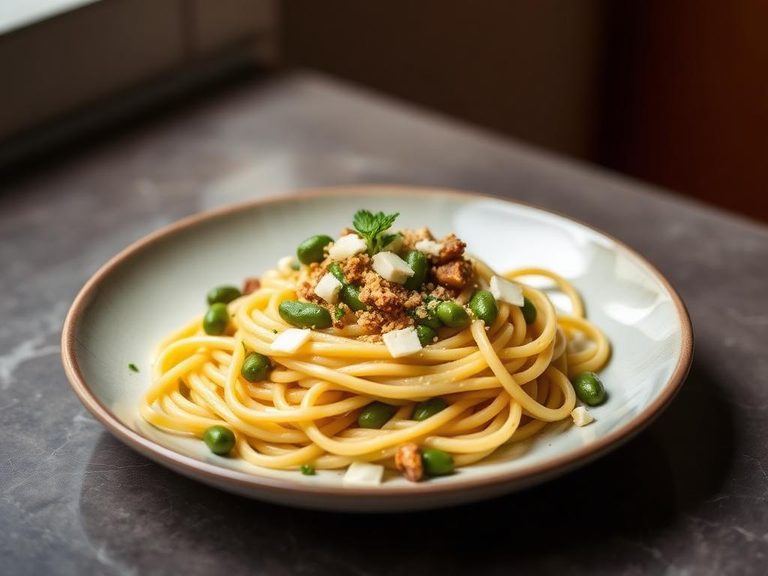
🌍 Where it's eaten
💡 Did you know?
Fava beans are one of the oldest cultivated plants, with evidence of their use dating back to the Neolithic period in the Near East, and they were a staple food for ancient Roman legions.
Full nutrition (USDA data · scales with serving)
| Water | 11.0 g |
| Energy | 341 kcal |
| Energy | 1425 kj |
| Protein | 26.1 g |
| Total lipid (fat) | 1.5 g |
| Ash | 3.1 g |
| Carbohydrate, by difference | 58.3 g |
| Fiber, total dietary | 25.0 g |
| Total Sugars | 5.7 g |
| Calcium, Ca | 103 mg |
| Iron, Fe | 6.7 mg |
| Magnesium, Mg | 192 mg |
| Phosphorus, P | 421 mg |
| Potassium, K | 1062 mg |
| Sodium, Na | 13.0 mg |
| Zinc, Zn | 3.1 mg |
| Copper, Cu | 0.82 mg |
| Manganese, Mn | 1.6 mg |
| Selenium, Se | 8.2 ug |
| Vitamin C, total ascorbic acid | 1.4 mg |
| Thiamin | 0.56 mg |
| Riboflavin | 0.33 mg |
| Niacin | 2.8 mg |
| Pantothenic acid | 0.98 mg |
| Vitamin B-6 | 0.37 mg |
| Folate, total | 423 ug |
| Folic acid | 0.00 ug |
| Folate, food | 423 ug |
| Folate, DFE | 423 ug |
| Choline, total | 95.8 mg |
| Vitamin B-12 | 0.00 ug |
| Vitamin B-12, added | 0.00 ug |
| Vitamin A, RAE | 3.0 ug |
| Retinol | 0.00 ug |
| Carotene, beta | 32.0 ug |
| Carotene, alpha | 0.00 ug |
| Cryptoxanthin, beta | 0.00 ug |
| Vitamin A, IU | 53.0 iu |
| Lycopene | 0.00 ug |
| Lutein + zeaxanthin | 0.00 ug |
| Vitamin E (alpha-tocopherol) | 0.05 mg |
| Vitamin E, added | 0.00 mg |
| Vitamin D (D2 + D3), International Units | 0.00 iu |
| Vitamin D (D2 + D3) | 0.00 ug |
| Vitamin K (phylloquinone) | 9.0 ug |
| Alcohol, ethyl | 0.00 g |
| Caffeine | 0.00 mg |
| Theobromine | 0.00 mg |
Fat & fatty acid profile (per 100g)
| Fatty acids, total saturated | 0.25 g |
| SFA 4:0 | 0.00 g |
| SFA 6:0 | 0.00 g |
| SFA 8:0 | 0.00 g |
| SFA 10:0 | 0.00 g |
| SFA 12:0 | 0.00 g |
| SFA 14:0 | 0.00 g |
| SFA 16:0 | 0.20 g |
| SFA 18:0 | 0.03 g |
| Fatty acids, total monounsaturated | 0.30 g |
| MUFA 16:1 | 0.00 g |
| MUFA 18:1 | 0.30 g |
| MUFA 20:1 | 0.00 g |
| MUFA 22:1 | 0.00 g |
| Fatty acids, total polyunsaturated | 0.63 g |
| PUFA 18:2 | 0.58 g |
| PUFA 18:3 | 0.05 g |
| PUFA 18:4 | 0.00 g |
| PUFA 20:4 | 0.00 g |
| PUFA 20:5 n-3 (EPA) | 0.00 g |
| PUFA 22:5 n-3 (DPA) | 0.00 g |
| PUFA 22:6 n-3 (DHA) | 0.00 g |
| Fatty acids, total trans | 0.00 g |
| Cholesterol | 0.00 mg |
| Phytosterols | 124 mg |
Amino acid profile (per 100g)
| Tryptophan | 0.25 g |
| Threonine | 0.93 g |
| Isoleucine | 1.1 g |
| Leucine | 2.0 g |
| Lysine | 1.7 g |
| Methionine | 0.21 g |
| Cystine | 0.33 g |
| Phenylalanine | 1.1 g |
| Tyrosine | 0.83 g |
| Valine | 1.2 g |
| Arginine | 2.4 g |
| Histidine | 0.66 g |
| Alanine | 1.1 g |
| Aspartic acid | 2.9 g |
| Glutamic acid | 4.4 g |
| Glycine | 1.1 g |
| Proline | 1.1 g |
| Serine | 1.2 g |
FAQ
Do I need to remove the outer skin from broad beans?
For mature, dried beans, it's recommended. After cooking, the skins can be tough and fibrous. Pinching each bean between your fingers will pop the bright green inner bean out, improving texture and digestibility.
What is the difference between broad beans and fava beans?
They are the same bean (Vicia faba). 'Broad bean' is the common name in the UK and elsewhere, while 'fava bean' is widely used in the US and for culinary products like 'fava bean flour'.
Can I eat the pods of mature broad beans?
No. The pods of mature, dried broad beans become tough, fibrous, and inedible. Only the pods of young, tender, green broad beans (often sold as 'fava beans') can be eaten, and even then, they are often shelled.
Nutrient density (calculated · NRF9.3)
Nutrient Rich Foods index: beneficial nutrients (protein, fiber, vitamins, minerals) minus saturated fat, added sugar & sodium, per 100 kcal.
NRF9.3 index — Fulgoni, Keast & Drewnowski, 2009. Computed from USDA nutrients.
Weight-loss friendliness (composite index)
Energy density 3.41 kcal/g · 31% calories from protein · 25.0 g fiber · 5.7 g sugar per 100 g.
Composite of energy density (Rolls et al., 1999), protein & fiber satiety, minus sugar. A calculated heuristic — ranks satiety-per-calorie, not a clinical measure.
Dietary load (calculated from USDA values)
Potential renal acid load. Positive = acid-forming, negative = alkaline-forming.
Sodium-to-potassium ratio: 0.01 (lower is better — aim for ≤ 1)
Sodium:potassium per WHO potassium guidance. Computed from USDA nutrients.