

Beverages, coffee, instant, regular, prepared with water
Whole food · Beverages

Photo: Wikipedia
Instant coffee is a dehydrated coffee concentrate made by brewing and then freeze-drying or spray-drying roasted coffee beans. It dissolves instantly in hot water, offering a light-bodied, slightly bitter brew with a distinct, often milder aroma than freshly brewed coffee. Nutritionally, it is extremely low in calories and contains negligible amounts of protein, carbohydrates, and fat.
Calorie split: 23% protein · 77% carbs · 0% fat
↓ Full nutrition💚 Why it's loved
People love it for its unparalleled convenience and speed, making it a reliable caffeine source for busy mornings, travel, or areas without fresh coffee access. Its consistent, mild flavor profile also serves as a familiar, comforting base for many coffee-based drinks.
⚠️ Watch-outs & how to enjoy it better
Some find its flavor profile less complex and aromatic than freshly brewed coffee, often describing it as having a slightly burnt or metallic aftertaste. Those sensitive to caffeine should be cautious, as a standard cup can contain 30-90 mg. To mitigate jitters, pair it with a source of protein or healthy fat (like nuts or milk) to slow caffeine absorption, and practice portion control by limiting to 1-2 cups.
Key benefits
- Extremely convenient and quick to prepare
- Virtually calorie-free beverage option
- Contains antioxidants like chlorogenic acid
- Long shelf life without refrigeration
- Provides a consistent caffeine dose
🍽️ Popular dishes
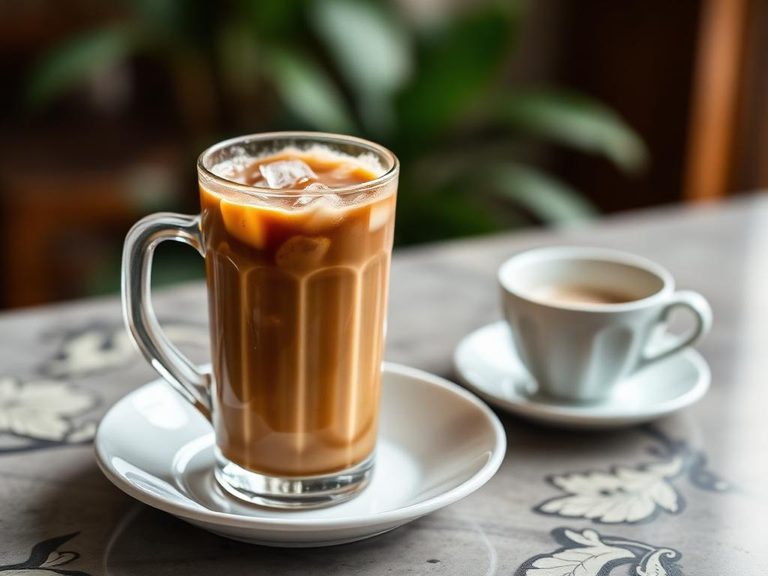
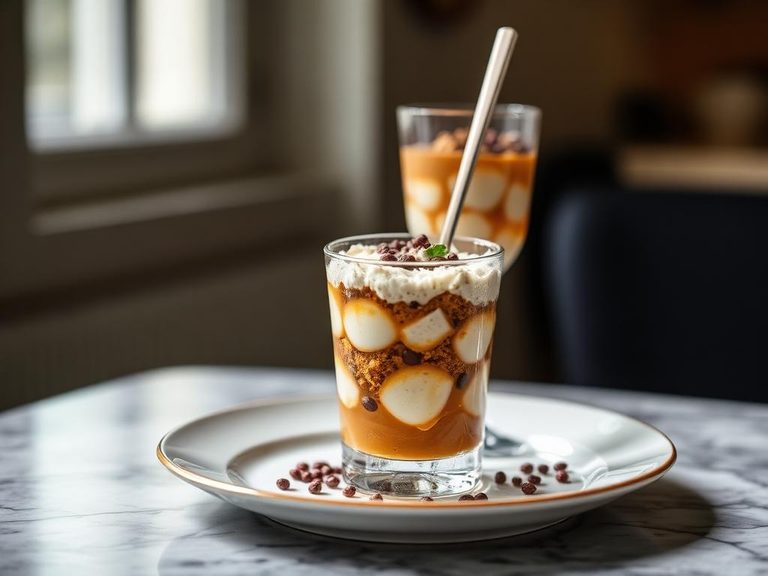

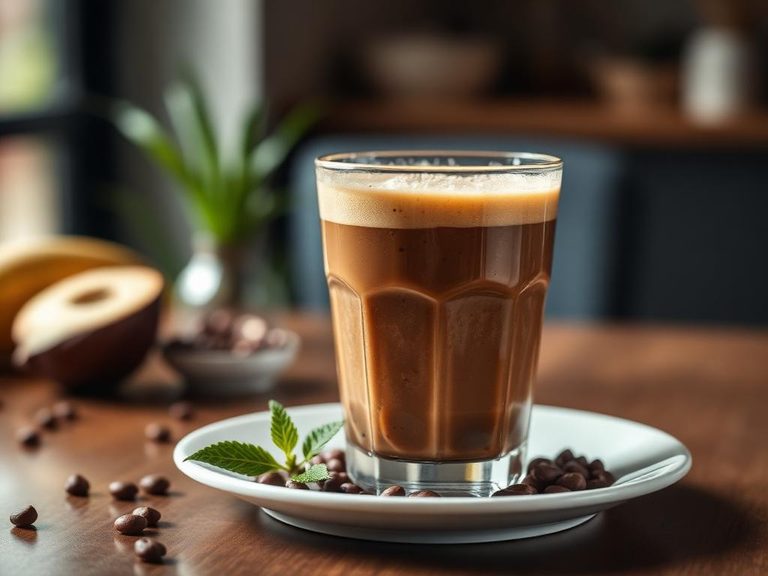

🌍 Where it's eaten
💡 Did you know?
The largest producer of instant coffee is not a traditional coffee-growing nation, but Switzerland, home to major brands like Nescafé.
Full nutrition (USDA data · scales with serving)
| Water | 99.1 g |
| Energy | 2.0 kcal |
| Energy | 7.0 kj |
| Protein | 0.10 g |
| Total lipid (fat) | 0.00 g |
| Ash | 0.17 g |
| Carbohydrate, by difference | 0.34 g |
| Fiber, total dietary | 0.00 g |
| Total Sugars | 0.00 g |
| Calcium, Ca | 4.0 mg |
| Iron, Fe | 0.04 mg |
| Magnesium, Mg | 4.0 mg |
| Phosphorus, P | 3.0 mg |
| Potassium, K | 30.0 mg |
| Sodium, Na | 4.0 mg |
| Zinc, Zn | 0.01 mg |
| Copper, Cu | 0.01 mg |
| Manganese, Mn | 0.01 mg |
| Selenium, Se | 0.10 ug |
| Vitamin C, total ascorbic acid | 0.00 mg |
| Thiamin | 0.00 mg |
| Riboflavin | 0.00 mg |
| Niacin | 0.24 mg |
| Pantothenic acid | 0.00 mg |
| Vitamin B-6 | 0.00 mg |
| Folate, total | 0.00 ug |
| Folic acid | 0.00 ug |
| Folate, food | 0.00 ug |
| Folate, DFE | 0.00 ug |
| Vitamin B-12 | 0.00 ug |
| Vitamin B-12, added | 0.00 ug |
| Vitamin A, RAE | 0.00 ug |
| Retinol | 0.00 ug |
| Carotene, beta | 0.00 ug |
| Carotene, alpha | 0.00 ug |
| Cryptoxanthin, beta | 0.00 ug |
| Vitamin A, IU | 0.00 iu |
| Lycopene | 0.00 ug |
| Lutein + zeaxanthin | 0.00 ug |
| Vitamin E (alpha-tocopherol) | 0.00 mg |
| Vitamin E, added | 0.00 mg |
| Vitamin K (phylloquinone) | 0.00 ug |
| Alcohol, ethyl | 0.00 g |
| Caffeine | 26.0 mg |
| Theobromine | 0.00 mg |
Fat & fatty acid profile (per 100g)
| Fatty acids, total saturated | 0.00 g |
| SFA 4:0 | 0.00 g |
| SFA 6:0 | 0.00 g |
| SFA 8:0 | 0.00 g |
| SFA 10:0 | 0.00 g |
| SFA 12:0 | 0.00 g |
| SFA 14:0 | 0.00 g |
| SFA 16:0 | 0.00 g |
| SFA 18:0 | 0.00 g |
| Fatty acids, total monounsaturated | 0.00 g |
| MUFA 16:1 | 0.00 g |
| MUFA 18:1 | 0.00 g |
| MUFA 20:1 | 0.00 g |
| MUFA 22:1 | 0.00 g |
| Fatty acids, total polyunsaturated | 0.00 g |
| PUFA 18:2 | 0.00 g |
| PUFA 18:3 | 0.00 g |
| PUFA 18:4 | 0.00 g |
| PUFA 20:4 | 0.00 g |
| PUFA 20:5 n-3 (EPA) | 0.00 g |
| PUFA 22:5 n-3 (DPA) | 0.00 g |
| PUFA 22:6 n-3 (DHA) | 0.00 g |
| Fatty acids, total trans | 0.00 g |
| Cholesterol | 0.00 mg |
Amino acid profile (per 100g)
Estimated from Beverages, carbonated, tonic water — USDA does not publish this profile for Beverages.
| Tryptophan | 0.00 g |
| Threonine | 0.00 g |
| Isoleucine | 0.00 g |
| Leucine | 0.00 g |
| Lysine | 0.00 g |
| Methionine | 0.00 g |
| Cystine | 0.00 g |
| Phenylalanine | 0.00 g |
| Tyrosine | 0.00 g |
| Valine | 0.00 g |
| Arginine | 0.00 g |
| Histidine | 0.00 g |
| Alanine | 0.00 g |
| Aspartic acid | 0.00 g |
| Glutamic acid | 0.00 g |
| Glycine | 0.00 g |
| Proline | 0.00 g |
| Serine | 0.00 g |
FAQ
How is instant coffee made?
It's made by brewing a very strong coffee concentrate, then removing the water through either freeze-drying (freezing and sublimating under vacuum) or spray-drying (spraying into hot air). The result is soluble coffee crystals or powder.
Does instant coffee have less caffeine than brewed?
Generally, yes. An average 8-oz cup of instant coffee contains about 30-90 mg of caffeine, while brewed coffee typically has 70-140 mg. However, this varies by brand and serving size.
Is instant coffee less healthy than regular coffee?
Not necessarily. It retains most of the antioxidants found in regular coffee. The main health differences are often due to additives (like sugar in 3-in-1 mixes) or slightly lower caffeine content, not the instant coffee itself.
Nutrient density (calculated · NRF9.3)
Nutrient Rich Foods index: beneficial nutrients (protein, fiber, vitamins, minerals) minus saturated fat, added sugar & sodium, per 100 kcal.
NRF9.3 index — Fulgoni, Keast & Drewnowski, 2009. Computed from USDA nutrients.
Weight-loss friendliness (composite index)
Energy density 0.02 kcal/g · 20% calories from protein · 0.0 g fiber · 0.0 g sugar per 100 g.
Composite of energy density (Rolls et al., 1999), protein & fiber satiety, minus sugar. A calculated heuristic — ranks satiety-per-calorie, not a clinical measure.
Dietary load (calculated from USDA values)
Potential renal acid load. Positive = acid-forming, negative = alkaline-forming.
Sodium-to-potassium ratio: 0.13 (lower is better — aim for ≤ 1)
Sodium:potassium per WHO potassium guidance. Computed from USDA nutrients.