

Beef, steak, sirloin, NS as to fat eaten
Common food

Photo: Wikipedia
Sirloin steak is a lean, robustly flavored cut from the cow's lower back, prized for its firm yet tender texture and a clean, beefy taste. When cooked properly, it offers a satisfying chew without excessive fat, making it a staple for protein-focused meals. With nearly 27g of protein and zero carbs per 100g, it's a powerhouse for muscle maintenance and satiety.
Calorie split: 46% protein · 0% carbs · 54% fat
↓ Full nutrition💚 Why it's loved
People love sirloin for its deep, savory umami flavor and its versatility—it can be the star of a simple grilled dinner or sliced thin for stir-fries. Its cultural significance in steakhouses and home cooking worldwide makes it a go-to choice for a reliable, hearty meal.
⚠️ Watch-outs & how to enjoy it better
As a red meat, it can be high in saturated fat and cholesterol, which some individuals may need to moderate. To counteract this, pair it with fiber-rich vegetables like roasted broccoli or a fresh salad, and practice portion control. Also, ensure it's cooked to a safe internal temperature to avoid foodborne illness.
Key benefits
- Excellent source of high-quality, complete protein.
- Rich in essential minerals like zinc and iron.
- Zero carbohydrates, suitable for low-carb and ketogenic diets.
- Contains B vitamins, especially B12, crucial for nerve function.
- Leaner than many other steak cuts, offering good flavor with less fat.
🍽️ Popular dishes
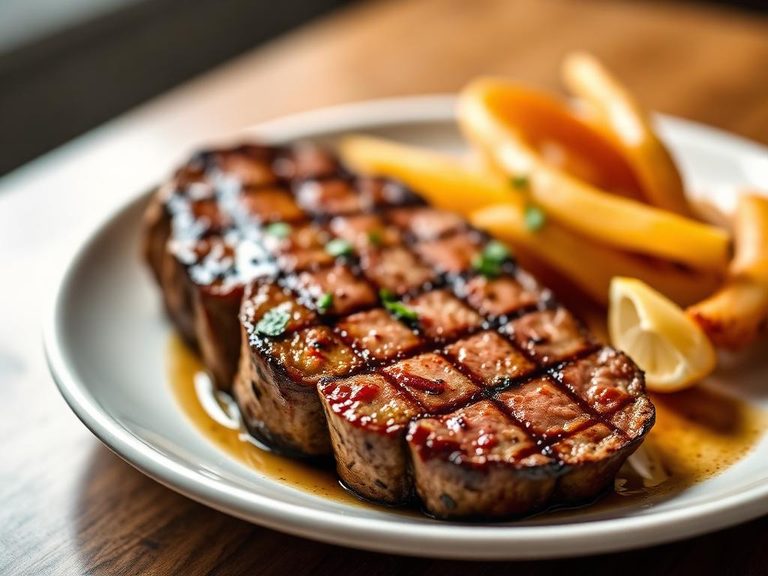
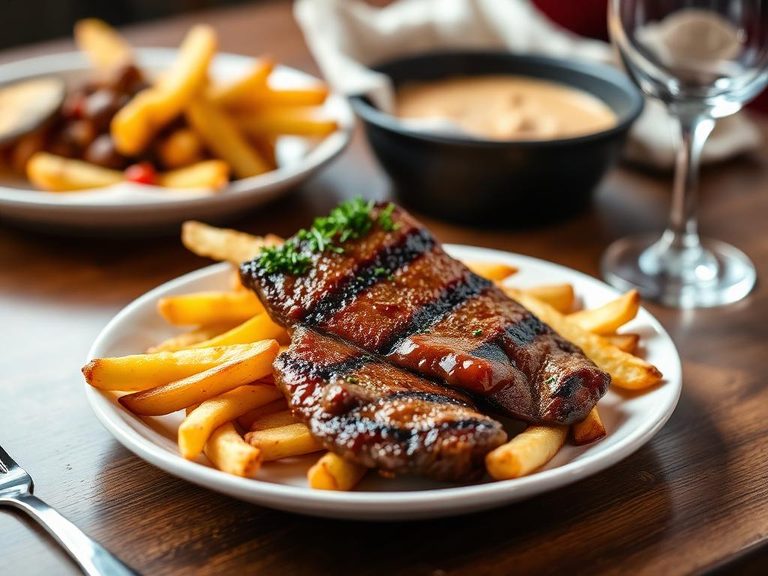
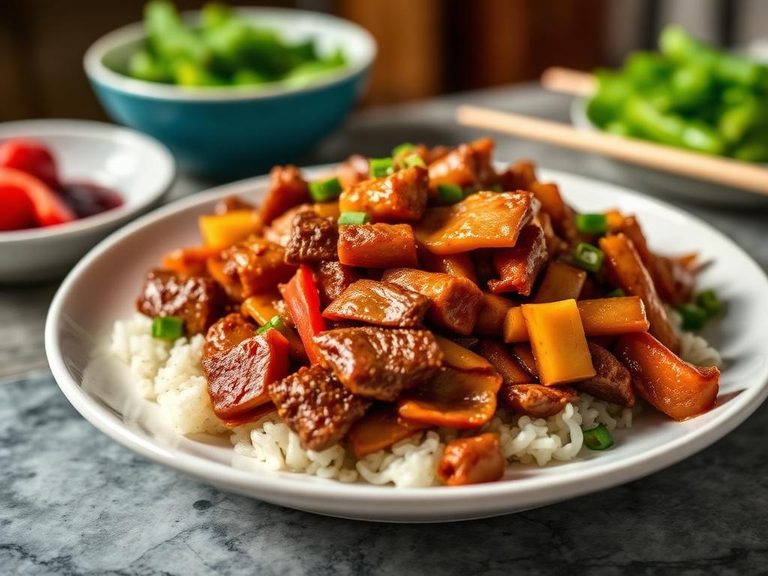
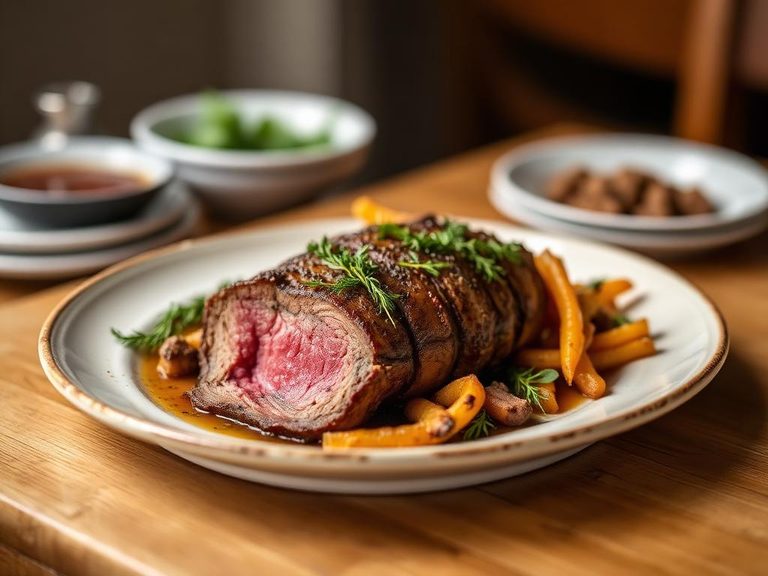
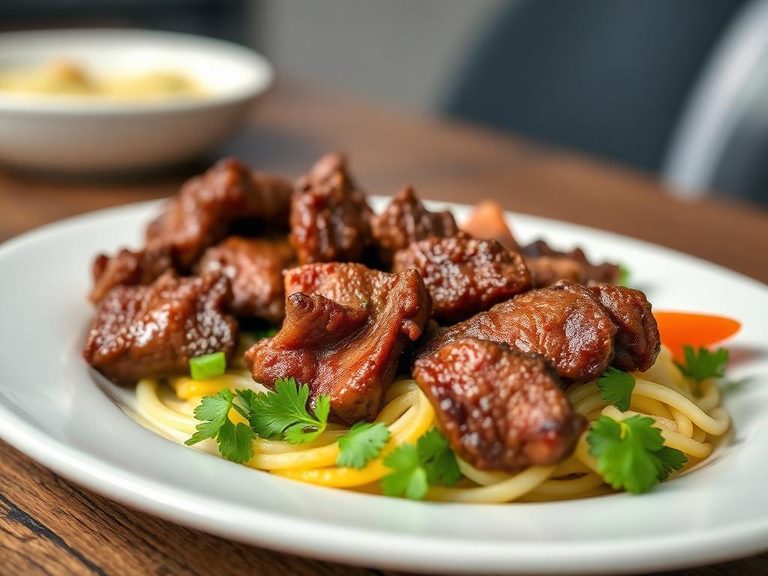
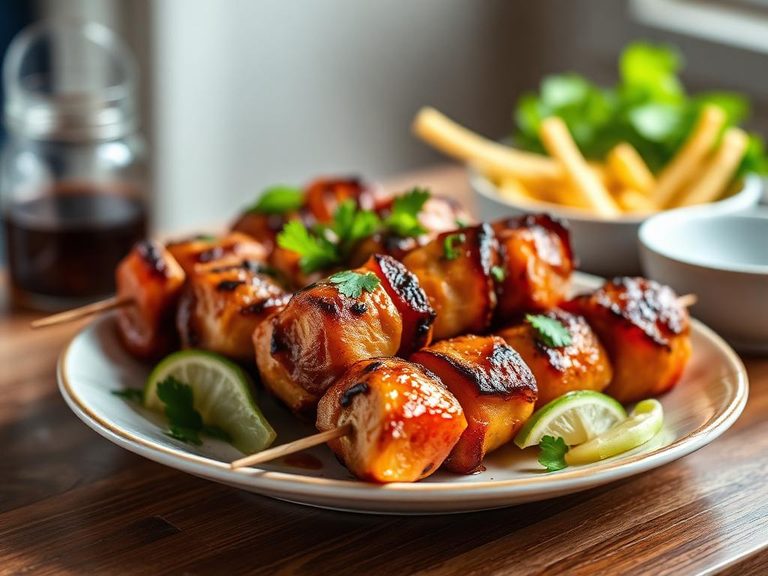
🌍 Where it's eaten
💡 Did you know?
The name 'sirloin' is popularly (though likely apocryphally) said to derive from King Henry VIII of England allegedly knighting a loin of beef with a 'Sir Loin' during a feast.
Full nutrition (USDA data · scales with serving)
| Water | 57.8 g |
| Energy | 239 kcal |
| Protein | 27.1 g |
| Total lipid (fat) | 14.0 g |
| Carbohydrate, by difference | 0.00 g |
| Fiber, total dietary | 0.00 g |
| Total Sugars | 0.00 g |
| Calcium, Ca | 17.0 mg |
| Iron, Fe | 2.0 mg |
| Magnesium, Mg | 22.0 mg |
| Phosphorus, P | 211 mg |
| Potassium, K | 315 mg |
| Sodium, Na | 361 mg |
| Zinc, Zn | 4.7 mg |
| Copper, Cu | 0.08 mg |
| Selenium, Se | 28.0 ug |
| Vitamin C, total ascorbic acid | 0.00 mg |
| Thiamin | 0.07 mg |
| Riboflavin | 0.16 mg |
| Niacin | 7.1 mg |
| Vitamin B-6 | 0.61 mg |
| Folate, total | 8.0 ug |
| Folic acid | 0.00 ug |
| Folate, food | 8.0 ug |
| Folate, DFE | 8.0 ug |
| Choline, total | 88.5 mg |
| Vitamin B-12 | 1.7 ug |
| Vitamin B-12, added | 0.00 ug |
| Vitamin A, RAE | 1.0 ug |
| Retinol | 1.0 ug |
| Carotene, beta | 0.00 ug |
| Carotene, alpha | 0.00 ug |
| Cryptoxanthin, beta | 0.00 ug |
| Lycopene | 0.00 ug |
| Lutein + zeaxanthin | 0.00 ug |
| Vitamin E (alpha-tocopherol) | 0.37 mg |
| Vitamin E, added | 0.00 mg |
| Vitamin D (D2 + D3) | 0.20 ug |
| Vitamin K (phylloquinone) | 1.6 ug |
| Alcohol, ethyl | 0.00 g |
| Caffeine | 0.00 mg |
| Theobromine | 0.00 mg |
Fat & fatty acid profile (per 100g)
| Fatty acids, total saturated | 5.5 g |
| SFA 4:0 | 0.00 g |
| SFA 6:0 | 0.00 g |
| SFA 8:0 | 0.00 g |
| SFA 10:0 | 0.03 g |
| SFA 12:0 | 0.03 g |
| SFA 14:0 | 0.41 g |
| SFA 16:0 | 3.3 g |
| SFA 18:0 | 1.7 g |
| Fatty acids, total monounsaturated | 5.9 g |
| MUFA 16:1 | 0.51 g |
| MUFA 18:1 | 5.3 g |
| MUFA 20:1 | 0.02 g |
| MUFA 22:1 | 0.00 g |
| Fatty acids, total polyunsaturated | 0.58 g |
| PUFA 18:2 | 0.42 g |
| PUFA 18:3 | 0.10 g |
| PUFA 18:4 | 0.00 g |
| PUFA 20:4 | 0.04 g |
| PUFA 20:5 n-3 (EPA) | 0.00 g |
| PUFA 22:5 n-3 (DPA) | 0.00 g |
| PUFA 22:6 n-3 (DHA) | 0.00 g |
| Cholesterol | 85.0 mg |
Amino acid profile (per 100g)
Estimated from Beef, variety meats and by-products, mechanically separated beef, raw — USDA does not publish this profile for Beef.
| Tryptophan | 0.17 g |
| Threonine | 0.47 g |
| Isoleucine | 0.58 g |
| Leucine | 1.2 g |
| Lysine | 1.2 g |
| Methionine | 0.43 g |
| Cystine | 0.23 g |
| Phenylalanine | 0.64 g |
| Tyrosine | 0.38 g |
| Valine | 0.92 g |
| Arginine | 1.2 g |
| Histidine | 0.44 g |
| Alanine | 1.0 g |
| Aspartic acid | 1.3 g |
| Glutamic acid | 2.1 g |
| Glycine | 1.2 g |
| Proline | 0.92 g |
| Serine | 0.57 g |
FAQ
How do I prevent a sirloin steak from becoming tough?
Avoid overcooking it; sirloin is best served medium-rare to medium. Let it rest for 5-10 minutes after cooking to allow the juices to redistribute, and consider marinating or using a meat mallet for tougher cuts.
Is sirloin a healthy choice for a high-protein diet?
Yes, it's an excellent choice due to its high protein and low carb content. However, for overall heart health, balance it with lean poultry, fish, and plant-based proteins throughout the week.
What's the best way to cook a sirloin steak at home?
Pan-searing in a cast-iron skillet or grilling over high heat are classic methods. Pat the steak dry, season generously, and cook quickly for a good sear. A meat thermometer is the best tool to ensure perfect doneness.
Nutrient density (calculated · NRF9.3)
Nutrient Rich Foods index: beneficial nutrients (protein, fiber, vitamins, minerals) minus saturated fat, added sugar & sodium, per 100 kcal.
NRF9.3 index — Fulgoni, Keast & Drewnowski, 2009. Computed from USDA nutrients.
Weight-loss friendliness (composite index)
Energy density 2.39 kcal/g · 45% calories from protein · 0.0 g fiber · 0.0 g sugar per 100 g.
Composite of energy density (Rolls et al., 1999), protein & fiber satiety, minus sugar. A calculated heuristic — ranks satiety-per-calorie, not a clinical measure.
Dietary load (calculated from USDA values)
Potential renal acid load. Positive = acid-forming, negative = alkaline-forming.
Sodium-to-potassium ratio: 1.15 (lower is better — aim for ≤ 1)
Sodium:potassium per WHO potassium guidance. Computed from USDA nutrients.