

Beef, steak, sirloin, lean and fat eaten
Common food

Photo: Wikipedia
Sirloin steak is a robust, beefy cut from the rear back of the cow, prized for its balance of lean meat and a signature cap of fat. When cooked, it offers a satisfyingly firm yet tender chew with a deep, savory flavor that's less intense than ribeye but more flavorful than tenderloin. Nutritionally, it's a powerhouse of complete protein with a moderate calorie count, making it a staple for muscle maintenance and satiety.
Calorie split: 41% protein · 0% carbs · 59% fat
↓ Full nutrition💚 Why it's loved
People love sirloin for its quintessential 'steakhouse' flavor—a clean, beefy taste that's robust without being overwhelming. Its relative leanness and versatility make it a go-to for everything from a simple grilled weeknight dinner to a classic surf-and-turf centerpiece.
⚠️ Watch-outs & how to enjoy it better
The leaner nature means it can become tough and chewy if overcooked, demanding careful attention to doneness. Those monitoring saturated fat intake should practice portion control, and the high protein content can be a consideration for individuals with specific kidney conditions. To counteract toughness, use a meat thermometer to cook to medium-rare or medium, and slice thinly against the grain. Pairing with a fiber-rich vegetable like asparagus or a small sweet potato can balance the meal.
Key benefits
- Excellent source of complete, high-quality protein (26g per 100g).
- Rich in bioavailable iron and zinc for immune function and energy.
- Provides B vitamins, especially B12 and niacin, crucial for metabolism.
- Contains conjugated linoleic acid (CLA), a fatty acid linked in studies to body composition benefits.
- Zero carbohydrates, making it ideal for low-carb and ketogenic diets.
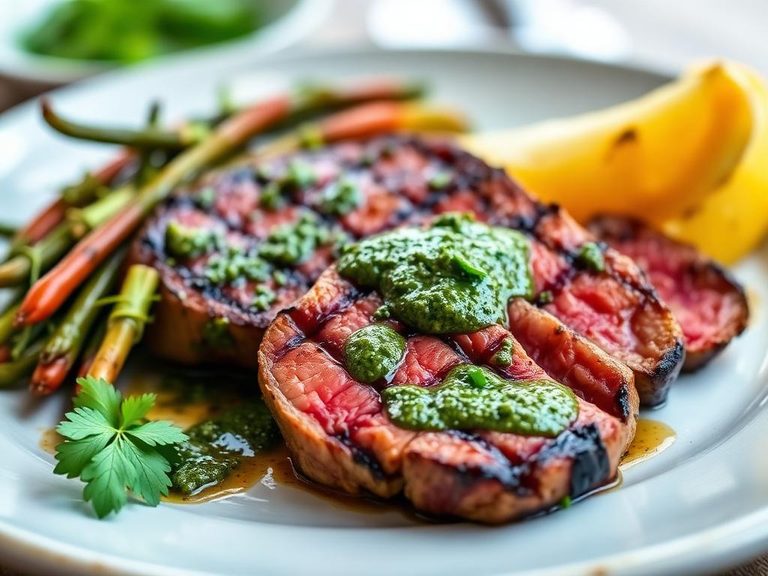
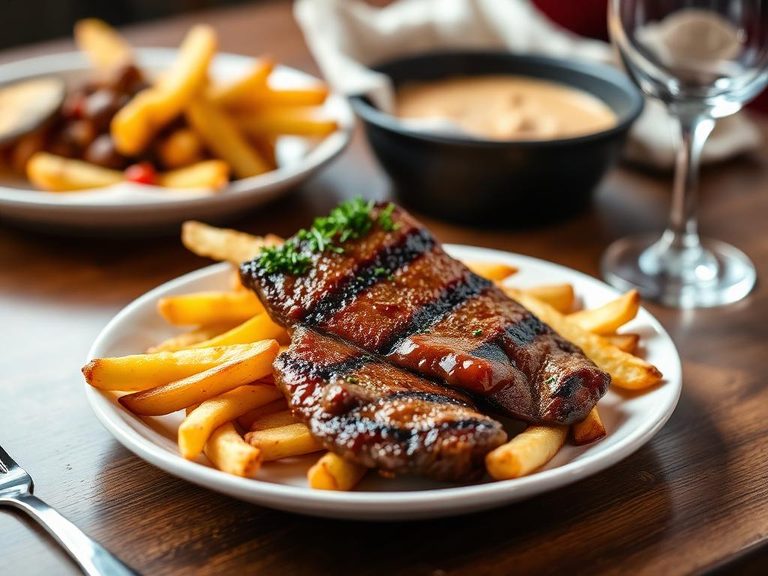
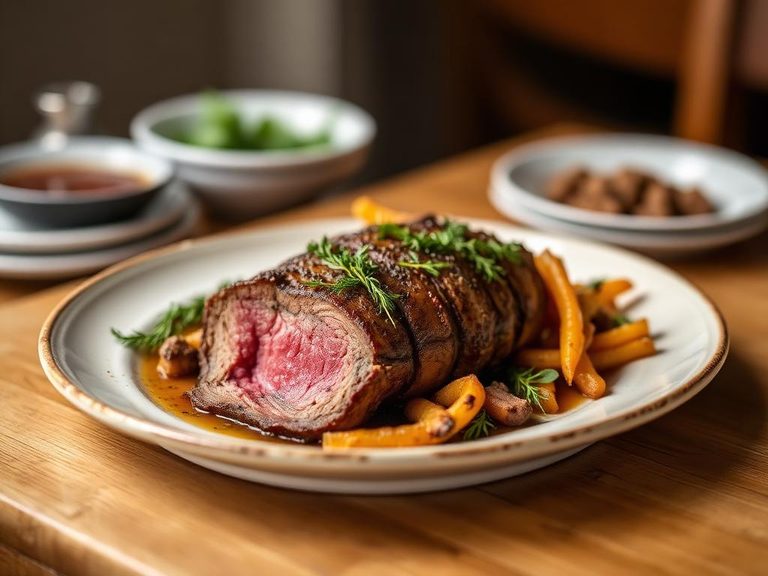
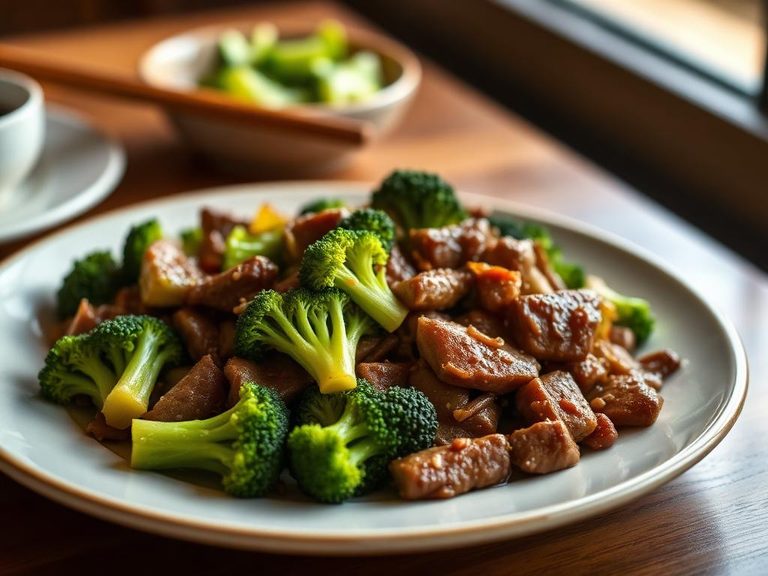
🍽️ Popular dishes
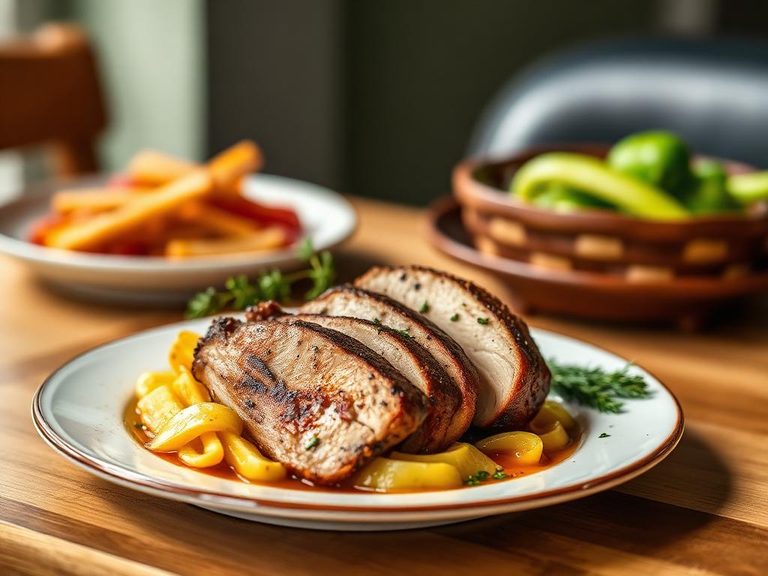
🌍 Where it's eaten
💡 Did you know?
The name 'sirloin' is popularly (but likely apocryphally) said to derive from King Henry VIII of England knighting the cut of beef with a 'Sir' after a particularly enjoyable meal.
Full nutrition (USDA data · scales with serving)
| Water | 56.0 g |
| Energy | 262 kcal |
| Protein | 26.2 g |
| Total lipid (fat) | 16.6 g |
| Carbohydrate, by difference | 0.00 g |
| Fiber, total dietary | 0.00 g |
| Total Sugars | 0.00 g |
| Calcium, Ca | 19.0 mg |
| Iron, Fe | 1.7 mg |
| Magnesium, Mg | 22.0 mg |
| Phosphorus, P | 202 mg |
| Potassium, K | 325 mg |
| Sodium, Na | 361 mg |
| Zinc, Zn | 4.7 mg |
| Copper, Cu | 0.08 mg |
| Selenium, Se | 28.3 ug |
| Vitamin C, total ascorbic acid | 0.00 mg |
| Thiamin | 0.07 mg |
| Riboflavin | 0.13 mg |
| Niacin | 7.0 mg |
| Vitamin B-6 | 0.55 mg |
| Folate, total | 8.0 ug |
| Folic acid | 0.00 ug |
| Folate, food | 8.0 ug |
| Folate, DFE | 8.0 ug |
| Choline, total | 99.9 mg |
| Vitamin B-12 | 1.6 ug |
| Vitamin B-12, added | 0.00 ug |
| Vitamin A, RAE | 0.00 ug |
| Retinol | 0.00 ug |
| Carotene, beta | 0.00 ug |
| Carotene, alpha | 0.00 ug |
| Cryptoxanthin, beta | 0.00 ug |
| Lycopene | 0.00 ug |
| Lutein + zeaxanthin | 0.00 ug |
| Vitamin E (alpha-tocopherol) | 0.46 mg |
| Vitamin E, added | 0.00 mg |
| Vitamin D (D2 + D3) | 0.30 ug |
| Vitamin K (phylloquinone) | 1.6 ug |
| Alcohol, ethyl | 0.00 g |
| Caffeine | 0.00 mg |
| Theobromine | 0.00 mg |
Fat & fatty acid profile (per 100g)
| Fatty acids, total saturated | 6.6 g |
| SFA 4:0 | 0.00 g |
| SFA 6:0 | 0.00 g |
| SFA 8:0 | 0.00 g |
| SFA 10:0 | 0.04 g |
| SFA 12:0 | 0.04 g |
| SFA 14:0 | 0.51 g |
| SFA 16:0 | 4.0 g |
| SFA 18:0 | 2.0 g |
| Fatty acids, total monounsaturated | 6.9 g |
| MUFA 16:1 | 0.63 g |
| MUFA 18:1 | 6.3 g |
| MUFA 20:1 | 0.02 g |
| MUFA 22:1 | 0.00 g |
| Fatty acids, total polyunsaturated | 0.62 g |
| PUFA 18:2 | 0.43 g |
| PUFA 18:3 | 0.15 g |
| PUFA 18:4 | 0.00 g |
| PUFA 20:4 | 0.04 g |
| PUFA 20:5 n-3 (EPA) | 0.00 g |
| PUFA 22:5 n-3 (DPA) | 0.00 g |
| PUFA 22:6 n-3 (DHA) | 0.00 g |
| Cholesterol | 87.0 mg |
Amino acid profile (per 100g)
Estimated from Beef, variety meats and by-products, mechanically separated beef, raw — USDA does not publish this profile for Beef.
| Tryptophan | 0.17 g |
| Threonine | 0.47 g |
| Isoleucine | 0.58 g |
| Leucine | 1.2 g |
| Lysine | 1.2 g |
| Methionine | 0.43 g |
| Cystine | 0.23 g |
| Phenylalanine | 0.64 g |
| Tyrosine | 0.38 g |
| Valine | 0.92 g |
| Arginine | 1.2 g |
| Histidine | 0.44 g |
| Alanine | 1.0 g |
| Aspartic acid | 1.3 g |
| Glutamic acid | 2.1 g |
| Glycine | 1.2 g |
| Proline | 0.92 g |
| Serine | 0.57 g |
FAQ
What's the difference between top sirloin and bottom sirloin?
Top sirloin is more tender, leaner, and typically sold as steaks. Bottom sirloin is tougher and fattier, often used for roasts, stews, or ground beef.
How do I prevent sirloin steak from being tough?
The keys are to not overcook it (aim for medium-rare to medium), let it rest for 5-10 minutes after cooking to redistribute juices, and always slice thinly against the grain.
Is sirloin steak a good choice for weight loss?
It can be. Its high protein content promotes fullness, and it has zero carbs. The key is practicing portion control (a 3-4 oz serving) and choosing healthy cooking methods like grilling or broiling.
Nutrient density (calculated · NRF9.3)
Nutrient Rich Foods index: beneficial nutrients (protein, fiber, vitamins, minerals) minus saturated fat, added sugar & sodium, per 100 kcal.
NRF9.3 index — Fulgoni, Keast & Drewnowski, 2009. Computed from USDA nutrients.
Weight-loss friendliness (composite index)
Energy density 2.62 kcal/g · 40% calories from protein · 0.0 g fiber · 0.0 g sugar per 100 g.
Composite of energy density (Rolls et al., 1999), protein & fiber satiety, minus sugar. A calculated heuristic — ranks satiety-per-calorie, not a clinical measure.
Dietary load (calculated from USDA values)
Potential renal acid load. Positive = acid-forming, negative = alkaline-forming.
Sodium-to-potassium ratio: 1.11 (lower is better — aim for ≤ 1)
Sodium:potassium per WHO potassium guidance. Computed from USDA nutrients.