

Beef, steak, sirloin, lean only eaten
Common food

Photo: Wikipedia
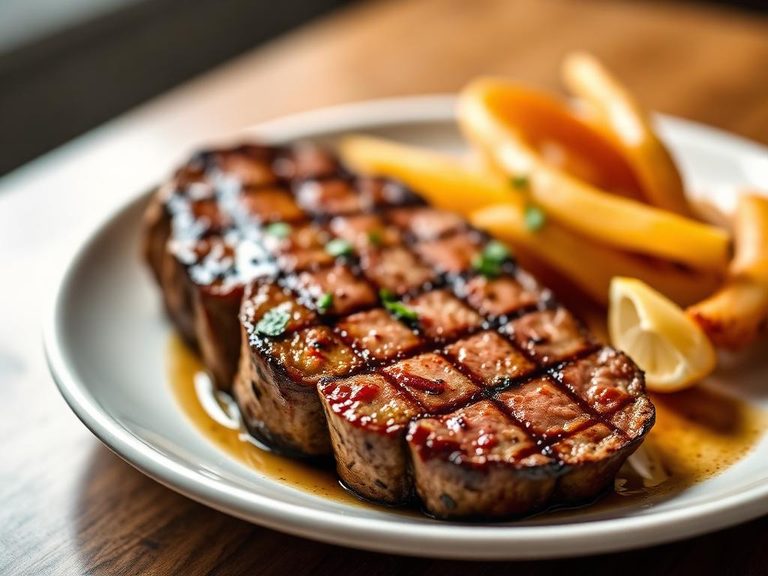
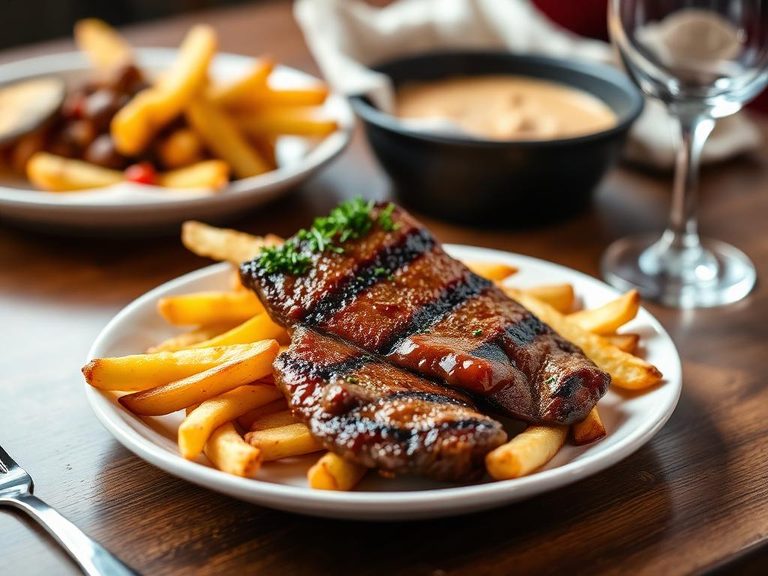
Lean sirloin steak is a premium cut from the rear back of the cow, prized for its firm, yet tender texture and a robust, beefy flavor that is less fatty than ribeye but more flavorful than round. Its deep red color and tight grain make it a visual centerpiece on the plate. Nutritionally, it is a powerhouse of high-quality protein with virtually no carbohydrates, making it a staple for muscle maintenance and low-carb diets.
Calorie split: 52% protein · 0% carbs · 48% fat
↓ Full nutrition💚 Why it's loved
People love sirloin for its perfect balance of lean meat and just enough marbling to deliver a satisfying, meaty chew and rich umami flavor without excessive grease. It's incredibly versatile, grilling to a perfect char while staying juicy, and serves as a reliable, flavorful canvas for everything from simple salt-and-pepper seasoning to complex marinades.
⚠️ Watch-outs & how to enjoy it better
As a lean cut, sirloin can become tough and dry if overcooked, which is a common pitfall for home cooks. It is also a significant source of dietary cholesterol and saturated fat, so individuals managing heart health or following strict low-fat diets should monitor portion sizes. To counteract toughness, use a meat thermometer to pull it off the heat at 130-135°F (54-57°C) for medium-rare, and let it rest for 5-10 minutes before slicing against the grain to maximize tenderness.
Key benefits
- Excellent source of complete, high-quality protein
- Naturally very low in carbohydrates and sugars
- Rich in essential minerals like zinc, iron, and selenium
- Provides B vitamins, particularly B12 and niacin, for energy metabolism
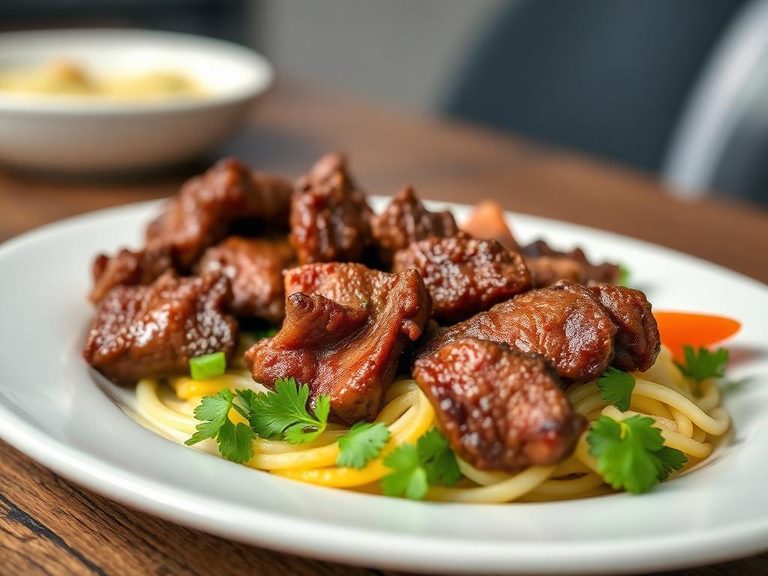
🍽️ Popular dishes
🌍 Where it's eaten
💡 Did you know?
The name 'sirloin' is popularly (but incorrectly) thought to derive from King Henry VIII of England 'knighting' a particularly delicious loin of beef with the title 'Sir Loin.'
Full nutrition (USDA data · scales with serving)
| Water | 59.5 g |
| Energy | 216 kcal |
| Protein | 28.1 g |
| Total lipid (fat) | 11.3 g |
| Carbohydrate, by difference | 0.00 g |
| Fiber, total dietary | 0.00 g |
| Total Sugars | 0.00 g |
| Calcium, Ca | 15.0 mg |
| Iron, Fe | 2.3 mg |
| Magnesium, Mg | 23.0 mg |
| Phosphorus, P | 220 mg |
| Potassium, K | 305 mg |
| Sodium, Na | 361 mg |
| Zinc, Zn | 4.7 mg |
| Copper, Cu | 0.07 mg |
| Selenium, Se | 27.7 ug |
| Vitamin C, total ascorbic acid | 0.00 mg |
| Thiamin | 0.06 mg |
| Riboflavin | 0.19 mg |
| Niacin | 7.2 mg |
| Vitamin B-6 | 0.66 mg |
| Folate, total | 7.0 ug |
| Folic acid | 0.00 ug |
| Folate, food | 7.0 ug |
| Folate, DFE | 7.0 ug |
| Choline, total | 77.2 mg |
| Vitamin B-12 | 1.8 ug |
| Vitamin B-12, added | 0.00 ug |
| Vitamin A, RAE | 1.0 ug |
| Retinol | 1.0 ug |
| Carotene, beta | 0.00 ug |
| Carotene, alpha | 0.00 ug |
| Cryptoxanthin, beta | 0.00 ug |
| Lycopene | 0.00 ug |
| Lutein + zeaxanthin | 0.00 ug |
| Vitamin E (alpha-tocopherol) | 0.29 mg |
| Vitamin E, added | 0.00 mg |
| Vitamin D (D2 + D3) | 0.20 ug |
| Vitamin K (phylloquinone) | 1.6 ug |
| Alcohol, ethyl | 0.00 g |
| Caffeine | 0.00 mg |
| Theobromine | 0.00 mg |
Fat & fatty acid profile (per 100g)
| Fatty acids, total saturated | 4.4 g |
| SFA 4:0 | 0.00 g |
| SFA 6:0 | 0.00 g |
| SFA 8:0 | 0.00 g |
| SFA 10:0 | 0.02 g |
| SFA 12:0 | 0.02 g |
| SFA 14:0 | 0.31 g |
| SFA 16:0 | 2.6 g |
| SFA 18:0 | 1.3 g |
| Fatty acids, total monounsaturated | 4.8 g |
| MUFA 16:1 | 0.39 g |
| MUFA 18:1 | 4.4 g |
| MUFA 20:1 | 0.02 g |
| MUFA 22:1 | 0.00 g |
| Fatty acids, total polyunsaturated | 0.54 g |
| PUFA 18:2 | 0.41 g |
| PUFA 18:3 | 0.05 g |
| PUFA 18:4 | 0.00 g |
| PUFA 20:4 | 0.05 g |
| PUFA 20:5 n-3 (EPA) | 0.00 g |
| PUFA 22:5 n-3 (DPA) | 0.01 g |
| PUFA 22:6 n-3 (DHA) | 0.00 g |
| Cholesterol | 82.0 mg |
Amino acid profile (per 100g)
Estimated from Beef, variety meats and by-products, mechanically separated beef, raw — USDA does not publish this profile for Beef.
| Tryptophan | 0.17 g |
| Threonine | 0.47 g |
| Isoleucine | 0.58 g |
| Leucine | 1.2 g |
| Lysine | 1.2 g |
| Methionine | 0.43 g |
| Cystine | 0.23 g |
| Phenylalanine | 0.64 g |
| Tyrosine | 0.38 g |
| Valine | 0.92 g |
| Arginine | 1.2 g |
| Histidine | 0.44 g |
| Alanine | 1.0 g |
| Aspartic acid | 1.3 g |
| Glutamic acid | 2.1 g |
| Glycine | 1.2 g |
| Proline | 0.92 g |
| Serine | 0.57 g |
FAQ
How is sirloin different from ribeye or filet mignon?
Sirloin is leaner and more flavorful than the buttery, heavily marbled ribeye, but it's firmer and less tender than the ultra-soft, mild filet mignon. It sits in the middle, offering a great balance of taste, texture, and value.
What's the best way to cook a lean sirloin steak?
High-heat, fast cooking methods like grilling, broiling, or pan-searing are ideal. The goal is to develop a flavorful crust quickly without overcooking the interior. Always let it rest after cooking.
Why is my sirloin steak tough?
The most common reasons are overcooking (which squeezes out moisture) or slicing with the grain instead of against it. Cooking to medium-rare or medium and slicing perpendicular to the muscle fibers will ensure a more tender bite.
Nutrient density (calculated · NRF9.3)
Nutrient Rich Foods index: beneficial nutrients (protein, fiber, vitamins, minerals) minus saturated fat, added sugar & sodium, per 100 kcal.
NRF9.3 index — Fulgoni, Keast & Drewnowski, 2009. Computed from USDA nutrients.
Weight-loss friendliness (composite index)
Energy density 2.16 kcal/g · 52% calories from protein · 0.0 g fiber · 0.0 g sugar per 100 g.
Composite of energy density (Rolls et al., 1999), protein & fiber satiety, minus sugar. A calculated heuristic — ranks satiety-per-calorie, not a clinical measure.
Dietary load (calculated from USDA values)
Potential renal acid load. Positive = acid-forming, negative = alkaline-forming.
Sodium-to-potassium ratio: 1.18 (lower is better — aim for ≤ 1)
Sodium:potassium per WHO potassium guidance. Computed from USDA nutrients.