

Beef, rib, back ribs, bone-in, separable lean only, trimmed to 0" fat, select, cooked, braised
Whole food · Beef Products

Photo: Wikipedia
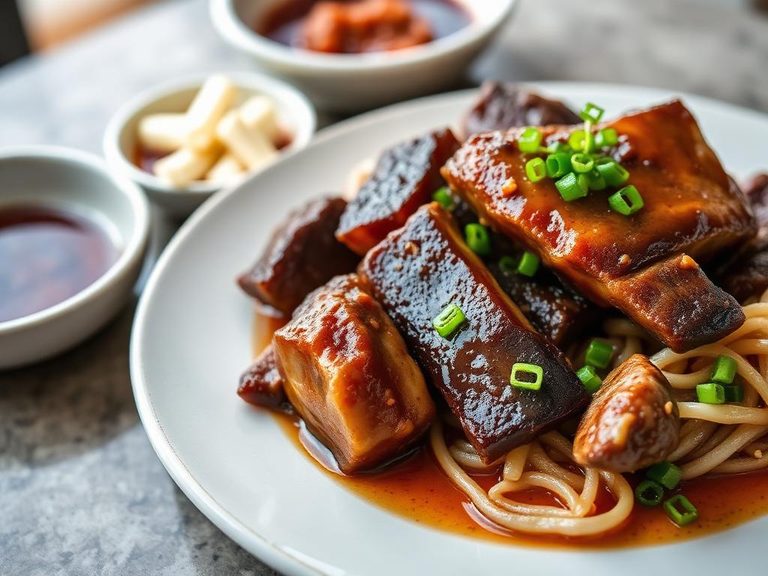
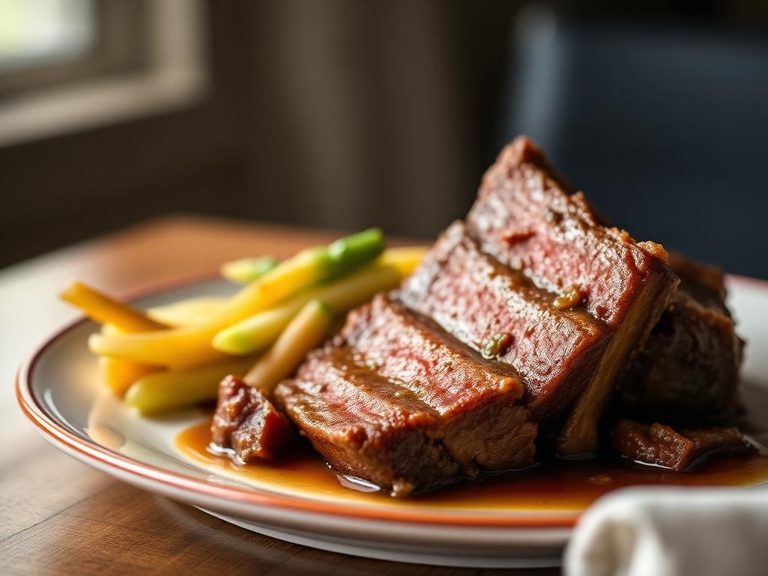
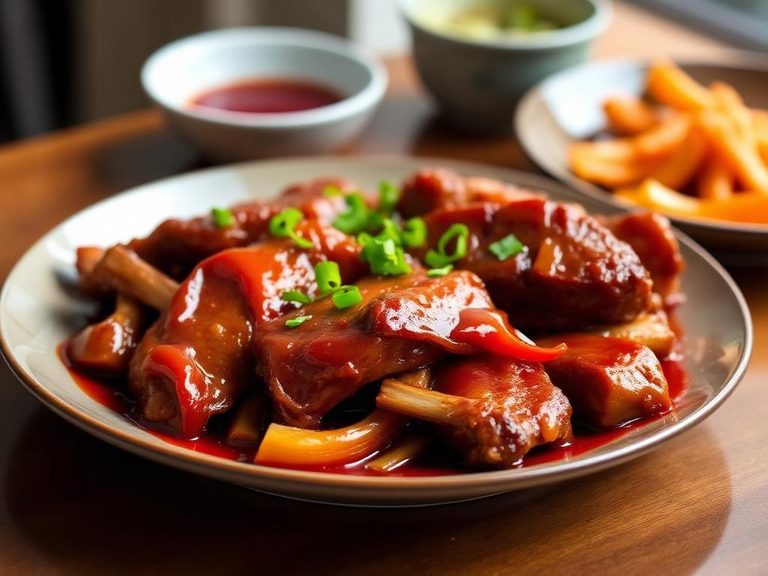
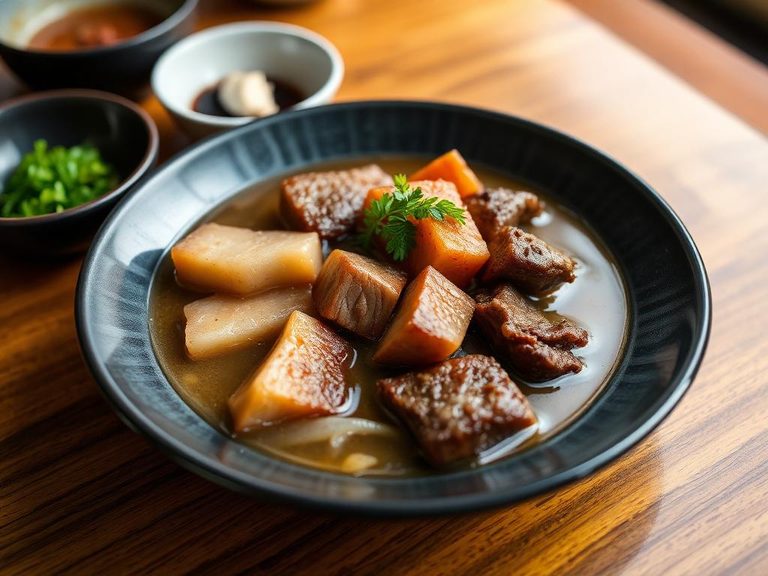
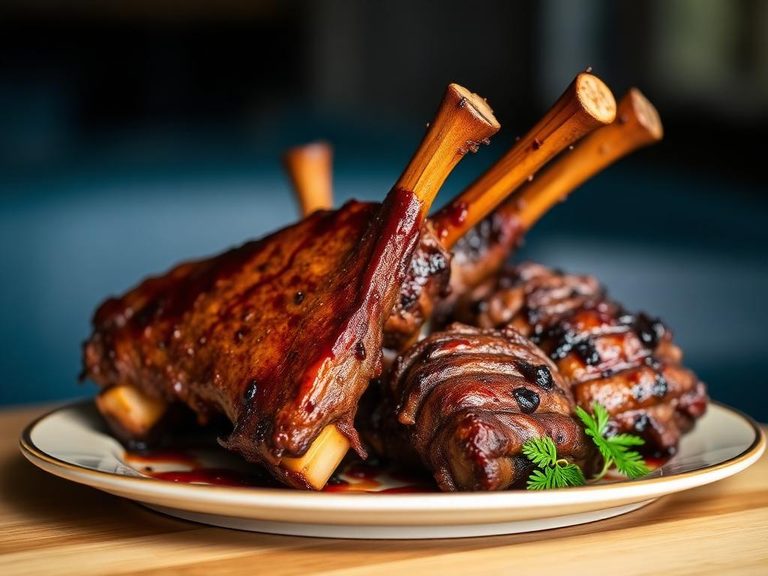
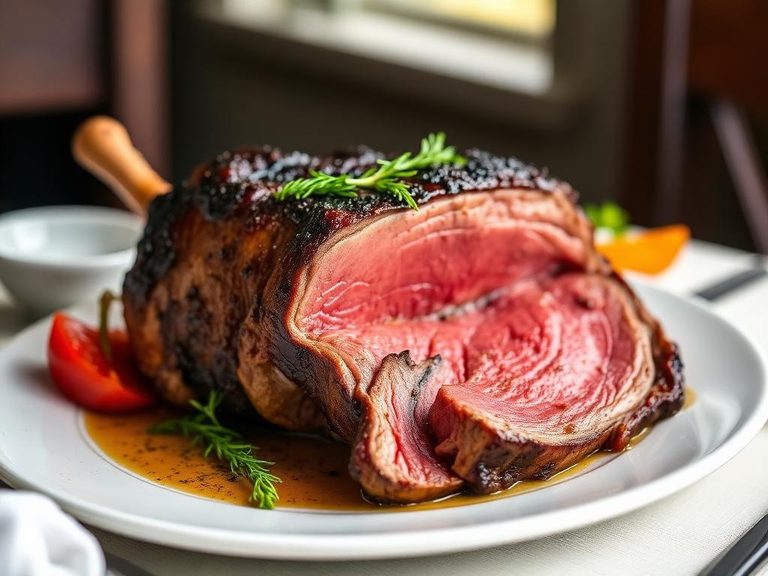
Beef back ribs, braised until the meat is fall-off-the-bone tender, offer a rich, beefy flavor with a satisfying, melt-in-your-mouth texture. This preparation, with the lean meat trimmed of fat, provides a substantial 29 grams of protein per 100g serving with zero carbohydrates. The braising process concentrates the meat's natural umami, making it a deeply savory and comforting dish.
Calorie split: 41% protein · 0% carbs · 59% fat
↓ Full nutrition💚 Why it's loved
People adore braised beef ribs for their deep, savory flavor and the way the meat becomes incredibly tender, often falling off the bone. The dish is a cultural staple in many cuisines, symbolizing comfort and hearty home cooking, from American barbecues to Korean galbi-jjim.
⚠️ Watch-outs & how to enjoy it better
While delicious, braised beef ribs can be high in saturated fat and sodium, especially if not carefully trimmed or if a salty braising liquid is used. Those monitoring their fat or sodium intake should practice portion control and consider pairing with fiber-rich vegetables like steamed broccoli or a simple salad to balance the meal.
Key benefits
- Excellent source of high-quality protein for muscle maintenance and repair.
- Naturally zero in carbohydrates and sugar, suitable for low-carb diets.
- Rich in essential minerals like iron, zinc, and B vitamins (especially B12).
- Provides a satisfying, satiating meal that can help with appetite control.
- Braising tenderizes tough cuts, making the meat highly digestible.
🍽️ Popular dishes
🌍 Where it's eaten
💡 Did you know?
The 'rib' in beef ribs refers to the cut from the rib section of the cow, and the bone-in version is prized for the flavor it imparts during cooking, as the marrow and connective tissue break down to enrich the braising liquid.
Full nutrition (USDA data · scales with serving)
| Water | 52.0 g |
| Energy | 287 kcal |
| Energy | 1199 kj |
| Protein | 29.3 g |
| Total lipid (fat) | 18.8 g |
| Ash | 0.70 g |
| Carbohydrate, by difference | 0.00 g |
| Fiber, total dietary | 0.00 g |
| Total Sugars | 0.00 g |
| Calcium, Ca | 22.0 mg |
| Iron, Fe | 2.7 mg |
| Magnesium, Mg | 26.0 mg |
| Phosphorus, P | 188 mg |
| Potassium, K | 289 mg |
| Sodium, Na | 68.0 mg |
| Zinc, Zn | 6.1 mg |
| Copper, Cu | 0.08 mg |
| Selenium, Se | 28.5 ug |
| Vitamin C, total ascorbic acid | 0.00 mg |
| Thiamin | 0.12 mg |
| Riboflavin | 0.35 mg |
| Niacin | 6.0 mg |
| Vitamin B-6 | 0.60 mg |
| Folate, total | 7.0 ug |
| Folic acid | 0.00 ug |
| Folate, food | 7.0 ug |
| Folate, DFE | 7.0 ug |
| Vitamin B-12 | 2.3 ug |
| Vitamin B-12, added | 0.00 ug |
| Vitamin A, RAE | 3.0 ug |
| Retinol | 3.0 ug |
| Carotene, beta | 0.00 ug |
| Carotene, alpha | 0.00 ug |
| Cryptoxanthin, beta | 0.00 ug |
| Vitamin A, IU | 9.0 iu |
| Lycopene | 0.00 ug |
| Lutein + zeaxanthin | 0.00 ug |
| Vitamin D (D2 + D3), International Units | 5.0 iu |
| Vitamin D (D2 + D3) | 0.10 ug |
| Vitamin D3 (cholecalciferol) | 0.10 ug |
| Vitamin K (phylloquinone) | 1.6 ug |
| Alcohol, ethyl | 0.00 g |
| Caffeine | 0.00 mg |
| Theobromine | 0.00 mg |
Fat & fatty acid profile (per 100g)
| Fatty acids, total saturated | 7.1 g |
| SFA 4:0 | 0.00 g |
| SFA 6:0 | 0.00 g |
| SFA 8:0 | 0.00 g |
| SFA 10:0 | 0.01 g |
| SFA 12:0 | 0.01 g |
| SFA 14:0 | 0.46 g |
| SFA 16:0 | 3.8 g |
| SFA 18:0 | 2.5 g |
| Fatty acids, total monounsaturated | 8.1 g |
| MUFA 16:1 | 0.52 g |
| MUFA 18:1 | 7.2 g |
| MUFA 20:1 | 0.03 g |
| MUFA 22:1 | 0.00 g |
| Fatty acids, total polyunsaturated | 0.74 g |
| PUFA 18:2 | 0.62 g |
| PUFA 18:3 | 0.03 g |
| PUFA 18:4 | 0.00 g |
| PUFA 20:4 | 0.06 g |
| PUFA 20:5 n-3 (EPA) | 0.00 g |
| PUFA 22:5 n-3 (DPA) | 0.02 g |
| PUFA 22:6 n-3 (DHA) | 0.00 g |
| Cholesterol | 89.0 mg |
Amino acid profile (per 100g)
| Tryptophan | 0.38 g |
| Threonine | 1.6 g |
| Isoleucine | 1.6 g |
| Leucine | 3.0 g |
| Lysine | 3.4 g |
| Methionine | 0.93 g |
| Cystine | 0.35 g |
| Phenylalanine | 1.4 g |
| Tyrosine | 1.3 g |
| Valine | 1.7 g |
| Arginine | 2.4 g |
| Histidine | 1.3 g |
| Alanine | 2.1 g |
| Aspartic acid | 3.4 g |
| Glutamic acid | 5.7 g |
| Glycine | 1.5 g |
| Proline | 1.5 g |
| Serine | 1.4 g |
| Hydroxyproline | 0.15 g |
FAQ
What is the difference between beef back ribs and short ribs?
Beef back ribs come from the rib section behind the shoulder, while short ribs are from the lower rib area, closer to the flank. Back ribs are typically meatier on the bone, while short ribs have more marbling and fat.
How do I make braised beef ribs tender?
The key is low and slow cooking. Braise them in a covered pot with liquid (like broth, wine, or tomatoes) at a low temperature for several hours until the meat is fork-tender and easily separates from the bone.
Can I use a slow cooker for this recipe?
Yes, a slow cooker is ideal for braising beef ribs. Cook on low for 6-8 hours or on high for 3-4 hours for perfectly tender results.
Nutrient density (calculated · NRF9.3)
Nutrient Rich Foods index: beneficial nutrients (protein, fiber, vitamins, minerals) minus saturated fat, added sugar & sodium, per 100 kcal.
NRF9.3 index — Fulgoni, Keast & Drewnowski, 2009. Computed from USDA nutrients.
Weight-loss friendliness (composite index)
Energy density 2.87 kcal/g · 41% calories from protein · 0.0 g fiber · 0.0 g sugar per 100 g.
Composite of energy density (Rolls et al., 1999), protein & fiber satiety, minus sugar. A calculated heuristic — ranks satiety-per-calorie, not a clinical measure.
Dietary load (calculated from USDA values)
Potential renal acid load. Positive = acid-forming, negative = alkaline-forming.
Sodium-to-potassium ratio: 0.24 (lower is better — aim for ≤ 1)
Sodium:potassium per WHO potassium guidance. Computed from USDA nutrients.