

Beef, rib, back ribs, bone-in, separable lean and fat, trimmed to 0" fat, select, cooked, braised
Whole food · Beef Products
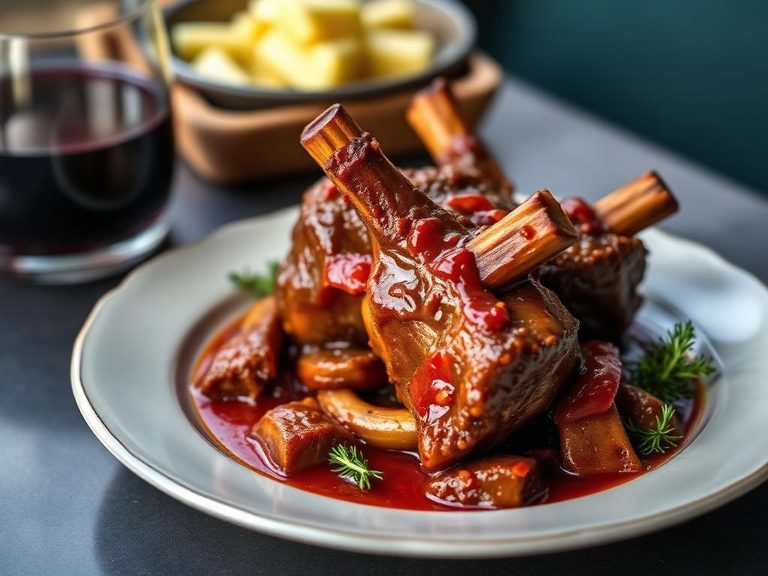
Beef back ribs, bone-in and braised until fork-tender, deliver a deeply savory, umami-rich flavor with a luscious, melt-in-your-mouth texture from the rendered fat and connective tissue. This cut is a protein powerhouse, packing over 25 grams of protein per 100g while providing substantial energy from its fat content, making it a satisfying, indulgent centerpiece for hearty meals.
Calorie split: 30% protein · 0% carbs · 70% fat
↓ Full nutrition💚 Why it's loved
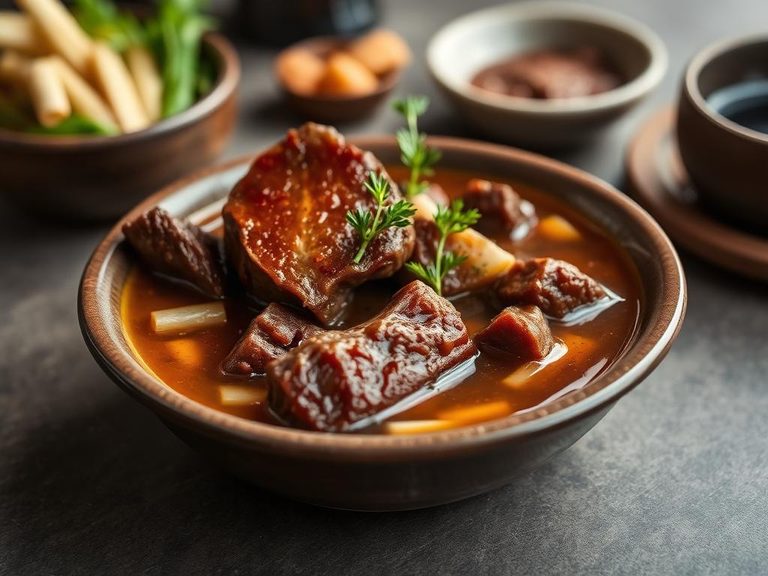
People adore braised beef ribs for their profound, beefy flavor and the satisfying, fall-off-the-bone texture that comes from slow cooking. They are a beloved centerpiece in many cultures, often associated with comfort food, family gatherings, and celebratory feasts.
⚠️ Watch-outs & how to enjoy it better
The high fat content (26.59g per 100g) makes this a calorie-dense choice, which may be a concern for those monitoring fat intake or managing certain health conditions. To enjoy it mindfully, practice portion control by pairing a moderate serving with a large side of fiber-rich vegetables like roasted broccoli or a fresh salad to balance the meal and promote satiety.
Key benefits
- High-quality complete protein for muscle repair and maintenance
- Rich source of B vitamins, especially B12, for nerve function and energy
- Provides essential minerals like zinc and iron for immune health
- Contains collagen and gelatin from slow cooking, supporting joint and gut health
- Offers a highly satiating meal due to its protein and fat content
🍽️ Popular dishes
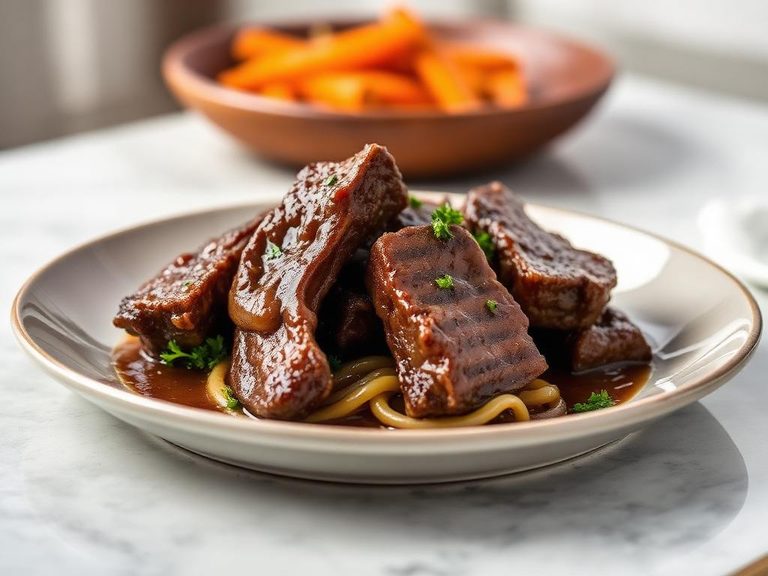
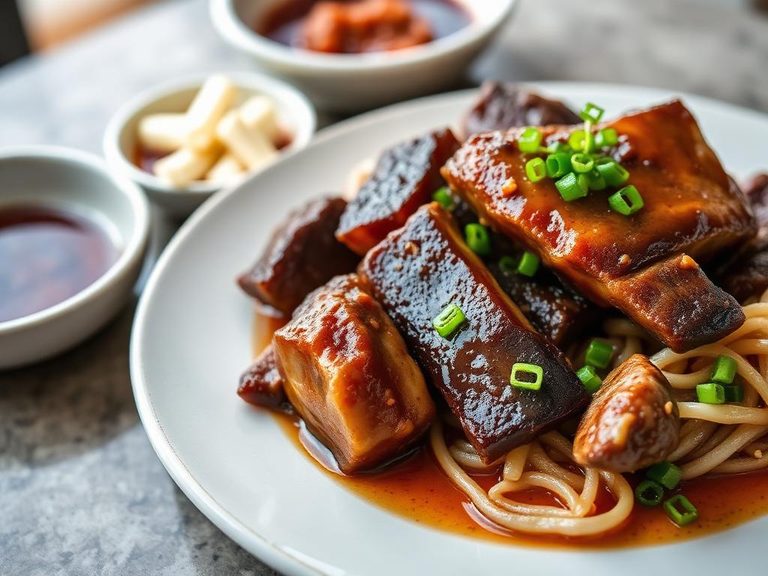
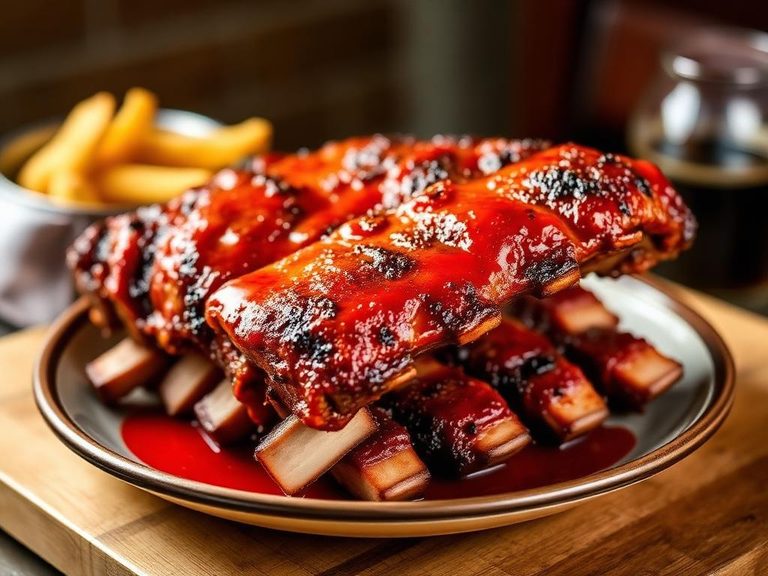
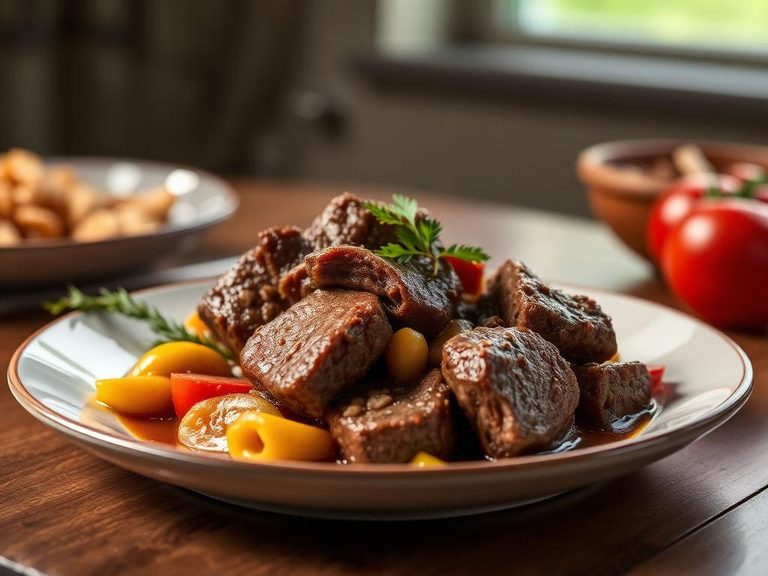
🌍 Where it's eaten
💡 Did you know?
The connective tissue in beef ribs, primarily collagen, breaks down into gelatin during slow braising, which is what gives the cooking liquid a rich, velvety body and creates that signature sticky, lip-smacking coating on the meat.
Full nutrition (USDA data · scales with serving)
| Water | 47.9 g |
| Energy | 341 kcal |
| Energy | 1429 kj |
| Protein | 25.6 g |
| Total lipid (fat) | 26.6 g |
| Ash | 0.67 g |
| Carbohydrate, by difference | 0.00 g |
| Fiber, total dietary | 0.00 g |
| Total Sugars | 0.00 g |
| Calcium, Ca | 24.0 mg |
| Iron, Fe | 2.5 mg |
| Magnesium, Mg | 23.0 mg |
| Phosphorus, P | 168 mg |
| Potassium, K | 267 mg |
| Sodium, Na | 64.0 mg |
| Zinc, Zn | 5.5 mg |
| Copper, Cu | 0.07 mg |
| Selenium, Se | 25.1 ug |
| Vitamin C, total ascorbic acid | 0.00 mg |
| Thiamin | 0.10 mg |
| Riboflavin | 0.32 mg |
| Niacin | 5.2 mg |
| Vitamin B-6 | 0.53 mg |
| Folate, total | 6.0 ug |
| Folic acid | 0.00 ug |
| Folate, food | 6.0 ug |
| Folate, DFE | 6.0 ug |
| Vitamin B-12 | 2.2 ug |
| Vitamin B-12, added | 0.00 ug |
| Vitamin A, RAE | 9.0 ug |
| Retinol | 9.0 ug |
| Carotene, beta | 0.00 ug |
| Carotene, alpha | 0.00 ug |
| Cryptoxanthin, beta | 0.00 ug |
| Vitamin A, IU | 31.0 iu |
| Lycopene | 0.00 ug |
| Lutein + zeaxanthin | 0.00 ug |
| Vitamin D (D2 + D3), International Units | 7.0 iu |
| Vitamin D (D2 + D3) | 0.20 ug |
| Vitamin D3 (cholecalciferol) | 0.20 ug |
| Vitamin K (phylloquinone) | 1.6 ug |
| Alcohol, ethyl | 0.00 g |
| Caffeine | 0.00 mg |
| Theobromine | 0.00 mg |
Fat & fatty acid profile (per 100g)
| Fatty acids, total saturated | 11.8 g |
| SFA 4:0 | 0.00 g |
| SFA 6:0 | 0.00 g |
| SFA 8:0 | 0.00 g |
| SFA 10:0 | 0.02 g |
| SFA 12:0 | 0.02 g |
| SFA 14:0 | 0.79 g |
| SFA 16:0 | 6.2 g |
| SFA 18:0 | 4.2 g |
| Fatty acids, total monounsaturated | 12.9 g |
| MUFA 16:1 | 0.87 g |
| MUFA 18:1 | 11.5 g |
| MUFA 20:1 | 0.06 g |
| MUFA 22:1 | 0.00 g |
| Fatty acids, total polyunsaturated | 1.1 g |
| PUFA 18:2 | 0.98 g |
| PUFA 18:3 | 0.05 g |
| PUFA 18:4 | 0.00 g |
| PUFA 20:4 | 0.04 g |
| PUFA 20:5 n-3 (EPA) | 0.00 g |
| PUFA 22:5 n-3 (DPA) | 0.01 g |
| PUFA 22:6 n-3 (DHA) | 0.00 g |
| Cholesterol | 85.0 mg |
Amino acid profile (per 100g)
| Tryptophan | 0.29 g |
| Threonine | 1.2 g |
| Isoleucine | 1.2 g |
| Leucine | 2.3 g |
| Lysine | 2.5 g |
| Methionine | 0.71 g |
| Cystine | 0.27 g |
| Phenylalanine | 1.0 g |
| Tyrosine | 0.98 g |
| Valine | 1.3 g |
| Arginine | 1.8 g |
| Histidine | 1.0 g |
| Alanine | 1.6 g |
| Aspartic acid | 2.6 g |
| Glutamic acid | 4.3 g |
| Glycine | 1.3 g |
| Proline | 1.2 g |
| Serine | 1.1 g |
| Hydroxyproline | 0.17 g |
FAQ
What's the difference between beef back ribs and short ribs?
Back ribs come from the upper back, are meatier on one side with a curved bone, and are often leaner. Short ribs come from the lower rib area, have more marbling and connective tissue, and are ideal for braising. Both are delicious when cooked low and slow.
How can I make braised beef ribs more tender?
The key is low and slow cooking—braise at a low temperature (around 300°F/150°C) for 2.5 to 3 hours. Searing the ribs first builds flavor, and using a flavorful liquid (like broth, wine, or tomatoes) helps break down the tough collagen into tender gelatin.
Are beef ribs a good source of iron?
Yes, beef ribs contain heme iron, which is more easily absorbed by the body than plant-based iron. A 100g serving provides a significant portion of the daily recommended intake, making it a beneficial food for preventing iron deficiency.
Nutrient density (calculated · NRF9.3)
Nutrient Rich Foods index: beneficial nutrients (protein, fiber, vitamins, minerals) minus saturated fat, added sugar & sodium, per 100 kcal.
NRF9.3 index — Fulgoni, Keast & Drewnowski, 2009. Computed from USDA nutrients.
Weight-loss friendliness (composite index)
Energy density 3.41 kcal/g · 30% calories from protein · 0.0 g fiber · 0.0 g sugar per 100 g.
Composite of energy density (Rolls et al., 1999), protein & fiber satiety, minus sugar. A calculated heuristic — ranks satiety-per-calorie, not a clinical measure.
Dietary load (calculated from USDA values)
Potential renal acid load. Positive = acid-forming, negative = alkaline-forming.
Sodium-to-potassium ratio: 0.24 (lower is better — aim for ≤ 1)
Sodium:potassium per WHO potassium guidance. Computed from USDA nutrients.