

Beans, pink, mature seeds, raw
Whole food · Legumes and Legume Products
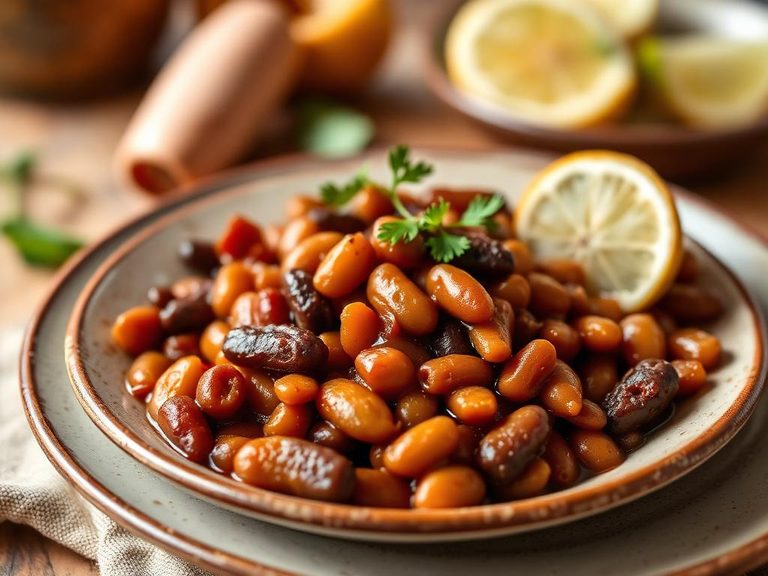
Pink beans, also known as red chori, are small, oval-shaped legumes with a smooth, rosy-pink skin that cooks to a creamy, meaty texture. They offer a mild, slightly nutty flavor that readily absorbs surrounding spices and broths. Nutritionally, they are a powerhouse of plant-based protein and complex carbohydrates, with an impressive 12.7g of fiber per 100g dry weight.
Calorie split: 24% protein · 73% carbs · 3% fat
↓ Full nutrition💚 Why it's loved
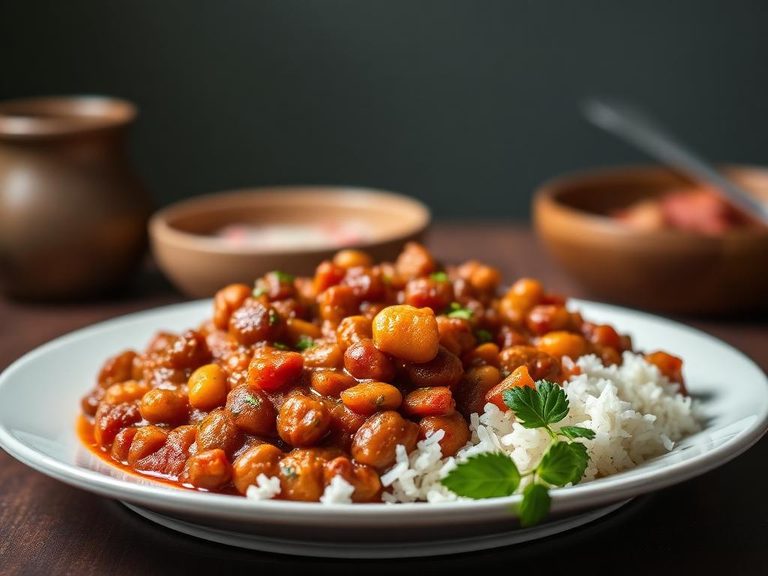
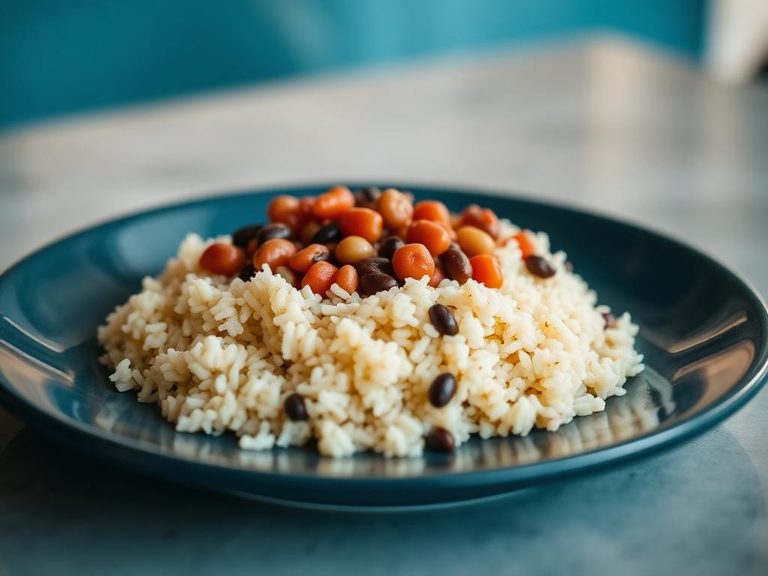
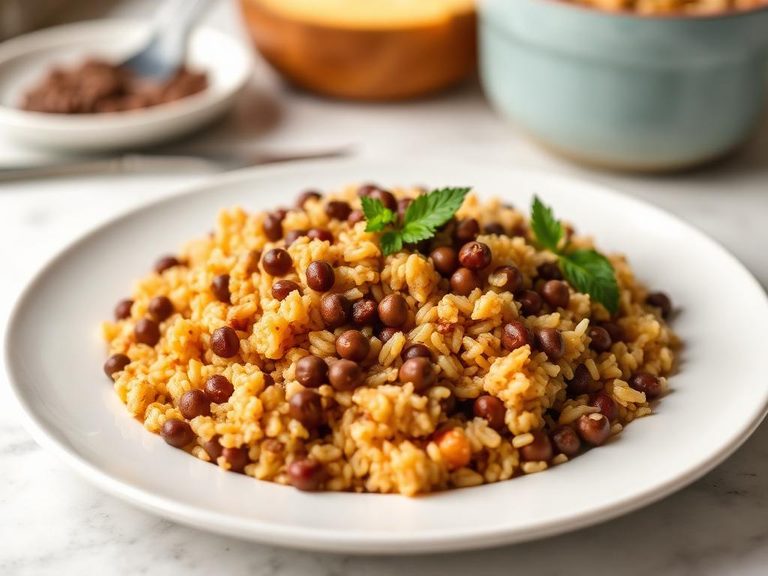
People love pink beans for their satisfying, hearty texture and ability to act as a flavor sponge in stews and chilis. They are a beloved staple in many cultures, forming the comforting base of iconic dishes from Mexico to the Caribbean.
⚠️ Watch-outs & how to enjoy it better
Like all legumes, they contain oligosaccharides that can cause gas and bloating in some individuals. To minimize this, soak dried beans overnight and discard the soaking water before cooking. They also contain phytates, which can reduce mineral absorption; pairing with a source of vitamin C (like tomatoes or lime juice) can enhance iron uptake.
Key benefits
- Excellent source of plant-based protein for muscle maintenance.
- High in dietary fiber, promoting digestive health and satiety.
- Provides complex carbohydrates for sustained energy release.
- Naturally low in fat and a good source of essential minerals.
- Contains resistant starch, which may benefit gut microbiome health.
🍽️ Popular dishes
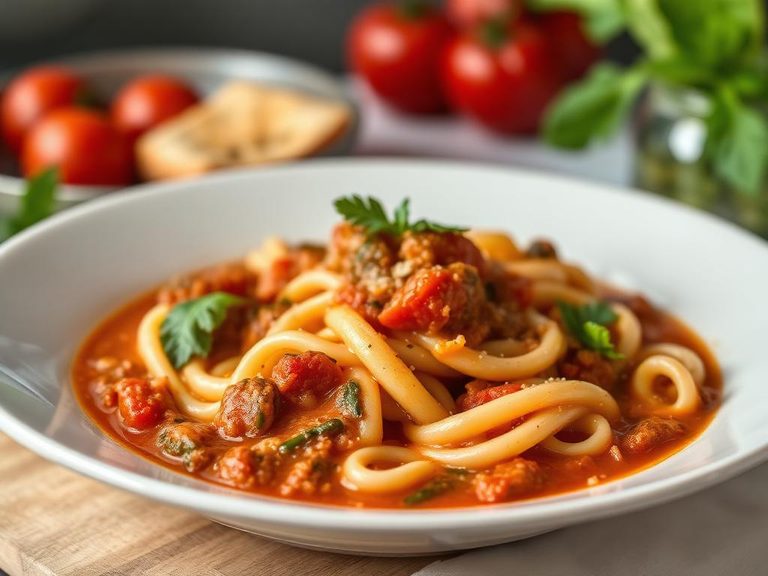
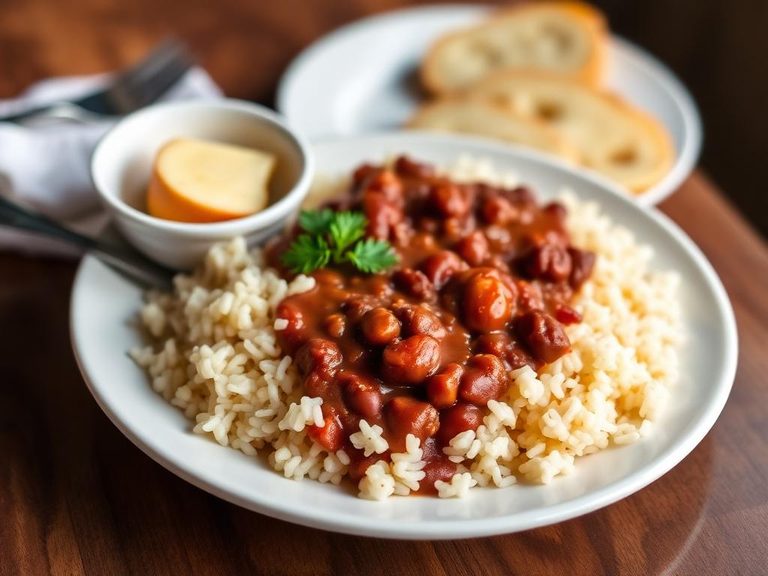
🌍 Where it's eaten
💡 Did you know?
The pink bean is a close relative of the common pinto bean and the kidney bean, all belonging to the same species, Phaseolus vulgaris, but each has been selectively bred for distinct color, size, and flavor profiles.
Full nutrition (USDA data · scales with serving)
| Water | 10.1 g |
| Energy | 343 kcal |
| Energy | 1435 kj |
| Protein | 21.0 g |
| Total lipid (fat) | 1.1 g |
| Ash | 3.7 g |
| Carbohydrate, by difference | 64.2 g |
| Fiber, total dietary | 12.7 g |
| Total Sugars | 2.1 g |
| Calcium, Ca | 130 mg |
| Iron, Fe | 6.8 mg |
| Magnesium, Mg | 182 mg |
| Phosphorus, P | 415 mg |
| Potassium, K | 1464 mg |
| Sodium, Na | 8.0 mg |
| Zinc, Zn | 2.5 mg |
| Copper, Cu | 0.81 mg |
| Manganese, Mn | 1.4 mg |
| Selenium, Se | 13.0 ug |
| Vitamin C, total ascorbic acid | 0.00 mg |
| Thiamin | 0.77 mg |
| Riboflavin | 0.19 mg |
| Niacin | 1.9 mg |
| Pantothenic acid | 1.00 mg |
| Vitamin B-6 | 0.53 mg |
| Folate, total | 463 ug |
| Folic acid | 0.00 ug |
| Folate, food | 463 ug |
| Folate, DFE | 463 ug |
| Choline, total | 67.2 mg |
| Vitamin B-12 | 0.00 ug |
| Vitamin B-12, added | 0.00 ug |
| Vitamin A, RAE | 0.00 ug |
| Retinol | 0.00 ug |
| Carotene, beta | 0.00 ug |
| Carotene, alpha | 0.00 ug |
| Cryptoxanthin, beta | 0.00 ug |
| Vitamin A, IU | 0.00 iu |
| Lycopene | 0.00 ug |
| Lutein + zeaxanthin | 0.00 ug |
| Vitamin E (alpha-tocopherol) | 0.21 mg |
| Vitamin E, added | 0.00 mg |
| Vitamin D (D2 + D3), International Units | 0.00 iu |
| Vitamin D (D2 + D3) | 0.00 ug |
| Vitamin K (phylloquinone) | 5.7 ug |
| Alcohol, ethyl | 0.00 g |
| Caffeine | 0.00 mg |
| Theobromine | 0.00 mg |
Fat & fatty acid profile (per 100g)
| Fatty acids, total saturated | 0.29 g |
| SFA 4:0 | 0.00 g |
| SFA 6:0 | 0.00 g |
| SFA 8:0 | 0.00 g |
| SFA 10:0 | 0.00 g |
| SFA 12:0 | 0.00 g |
| SFA 14:0 | 0.00 g |
| SFA 16:0 | 0.27 g |
| SFA 18:0 | 0.02 g |
| Fatty acids, total monounsaturated | 0.10 g |
| MUFA 16:1 | 0.00 g |
| MUFA 18:1 | 0.10 g |
| MUFA 20:1 | 0.00 g |
| MUFA 22:1 | 0.00 g |
| Fatty acids, total polyunsaturated | 0.49 g |
| PUFA 18:2 | 0.27 g |
| PUFA 18:3 | 0.22 g |
| PUFA 18:4 | 0.00 g |
| PUFA 20:4 | 0.00 g |
| PUFA 20:5 n-3 (EPA) | 0.00 g |
| PUFA 22:5 n-3 (DPA) | 0.00 g |
| PUFA 22:6 n-3 (DHA) | 0.00 g |
| Fatty acids, total trans | 0.00 g |
| Cholesterol | 0.00 mg |
Amino acid profile (per 100g)
| Tryptophan | 0.25 g |
| Threonine | 0.88 g |
| Isoleucine | 0.93 g |
| Leucine | 1.7 g |
| Lysine | 1.4 g |
| Methionine | 0.32 g |
| Cystine | 0.23 g |
| Phenylalanine | 1.1 g |
| Tyrosine | 0.59 g |
| Valine | 1.1 g |
| Arginine | 1.3 g |
| Histidine | 0.58 g |
| Alanine | 0.88 g |
| Aspartic acid | 2.5 g |
| Glutamic acid | 3.2 g |
| Glycine | 0.82 g |
| Proline | 0.89 g |
| Serine | 1.1 g |
FAQ
What's the difference between pink beans and pinto beans?
They are very similar in flavor and nutrition, both being varieties of common beans. Pink beans are generally smaller, more uniformly pink, and have a slightly firmer texture when cooked. Pinto beans are larger, beige with pink speckles, and tend to become creamier.
Do I need to soak dried pink beans before cooking?
Yes, soaking is highly recommended. It reduces cooking time, improves digestibility by breaking down gas-producing compounds, and ensures even cooking. Soak in cold water for at least 8 hours or overnight, then drain and rinse.
Are canned pink beans as nutritious as dried?
Canned pink beans are a convenient and nutritious option. They retain most of their protein, fiber, and minerals. The main difference is often higher sodium content from the canning liquid. Look for 'low sodium' or 'no salt added' versions, or rinse them thoroughly under water to reduce sodium by about 40%.
Nutrient density (calculated · NRF9.3)
Nutrient Rich Foods index: beneficial nutrients (protein, fiber, vitamins, minerals) minus saturated fat, added sugar & sodium, per 100 kcal.
NRF9.3 index — Fulgoni, Keast & Drewnowski, 2009. Computed from USDA nutrients.
Weight-loss friendliness (composite index)
Energy density 3.43 kcal/g · 24% calories from protein · 12.7 g fiber · 2.1 g sugar per 100 g.
Composite of energy density (Rolls et al., 1999), protein & fiber satiety, minus sugar. A calculated heuristic — ranks satiety-per-calorie, not a clinical measure.
Dietary load (calculated from USDA values)
Potential renal acid load. Positive = acid-forming, negative = alkaline-forming.
Sodium-to-potassium ratio: 0.01 (lower is better — aim for ≤ 1)
Sodium:potassium per WHO potassium guidance. Computed from USDA nutrients.