

Barley, pearled, raw
Whole food · Cereal Grains and Pasta

Photo: Wikipedia
Pearled barley is a hulled, polished whole grain with a satisfyingly chewy texture and a mild, nutty flavor. It's a nutritional powerhouse, notably high in dietary fiber which supports digestion and helps maintain steady energy levels.
Calorie split: 11% protein · 86% carbs · 3% fat
↓ Full nutrition💚 Why it's loved
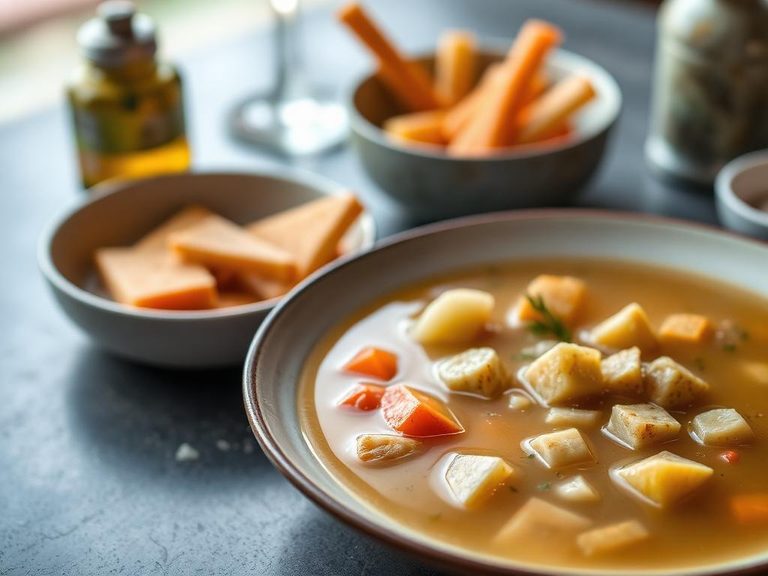
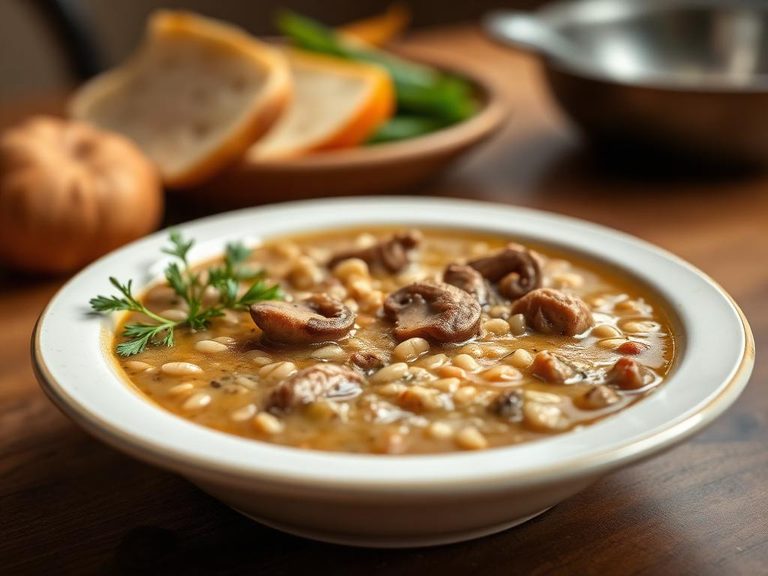
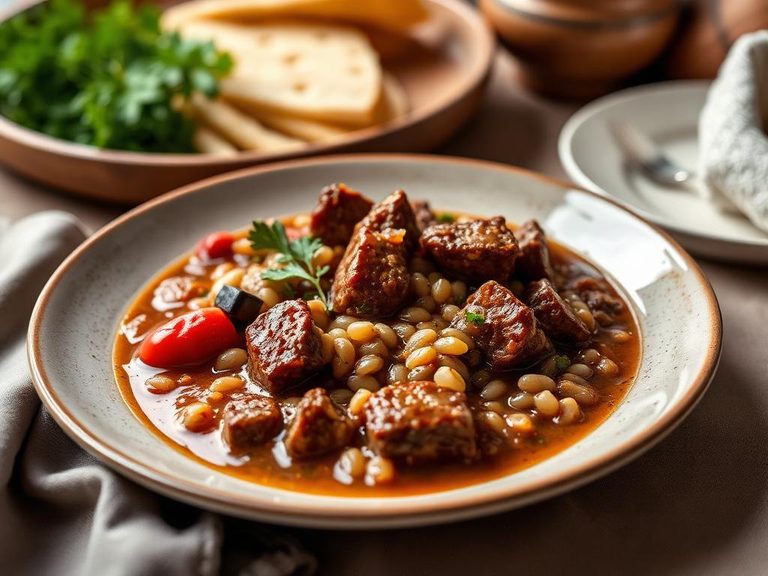
People cherish barley for its hearty, comforting texture and ability to absorb flavors in soups and stews. It's a versatile staple with deep roots in global cuisines, from European potages to Middle Eastern pilafs.
⚠️ Watch-outs & how to enjoy it better
Its high fiber content can cause digestive discomfort like bloating if introduced too quickly; start with small portions and drink plenty of water. As a grain, it contains gluten and is unsafe for those with celiac disease or gluten sensitivity.
Key benefits
- Excellent source of dietary fiber (15.6g per 100g raw)
- Provides plant-based protein (9.91g per 100g raw)
- Low in fat and contains no cholesterol
- Contains essential minerals like selenium and manganese
🍽️ Popular dishes
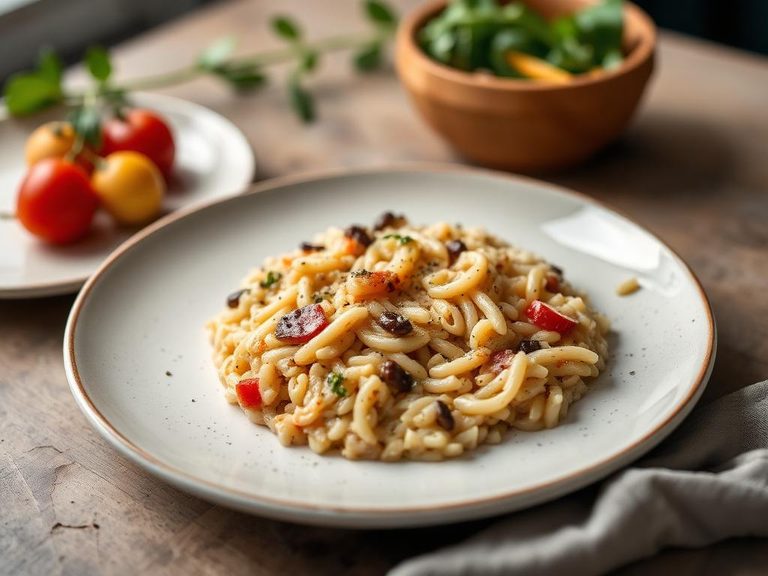
🌍 Where it's eaten
💡 Did you know?
Barley was one of the first grains cultivated by humans, with evidence of its use dating back to 8000 BCE in the Fertile Crescent.
Full nutrition (USDA data · scales with serving)
| Water | 10.1 g |
| Energy | 352 kcal |
| Energy | 1473 kj |
| Protein | 9.9 g |
| Total lipid (fat) | 1.2 g |
| Ash | 1.1 g |
| Carbohydrate, by difference | 77.7 g |
| Fiber, total dietary | 15.6 g |
| Total Sugars | 0.80 g |
| Calcium, Ca | 29.0 mg |
| Iron, Fe | 2.5 mg |
| Magnesium, Mg | 79.0 mg |
| Phosphorus, P | 221 mg |
| Potassium, K | 280 mg |
| Sodium, Na | 9.0 mg |
| Zinc, Zn | 2.1 mg |
| Copper, Cu | 0.42 mg |
| Manganese, Mn | 1.3 mg |
| Selenium, Se | 37.7 ug |
| Vitamin C, total ascorbic acid | 0.00 mg |
| Thiamin | 0.19 mg |
| Riboflavin | 0.11 mg |
| Niacin | 4.6 mg |
| Pantothenic acid | 0.28 mg |
| Vitamin B-6 | 0.26 mg |
| Folate, total | 23.0 ug |
| Folic acid | 0.00 ug |
| Folate, food | 23.0 ug |
| Folate, DFE | 23.0 ug |
| Choline, total | 37.8 mg |
| Vitamin B-12 | 0.00 ug |
| Vitamin B-12, added | 0.00 ug |
| Vitamin A, RAE | 1.0 ug |
| Retinol | 0.00 ug |
| Carotene, beta | 13.0 ug |
| Carotene, alpha | 0.00 ug |
| Cryptoxanthin, beta | 0.00 ug |
| Vitamin A, IU | 22.0 iu |
| Lycopene | 0.00 ug |
| Lutein + zeaxanthin | 160 ug |
| Vitamin E (alpha-tocopherol) | 0.02 mg |
| Vitamin E, added | 0.00 mg |
| Vitamin D (D2 + D3), International Units | 0.00 iu |
| Vitamin D (D2 + D3) | 0.00 ug |
| Vitamin K (phylloquinone) | 2.2 ug |
| Alcohol, ethyl | 0.00 g |
| Caffeine | 0.00 mg |
| Theobromine | 0.00 mg |
Fat & fatty acid profile (per 100g)
| Fatty acids, total saturated | 0.24 g |
| SFA 4:0 | 0.00 g |
| SFA 6:0 | 0.00 g |
| SFA 8:0 | 0.00 g |
| SFA 10:0 | 0.00 g |
| SFA 12:0 | 0.00 g |
| SFA 14:0 | 0.01 g |
| SFA 16:0 | 0.21 g |
| SFA 18:0 | 0.01 g |
| Fatty acids, total monounsaturated | 0.15 g |
| MUFA 16:1 | 0.00 g |
| MUFA 18:1 | 0.12 g |
| MUFA 20:1 | 0.00 g |
| MUFA 22:1 | 0.00 g |
| Fatty acids, total polyunsaturated | 0.56 g |
| PUFA 18:2 | 0.51 g |
| PUFA 18:3 | 0.06 g |
| PUFA 18:4 | 0.00 g |
| PUFA 20:4 | 0.00 g |
| PUFA 20:5 n-3 (EPA) | 0.00 g |
| PUFA 22:5 n-3 (DPA) | 0.00 g |
| PUFA 22:6 n-3 (DHA) | 0.00 g |
| Cholesterol | 0.00 mg |
Amino acid profile (per 100g)
| Tryptophan | 0.17 g |
| Threonine | 0.34 g |
| Isoleucine | 0.36 g |
| Leucine | 0.67 g |
| Lysine | 0.37 g |
| Methionine | 0.19 g |
| Cystine | 0.22 g |
| Phenylalanine | 0.56 g |
| Tyrosine | 0.28 g |
| Valine | 0.49 g |
| Arginine | 0.50 g |
| Histidine | 0.22 g |
| Alanine | 0.39 g |
| Aspartic acid | 0.62 g |
| Glutamic acid | 2.6 g |
| Glycine | 0.36 g |
| Proline | 1.2 g |
| Serine | 0.42 g |
FAQ
Is pearled barley a whole grain?
No. While it retains the bran and germ, pearling removes the outer husk and polishes the grain, unlike hulled barley which is a true whole grain.
How does it differ from hulled barley?
Hulled barley is minimally processed with only the inedible outer husk removed, making it chewier and higher in fiber. Pearled barley is polished for quicker cooking and a softer texture.
Can I use it in place of rice?
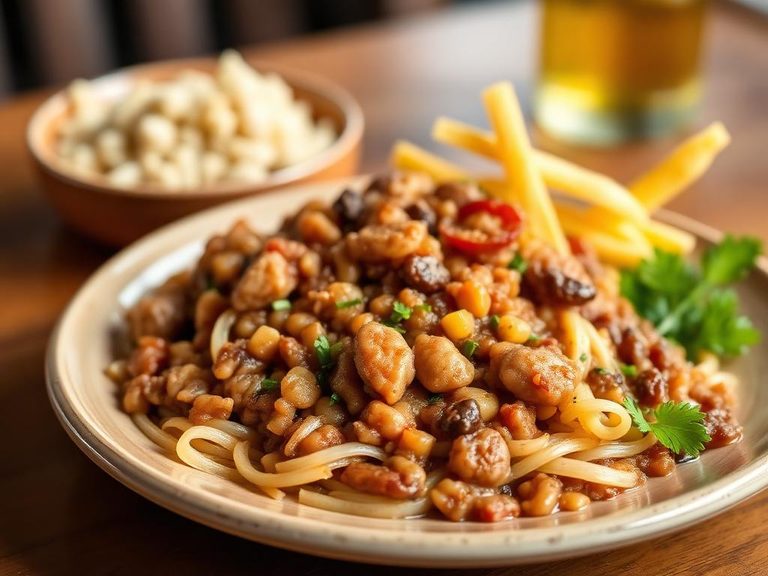
Yes, but it has a chewier texture and nuttier flavor. It works well in pilafs, risottos, or as a base for grain bowls, though cooking times and liquid ratios will differ.
Nutrient density (calculated · NRF9.3)
Nutrient Rich Foods index: beneficial nutrients (protein, fiber, vitamins, minerals) minus saturated fat, added sugar & sodium, per 100 kcal.
NRF9.3 index — Fulgoni, Keast & Drewnowski, 2009. Computed from USDA nutrients.
Weight-loss friendliness (composite index)
Energy density 3.52 kcal/g · 11% calories from protein · 15.6 g fiber · 0.8 g sugar per 100 g.
Composite of energy density (Rolls et al., 1999), protein & fiber satiety, minus sugar. A calculated heuristic — ranks satiety-per-calorie, not a clinical measure.
Dietary load (calculated from USDA values)
Potential renal acid load. Positive = acid-forming, negative = alkaline-forming.
Sodium-to-potassium ratio: 0.03 (lower is better — aim for ≤ 1)
Sodium:potassium per WHO potassium guidance. Computed from USDA nutrients.