

Alcoholic beverage, distilled, all (gin, rum, vodka, whiskey) 90 proof
Whole food · Beverages
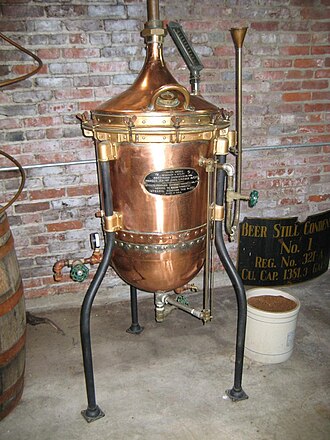
Photo: Wikipedia
A clear, potent spirit distilled from grains, potatoes, or sugarcane, offering a sharp, clean burn with subtle notes of its base ingredient—whether the juniper of gin, the caramel of whiskey, or the neutral crispness of vodka. Nutritionally, it is a source of 'empty' calories, providing 263 kcal per 100g with zero protein, carbohydrates, fat, or micronutrients.
💚 Why it's loved
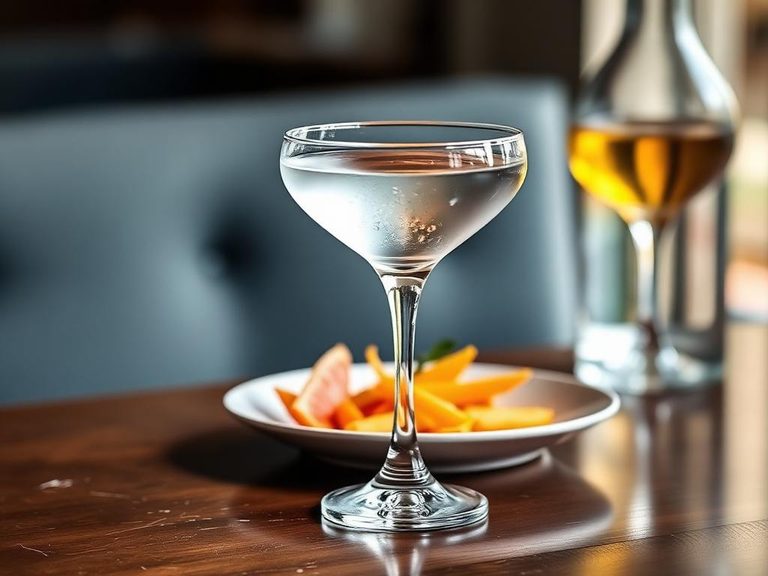
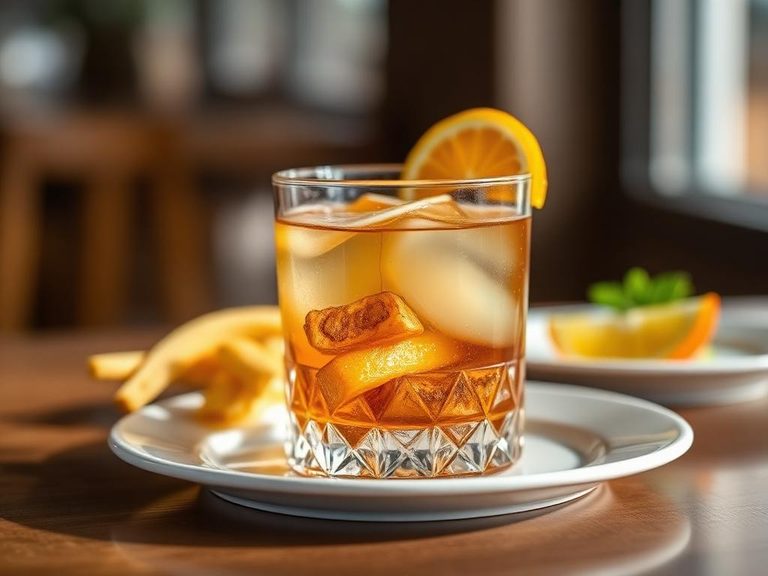
People love it for its potent, warming effect and its incredible versatility as the backbone of countless classic cocktails, from the Martini to the Old Fashioned. Its diverse flavor profiles, shaped by base ingredients and aging, allow for a vast spectrum of taste experiences.
⚠️ Watch-outs & how to enjoy it better
Its high caloric density and lack of nutrients can contribute to weight gain if consumed excessively, and it can disrupt sleep and lower inhibitions. To counteract, practice strict portion control (e.g., a standard 44ml drink), always consume with a meal containing protein and healthy fats to slow absorption, and alternate with water to stay hydrated.
Key benefits
- Provides a quick source of metabolic energy (calories)
- Can be part of social rituals and culinary traditions
- Used in tinctures and extracts for flavoring
- Certain styles (e.g., whiskey) contain trace antioxidants from aging
- Can be enjoyed in moderation as a digestive aid
🍽️ Popular dishes
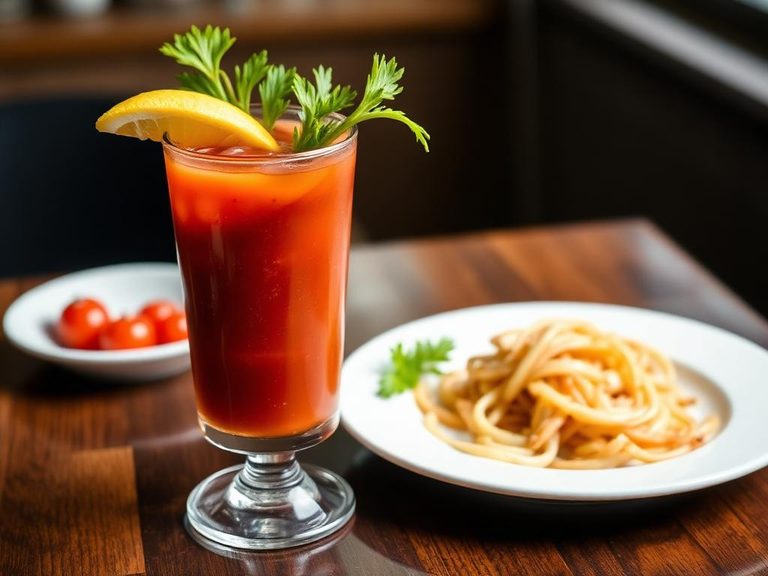
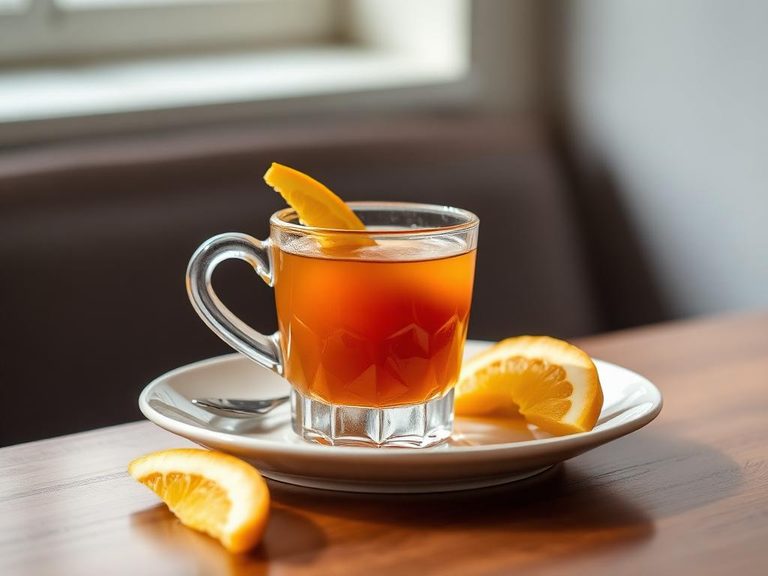
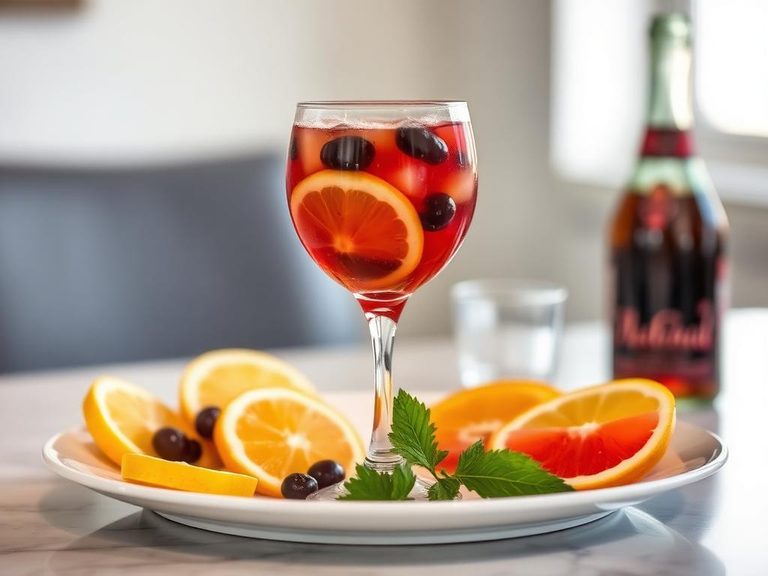
🌍 Where it's eaten
💡 Did you know?
The 'proof' system originated in 16th-century England, where sailors would test the strength of rum by soaking a gunpowder pellet in it; if the gunpowder still ignited, the rum was 'proof' of its high alcohol content.
Full nutrition (USDA data · scales with serving)
| Water | 62.1 g |
| Energy | 263 kcal |
| Energy | 1100 kj |
| Protein | 0.00 g |
| Total lipid (fat) | 0.00 g |
| Ash | 0.01 g |
| Carbohydrate, by difference | 0.00 g |
| Fiber, total dietary | 0.00 g |
| Total Sugars | 0.00 g |
| Calcium, Ca | 0.00 mg |
| Iron, Fe | 0.04 mg |
| Magnesium, Mg | 0.00 mg |
| Phosphorus, P | 4.0 mg |
| Potassium, K | 2.0 mg |
| Sodium, Na | 1.0 mg |
| Zinc, Zn | 0.04 mg |
| Copper, Cu | 0.02 mg |
| Manganese, Mn | 0.02 mg |
| Selenium, Se | 0.00 ug |
| Vitamin C, total ascorbic acid | 0.00 mg |
| Thiamin | 0.01 mg |
| Riboflavin | 0.00 mg |
| Niacin | 0.01 mg |
| Pantothenic acid | 0.00 mg |
| Vitamin B-6 | 0.00 mg |
| Folate, total | 0.00 ug |
| Folic acid | 0.00 ug |
| Folate, food | 0.00 ug |
| Folate, DFE | 0.00 ug |
| Choline, total | 0.00 mg |
| Vitamin B-12 | 0.00 ug |
| Vitamin B-12, added | 0.00 ug |
| Vitamin A, RAE | 0.00 ug |
| Retinol | 0.00 ug |
| Carotene, beta | 0.00 ug |
| Carotene, alpha | 0.00 ug |
| Cryptoxanthin, beta | 0.00 ug |
| Vitamin A, IU | 0.00 iu |
| Lycopene | 0.00 ug |
| Lutein + zeaxanthin | 0.00 ug |
| Vitamin E (alpha-tocopherol) | 0.00 mg |
| Vitamin E, added | 0.00 mg |
| Vitamin D (D2 + D3), International Units | 0.00 iu |
| Vitamin D (D2 + D3) | 0.00 ug |
| Vitamin K (phylloquinone) | 0.00 ug |
| Alcohol, ethyl | 37.9 g |
| Caffeine | 0.00 mg |
| Theobromine | 0.00 mg |
Fat & fatty acid profile (per 100g)
| Fatty acids, total saturated | 0.00 g |
| SFA 4:0 | 0.00 g |
| SFA 6:0 | 0.00 g |
| SFA 8:0 | 0.00 g |
| SFA 10:0 | 0.00 g |
| SFA 12:0 | 0.00 g |
| SFA 14:0 | 0.00 g |
| SFA 16:0 | 0.00 g |
| SFA 18:0 | 0.00 g |
| Fatty acids, total monounsaturated | 0.00 g |
| MUFA 16:1 | 0.00 g |
| MUFA 18:1 | 0.00 g |
| MUFA 20:1 | 0.00 g |
| MUFA 22:1 | 0.00 g |
| Fatty acids, total polyunsaturated | 0.00 g |
| PUFA 18:2 | 0.00 g |
| PUFA 18:3 | 0.00 g |
| PUFA 18:4 | 0.00 g |
| PUFA 20:4 | 0.00 g |
| PUFA 20:5 n-3 (EPA) | 0.00 g |
| PUFA 22:5 n-3 (DPA) | 0.00 g |
| PUFA 22:6 n-3 (DHA) | 0.00 g |
| Fatty acids, total trans | 0.00 g |
| Cholesterol | 0.00 mg |
Amino acid profile (per 100g)
| Tryptophan | 0.00 g |
| Threonine | 0.00 g |
| Isoleucine | 0.00 g |
| Leucine | 0.00 g |
| Lysine | 0.00 g |
| Methionine | 0.00 g |
| Cystine | 0.00 g |
| Phenylalanine | 0.00 g |
| Tyrosine | 0.00 g |
| Valine | 0.00 g |
| Arginine | 0.00 g |
| Histidine | 0.00 g |
| Alanine | 0.00 g |
| Aspartic acid | 0.00 g |
| Glutamic acid | 0.00 g |
| Glycine | 0.00 g |
| Proline | 0.00 g |
| Serine | 0.00 g |
FAQ
Does distilled alcohol have any sugar or carbs?
No. The distillation process removes all sugars and carbohydrates, leaving only ethanol and water, along with trace congeners that provide flavor.
Why is it called '90 proof'?
In the U.S., proof is double the alcohol by volume (ABV). So, 90 proof equals 45% ABV, meaning 45% of the liquid is pure ethanol.
Is there a nutritional difference between gin, rum, vodka, and whiskey?
In terms of macronutrients, no. All are virtually identical: 0g protein, carbs, fat, and sugar. Minor differences exist in trace minerals and antioxidants, especially in aged spirits like whiskey, but these are negligible.
Nutrient density (calculated · NRF9.3)
Nutrient Rich Foods index: beneficial nutrients (protein, fiber, vitamins, minerals) minus saturated fat, added sugar & sodium, per 100 kcal.
NRF9.3 index — Fulgoni, Keast & Drewnowski, 2009. Computed from USDA nutrients.
Weight-loss friendliness (composite index)
Energy density 2.63 kcal/g · 0% calories from protein · 0.0 g fiber · 0.0 g sugar per 100 g.
Composite of energy density (Rolls et al., 1999), protein & fiber satiety, minus sugar. A calculated heuristic — ranks satiety-per-calorie, not a clinical measure.
Dietary load (calculated from USDA values)
Potential renal acid load. Positive = acid-forming, negative = alkaline-forming.
Sodium-to-potassium ratio: 0.50 (lower is better — aim for ≤ 1)
Sodium:potassium per WHO potassium guidance. Computed from USDA nutrients.