

Wild rice, raw
Whole food · Cereal Grains and Pasta

Photo: Wikipedia
Wild rice is not a true rice but the semi-aquatic seed of a North American grass, prized for its long, dark kernels. When cooked, it boasts a distinctive chewy, almost crunchy texture and a deep, nutty, earthy flavor. Nutritionally, it's a standout for its high protein and fiber content relative to other grains.
Calorie split: 16% protein · 81% carbs · 3% fat
↓ Full nutrition💚 Why it's loved
People cherish wild rice for its robust, earthy flavor that adds depth to soups, salads, and pilafs, and its satisfying, firm texture that doesn't turn mushy. It's also a celebrated cultural food with deep roots in the Great Lakes region of North America.
⚠️ Watch-outs & how to enjoy it better
Its high fiber and protein content can be challenging for those with sensitive digestive systems (e.g., IBS). To ease digestion, ensure it's thoroughly cooked and chewed well. It has a lower glycemic index than white rice, but its carbohydrate content still requires portion awareness for strict blood sugar management.
Key benefits
- Excellent source of plant-based protein (14.73g per 100g dry).
- High in dietary fiber (6.2g per 100g dry) for digestive health.
- Rich in minerals like manganese, phosphorus, and magnesium.
- Contains antioxidants like beta-carotene and vanillic acid.
- Naturally gluten-free, suitable for celiac diets.
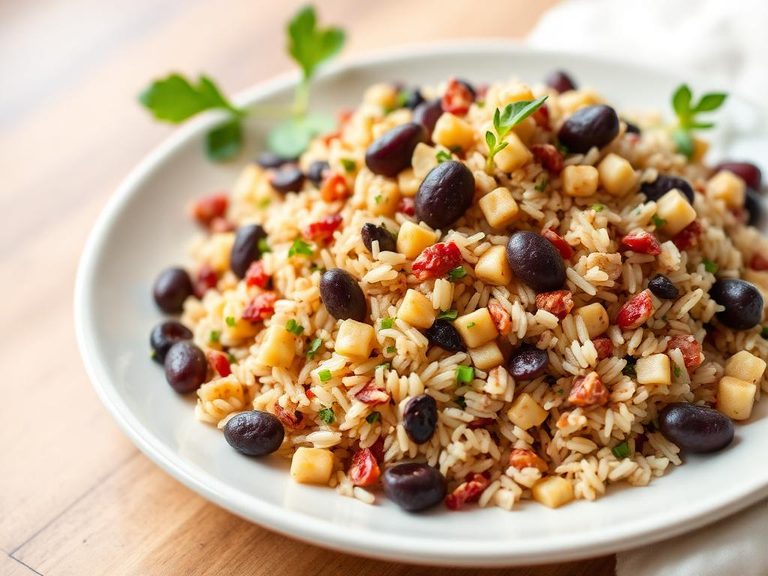
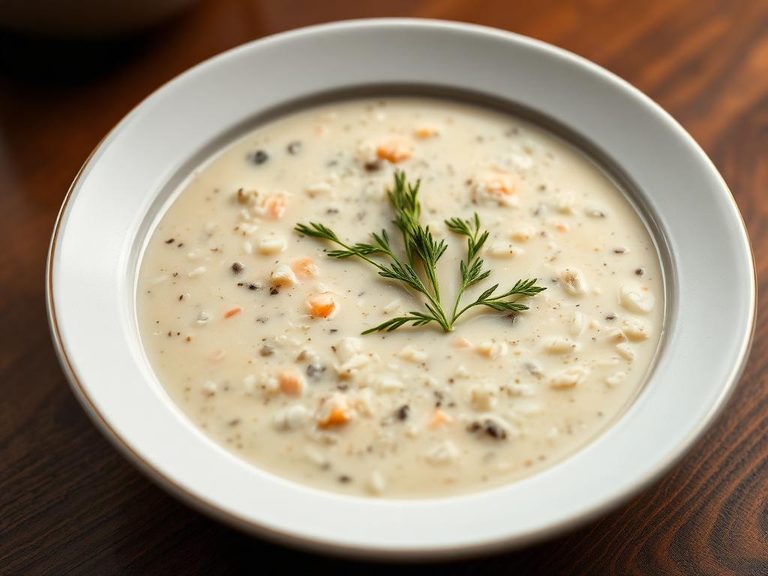
🍽️ Popular dishes
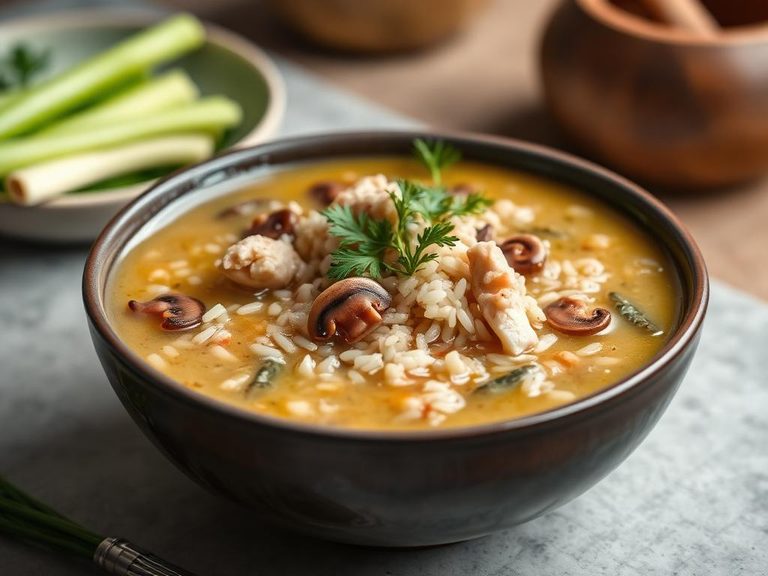
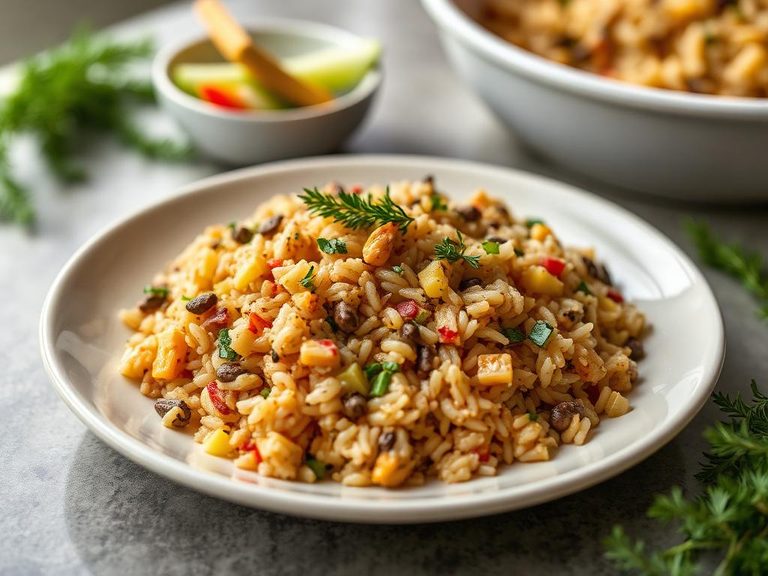
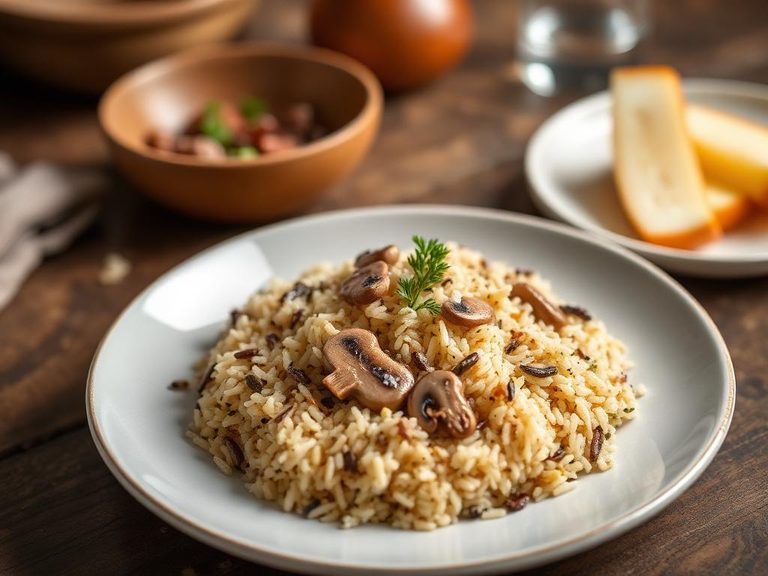
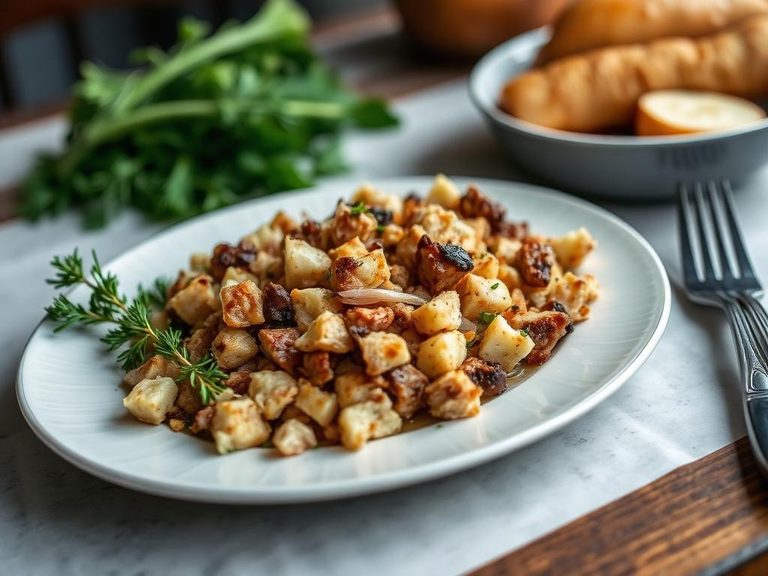
🌍 Where it's eaten
💡 Did you know?
True wild rice must be hand-harvested by 'knocking' the grains into canoes, a traditional method still used by many Indigenous communities, which is why it can be significantly more expensive than cultivated varieties.
Full nutrition (USDA data · scales with serving)
| Water | 7.8 g |
| Energy | 357 kcal |
| Energy | 1494 kj |
| Protein | 14.7 g |
| Total lipid (fat) | 1.1 g |
| Ash | 1.5 g |
| Carbohydrate, by difference | 74.9 g |
| Fiber, total dietary | 6.2 g |
| Total Sugars | 2.5 g |
| Sucrose | 0.67 g |
| Calcium, Ca | 21.0 mg |
| Iron, Fe | 2.0 mg |
| Magnesium, Mg | 177 mg |
| Phosphorus, P | 433 mg |
| Potassium, K | 427 mg |
| Sodium, Na | 7.0 mg |
| Zinc, Zn | 6.0 mg |
| Copper, Cu | 0.52 mg |
| Manganese, Mn | 1.3 mg |
| Selenium, Se | 2.8 ug |
| Vitamin C, total ascorbic acid | 0.00 mg |
| Thiamin | 0.12 mg |
| Riboflavin | 0.26 mg |
| Niacin | 6.7 mg |
| Pantothenic acid | 1.1 mg |
| Vitamin B-6 | 0.39 mg |
| Folate, total | 95.0 ug |
| Folic acid | 0.00 ug |
| Folate, food | 95.0 ug |
| Folate, DFE | 95.0 ug |
| Choline, total | 35.0 mg |
| Vitamin B-12 | 0.00 ug |
| Vitamin B-12, added | 0.00 ug |
| Vitamin A, RAE | 1.0 ug |
| Retinol | 0.00 ug |
| Carotene, beta | 11.0 ug |
| Carotene, alpha | 0.00 ug |
| Cryptoxanthin, beta | 0.00 ug |
| Vitamin A, IU | 19.0 iu |
| Lycopene | 0.00 ug |
| Lutein + zeaxanthin | 220 ug |
| Vitamin E (alpha-tocopherol) | 0.82 mg |
| Vitamin E, added | 0.00 mg |
| Vitamin D (D2 + D3), International Units | 0.00 iu |
| Vitamin D (D2 + D3) | 0.00 ug |
| Vitamin K (phylloquinone) | 1.9 ug |
| Alcohol, ethyl | 0.00 g |
| Caffeine | 0.00 mg |
| Theobromine | 0.00 mg |
Fat & fatty acid profile (per 100g)
| Fatty acids, total saturated | 0.16 g |
| SFA 4:0 | 0.00 g |
| SFA 6:0 | 0.00 g |
| SFA 8:0 | 0.00 g |
| SFA 10:0 | 0.00 g |
| SFA 12:0 | 0.00 g |
| SFA 14:0 | 0.00 g |
| SFA 16:0 | 0.14 g |
| SFA 18:0 | 0.01 g |
| Fatty acids, total monounsaturated | 0.16 g |
| MUFA 16:1 | 0.00 g |
| MUFA 18:1 | 0.16 g |
| MUFA 20:1 | 0.00 g |
| MUFA 22:1 | 0.00 g |
| Fatty acids, total polyunsaturated | 0.68 g |
| PUFA 18:2 | 0.38 g |
| PUFA 18:3 | 0.30 g |
| PUFA 18:4 | 0.00 g |
| PUFA 20:4 | 0.00 g |
| PUFA 20:5 n-3 (EPA) | 0.00 g |
| PUFA 22:5 n-3 (DPA) | 0.00 g |
| PUFA 22:6 n-3 (DHA) | 0.00 g |
| Cholesterol | 0.00 mg |
Amino acid profile (per 100g)
| Tryptophan | 0.18 g |
| Threonine | 0.47 g |
| Isoleucine | 0.62 g |
| Leucine | 1.0 g |
| Lysine | 0.63 g |
| Methionine | 0.44 g |
| Cystine | 0.17 g |
| Phenylalanine | 0.72 g |
| Tyrosine | 0.62 g |
| Valine | 0.86 g |
| Arginine | 1.1 g |
| Histidine | 0.38 g |
| Alanine | 0.82 g |
| Aspartic acid | 1.4 g |
| Glutamic acid | 2.6 g |
| Glycine | 0.67 g |
| Proline | 0.52 g |
| Serine | 0.78 g |
FAQ
Is wild rice actually rice?
No, it's the seed of an aquatic grass (Zizania palustris). It's called 'rice' due to its similar appearance and use, but it's botanically distinct from true rice (Oryza sativa).
How do I cook wild rice?
Rinse it, then simmer in 3-4 parts water or broth to 1 part rice for 45-60 minutes until kernels split open. It can also be cooked in a rice cooker on the brown rice setting.
Why is wild rice so expensive?
True, hand-harvested wild rice from natural lakes is labor-intensive and has a limited growing season. Much commercially available 'wild rice' is a cultivated hybrid, which is more affordable.
Nutrient density (calculated · NRF9.3)
Nutrient Rich Foods index: beneficial nutrients (protein, fiber, vitamins, minerals) minus saturated fat, added sugar & sodium, per 100 kcal.
NRF9.3 index — Fulgoni, Keast & Drewnowski, 2009. Computed from USDA nutrients.
Weight-loss friendliness (composite index)
Energy density 3.57 kcal/g · 17% calories from protein · 6.2 g fiber · 2.5 g sugar per 100 g.
Composite of energy density (Rolls et al., 1999), protein & fiber satiety, minus sugar. A calculated heuristic — ranks satiety-per-calorie, not a clinical measure.
Dietary load (calculated from USDA values)
Potential renal acid load. Positive = acid-forming, negative = alkaline-forming.
Sodium-to-potassium ratio: 0.02 (lower is better — aim for ≤ 1)
Sodium:potassium per WHO potassium guidance. Computed from USDA nutrients.