

Turnip, cooked
Common food

Photo: Wikipedia
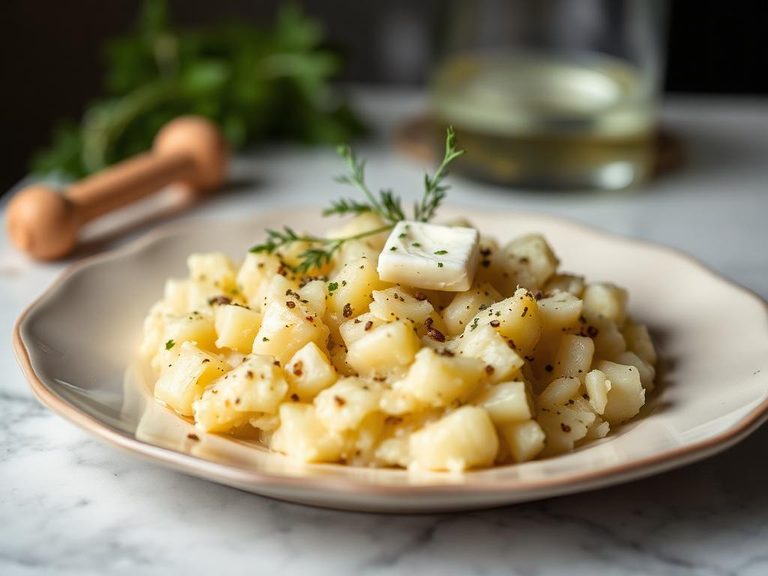
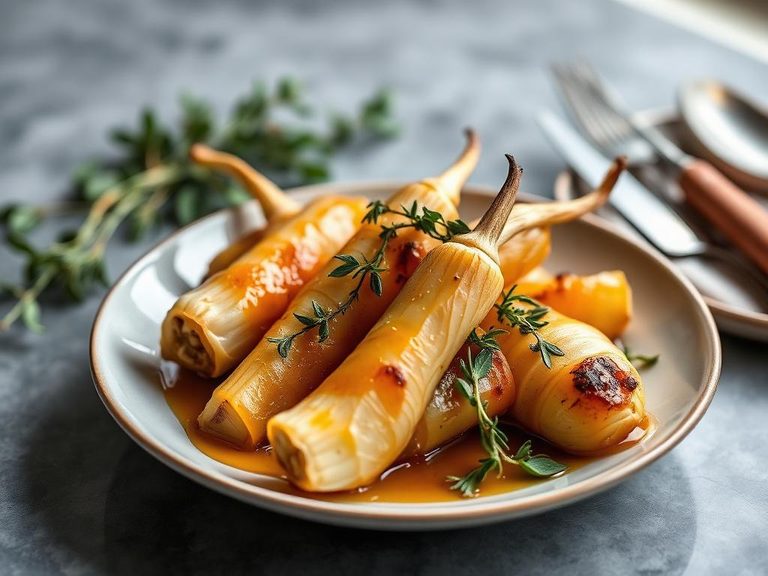
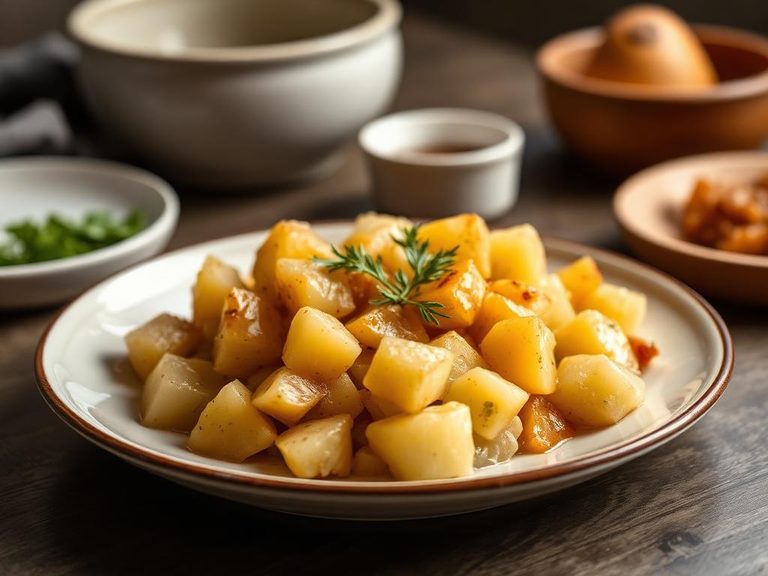
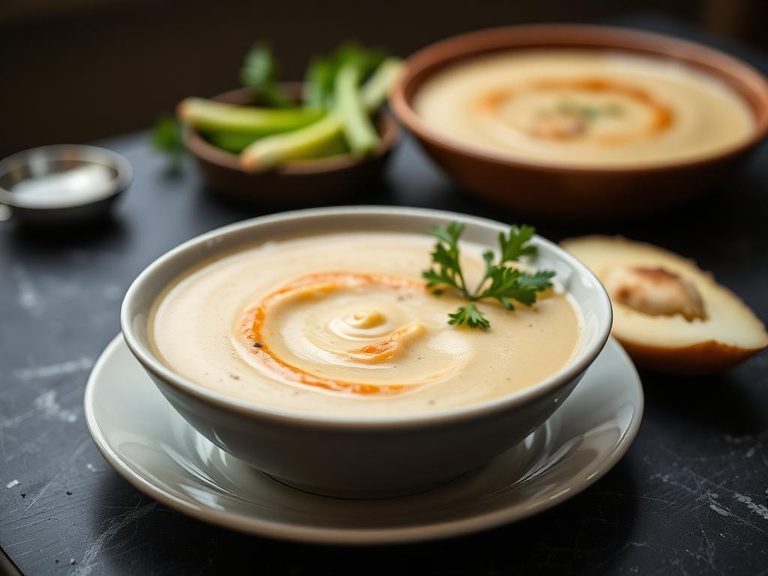
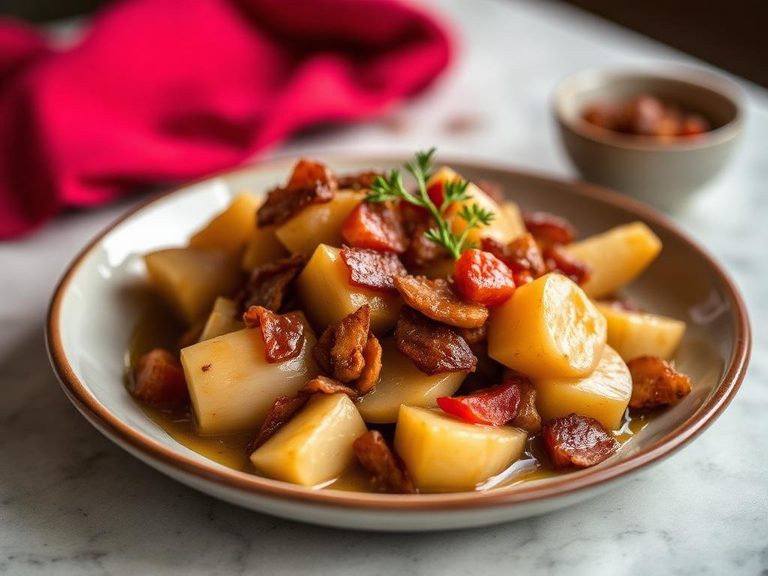
Cooked turnip is a humble root vegetable that transforms into a tender, slightly sweet, and earthy side dish when boiled or roasted. Its texture ranges from creamy and mashable to pleasantly firm, depending on the cooking method. With only 54 calories per 100g and a modest 6.7g of carbs, it's a nutrient-dense, low-energy option that provides a good source of fiber (1.9g) and a surprising amount of healthy fats (2.84g) for a root vegetable.
Calorie split: 7% protein · 48% carbs · 46% fat
↓ Full nutrition💚 Why it's loved
People love cooked turnips for their ability to absorb flavors like butter, herbs, and spices, making them a comforting and adaptable side. In many cultures, they are a staple in soups, stews, and roasted dishes, offering a mild, slightly peppery sweetness that complements richer proteins.
⚠️ Watch-outs & how to enjoy it better
Some find the earthy, slightly bitter taste of turnips off-putting, especially if overcooked. To counteract this, pair them with fat (like butter or olive oil) and protein (such as bacon or cheese) to balance the flavor and slow sugar absorption. For those sensitive to goitrogens, which can affect thyroid function, cooking thoroughly and avoiding excessive raw consumption is recommended.
Key benefits
- Low in calories and carbohydrates, making it suitable for weight management.
- Provides dietary fiber (1.9g per 100g) to support digestive health.
- Contains a notable amount of healthy fats (2.84g per 100g) for a vegetable.
- Rich in vitamin C and potassium, supporting immune and cardiovascular health.
- Serves as a versatile, low-glycemic base for hearty meals.
🍽️ Popular dishes

🌍 Where it's eaten
💡 Did you know?
The turnip was one of the first vegetables cultivated in ancient Rome, and its leaves (turnip greens) are often more nutritious than the root itself, packed with vitamins A, C, and K.
Full nutrition (USDA data · scales with serving)
| Water | 88.5 g |
| Energy | 54.0 kcal |
| Protein | 0.95 g |
| Total lipid (fat) | 2.8 g |
| Carbohydrate, by difference | 6.7 g |
| Fiber, total dietary | 1.9 g |
| Total Sugars | 4.0 g |
| Calcium, Ca | 32.0 mg |
| Iron, Fe | 0.32 mg |
| Magnesium, Mg | 11.0 mg |
| Phosphorus, P | 28.0 mg |
| Potassium, K | 199 mg |
| Sodium, Na | 200 mg |
| Zinc, Zn | 0.28 mg |
| Copper, Cu | 0.09 mg |
| Selenium, Se | 0.70 ug |
| Vitamin C, total ascorbic acid | 18.6 mg |
| Thiamin | 0.04 mg |
| Riboflavin | 0.03 mg |
| Niacin | 0.40 mg |
| Vitamin B-6 | 0.10 mg |
| Folate, total | 13.0 ug |
| Folic acid | 0.00 ug |
| Folate, food | 13.0 ug |
| Folate, DFE | 13.0 ug |
| Choline, total | 11.8 mg |
| Vitamin B-12 | 0.00 ug |
| Vitamin B-12, added | 0.00 ug |
| Vitamin A, RAE | 12.0 ug |
| Retinol | 12.0 ug |
| Carotene, beta | 5.0 ug |
| Carotene, alpha | 0.00 ug |
| Cryptoxanthin, beta | 0.00 ug |
| Lycopene | 0.00 ug |
| Lutein + zeaxanthin | 0.00 ug |
| Vitamin E (alpha-tocopherol) | 0.44 mg |
| Vitamin E, added | 0.00 mg |
| Vitamin D (D2 + D3) | 0.00 ug |
| Vitamin K (phylloquinone) | 2.4 ug |
| Alcohol, ethyl | 0.00 g |
| Caffeine | 0.00 mg |
| Theobromine | 0.00 mg |
Fat & fatty acid profile (per 100g)
| Fatty acids, total saturated | 0.73 g |
| SFA 4:0 | 0.02 g |
| SFA 6:0 | 0.01 g |
| SFA 8:0 | 0.01 g |
| SFA 10:0 | 0.02 g |
| SFA 12:0 | 0.02 g |
| SFA 14:0 | 0.07 g |
| SFA 16:0 | 0.40 g |
| SFA 18:0 | 0.15 g |
| Fatty acids, total monounsaturated | 0.98 g |
| MUFA 16:1 | 0.02 g |
| MUFA 18:1 | 0.94 g |
| MUFA 20:1 | 0.01 g |
| MUFA 22:1 | 0.00 g |
| Fatty acids, total polyunsaturated | 0.84 g |
| PUFA 18:2 | 0.71 g |
| PUFA 18:3 | 0.13 g |
| PUFA 18:4 | 0.00 g |
| PUFA 20:4 | 0.00 g |
| PUFA 20:5 n-3 (EPA) | 0.00 g |
| PUFA 22:5 n-3 (DPA) | 0.00 g |
| PUFA 22:6 n-3 (DHA) | 0.00 g |
| Cholesterol | 2.0 mg |
Amino acid profile (per 100g)
Estimated from Turnips, frozen, cooked, boiled, drained, with salt — USDA does not publish this profile for Turnip.
| Tryptophan | 0.01 g |
| Threonine | 0.04 g |
| Isoleucine | 0.06 g |
| Leucine | 0.06 g |
| Lysine | 0.06 g |
| Methionine | 0.02 g |
| Cystine | 0.01 g |
| Phenylalanine | 0.03 g |
| Tyrosine | 0.02 g |
| Valine | 0.05 g |
| Arginine | 0.04 g |
| Histidine | 0.02 g |
| Alanine | 0.06 g |
| Aspartic acid | 0.11 g |
| Glutamic acid | 0.22 g |
| Glycine | 0.04 g |
| Proline | 0.04 g |
| Serine | 0.05 g |
FAQ
Are cooked turnips high in sugar?
No, cooked turnips contain only about 3.96g of sugar per 100g, which is relatively low compared to many other root vegetables like carrots or beets.
Can I eat the leaves of a turnip?
Yes, turnip greens are edible and highly nutritious, often cooked in soups, stir-fries, or as a side dish. They are rich in vitamins A, C, and K, and calcium.
How do I reduce the bitterness of cooked turnips?
To reduce bitterness, roast or boil the turnips until tender, and pair them with sweet or fatty ingredients like honey, butter, or bacon. Adding a pinch of salt during cooking also helps.
Nutrient density (calculated · NRF9.3)
Nutrient Rich Foods index: beneficial nutrients (protein, fiber, vitamins, minerals) minus saturated fat, added sugar & sodium, per 100 kcal.
NRF9.3 index — Fulgoni, Keast & Drewnowski, 2009. Computed from USDA nutrients.
Weight-loss friendliness (composite index)
Energy density 0.54 kcal/g · 7% calories from protein · 1.9 g fiber · 4.0 g sugar per 100 g.
Composite of energy density (Rolls et al., 1999), protein & fiber satiety, minus sugar. A calculated heuristic — ranks satiety-per-calorie, not a clinical measure.
Dietary load (calculated from USDA values)
Potential renal acid load. Positive = acid-forming, negative = alkaline-forming.
Sodium-to-potassium ratio: 1.01 (lower is better — aim for ≤ 1)
Sodium:potassium per WHO potassium guidance. Computed from USDA nutrients.