

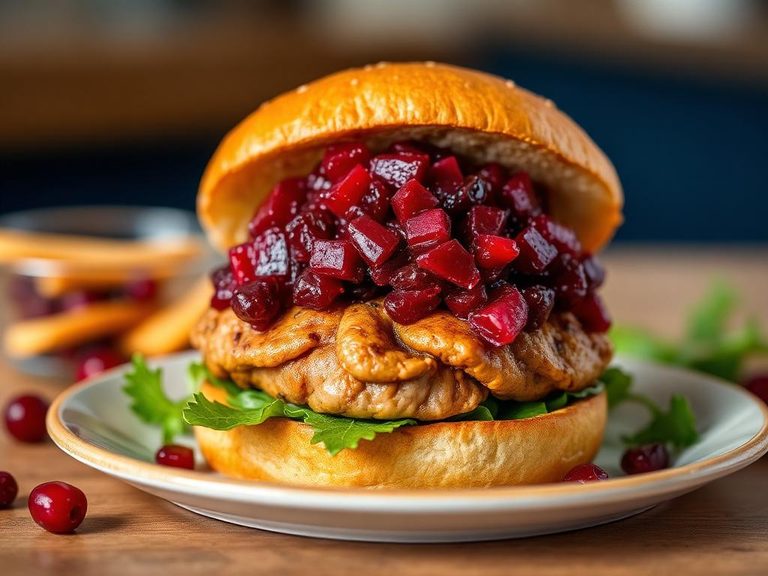
Turkey or chicken burger, on wheat bun
Common food

Photo: Wikipedia
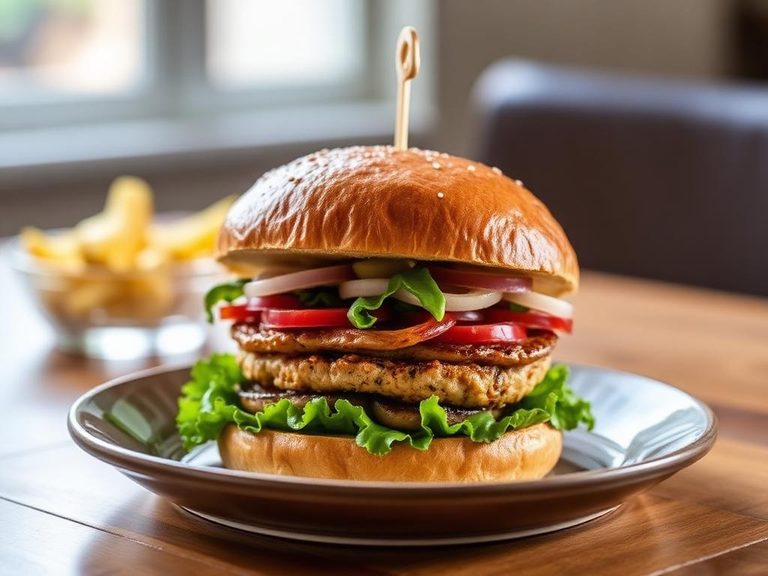
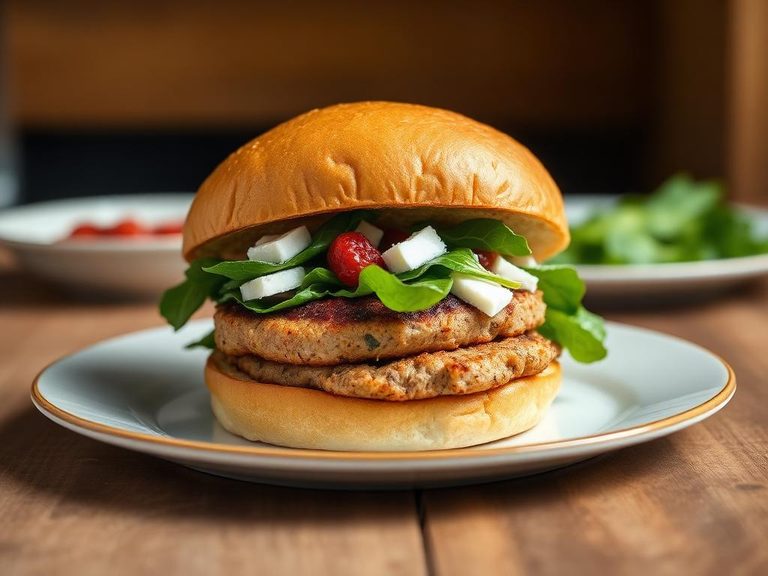
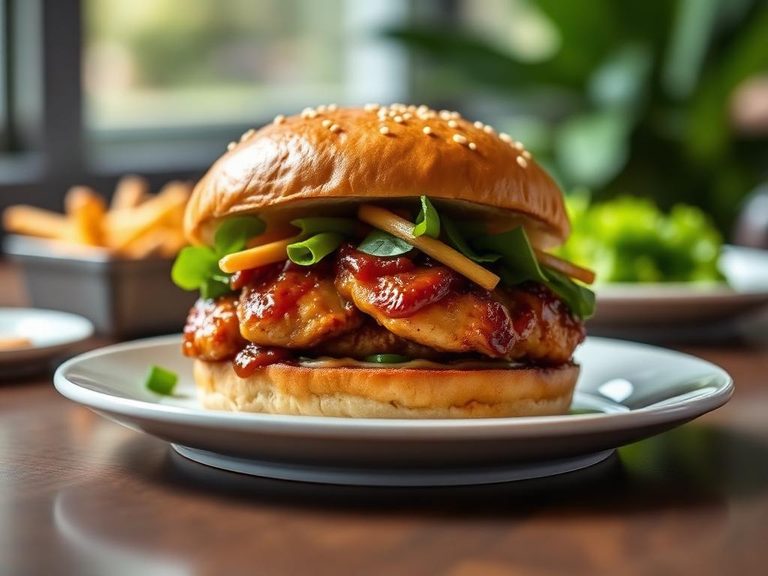
This is a lean, high-protein patty made from ground turkey or chicken, served on a whole-wheat bun. It offers a mild, savory flavor with a tender, juicy texture, and the wheat bun adds a slightly nutty, chewy contrast. Nutritionally, it's a powerhouse, delivering over 20g of protein per 100g with a moderate calorie count.
Calorie split: 36% protein · 33% carbs · 31% fat
↓ Full nutrition💚 Why it's loved
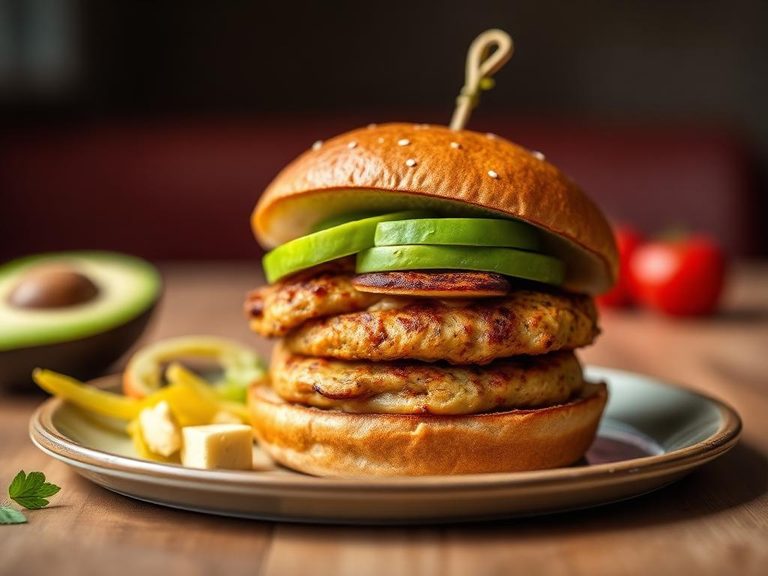
People love it for its satisfying, familiar burger experience with a lighter, healthier profile. It's a versatile canvas that pairs well with everything from classic lettuce and tomato to spicy salsas or avocado.
⚠️ Watch-outs & how to enjoy it better
The lean meat can become dry if overcooked, and pre-made patties or buns can be high in sodium. Those watching blood sugar should be mindful of the bun's carbs. To counteract dryness, mix in finely diced onions or a touch of olive oil before cooking, and choose low-sodium seasonings. Pair the burger with a large side salad to increase fiber and slow carb absorption.
Key benefits
- Excellent source of lean protein for muscle maintenance.
- Whole-wheat bun provides dietary fiber and B vitamins.
- Lower in saturated fat compared to traditional beef burgers.
- Versatile base for adding vegetables and healthy toppings.
🍽️ Popular dishes
🌍 Where it's eaten
💡 Did you know?
Ground turkey is often a mix of both dark and light meat, which helps keep it juicier than using only breast meat, while ground chicken is typically made from just the breast.
Full nutrition (USDA data · scales with serving)
| Water | 51.5 g |
| Energy | 227 kcal |
| Protein | 20.7 g |
| Total lipid (fat) | 7.7 g |
| Carbohydrate, by difference | 18.7 g |
| Fiber, total dietary | 2.2 g |
| Total Sugars | 2.1 g |
| Calcium, Ca | 83.0 mg |
| Iron, Fe | 2.2 mg |
| Magnesium, Mg | 41.0 mg |
| Phosphorus, P | 217 mg |
| Potassium, K | 250 mg |
| Sodium, Na | 334 mg |
| Zinc, Zn | 2.4 mg |
| Copper, Cu | 0.17 mg |
| Selenium, Se | 29.6 ug |
| Vitamin C, total ascorbic acid | 0.00 mg |
| Thiamin | 0.21 mg |
| Riboflavin | 0.21 mg |
| Niacin | 7.1 mg |
| Vitamin B-6 | 0.44 mg |
| Folate, total | 34.0 ug |
| Folic acid | 6.0 ug |
| Folate, food | 28.0 ug |
| Folate, DFE | 38.0 ug |
| Choline, total | 54.5 mg |
| Vitamin B-12 | 0.78 ug |
| Vitamin B-12, added | 0.00 ug |
| Vitamin A, RAE | 14.0 ug |
| Retinol | 14.0 ug |
| Carotene, beta | 1.0 ug |
| Carotene, alpha | 0.00 ug |
| Cryptoxanthin, beta | 0.00 ug |
| Lycopene | 0.00 ug |
| Lutein + zeaxanthin | 26.0 ug |
| Vitamin E (alpha-tocopherol) | 0.21 mg |
| Vitamin E, added | 0.00 mg |
| Vitamin D (D2 + D3) | 0.10 ug |
| Vitamin K (phylloquinone) | 2.3 ug |
| Alcohol, ethyl | 0.00 g |
| Caffeine | 0.00 mg |
| Theobromine | 0.00 mg |
Fat & fatty acid profile (per 100g)
| Fatty acids, total saturated | 1.9 g |
| SFA 4:0 | 0.00 g |
| SFA 6:0 | 0.00 g |
| SFA 8:0 | 0.00 g |
| SFA 10:0 | 0.00 g |
| SFA 12:0 | 0.01 g |
| SFA 14:0 | 0.05 g |
| SFA 16:0 | 1.2 g |
| SFA 18:0 | 0.52 g |
| Fatty acids, total monounsaturated | 2.3 g |
| MUFA 16:1 | 0.18 g |
| MUFA 18:1 | 2.1 g |
| MUFA 20:1 | 0.03 g |
| MUFA 22:1 | 0.00 g |
| Fatty acids, total polyunsaturated | 2.4 g |
| PUFA 18:2 | 2.1 g |
| PUFA 18:3 | 0.15 g |
| PUFA 18:4 | 0.00 g |
| PUFA 20:4 | 0.07 g |
| PUFA 20:5 n-3 (EPA) | 0.01 g |
| PUFA 22:5 n-3 (DPA) | 0.01 g |
| PUFA 22:6 n-3 (DHA) | 0.01 g |
| Cholesterol | 54.0 mg |
Amino acid profile (per 100g)
Estimated from Turnover, chicken- or turkey-, and vegetable-filled, reduced fat, frozen — USDA does not publish this profile for Turkey or chicken burger.
| Tryptophan | 0.16 g |
| Threonine | 0.41 g |
| Isoleucine | 0.47 g |
| Leucine | 0.80 g |
| Lysine | 0.61 g |
| Methionine | 0.23 g |
| Cystine | 0.13 g |
| Phenylalanine | 0.47 g |
| Tyrosine | 0.37 g |
| Valine | 0.53 g |
| Arginine | 0.51 g |
| Histidine | 0.30 g |
| Alanine | 0.45 g |
| Aspartic acid | 0.80 g |
| Glutamic acid | 2.2 g |
| Glycine | 0.38 g |
| Proline | 0.87 g |
| Serine | 0.42 g |
| Hydroxyproline | 0.00 g |
FAQ
Is a turkey burger healthier than a beef burger?
Generally, yes. A lean turkey burger is typically lower in calories and saturated fat than a regular ground beef patty, while providing a similar amount of high-quality protein.
How do I keep a turkey burger from falling apart?
Don't overmix the meat when seasoning, as this makes it tough. You can also bind it with an egg or a tablespoon of breadcrumbs, and make sure the grill or pan is properly preheated before adding the patty.
Can I freeze uncooked turkey burger patties?
Absolutely. Form the patties, place them on a baking sheet to freeze individually, then transfer to a freezer bag. They'll keep for 3-4 months. Cook from frozen, adding a few extra minutes to the cooking time.
Nutrient density (calculated · NRF9.3)
Nutrient Rich Foods index: beneficial nutrients (protein, fiber, vitamins, minerals) minus saturated fat, added sugar & sodium, per 100 kcal.
NRF9.3 index — Fulgoni, Keast & Drewnowski, 2009. Computed from USDA nutrients.
Weight-loss friendliness (composite index)
Energy density 2.27 kcal/g · 36% calories from protein · 2.2 g fiber · 2.1 g sugar per 100 g.
Composite of energy density (Rolls et al., 1999), protein & fiber satiety, minus sugar. A calculated heuristic — ranks satiety-per-calorie, not a clinical measure.
Dietary load (calculated from USDA values)
Potential renal acid load. Positive = acid-forming, negative = alkaline-forming.
Sodium-to-potassium ratio: 1.34 (lower is better — aim for ≤ 1)
Sodium:potassium per WHO potassium guidance. Computed from USDA nutrients.