

Veggie burger patty, no bun
Common food

Photo: Wikipedia
A veggie burger patty, served without a bun, is a dense, savory disc made from plant-based ingredients like soy, peas, or grains. Its texture is typically firm and slightly chewy, often with a hearty, umami-rich flavor profile that mimics meat. Nutritionally, it stands out for its impressive protein content (15.7g per 100g) and high fiber (4.9g per 100g), making it a satisfying, low-calorie option.
Calorie split: 36% protein · 32% carbs · 32% fat
↓ Full nutrition💚 Why it's loved
People love veggie burger patties for their ability to deliver a satisfying, savory experience without meat, making them a staple in plant-based diets. Their versatility allows them to be grilled, baked, or pan-fried, and they fit seamlessly into global cuisines from American diners to Mediterranean bowls.
⚠️ Watch-outs & how to enjoy it better
Some veggie patties can be high in sodium or contain common allergens like soy or gluten, which may concern those with sensitivities or blood-sugar concerns. To counteract this, choose low-sodium varieties, pair with healthy fats like avocado, and monitor portion sizes to avoid overconsumption.
Key benefits
- High in plant-based protein for muscle maintenance
- Rich in dietary fiber to support digestion and satiety
- Low in saturated fat compared to many meat patties
- Provides a convenient, quick-cooking protein source
- Often fortified with vitamins like B12 or iron
🍽️ Popular dishes
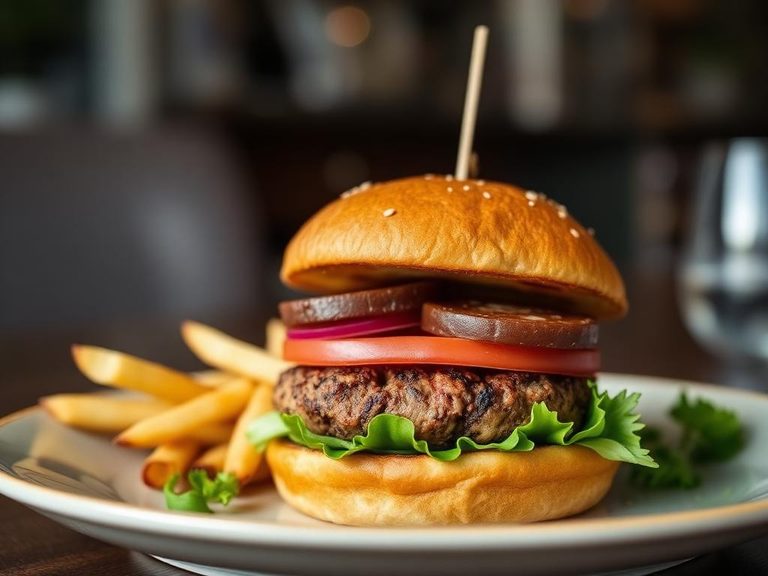
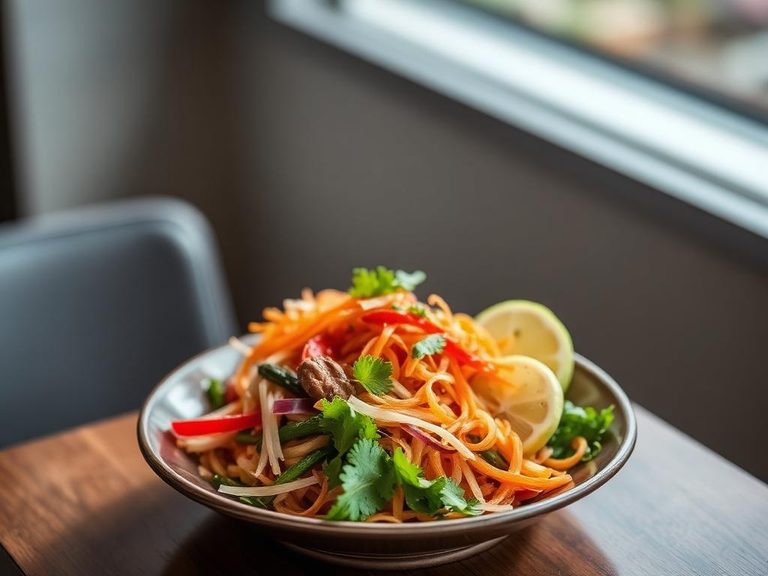
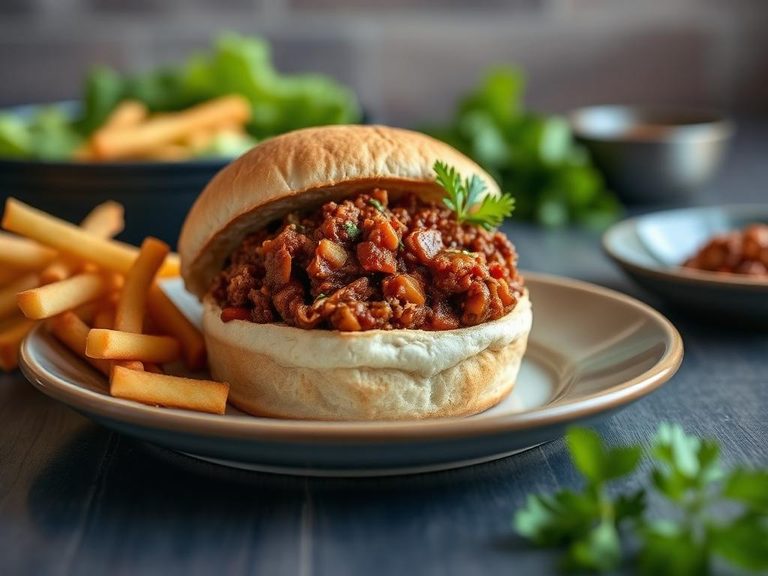


🌍 Where it's eaten
💡 Did you know?
The first commercially successful veggie burger, the Gardenburger, was created in 1982 by Paul Wenner, a restaurant owner in Oregon, using a base of mushrooms, onions, and brown rice.
Full nutrition (USDA data · scales with serving)
| Water | 61.2 g |
| Energy | 177 kcal |
| Protein | 15.7 g |
| Total lipid (fat) | 6.3 g |
| Carbohydrate, by difference | 14.3 g |
| Fiber, total dietary | 4.9 g |
| Total Sugars | 1.1 g |
| Calcium, Ca | 136 mg |
| Iron, Fe | 2.4 mg |
| Magnesium, Mg | 56.0 mg |
| Phosphorus, P | 206 mg |
| Potassium, K | 333 mg |
| Sodium, Na | 569 mg |
| Zinc, Zn | 1.3 mg |
| Copper, Cu | 0.20 mg |
| Selenium, Se | 22.6 ug |
| Vitamin C, total ascorbic acid | 4.5 mg |
| Thiamin | 2.7 mg |
| Riboflavin | 0.24 mg |
| Niacin | 3.8 mg |
| Vitamin B-6 | 0.30 mg |
| Folate, total | 124 ug |
| Folic acid | 0.00 ug |
| Folate, food | 124 ug |
| Folate, DFE | 124 ug |
| Choline, total | 19.4 mg |
| Vitamin B-12 | 2.0 ug |
| Vitamin B-12, added | 2.0 ug |
| Vitamin A, RAE | 1.0 ug |
| Retinol | 0.00 ug |
| Carotene, beta | 10.0 ug |
| Carotene, alpha | 0.00 ug |
| Cryptoxanthin, beta | 0.00 ug |
| Lycopene | 0.00 ug |
| Lutein + zeaxanthin | 0.00 ug |
| Vitamin E (alpha-tocopherol) | 0.23 mg |
| Vitamin E, added | 0.00 mg |
| Vitamin D (D2 + D3) | 0.00 ug |
| Vitamin K (phylloquinone) | 4.2 ug |
| Alcohol, ethyl | 0.00 g |
| Caffeine | 0.00 mg |
| Theobromine | 0.00 mg |
Fat & fatty acid profile (per 100g)
| Fatty acids, total saturated | 1.4 g |
| SFA 4:0 | 0.00 g |
| SFA 6:0 | 0.00 g |
| SFA 8:0 | 0.10 g |
| SFA 10:0 | 0.08 g |
| SFA 12:0 | 0.03 g |
| SFA 14:0 | 0.11 g |
| SFA 16:0 | 0.81 g |
| SFA 18:0 | 0.27 g |
| Fatty acids, total monounsaturated | 1.8 g |
| MUFA 16:1 | 0.02 g |
| MUFA 18:1 | 1.7 g |
| MUFA 20:1 | 0.02 g |
| MUFA 22:1 | 0.00 g |
| Fatty acids, total polyunsaturated | 2.0 g |
| PUFA 18:2 | 1.9 g |
| PUFA 18:3 | 0.00 g |
| PUFA 18:4 | 0.00 g |
| PUFA 20:4 | 0.00 g |
| PUFA 20:5 n-3 (EPA) | 0.00 g |
| PUFA 22:5 n-3 (DPA) | 0.00 g |
| PUFA 22:6 n-3 (DHA) | 0.00 g |
| Cholesterol | 5.0 mg |
Amino acid profile (per 100g)
Estimated from Veggie burgers or soyburgers, unprepared — USDA does not publish this profile for Veggie burger patty.
| Tryptophan | 0.16 g |
| Threonine | 0.60 g |
| Isoleucine | 0.78 g |
| Leucine | 1.4 g |
| Lysine | 1.0 g |
| Methionine | 0.29 g |
| Cystine | 0.26 g |
| Phenylalanine | 0.89 g |
| Tyrosine | 0.65 g |
| Valine | 0.89 g |
| Arginine | 1.0 g |
| Histidine | 0.47 g |
| Alanine | 0.73 g |
| Aspartic acid | 1.6 g |
| Glutamic acid | 4.1 g |
| Glycine | 0.66 g |
| Proline | 1.3 g |
| Serine | 0.97 g |
FAQ
Are veggie burger patties a good source of protein?
Yes, many veggie patties are high in protein, often containing 15-20g per serving, especially those made from soy, peas, or lentils.
Can veggie burger patties be part of a weight-loss diet?
Absolutely, as they are typically lower in calories and fat than meat patties, and their high fiber content helps with satiety.
Do veggie burger patties contain gluten?
Some do, especially if they include wheat or breadcrumbs, but many brands offer gluten-free options using ingredients like rice or quinoa.
Nutrient density (calculated · NRF9.3)
Nutrient Rich Foods index: beneficial nutrients (protein, fiber, vitamins, minerals) minus saturated fat, added sugar & sodium, per 100 kcal.
NRF9.3 index — Fulgoni, Keast & Drewnowski, 2009. Computed from USDA nutrients.
Weight-loss friendliness (composite index)
Energy density 1.77 kcal/g · 35% calories from protein · 4.9 g fiber · 1.1 g sugar per 100 g.
Composite of energy density (Rolls et al., 1999), protein & fiber satiety, minus sugar. A calculated heuristic — ranks satiety-per-calorie, not a clinical measure.
Dietary load (calculated from USDA values)
Potential renal acid load. Positive = acid-forming, negative = alkaline-forming.
Sodium-to-potassium ratio: 1.71 (lower is better — aim for ≤ 1)
Sodium:potassium per WHO potassium guidance. Computed from USDA nutrients.