

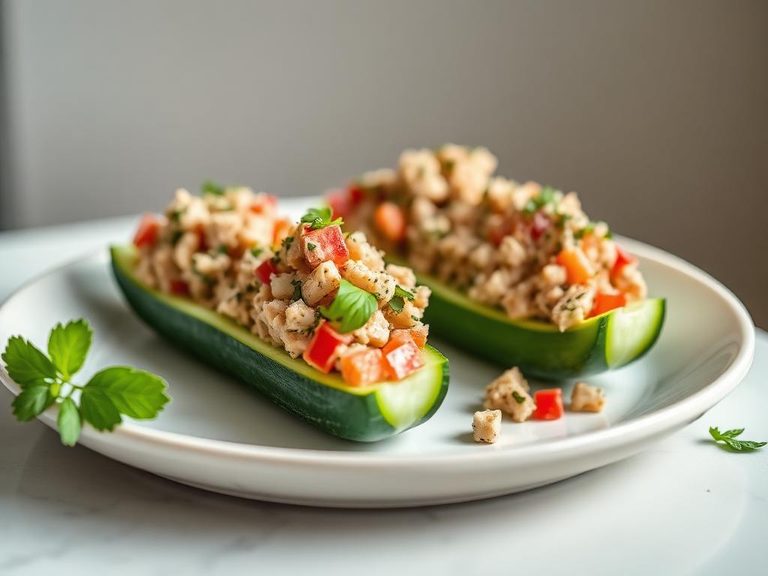
Tuna salad, made with light creamy dressing
Common food

Photo: Wikipedia
A classic deli staple, this tuna salad combines flaky, mild canned tuna with a light, creamy dressing for a satisfying, protein-packed bite. Its texture is a pleasing mix of tender fish and crisp, fresh vegetables like celery or onion, all coated in a subtle, tangy sauce. Nutritionally, it's a lean powerhouse, delivering an impressive 9.82g of protein per 100g with minimal fat.
Calorie split: 50% protein · 37% carbs · 13% fat
↓ Full nutrition💚 Why it's loved
People love it for its incredible versatility and convenience—it's a quick lunch, a picnic essential, and a flavorful filling for sandwiches, wraps, and stuffed tomatoes. The familiar, comforting taste of tuna paired with a creamy dressing makes it a nostalgic and reliable crowd-pleaser.
⚠️ Watch-outs & how to enjoy it better
The light creamy dressing can sometimes be high in sodium, and canned tuna is a common allergen. For those monitoring mercury intake, choosing 'chunk light' tuna (typically skipjack) and limiting portion frequency is advisable. To balance the meal, pair it with a large portion of leafy greens or whole-grain crackers to add fiber and slow digestion.
Key benefits
- Excellent source of lean, high-quality protein
- Low in total fat and calories
- Provides omega-3 fatty acids from tuna
- Quick, no-cook meal or ingredient
- Good source of selenium and B vitamins
🍽️ Popular dishes
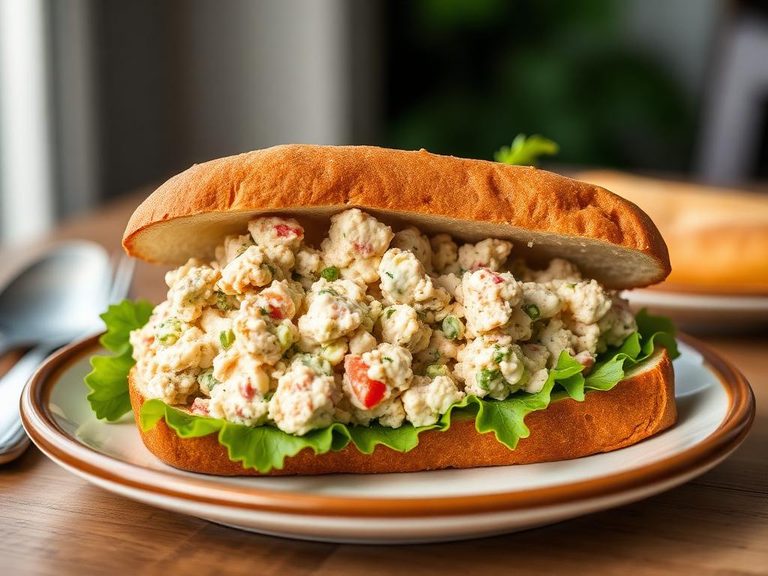
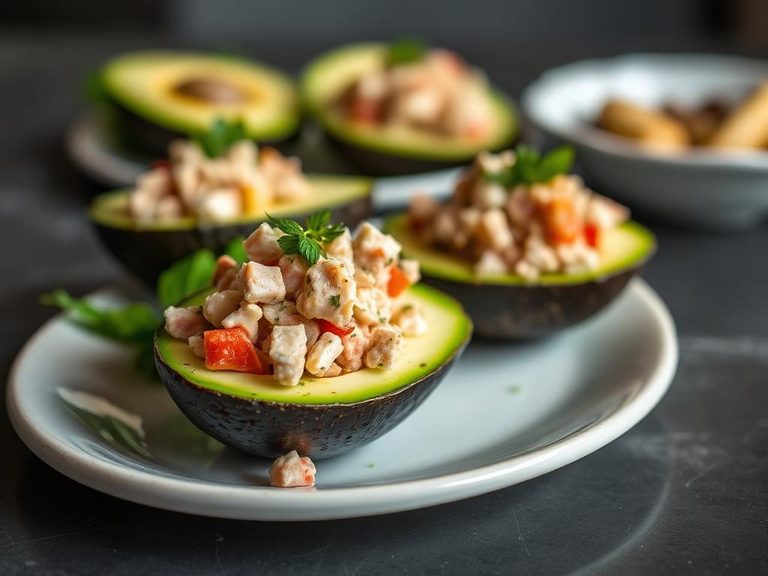

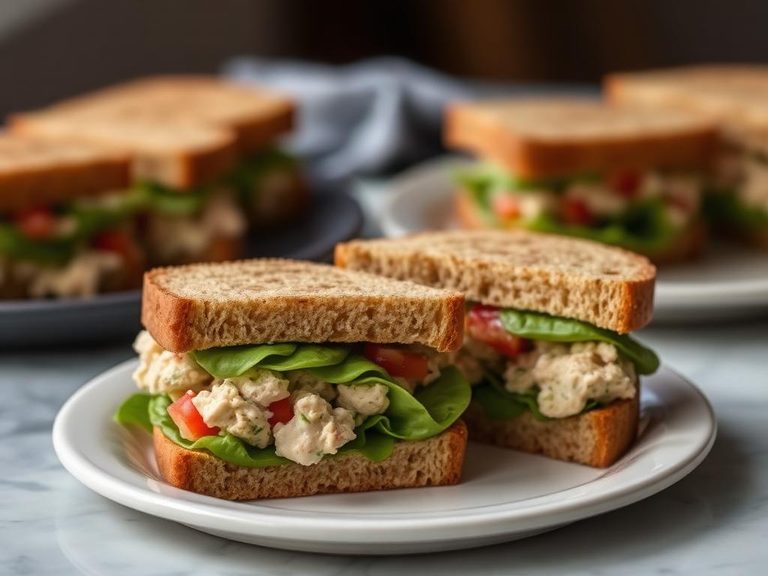
🌍 Where it's eaten
💡 Did you know?
The classic 'tuna salad' as we know it—canned tuna mixed with mayonnaise—became a widespread American staple during World War II, thanks to government-issued canned tuna and the convenience it offered for home front meals.
Full nutrition (USDA data · scales with serving)
| Water | 80.3 g |
| Energy | 78.0 kcal |
| Protein | 9.8 g |
| Total lipid (fat) | 1.2 g |
| Carbohydrate, by difference | 7.4 g |
| Fiber, total dietary | 0.40 g |
| Total Sugars | 3.1 g |
| Calcium, Ca | 28.0 mg |
| Iron, Fe | 0.93 mg |
| Magnesium, Mg | 15.0 mg |
| Phosphorus, P | 91.0 mg |
| Potassium, K | 176 mg |
| Sodium, Na | 488 mg |
| Zinc, Zn | 0.40 mg |
| Copper, Cu | 0.03 mg |
| Selenium, Se | 33.8 ug |
| Vitamin C, total ascorbic acid | 0.70 mg |
| Thiamin | 0.02 mg |
| Riboflavin | 0.07 mg |
| Niacin | 5.0 mg |
| Vitamin B-6 | 0.17 mg |
| Folate, total | 11.0 ug |
| Folic acid | 0.00 ug |
| Folate, food | 11.0 ug |
| Folate, DFE | 11.0 ug |
| Choline, total | 19.8 mg |
| Vitamin B-12 | 1.3 ug |
| Vitamin B-12, added | 0.00 ug |
| Vitamin A, RAE | 17.0 ug |
| Retinol | 9.0 ug |
| Carotene, beta | 86.0 ug |
| Carotene, alpha | 7.0 ug |
| Cryptoxanthin, beta | 16.0 ug |
| Lycopene | 0.00 ug |
| Lutein + zeaxanthin | 76.0 ug |
| Vitamin E (alpha-tocopherol) | 0.41 mg |
| Vitamin E, added | 0.00 mg |
| Vitamin D (D2 + D3) | 0.60 ug |
| Vitamin K (phylloquinone) | 11.5 ug |
| Alcohol, ethyl | 0.00 g |
| Caffeine | 0.00 mg |
| Theobromine | 0.00 mg |
Fat & fatty acid profile (per 100g)
| Fatty acids, total saturated | 0.24 g |
| SFA 4:0 | 0.00 g |
| SFA 6:0 | 0.00 g |
| SFA 8:0 | 0.00 g |
| SFA 10:0 | 0.00 g |
| SFA 12:0 | 0.00 g |
| SFA 14:0 | 0.01 g |
| SFA 16:0 | 0.15 g |
| SFA 18:0 | 0.06 g |
| Fatty acids, total monounsaturated | 0.23 g |
| MUFA 16:1 | 0.01 g |
| MUFA 18:1 | 0.20 g |
| MUFA 20:1 | 0.00 g |
| MUFA 22:1 | 0.01 g |
| Fatty acids, total polyunsaturated | 0.49 g |
| PUFA 18:2 | 0.33 g |
| PUFA 18:3 | 0.04 g |
| PUFA 18:4 | 0.00 g |
| PUFA 20:4 | 0.01 g |
| PUFA 20:5 n-3 (EPA) | 0.01 g |
| PUFA 22:5 n-3 (DPA) | 0.00 g |
| PUFA 22:6 n-3 (DHA) | 0.10 g |
| Cholesterol | 18.0 mg |
Amino acid profile (per 100g)
Estimated from Fish, tuna salad — USDA does not publish this profile for Tuna salad.
| Tryptophan | 0.18 g |
| Threonine | 0.70 g |
| Isoleucine | 0.74 g |
| Leucine | 1.3 g |
| Lysine | 1.5 g |
| Methionine | 0.47 g |
| Cystine | 0.17 g |
| Phenylalanine | 0.63 g |
| Tyrosine | 0.54 g |
| Valine | 0.82 g |
| Arginine | 0.97 g |
| Histidine | 0.47 g |
| Alanine | 0.96 g |
| Aspartic acid | 1.6 g |
| Glutamic acid | 2.4 g |
| Glycine | 0.77 g |
| Proline | 0.56 g |
| Serine | 0.66 g |
FAQ
What's the difference between 'light' and 'white' tuna salad?
'Light' tuna salad is typically made from skipjack or yellowfin tuna, has a darker color, stronger flavor, and is lower in mercury and cost. 'White' tuna salad uses albacore tuna, which is milder, paler, and higher in both mercury and price.
How can I make it healthier?
You can lighten it further by substituting some or all of the creamy dressing with mashed avocado, plain Greek yogurt, or a vinaigrette. Boost fiber and nutrients by adding extra diced vegetables like bell peppers, carrots, or fresh herbs.
Is it safe for pregnant women?
In general, yes, but with caution. Pregnant women should choose canned 'light' tuna (lower mercury) and limit consumption to 2-3 servings per week, following FDA guidelines. Always consult a healthcare provider for personalized advice.
Nutrient density (calculated · NRF9.3)
Nutrient Rich Foods index: beneficial nutrients (protein, fiber, vitamins, minerals) minus saturated fat, added sugar & sodium, per 100 kcal.
NRF9.3 index — Fulgoni, Keast & Drewnowski, 2009. Computed from USDA nutrients.
Weight-loss friendliness (composite index)
Energy density 0.78 kcal/g · 50% calories from protein · 0.4 g fiber · 3.1 g sugar per 100 g.
Composite of energy density (Rolls et al., 1999), protein & fiber satiety, minus sugar. A calculated heuristic — ranks satiety-per-calorie, not a clinical measure.
Dietary load (calculated from USDA values)
Potential renal acid load. Positive = acid-forming, negative = alkaline-forming.
Sodium-to-potassium ratio: 2.77 (lower is better — aim for ≤ 1)
Sodium:potassium per WHO potassium guidance. Computed from USDA nutrients.