

Tuna salad, made with light mayonnaise-type salad dressing
Common food

Photo: Wikipedia
Tuna salad made with light mayonnaise is a classic, protein-rich mixture of flaked canned tuna and a creamy, tangy dressing. Its texture is a satisfying blend of soft, fibrous fish and smooth, emulsified sauce, often with a subtle, savory flavor profile. Nutritionally, it's a lean powerhouse, delivering nearly 10 grams of protein per 100 grams for minimal calories.
Calorie split: 37% protein · 18% carbs · 46% fat
↓ Full nutrition💚 Why it's loved
People love it for its savory, umami-rich flavor and creamy texture, which makes it a comforting and satisfying meal. It's also incredibly versatile, easily adapted with different mix-ins and served in countless ways, from sandwiches to salads.
⚠️ Watch-outs & how to enjoy it better
The primary concern is the potential for high sodium content from canned tuna and mayonnaise, which can be an issue for those monitoring blood pressure. To mitigate this, choose low-sodium tuna, rinse it thoroughly, and use a small amount of a light, low-sodium dressing. Additionally, some individuals may be sensitive to histamines in tuna, which can cause reactions; opting for very fresh, high-quality canned tuna can help.
Key benefits
- High-quality protein source for muscle maintenance
- Low in carbohydrates and sugar
- Good source of omega-3 fatty acids from tuna
- Convenient and quick to prepare
- Versatile base for many meals
🍽️ Popular dishes
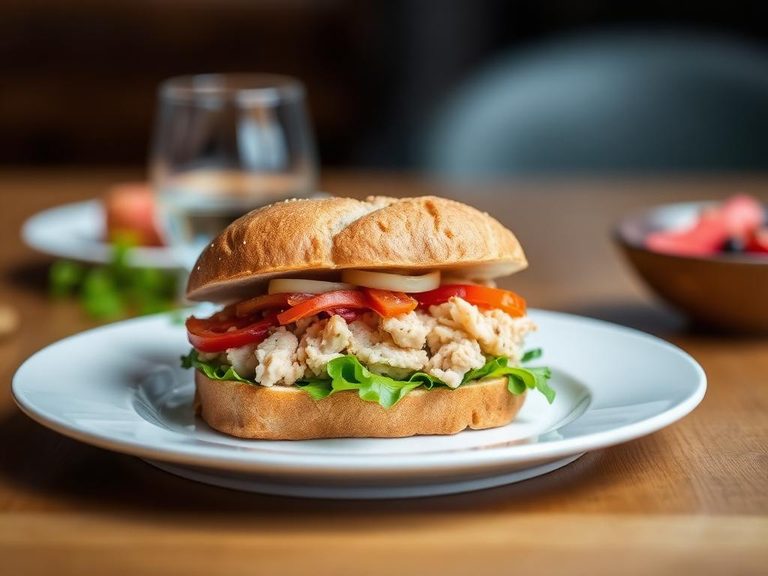
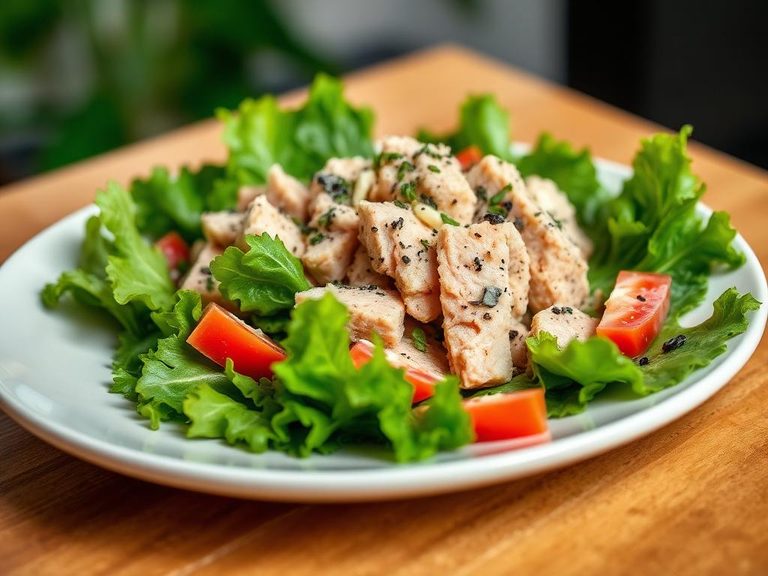
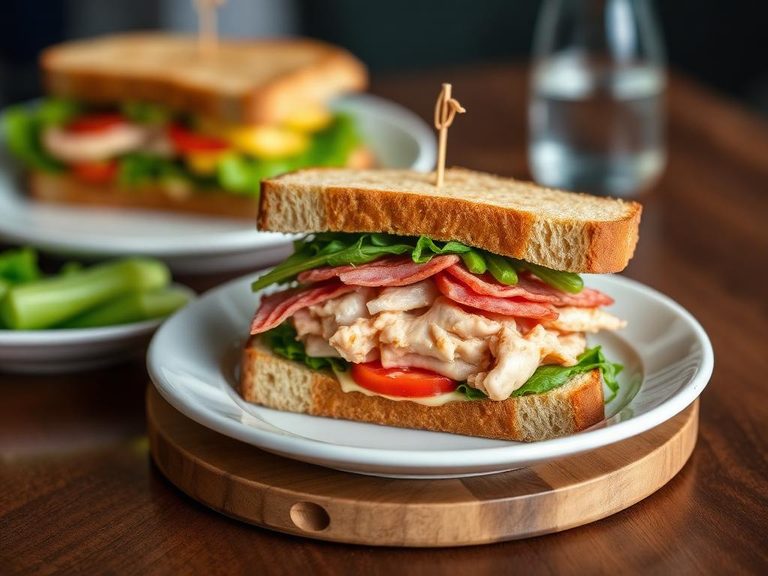
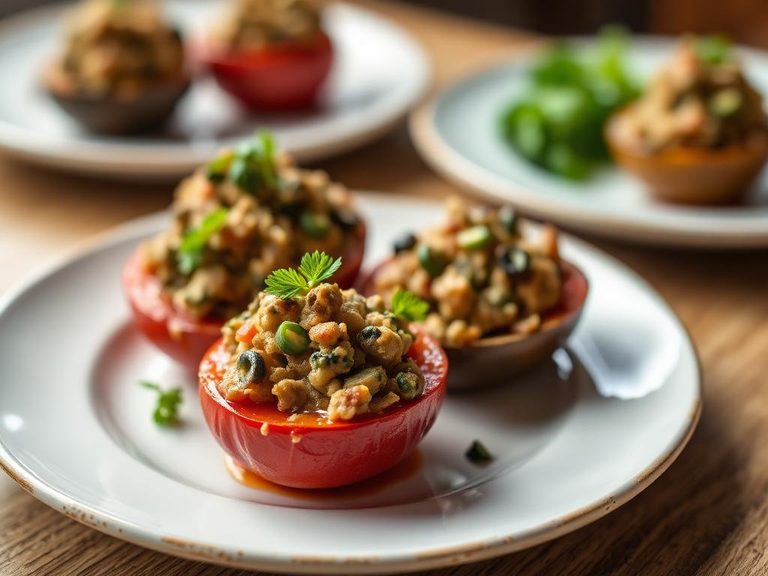
🌍 Where it's eaten
💡 Did you know?
The term 'tuna salad' in the U.S. became a staple of lunch counters and diners in the early 20th century, often served as a 'tuna fish sandwich' on sliced white bread, a tradition that persists in many delis today.
Full nutrition (USDA data · scales with serving)
| Water | 78.6 g |
| Energy | 106 kcal |
| Protein | 9.8 g |
| Total lipid (fat) | 5.4 g |
| Carbohydrate, by difference | 4.8 g |
| Fiber, total dietary | 0.40 g |
| Total Sugars | 2.7 g |
| Calcium, Ca | 21.0 mg |
| Iron, Fe | 0.92 mg |
| Magnesium, Mg | 15.0 mg |
| Phosphorus, P | 78.0 mg |
| Potassium, K | 155 mg |
| Sodium, Na | 464 mg |
| Zinc, Zn | 0.38 mg |
| Copper, Cu | 0.03 mg |
| Selenium, Se | 34.7 ug |
| Vitamin C, total ascorbic acid | 0.70 mg |
| Thiamin | 0.02 mg |
| Riboflavin | 0.06 mg |
| Niacin | 5.1 mg |
| Vitamin B-6 | 0.17 mg |
| Folate, total | 11.0 ug |
| Folic acid | 0.00 ug |
| Folate, food | 11.0 ug |
| Folate, DFE | 11.0 ug |
| Choline, total | 18.3 mg |
| Vitamin B-12 | 1.3 ug |
| Vitamin B-12, added | 0.00 ug |
| Vitamin A, RAE | 19.0 ug |
| Retinol | 10.0 ug |
| Carotene, beta | 95.0 ug |
| Carotene, alpha | 7.0 ug |
| Cryptoxanthin, beta | 17.0 ug |
| Lycopene | 0.00 ug |
| Lutein + zeaxanthin | 83.0 ug |
| Vitamin E (alpha-tocopherol) | 0.74 mg |
| Vitamin E, added | 0.00 mg |
| Vitamin D (D2 + D3) | 0.60 ug |
| Vitamin K (phylloquinone) | 23.0 ug |
| Alcohol, ethyl | 0.00 g |
| Caffeine | 0.00 mg |
| Theobromine | 0.00 mg |
Fat & fatty acid profile (per 100g)
| Fatty acids, total saturated | 0.88 g |
| SFA 4:0 | 0.00 g |
| SFA 6:0 | 0.00 g |
| SFA 8:0 | 0.00 g |
| SFA 10:0 | 0.00 g |
| SFA 12:0 | 0.00 g |
| SFA 14:0 | 0.01 g |
| SFA 16:0 | 0.59 g |
| SFA 18:0 | 0.23 g |
| Fatty acids, total monounsaturated | 1.2 g |
| MUFA 16:1 | 0.01 g |
| MUFA 18:1 | 1.1 g |
| MUFA 20:1 | 0.02 g |
| MUFA 22:1 | 0.01 g |
| Fatty acids, total polyunsaturated | 3.0 g |
| PUFA 18:2 | 2.5 g |
| PUFA 18:3 | 0.34 g |
| PUFA 18:4 | 0.00 g |
| PUFA 20:4 | 0.01 g |
| PUFA 20:5 n-3 (EPA) | 0.01 g |
| PUFA 22:5 n-3 (DPA) | 0.00 g |
| PUFA 22:6 n-3 (DHA) | 0.10 g |
| Cholesterol | 22.0 mg |
Amino acid profile (per 100g)
Estimated from Fish, tuna salad — USDA does not publish this profile for Tuna salad.
| Tryptophan | 0.18 g |
| Threonine | 0.70 g |
| Isoleucine | 0.74 g |
| Leucine | 1.3 g |
| Lysine | 1.5 g |
| Methionine | 0.47 g |
| Cystine | 0.17 g |
| Phenylalanine | 0.63 g |
| Tyrosine | 0.54 g |
| Valine | 0.82 g |
| Arginine | 0.97 g |
| Histidine | 0.47 g |
| Alanine | 0.96 g |
| Aspartic acid | 1.6 g |
| Glutamic acid | 2.4 g |
| Glycine | 0.77 g |
| Proline | 0.56 g |
| Serine | 0.66 g |
FAQ
Is tuna salad healthy?
Yes, it's generally a healthy choice due to its high protein and low carbohydrate content. The healthiness can vary based on the type of mayonnaise used and added ingredients like celery or onions, which add fiber and nutrients.
How long does tuna salad last in the fridge?
Properly stored in an airtight container, tuna salad will stay fresh for 3 to 4 days in the refrigerator. It's best to consume it within this window to ensure safety and quality.
Can I use fresh tuna for tuna salad?
While canned tuna is traditional for its convenience and texture, you can use cooked fresh tuna. Simply flake it and mix it with the dressing. The texture will be firmer and the flavor more pronounced than with canned tuna.
Nutrient density (calculated · NRF9.3)
Nutrient Rich Foods index: beneficial nutrients (protein, fiber, vitamins, minerals) minus saturated fat, added sugar & sodium, per 100 kcal.
NRF9.3 index — Fulgoni, Keast & Drewnowski, 2009. Computed from USDA nutrients.
Weight-loss friendliness (composite index)
Energy density 1.06 kcal/g · 37% calories from protein · 0.4 g fiber · 2.7 g sugar per 100 g.
Composite of energy density (Rolls et al., 1999), protein & fiber satiety, minus sugar. A calculated heuristic — ranks satiety-per-calorie, not a clinical measure.
Dietary load (calculated from USDA values)
Potential renal acid load. Positive = acid-forming, negative = alkaline-forming.
Sodium-to-potassium ratio: 2.99 (lower is better — aim for ≤ 1)
Sodium:potassium per WHO potassium guidance. Computed from USDA nutrients.