

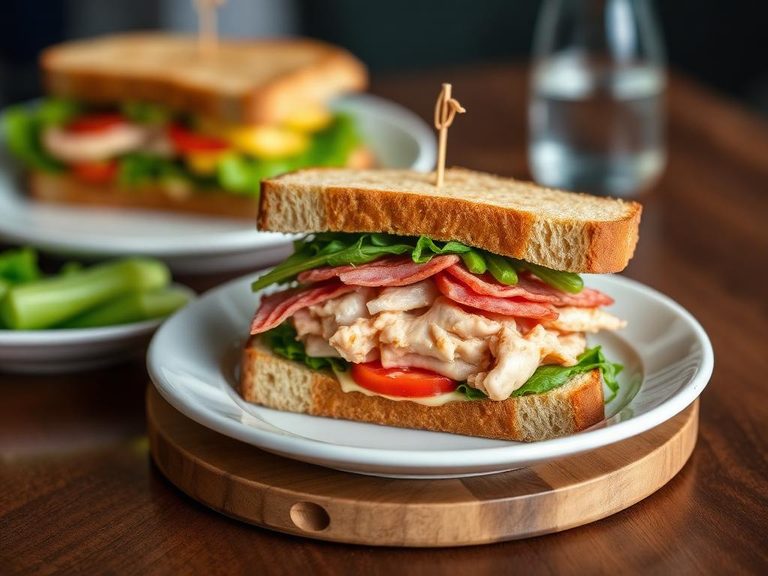
Tuna salad, made with mayonnaise-type salad dressing
Common food

Photo: Wikipedia
A classic, creamy salad made from flaked tuna mixed with a mayonnaise-based dressing. It offers a satisfying, savory flavor with a soft, flaky texture and a rich, smooth mouthfeel. Nutritionally, it's a standout for its high protein content relative to its calories, making it a potent source of lean protein.
Calorie split: 36% protein · 22% carbs · 42% fat
↓ Full nutrition💚 Why it's loved
People adore it for its savory, umami-rich flavor and the satisfying contrast of tender fish with creamy dressing. Its incredible versatility makes it a beloved staple for quick sandwiches, elegant stuffed tomatoes, or simple lettuce wraps.
⚠️ Watch-outs & how to enjoy it better
The mayonnaise dressing can be high in calories and saturated fats, and some commercial versions are very high in sodium. Those monitoring mercury intake or with specific fish allergies should exercise caution. To counteract this, choose tuna packed in water, use a light or Greek yogurt-based dressing, and pair the salad with fiber-rich vegetables like celery or leafy greens to balance the meal.
Key benefits
- Excellent source of high-quality, complete protein
- Rich in omega-3 fatty acids, particularly EPA and DHA
- Provides essential nutrients like selenium and vitamin D
- Supports muscle maintenance and satiety
- Quick and convenient no-cook protein source
🍽️ Popular dishes
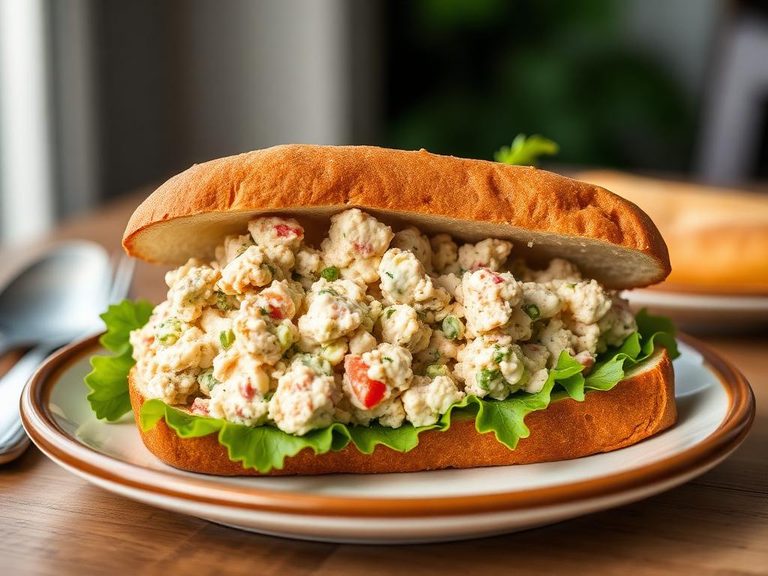
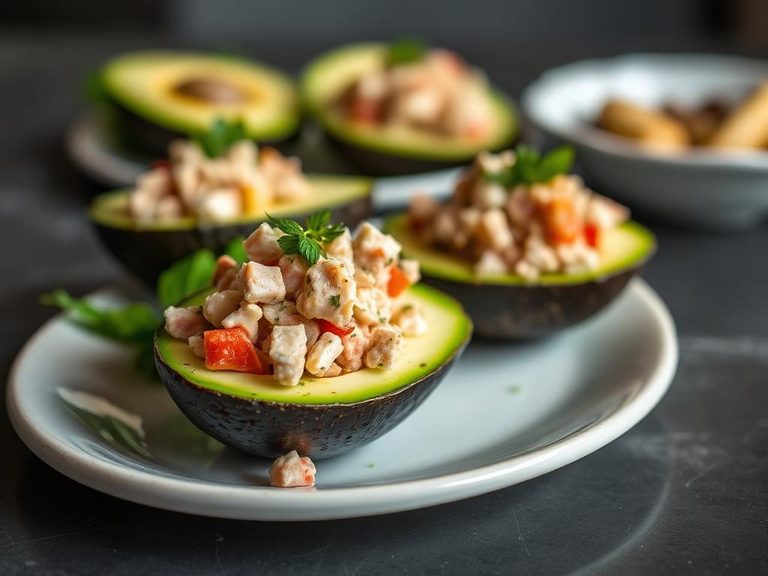
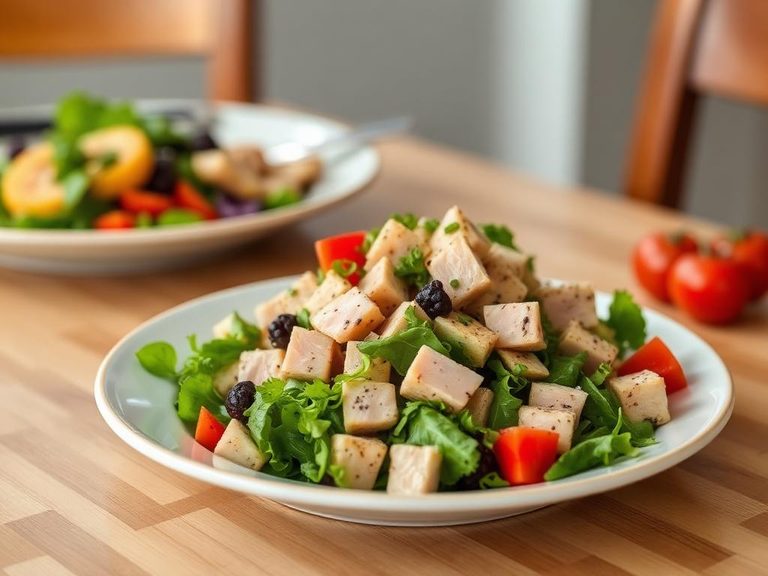
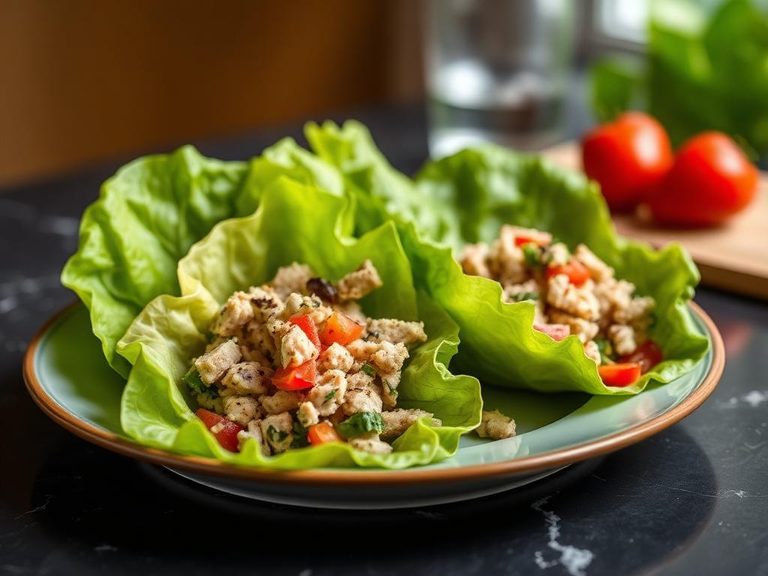
🌍 Where it's eaten
💡 Did you know?
The classic 'Tuna Nicoise' salad, a French bistro staple, traditionally does not include tuna at all in its original Provençal version, which features anchovies and tuna is a later, international addition.
Full nutrition (USDA data · scales with serving)
| Water | 77.6 g |
| Energy | 108 kcal |
| Protein | 9.9 g |
| Total lipid (fat) | 5.2 g |
| Carbohydrate, by difference | 5.9 g |
| Fiber, total dietary | 0.40 g |
| Total Sugars | 4.1 g |
| Calcium, Ca | 21.0 mg |
| Iron, Fe | 0.92 mg |
| Magnesium, Mg | 15.0 mg |
| Phosphorus, P | 78.0 mg |
| Potassium, K | 156 mg |
| Sodium, Na | 425 mg |
| Zinc, Zn | 0.38 mg |
| Copper, Cu | 0.03 mg |
| Selenium, Se | 34.4 ug |
| Vitamin C, total ascorbic acid | 0.70 mg |
| Thiamin | 0.02 mg |
| Riboflavin | 0.06 mg |
| Niacin | 5.1 mg |
| Vitamin B-6 | 0.18 mg |
| Folate, total | 11.0 ug |
| Folic acid | 0.00 ug |
| Folate, food | 11.0 ug |
| Folate, DFE | 11.0 ug |
| Choline, total | 19.6 mg |
| Vitamin B-12 | 1.3 ug |
| Vitamin B-12, added | 0.00 ug |
| Vitamin A, RAE | 18.0 ug |
| Retinol | 10.0 ug |
| Carotene, beta | 90.0 ug |
| Carotene, alpha | 7.0 ug |
| Cryptoxanthin, beta | 17.0 ug |
| Lycopene | 0.00 ug |
| Lutein + zeaxanthin | 83.0 ug |
| Vitamin E (alpha-tocopherol) | 0.59 mg |
| Vitamin E, added | 0.00 mg |
| Vitamin D (D2 + D3) | 0.60 ug |
| Vitamin K (phylloquinone) | 20.3 ug |
| Alcohol, ethyl | 0.00 g |
| Caffeine | 0.00 mg |
| Theobromine | 0.00 mg |
Fat & fatty acid profile (per 100g)
| Fatty acids, total saturated | 0.86 g |
| SFA 4:0 | 0.00 g |
| SFA 6:0 | 0.00 g |
| SFA 8:0 | 0.00 g |
| SFA 10:0 | 0.00 g |
| SFA 12:0 | 0.00 g |
| SFA 14:0 | 0.01 g |
| SFA 16:0 | 0.55 g |
| SFA 18:0 | 0.24 g |
| Fatty acids, total monounsaturated | 1.2 g |
| MUFA 16:1 | 0.01 g |
| MUFA 18:1 | 1.1 g |
| MUFA 20:1 | 0.02 g |
| MUFA 22:1 | 0.01 g |
| Fatty acids, total polyunsaturated | 2.8 g |
| PUFA 18:2 | 2.3 g |
| PUFA 18:3 | 0.31 g |
| PUFA 18:4 | 0.00 g |
| PUFA 20:4 | 0.01 g |
| PUFA 20:5 n-3 (EPA) | 0.01 g |
| PUFA 22:5 n-3 (DPA) | 0.00 g |
| PUFA 22:6 n-3 (DHA) | 0.10 g |
| Cholesterol | 22.0 mg |
Amino acid profile (per 100g)
Estimated from Fish, tuna salad — USDA does not publish this profile for Tuna salad.
| Tryptophan | 0.18 g |
| Threonine | 0.70 g |
| Isoleucine | 0.74 g |
| Leucine | 1.3 g |
| Lysine | 1.5 g |
| Methionine | 0.47 g |
| Cystine | 0.17 g |
| Phenylalanine | 0.63 g |
| Tyrosine | 0.54 g |
| Valine | 0.82 g |
| Arginine | 0.97 g |
| Histidine | 0.47 g |
| Alanine | 0.96 g |
| Aspartic acid | 1.6 g |
| Glutamic acid | 2.4 g |
| Glycine | 0.77 g |
| Proline | 0.56 g |
| Serine | 0.66 g |
FAQ
Is tuna salad healthy?
It can be very healthy. Its primary benefit is being a high-protein food. The healthiness largely depends on the dressing: using light mayo, Greek yogurt, or avocado can significantly improve the fat profile. Choosing tuna packed in water also reduces calories and fat.
How long does homemade tuna salad last in the fridge?
For food safety and best quality, homemade tuna salad should be stored in an airtight container in the refrigerator and consumed within 3 to 4 days.
Can I freeze tuna salad?
Freezing is not recommended. The mayonnaise dressing will separate and become watery upon thawing, resulting in a poor, grainy texture. It's best made fresh and eaten within a few days.
Nutrient density (calculated · NRF9.3)
Nutrient Rich Foods index: beneficial nutrients (protein, fiber, vitamins, minerals) minus saturated fat, added sugar & sodium, per 100 kcal.
NRF9.3 index — Fulgoni, Keast & Drewnowski, 2009. Computed from USDA nutrients.
Weight-loss friendliness (composite index)
Energy density 1.08 kcal/g · 37% calories from protein · 0.4 g fiber · 4.1 g sugar per 100 g.
Composite of energy density (Rolls et al., 1999), protein & fiber satiety, minus sugar. A calculated heuristic — ranks satiety-per-calorie, not a clinical measure.
Dietary load (calculated from USDA values)
Potential renal acid load. Positive = acid-forming, negative = alkaline-forming.
Sodium-to-potassium ratio: 2.72 (lower is better — aim for ≤ 1)
Sodium:potassium per WHO potassium guidance. Computed from USDA nutrients.