

Soup, vegetable beef, canned, condensed
Whole food · Soups, Sauces, and Gravies
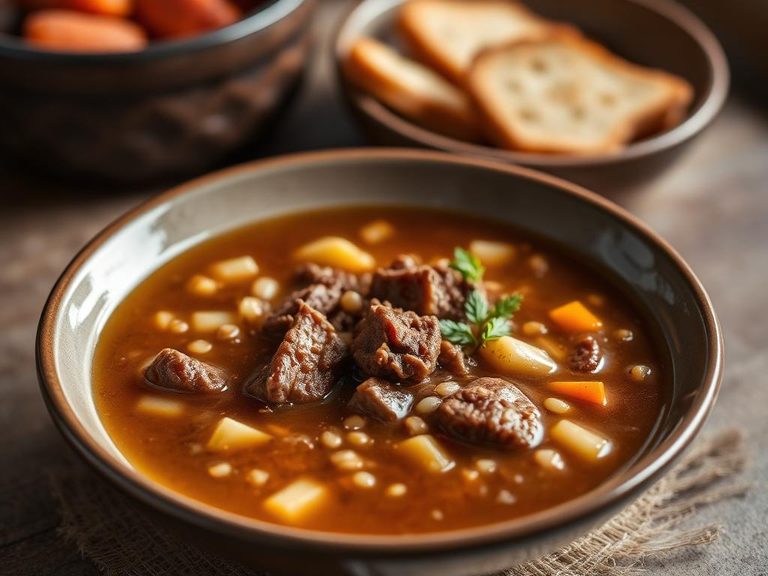
A pantry staple, canned condensed vegetable beef soup is a thick, savory concentrate that transforms with water or milk into a hearty, broth-based meal. Its taste is a nostalgic blend of tender beef chunks, soft carrots, potatoes, and celery in a rich, slightly salty umami broth. Nutritionally, it's a lean protein source (4.45g per 100g) with a modest calorie count (63 kcal per 100g), making it a quick, warming option.
Calorie split: 28% protein · 51% carbs · 21% fat
↓ Full nutrition💚 Why it's loved
People love it for its comforting, nostalgic flavor and the sheer convenience of having a ready-to-heat meal that feels substantial. Its versatility allows it to be enjoyed as is, used as a base for stews, or paired with crackers or bread.
⚠️ Watch-outs & how to enjoy it better
The primary downside is its typically high sodium content, which can be a concern for those monitoring blood pressure. To counteract this, choose a low-sodium version or dilute it with extra water and add fresh herbs for flavor. It may also contain common allergens like wheat (from thickeners) or soy, so check labels if sensitive.
Key benefits
- Provides a convenient source of protein for muscle maintenance.
- Low in fat (1.51g per 100g), supporting a balanced diet.
- Contains dietary fiber (1.6g per 100g) for digestive health.
- Offers a quick, warming meal with minimal preparation.
- Serves as a versatile base for enhancing with fresh vegetables or grains.
🍽️ Popular dishes
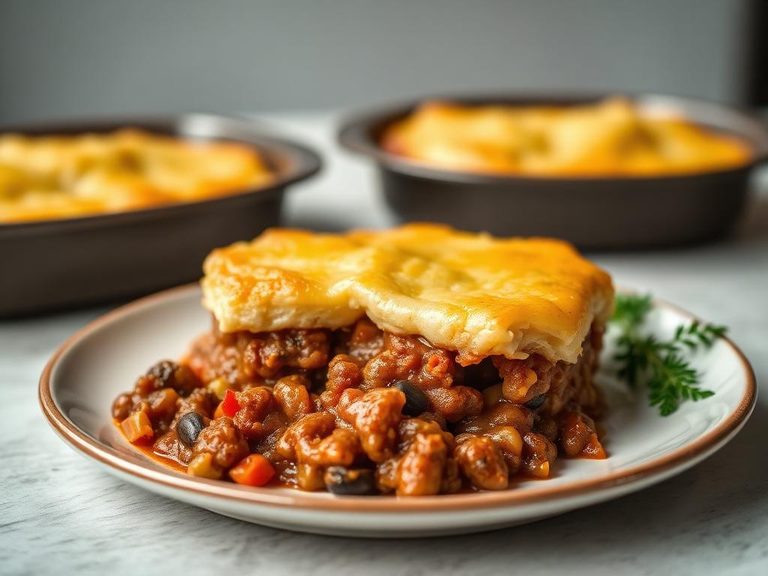
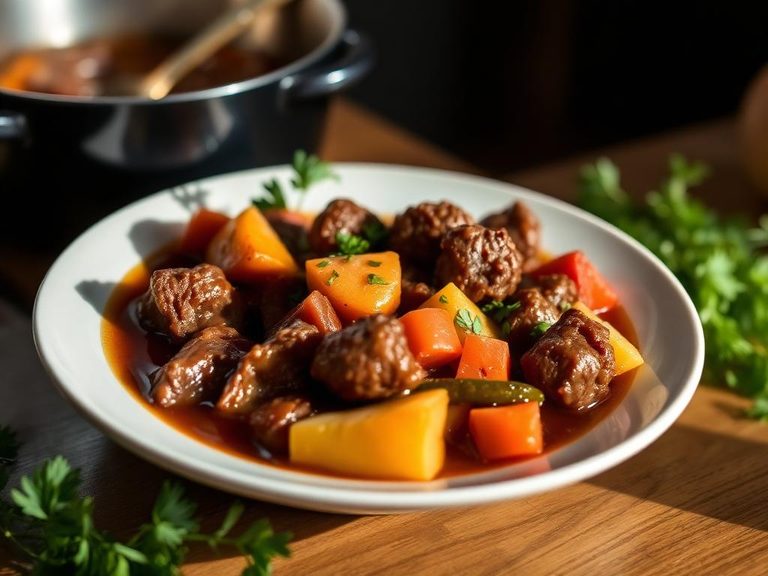
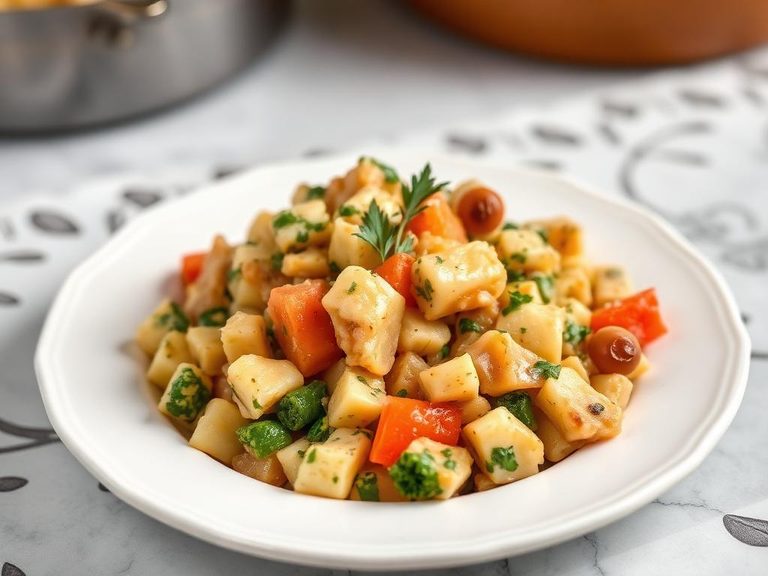
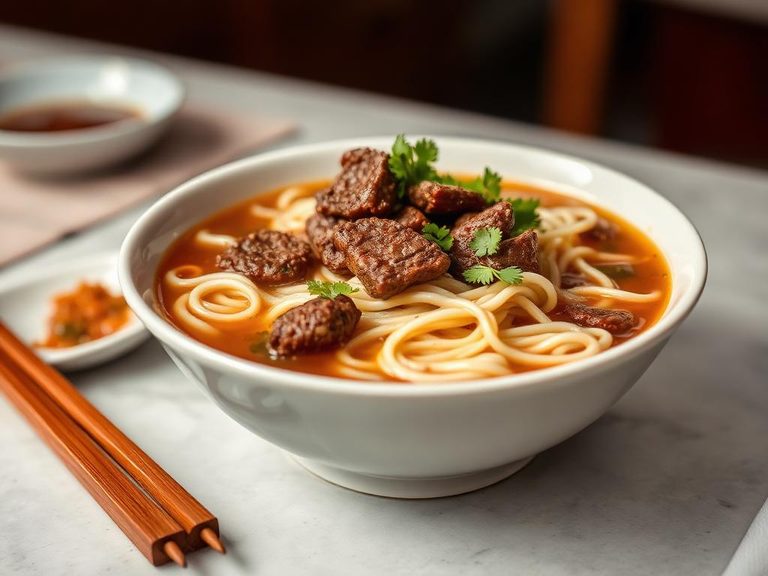
🌍 Where it's eaten
💡 Did you know?
The condensed soup format was popularized by Campbell's in the late 19th century, revolutionizing food preservation and home cooking by requiring only the addition of water or milk.
Full nutrition (USDA data · scales with serving)
| Water | 83.7 g |
| Energy | 63.0 kcal |
| Energy | 264 kj |
| Protein | 4.5 g |
| Total lipid (fat) | 1.5 g |
| Ash | 2.3 g |
| Carbohydrate, by difference | 8.1 g |
| Fiber, total dietary | 1.6 g |
| Total Sugars | 0.89 g |
| Calcium, Ca | 13.0 mg |
| Iron, Fe | 0.89 mg |
| Magnesium, Mg | 5.0 mg |
| Phosphorus, P | 32.0 mg |
| Potassium, K | 138 mg |
| Sodium, Na | 706 mg |
| Zinc, Zn | 1.2 mg |
| Copper, Cu | 0.14 mg |
| Manganese, Mn | 0.25 mg |
| Selenium, Se | 2.2 ug |
| Vitamin C, total ascorbic acid | 1.9 mg |
| Thiamin | 0.03 mg |
| Riboflavin | 0.04 mg |
| Niacin | 0.82 mg |
| Pantothenic acid | 0.28 mg |
| Vitamin B-6 | 0.06 mg |
| Folate, total | 8.0 ug |
| Folic acid | 0.00 ug |
| Folate, food | 8.0 ug |
| Folate, DFE | 8.0 ug |
| Choline, total | 10.0 mg |
| Vitamin B-12 | 0.25 ug |
| Vitamin B-12, added | 0.00 ug |
| Vitamin A, RAE | 155 ug |
| Retinol | 0.00 ug |
| Carotene, beta | 1618 ug |
| Carotene, alpha | 489 ug |
| Cryptoxanthin, beta | 0.00 ug |
| Vitamin A, IU | 3104 iu |
| Lycopene | 364 ug |
| Lutein + zeaxanthin | 92.0 ug |
| Vitamin E (alpha-tocopherol) | 0.48 mg |
| Vitamin E, added | 0.00 mg |
| Vitamin D (D2 + D3), International Units | 0.00 iu |
| Vitamin D (D2 + D3) | 0.00 ug |
| Vitamin K (phylloquinone) | 5.6 ug |
| Alcohol, ethyl | 0.00 g |
| Caffeine | 0.00 mg |
| Theobromine | 0.00 mg |
Fat & fatty acid profile (per 100g)
| Fatty acids, total saturated | 0.68 g |
| SFA 4:0 | 0.00 g |
| SFA 6:0 | 0.00 g |
| SFA 8:0 | 0.00 g |
| SFA 10:0 | 0.00 g |
| SFA 12:0 | 0.00 g |
| SFA 14:0 | 0.03 g |
| SFA 16:0 | 0.37 g |
| SFA 18:0 | 0.23 g |
| Fatty acids, total monounsaturated | 0.64 g |
| MUFA 16:1 | 0.06 g |
| MUFA 18:1 | 0.56 g |
| MUFA 20:1 | 0.00 g |
| MUFA 22:1 | 0.00 g |
| Fatty acids, total polyunsaturated | 0.09 g |
| PUFA 18:2 | 0.08 g |
| PUFA 18:3 | 0.01 g |
| PUFA 18:4 | 0.00 g |
| PUFA 20:4 | 0.00 g |
| PUFA 20:5 n-3 (EPA) | 0.00 g |
| PUFA 22:5 n-3 (DPA) | 0.00 g |
| PUFA 22:6 n-3 (DHA) | 0.00 g |
| Cholesterol | 4.0 mg |
Amino acid profile (per 100g)
| Tryptophan | 0.04 g |
| Threonine | 0.14 g |
| Isoleucine | 0.17 g |
| Leucine | 0.28 g |
| Lysine | 0.27 g |
| Methionine | 0.07 g |
| Cystine | 0.03 g |
| Phenylalanine | 0.16 g |
| Tyrosine | 0.12 g |
| Valine | 0.20 g |
| Arginine | 0.21 g |
| Histidine | 0.10 g |
| Alanine | 0.25 g |
| Aspartic acid | 0.38 g |
| Glutamic acid | 1.1 g |
| Glycine | 0.28 g |
| Proline | 0.26 g |
| Serine | 0.15 g |
FAQ
How do I prepare canned condensed vegetable beef soup?
Typically, you mix the condensed soup with an equal amount of water or milk (e.g., 1 can of soup with 1 can of water), then heat it on the stovetop or in the microwave until hot.
Is canned vegetable beef soup healthy?
It can be part of a healthy diet, providing protein and vegetables, but be mindful of its sodium content. Opt for low-sodium versions and enhance with fresh vegetables to boost nutrition.
Can I use this soup as a cooking ingredient?
Yes, it's a versatile base for dishes like stews, pot pies, casseroles, and gravies, adding flavor and body without extra preparation.
Nutrient density (calculated · NRF9.3)
Nutrient Rich Foods index: beneficial nutrients (protein, fiber, vitamins, minerals) minus saturated fat, added sugar & sodium, per 100 kcal.
NRF9.3 index — Fulgoni, Keast & Drewnowski, 2009. Computed from USDA nutrients.
Weight-loss friendliness (composite index)
Energy density 0.63 kcal/g · 28% calories from protein · 1.6 g fiber · 0.9 g sugar per 100 g.
Composite of energy density (Rolls et al., 1999), protein & fiber satiety, minus sugar. A calculated heuristic — ranks satiety-per-calorie, not a clinical measure.
Dietary load (calculated from USDA values)
Potential renal acid load. Positive = acid-forming, negative = alkaline-forming.
Sodium-to-potassium ratio: 5.12 (lower is better — aim for ≤ 1)
Sodium:potassium per WHO potassium guidance. Computed from USDA nutrients.