

Soup, tomato, canned, prepared with equal volume water, commercial
Whole food · Soups, Sauces, and Gravies
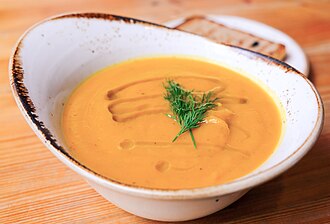
Photo: Wikipedia
This is a smooth, savory liquid made from pureed tomatoes, diluted with water and canned for shelf stability. It has a bright, tangy flavor with a velvety texture, offering a low-calorie base rich in the antioxidant lycopene.
Calorie split: 8% protein · 86% carbs · 5% fat
↓ Full nutrition💚 Why it's loved
People love its comforting, familiar warmth and its incredible versatility as a base for countless soups, stews, and sauces. It's a nostalgic taste of home cooking, evoking memories of simple, nourishing meals.
⚠️ Watch-outs & how to enjoy it better
Canned versions can be high in sodium, which may concern those monitoring blood pressure. The natural acidity might also trigger heartburn in sensitive individuals. To counteract, look for low-sodium varieties, rinse the can contents, and pair with a pinch of baking soda or a creamy element like yogurt to balance acidity.
Key benefits
- Excellent source of the antioxidant lycopene, linked to heart health.
- Very low in calories and fat, suitable for calorie-conscious diets.
- Provides a small amount of dietary fiber.
- Convenient, shelf-stable pantry staple for quick meals.
🍽️ Popular dishes
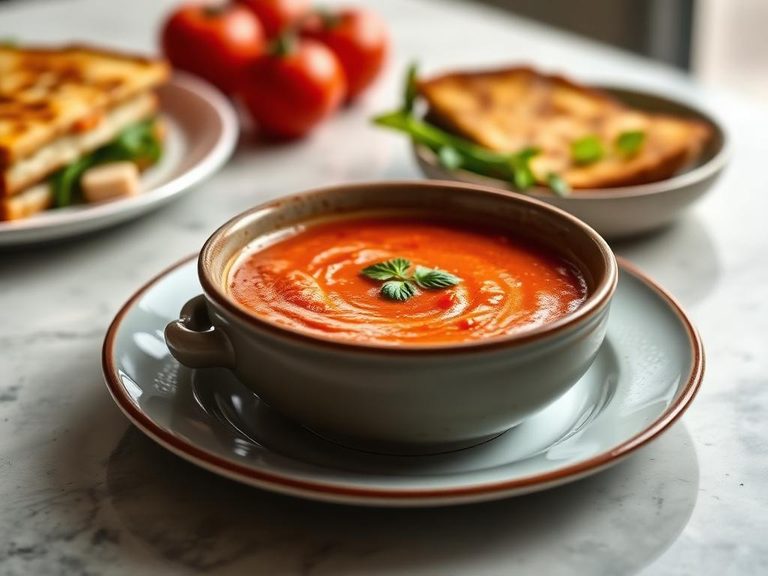
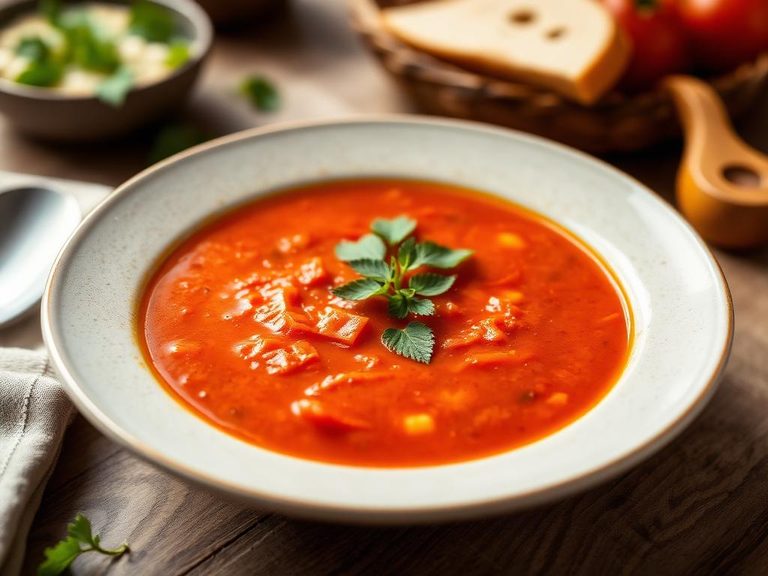
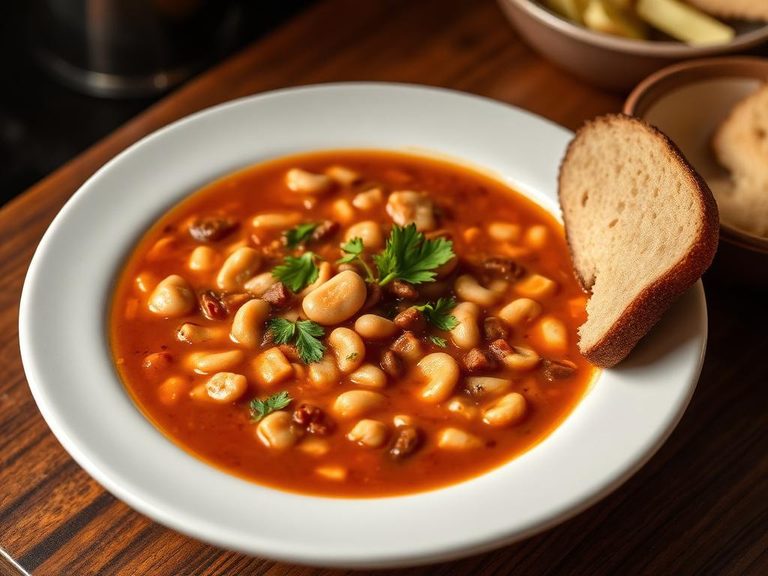
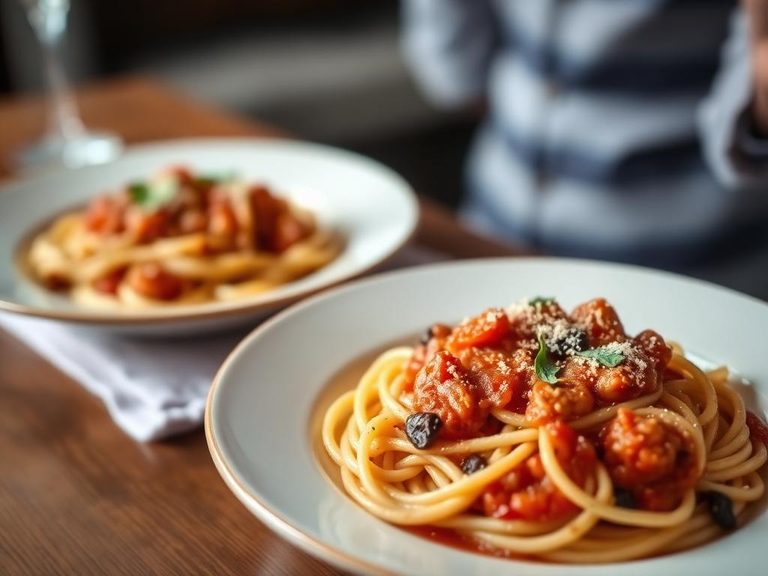
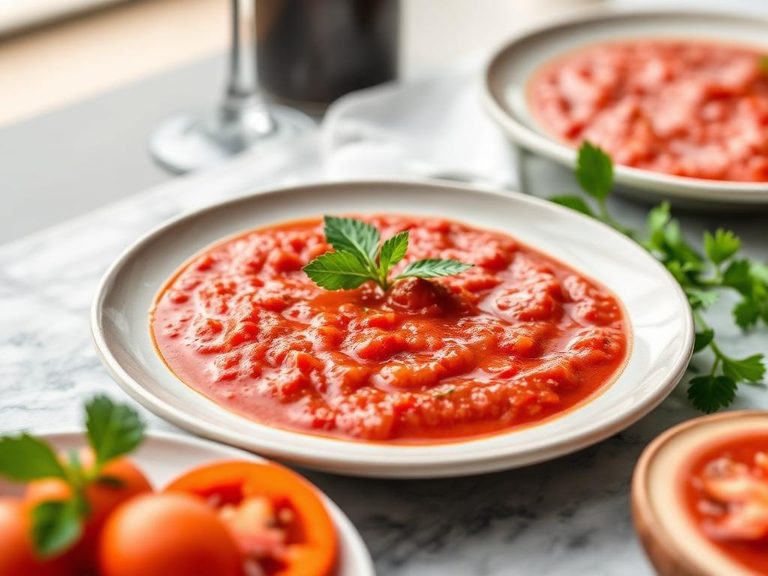
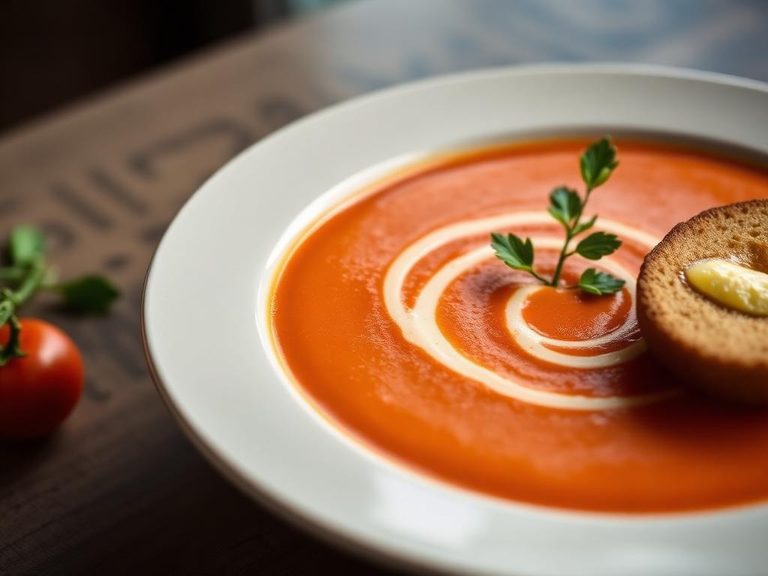
🌍 Where it's eaten
💡 Did you know?
The lycopene in canned tomato products is often more bioavailable to the body than in fresh tomatoes because the heating and canning process breaks down cell walls.
Full nutrition (USDA data · scales with serving)
| Water | 90.5 g |
| Energy | 32.0 kcal |
| Energy | 135 kj |
| Protein | 0.71 g |
| Total lipid (fat) | 0.21 g |
| Ash | 1.1 g |
| Carbohydrate, by difference | 7.5 g |
| Fiber, total dietary | 0.50 g |
| Total Sugars | 4.0 g |
| Calcium, Ca | 8.0 mg |
| Iron, Fe | 0.29 mg |
| Magnesium, Mg | 7.0 mg |
| Phosphorus, P | 15.0 mg |
| Potassium, K | 275 mg |
| Sodium, Na | 186 mg |
| Zinc, Zn | 0.09 mg |
| Copper, Cu | 0.03 mg |
| Manganese, Mn | 0.07 mg |
| Selenium, Se | 1.5 ug |
| Vitamin C, total ascorbic acid | 6.3 mg |
| Thiamin | 0.02 mg |
| Riboflavin | 0.01 mg |
| Niacin | 0.42 mg |
| Vitamin B-6 | 0.04 mg |
| Folate, total | 0.00 ug |
| Folic acid | 0.00 ug |
| Folate, food | 0.00 ug |
| Folate, DFE | 0.00 ug |
| Choline, total | 6.3 mg |
| Vitamin B-12 | 0.00 ug |
| Vitamin B-12, added | 0.00 ug |
| Vitamin A, RAE | 10.0 ug |
| Retinol | 0.00 ug |
| Carotene, beta | 115 ug |
| Carotene, alpha | 0.00 ug |
| Cryptoxanthin, beta | 0.00 ug |
| Vitamin A, IU | 192 iu |
| Lycopene | 5345 ug |
| Lutein + zeaxanthin | 44.0 ug |
| Vitamin E (alpha-tocopherol) | 0.17 mg |
| Vitamin E, added | 0.00 mg |
| Vitamin D (D2 + D3), International Units | 0.00 iu |
| Vitamin D (D2 + D3) | 0.00 ug |
| Vitamin K (phylloquinone) | 1.5 ug |
| Alcohol, ethyl | 0.00 g |
| Caffeine | 0.00 mg |
| Theobromine | 0.00 mg |
Fat & fatty acid profile (per 100g)
| Fatty acids, total saturated | 0.06 g |
| SFA 4:0 | 0.00 g |
| SFA 6:0 | 0.00 g |
| SFA 8:0 | 0.00 g |
| SFA 10:0 | 0.00 g |
| SFA 12:0 | 0.00 g |
| SFA 14:0 | 0.01 g |
| SFA 16:0 | 0.04 g |
| SFA 18:0 | 0.01 g |
| Fatty acids, total monounsaturated | 0.07 g |
| MUFA 16:1 | 0.01 g |
| MUFA 18:1 | 0.04 g |
| MUFA 20:1 | 0.01 g |
| MUFA 22:1 | 0.01 g |
| Fatty acids, total polyunsaturated | 0.08 g |
| PUFA 18:2 | 0.06 g |
| PUFA 18:3 | 0.01 g |
| PUFA 18:4 | 0.00 g |
| PUFA 20:4 | 0.00 g |
| PUFA 20:5 n-3 (EPA) | 0.00 g |
| PUFA 22:5 n-3 (DPA) | 0.00 g |
| PUFA 22:6 n-3 (DHA) | 0.00 g |
| Cholesterol | 0.00 mg |
Amino acid profile (per 100g)
Estimated from Soup, bean with pork, canned, condensed — USDA does not publish this profile for Soup.
| Tryptophan | 0.06 g |
| Threonine | 0.24 g |
| Isoleucine | 0.29 g |
| Leucine | 0.48 g |
| Lysine | 0.40 g |
| Methionine | 0.07 g |
| Cystine | 0.07 g |
| Phenylalanine | 0.33 g |
| Tyrosine | 0.18 g |
| Valine | 0.32 g |
| Arginine | 0.31 g |
| Histidine | 0.15 g |
| Alanine | 0.29 g |
| Aspartic acid | 0.66 g |
| Glutamic acid | 1.1 g |
| Glycine | 0.28 g |
| Proline | 0.27 g |
| Serine | 0.29 g |
FAQ
How does it differ from fresh tomato soup?
Canned tomato soup is more concentrated, shelf-stable, and has a smoother, more uniform texture. Fresh versions often have more vibrant, bright acidity and may include chunks or skins.
Is it healthy for weight loss?
Yes, it's very low in calories and fat, making it a filling, nutrient-dense option. However, check the sodium content and consider adding protein or fiber to make it a more complete meal.
Can I use it in recipes other than soup?
Absolutely. It's a fantastic base for pasta sauces, chili, braising liquids for meats, or even as a tangy addition to a Bloody Mary cocktail.
Nutrient density (calculated · NRF9.3)
Nutrient Rich Foods index: beneficial nutrients (protein, fiber, vitamins, minerals) minus saturated fat, added sugar & sodium, per 100 kcal.
NRF9.3 index — Fulgoni, Keast & Drewnowski, 2009. Computed from USDA nutrients.
Weight-loss friendliness (composite index)
Energy density 0.32 kcal/g · 9% calories from protein · 0.5 g fiber · 4.0 g sugar per 100 g.
Composite of energy density (Rolls et al., 1999), protein & fiber satiety, minus sugar. A calculated heuristic — ranks satiety-per-calorie, not a clinical measure.
Dietary load (calculated from USDA values)
Potential renal acid load. Positive = acid-forming, negative = alkaline-forming.
Sodium-to-potassium ratio: 0.68 (lower is better — aim for ≤ 1)
Sodium:potassium per WHO potassium guidance. Computed from USDA nutrients.