

Soup, tomato
Common food
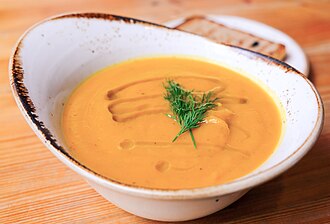
Photo: Wikipedia
A comforting, velvety liquid made from simmered tomatoes, often with a subtle sweetness and a bright, tangy finish. Its smooth, pourable texture makes it a light yet satisfying base or standalone dish. Nutritionally, it's a low-calorie, hydrating choice with a modest amount of natural sugars.
Calorie split: 12% protein · 70% carbs · 18% fat
↓ Full nutrition💚 Why it's loved
People love its comforting warmth and versatile flavor, which serves as a perfect canvas for herbs, cream, or a simple grilled cheese sandwich. It's a nostalgic staple in many cultures, from a light lunch in Italy to a spicy base in Mexican sopa de tortilla.
⚠️ Watch-outs & how to enjoy it better
Commercial versions can be high in sodium, which may concern those monitoring blood pressure. The natural sugars, while minimal, can contribute to blood sugar spikes if consumed in large quantities or with high-glycemic additions. Tip: Choose low-sodium varieties and pair with a source of protein (like beans or cheese) or healthy fat (like avocado) to slow sugar absorption and enhance satiety.
Key benefits
- Low in calories and fat, supporting weight management.
- Provides a small amount of dietary fiber from tomato pulp.
- Contains natural sugars for quick energy without excess calories.
- Hydrating due to its high water content.
- A good source of the antioxidant lycopene, which becomes more bioavailable with cooking.
🍽️ Popular dishes
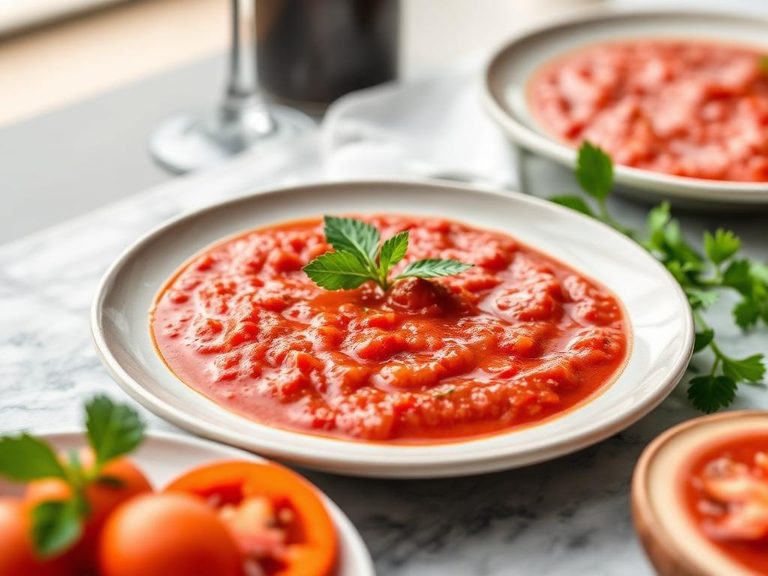
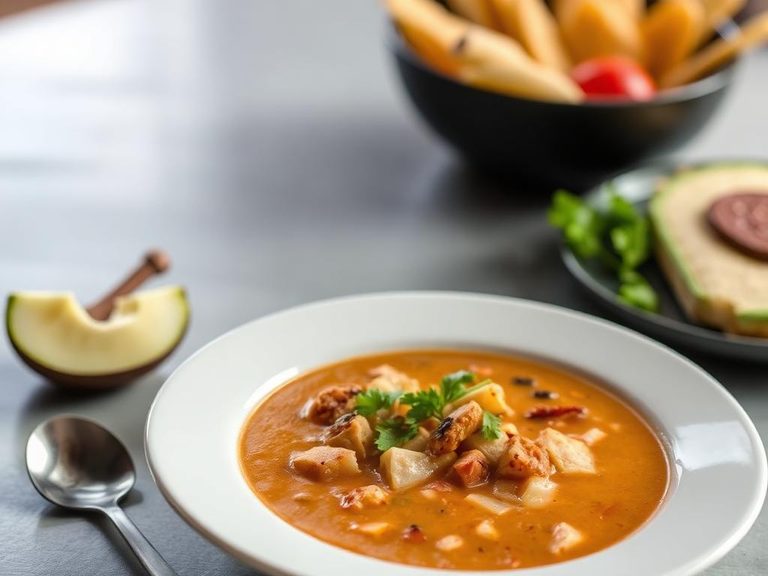
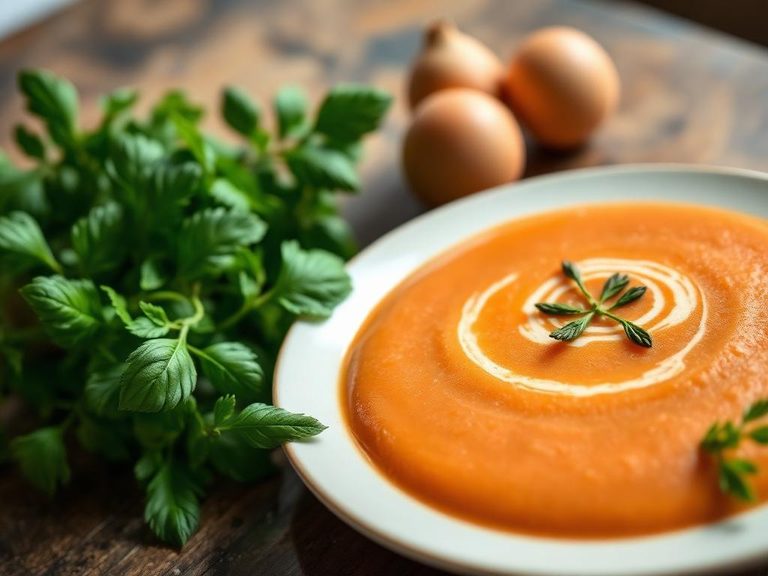
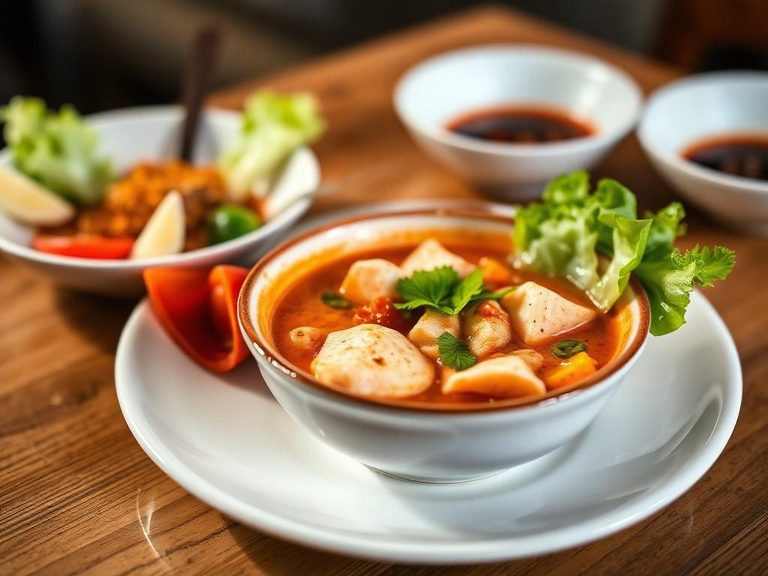
🌍 Where it's eaten
💡 Did you know?
The lycopene in cooked tomato soup is actually more easily absorbed by your body than the lycopene in raw tomatoes, thanks to the heat breaking down the plant's cell walls.
Full nutrition (USDA data · scales with serving)
| Water | 94.2 g |
| Energy | 19.0 kcal |
| Protein | 0.65 g |
| Total lipid (fat) | 0.41 g |
| Carbohydrate, by difference | 3.6 g |
| Fiber, total dietary | 0.90 g |
| Total Sugars | 2.0 g |
| Calcium, Ca | 11.0 mg |
| Iron, Fe | 0.44 mg |
| Magnesium, Mg | 9.0 mg |
| Phosphorus, P | 17.0 mg |
| Potassium, K | 169 mg |
| Sodium, Na | 244 mg |
| Zinc, Zn | 0.14 mg |
| Copper, Cu | 0.08 mg |
| Selenium, Se | 0.20 ug |
| Vitamin C, total ascorbic acid | 5.9 mg |
| Thiamin | 0.02 mg |
| Riboflavin | 0.03 mg |
| Niacin | 0.48 mg |
| Vitamin B-6 | 0.06 mg |
| Folate, total | 7.0 ug |
| Folic acid | 0.00 ug |
| Folate, food | 7.0 ug |
| Folate, DFE | 7.0 ug |
| Choline, total | 5.7 mg |
| Vitamin B-12 | 0.00 ug |
| Vitamin B-12, added | 0.00 ug |
| Vitamin A, RAE | 36.0 ug |
| Retinol | 0.00 ug |
| Carotene, beta | 376 ug |
| Carotene, alpha | 109 ug |
| Cryptoxanthin, beta | 0.00 ug |
| Lycopene | 4918 ug |
| Lutein + zeaxanthin | 43.0 ug |
| Vitamin E (alpha-tocopherol) | 0.61 mg |
| Vitamin E, added | 0.00 mg |
| Vitamin D (D2 + D3) | 0.00 ug |
| Vitamin K (phylloquinone) | 4.1 ug |
| Alcohol, ethyl | 0.00 g |
| Caffeine | 0.00 mg |
| Theobromine | 0.00 mg |
Fat & fatty acid profile (per 100g)
| Fatty acids, total saturated | 0.06 g |
| SFA 4:0 | 0.00 g |
| SFA 6:0 | 0.00 g |
| SFA 8:0 | 0.00 g |
| SFA 10:0 | 0.00 g |
| SFA 12:0 | 0.00 g |
| SFA 14:0 | 0.00 g |
| SFA 16:0 | 0.04 g |
| SFA 18:0 | 0.01 g |
| Fatty acids, total monounsaturated | 0.14 g |
| MUFA 16:1 | 0.00 g |
| MUFA 18:1 | 0.14 g |
| MUFA 20:1 | 0.00 g |
| MUFA 22:1 | 0.00 g |
| Fatty acids, total polyunsaturated | 0.16 g |
| PUFA 18:2 | 0.14 g |
| PUFA 18:3 | 0.01 g |
| PUFA 18:4 | 0.00 g |
| PUFA 20:4 | 0.00 g |
| PUFA 20:5 n-3 (EPA) | 0.00 g |
| PUFA 22:5 n-3 (DPA) | 0.00 g |
| PUFA 22:6 n-3 (DHA) | 0.00 g |
| Cholesterol | 0.00 mg |
Amino acid profile (per 100g)
Estimated from Restaurant, Latino, black bean soup — USDA does not publish this profile for Soup.
| Tryptophan | 0.04 g |
| Threonine | 0.17 g |
| Isoleucine | 0.16 g |
| Leucine | 0.32 g |
| Lysine | 0.27 g |
| Methionine | 0.10 g |
| Cystine | 0.04 g |
| Phenylalanine | 0.16 g |
| Tyrosine | 0.13 g |
| Valine | 0.20 g |
| Arginine | 0.35 g |
| Histidine | 0.09 g |
| Alanine | 0.35 g |
| Aspartic acid | 0.38 g |
| Glutamic acid | 0.72 g |
| Glycine | 0.58 g |
| Proline | 0.36 g |
| Serine | 0.20 g |
FAQ
Is tomato soup a good source of vitamins?
It provides some Vitamin C and Vitamin A, but the amounts vary by recipe. Homemade versions with fresh tomatoes will generally have more than canned, condensed varieties.
Why does my homemade tomato soup taste bitter?
Bitterness can come from tomato seeds and skins, or from underripe tomatoes. Try straining the soup after cooking or using a bit of sugar or carrot to balance the flavor.
Can I freeze tomato soup?
Yes, it freezes very well. Leave some headspace in the container for expansion, and it should keep for 4-6 months. The texture might become slightly grainy upon thawing, but a quick blend will smooth it out.
Nutrient density (calculated · NRF9.3)
Nutrient Rich Foods index: beneficial nutrients (protein, fiber, vitamins, minerals) minus saturated fat, added sugar & sodium, per 100 kcal.
NRF9.3 index — Fulgoni, Keast & Drewnowski, 2009. Computed from USDA nutrients.
Weight-loss friendliness (composite index)
Energy density 0.19 kcal/g · 14% calories from protein · 0.9 g fiber · 2.0 g sugar per 100 g.
Composite of energy density (Rolls et al., 1999), protein & fiber satiety, minus sugar. A calculated heuristic — ranks satiety-per-calorie, not a clinical measure.
Dietary load (calculated from USDA values)
Potential renal acid load. Positive = acid-forming, negative = alkaline-forming.
Sodium-to-potassium ratio: 1.44 (lower is better — aim for ≤ 1)
Sodium:potassium per WHO potassium guidance. Computed from USDA nutrients.