

Tomato products, canned, sauce, with tomato tidbits
Whole food · Vegetables and Vegetable Products

Photo: Wikipedia
This is a pantry staple: a thick, savory sauce made from crushed or diced tomatoes, simmered down into a rich, spoonable consistency. Its texture is chunky yet saucy, with visible tomato tidbits that add a pleasant bite. Nutritionally, it's a low-calorie, high-fiber base that delivers a concentrated dose of umami and lycopene.
Calorie split: 14% protein · 76% carbs · 9% fat
↓ Full nutrition💚 Why it's loved
People love it for its ability to instantly create a rich, savory foundation for sauces, stews, and braises. It's the ultimate kitchen shortcut, offering deep tomato flavor without the time-consuming process of reducing fresh tomatoes.
⚠️ Watch-outs & how to enjoy it better
Many commercial brands are high in sodium, which can be a concern for blood pressure management. A simple counteract is to choose 'no salt added' versions and season the dish yourself, or rinse the sauce briefly if using a standard can. It is also a nightshade, which some individuals with specific inflammatory conditions may choose to limit.
Key benefits
- Excellent source of lycopene, a potent antioxidant linked to heart and skin health.
- Very low in calories and fat, making it a nutrient-dense flavor base.
- Provides a good amount of dietary fiber to support digestive health.
- Versatile ingredient that adds depth and moisture to countless dishes.
- Shelf-stable and convenient for quick meal preparation.
🍽️ Popular dishes
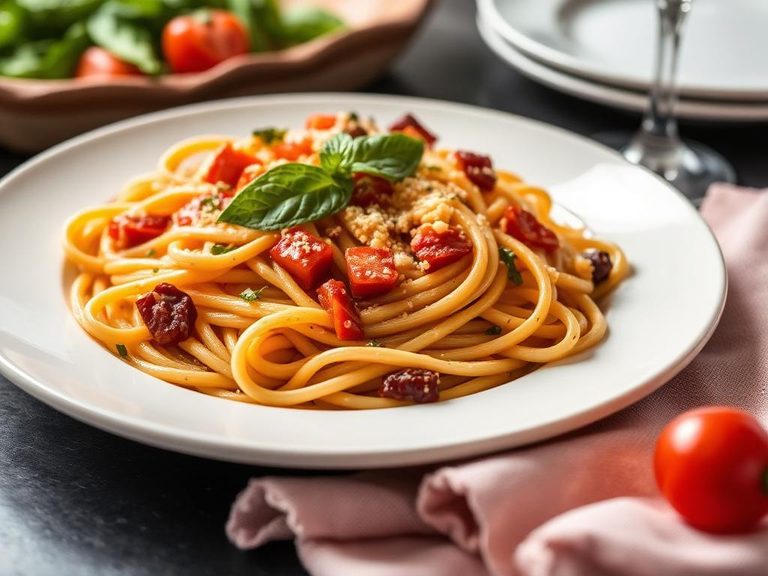
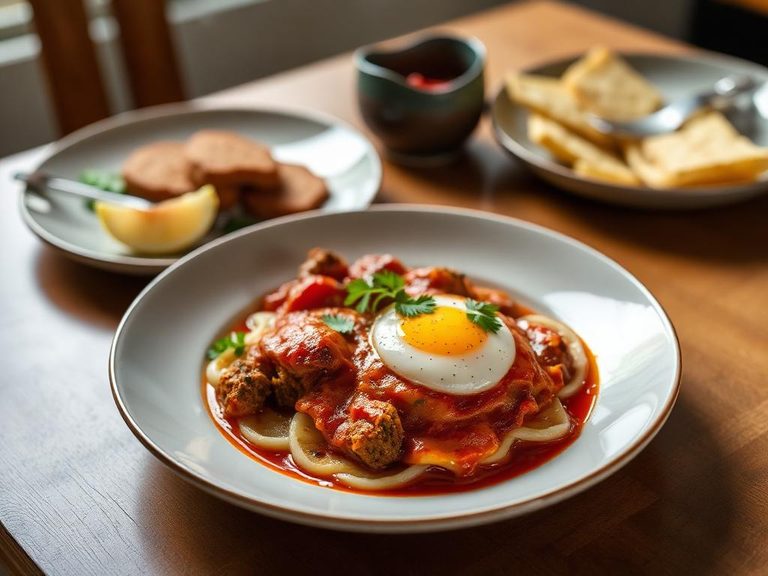
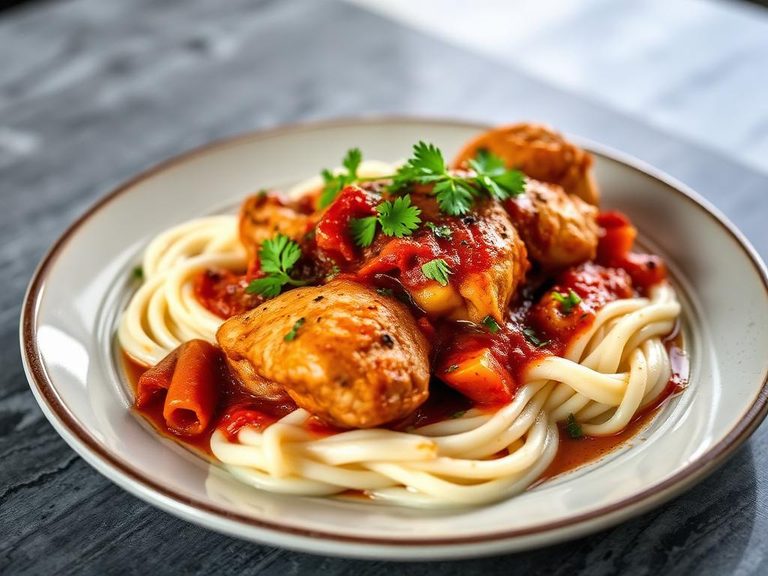
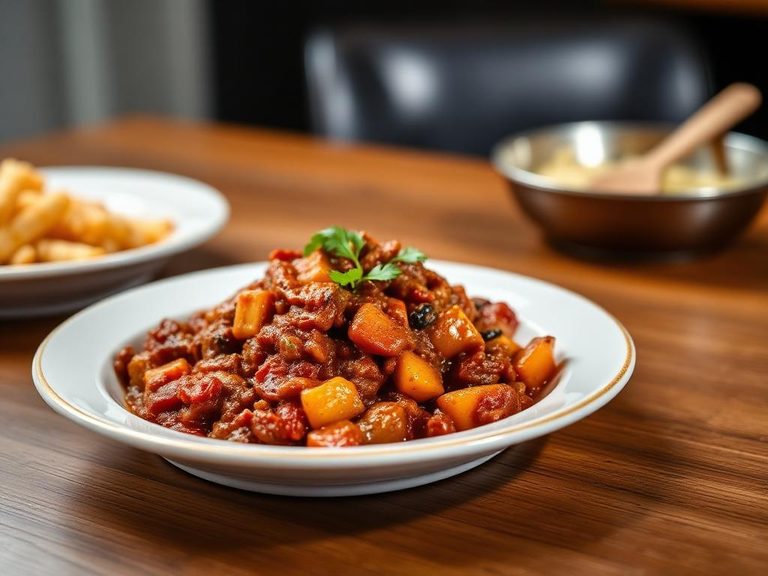
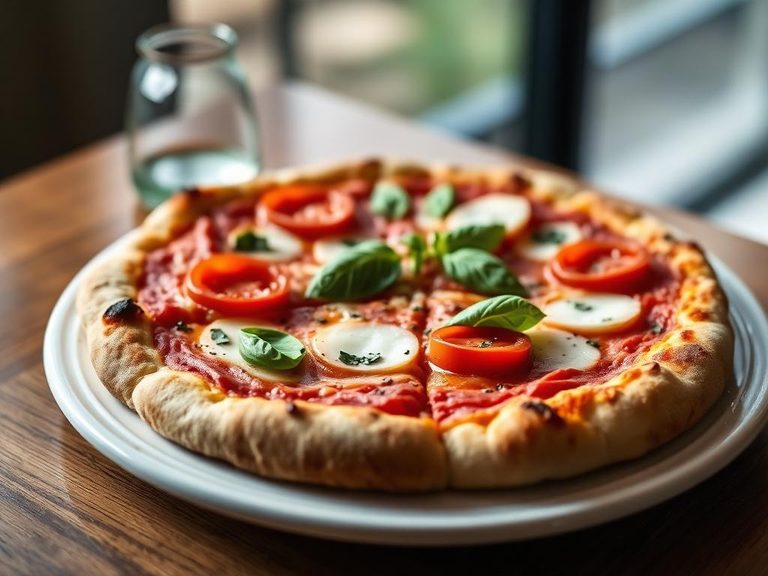
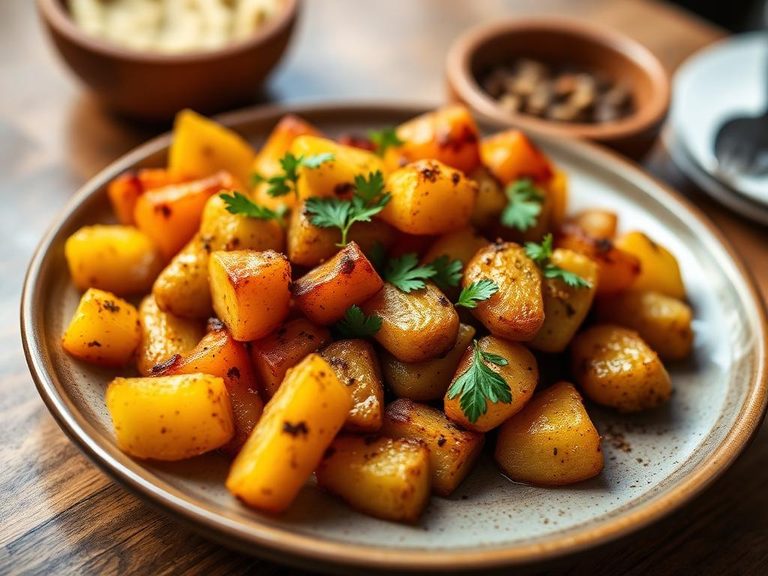
🌍 Where it's eaten
💡 Did you know?
The lycopene in canned tomato products is often more bioavailable (easier for your body to absorb) than in fresh tomatoes because the canning process breaks down cell walls and concentrates the compound.
Full nutrition (USDA data · scales with serving)
| Water | 89.1 g |
| Energy | 32.0 kcal |
| Energy | 134 kj |
| Protein | 1.3 g |
| Total lipid (fat) | 0.39 g |
| Ash | 2.1 g |
| Carbohydrate, by difference | 7.1 g |
| Fiber, total dietary | 1.4 g |
| Calcium, Ca | 10.0 mg |
| Iron, Fe | 0.68 mg |
| Magnesium, Mg | 20.0 mg |
| Phosphorus, P | 42.0 mg |
| Potassium, K | 373 mg |
| Sodium, Na | 15.0 mg |
| Zinc, Zn | 0.19 mg |
| Copper, Cu | 0.01 mg |
| Manganese, Mn | 0.22 mg |
| Selenium, Se | 0.60 ug |
| Vitamin C, total ascorbic acid | 21.5 mg |
| Thiamin | 0.07 mg |
| Riboflavin | 0.10 mg |
| Niacin | 1.2 mg |
| Pantothenic acid | 0.22 mg |
| Vitamin B-6 | 0.15 mg |
| Folate, total | 9.0 ug |
| Folic acid | 0.00 ug |
| Folate, food | 9.0 ug |
| Folate, DFE | 9.0 ug |
| Vitamin B-12 | 0.00 ug |
| Vitamin A, RAE | 40.0 ug |
| Retinol | 0.00 ug |
| Vitamin A, IU | 801 iu |
| Vitamin D (D2 + D3), International Units | 0.00 iu |
| Vitamin D (D2 + D3) | 0.00 ug |
Fat & fatty acid profile (per 100g)
| Fatty acids, total saturated | 0.06 g |
| SFA 14:0 | 0.00 g |
| SFA 16:0 | 0.04 g |
| SFA 18:0 | 0.01 g |
| Fatty acids, total monounsaturated | 0.06 g |
| MUFA 16:1 | 0.00 g |
| MUFA 18:1 | 0.06 g |
| MUFA 20:1 | 0.00 g |
| Fatty acids, total polyunsaturated | 0.16 g |
| PUFA 18:2 | 0.15 g |
| PUFA 18:3 | 0.01 g |
| Fatty acids, total trans | 0.00 g |
| Cholesterol | 0.00 mg |
Amino acid profile (per 100g)
| Tryptophan | 0.01 g |
| Threonine | 0.03 g |
| Isoleucine | 0.03 g |
| Leucine | 0.04 g |
| Lysine | 0.04 g |
| Methionine | 0.01 g |
| Cystine | 0.01 g |
| Phenylalanine | 0.03 g |
| Tyrosine | 0.02 g |
| Valine | 0.03 g |
| Arginine | 0.03 g |
| Histidine | 0.02 g |
| Alanine | 0.04 g |
| Aspartic acid | 0.17 g |
| Glutamic acid | 0.53 g |
| Glycine | 0.02 g |
| Proline | 0.03 g |
| Serine | 0.03 g |
FAQ
What's the difference between this and tomato paste or crushed tomatoes?
This sauce with tidbits has a chunkier, more spoonable texture than smooth tomato paste (which is a concentrated purée) and is thicker and more reduced than standard crushed tomatoes.
Can I use this as a substitute for fresh tomatoes in a recipe?
Yes, but with adjustment. Use about 1.5 cups of sauce for every pound of fresh tomatoes called for, and expect a richer, more cooked-down flavor. You may need to add a bit of water to reach the desired consistency.
Is the added sugar in some brands necessary?
No, it's often added to balance the natural acidity of tomatoes. You can easily find 'no sugar added' varieties or balance the acidity yourself with a pinch of baking soda or a small carrot simmered in the sauce.
Nutrient density (calculated · NRF9.3)
Nutrient Rich Foods index: beneficial nutrients (protein, fiber, vitamins, minerals) minus saturated fat, added sugar & sodium, per 100 kcal.
NRF9.3 index — Fulgoni, Keast & Drewnowski, 2009. Computed from USDA nutrients.
Weight-loss friendliness (composite index)
Energy density 0.32 kcal/g · 17% calories from protein · 1.4 g fiber · 0.0 g sugar per 100 g.
Composite of energy density (Rolls et al., 1999), protein & fiber satiety, minus sugar. A calculated heuristic — ranks satiety-per-calorie, not a clinical measure.
Dietary load (calculated from USDA values)
Potential renal acid load. Positive = acid-forming, negative = alkaline-forming.
Sodium-to-potassium ratio: 0.04 (lower is better — aim for ≤ 1)
Sodium:potassium per WHO potassium guidance. Computed from USDA nutrients.