

Tomato and cucumber salad made with tomato, cucumber, oil, and vinegar
Common food

Photo: Wikipedia
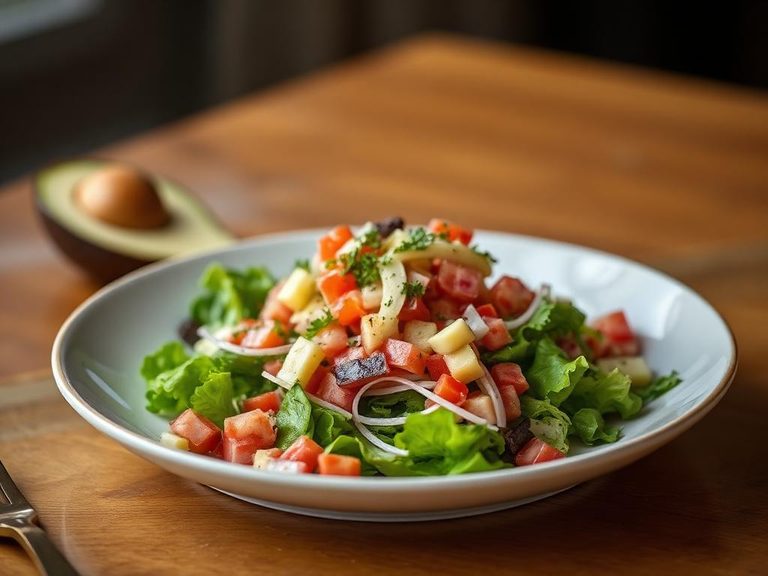
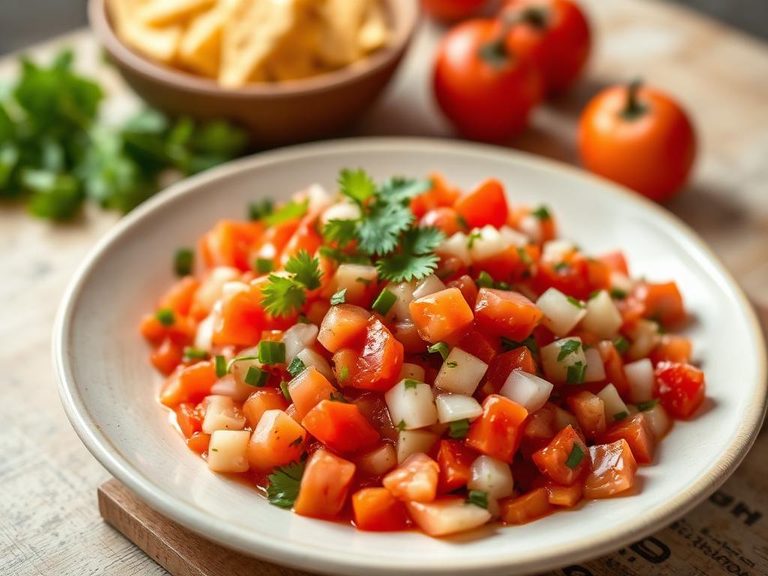
A crisp, refreshing salad where juicy tomato chunks and cool cucumber slices are tossed in a simple vinaigrette. The texture is a delightful contrast between the soft, yielding tomato and the firm, crunchy cucumber. Nutritionally, it's a light, low-calorie side dish primarily composed of healthy fats from the oil and natural sugars from the vegetables.
Calorie split: 2% protein · 21% carbs · 77% fat
↓ Full nutrition💚 Why it's loved
People adore it for its clean, bright flavors and the satisfying crunch that makes every bite refreshing. It's a beloved, versatile staple in summer cuisine, often serving as a cooling counterpoint to spicy or rich main dishes.
⚠️ Watch-outs & how to enjoy it better
The vinegar can be harsh for those with acid reflux or sensitive stomachs, and the oil content, while healthy, adds significant calories. To counteract, use a mild vinegar like white wine or rice vinegar, and measure the oil carefully (1-2 tsp per serving) or use a spray bottle for lighter coating.
Key benefits
- High in hydrating water content from both vegetables
- Provides vitamin C and potassium from tomatoes
- Contains healthy monounsaturated fats from the oil
- Very low in calories, making it ideal for weight management
- Offers a quick source of natural energy from carbs
🍽️ Popular dishes
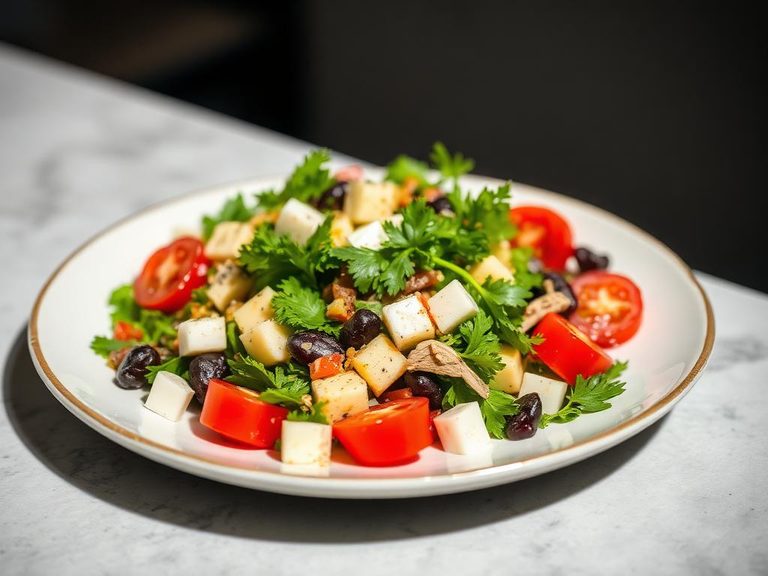
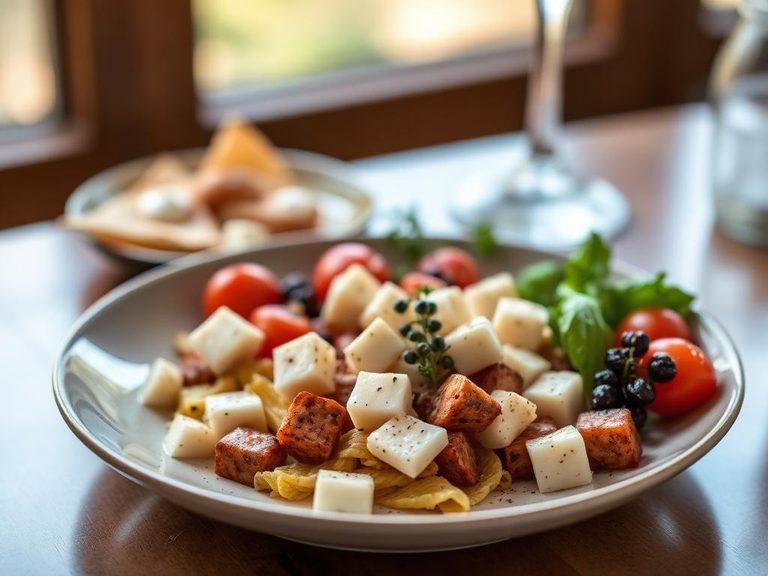
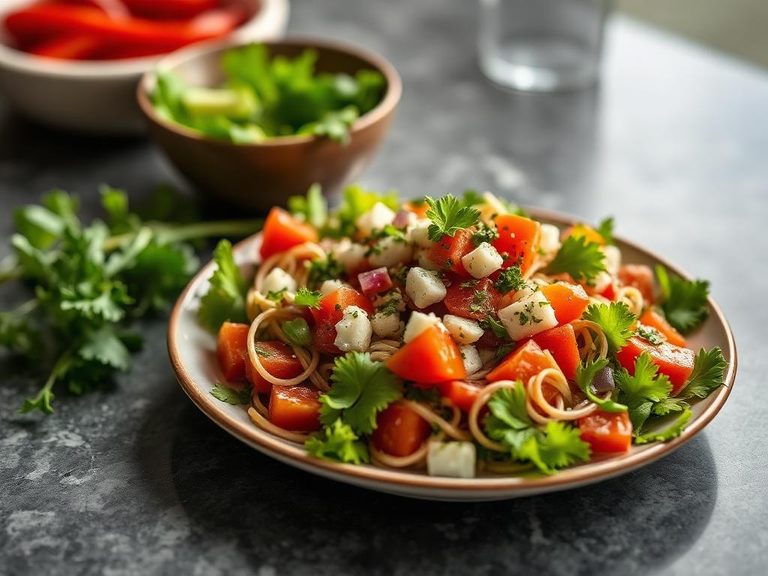
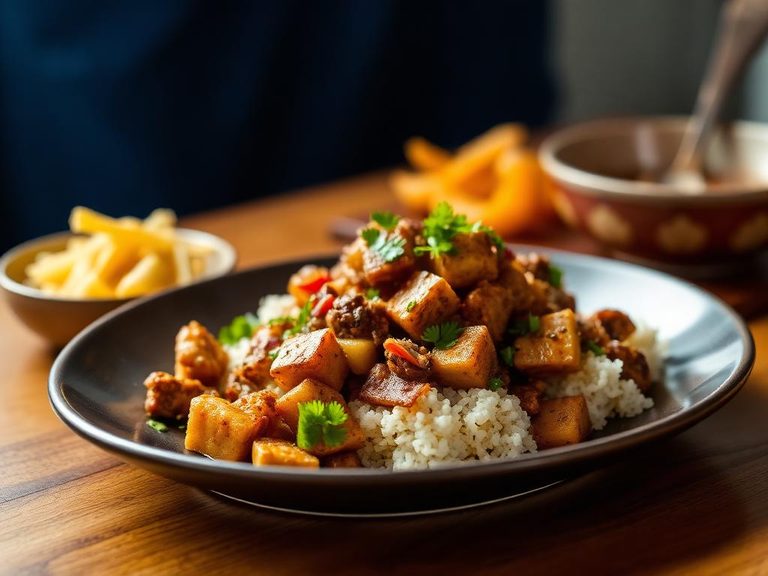
🌍 Where it's eaten
💡 Did you know?
This salad is a classic example of 'cuisine of necessity'—its core ingredients (tomato, cucumber, oil, vinegar) were historically preserved or available year-round in many cultures, making it a timeless, practical dish.
Full nutrition (USDA data · scales with serving)
| Water | 81.0 g |
| Energy | 122 kcal |
| Protein | 0.52 g |
| Total lipid (fat) | 10.2 g |
| Carbohydrate, by difference | 6.3 g |
| Fiber, total dietary | 0.60 g |
| Total Sugars | 5.0 g |
| Calcium, Ca | 11.0 mg |
| Iron, Fe | 0.16 mg |
| Magnesium, Mg | 8.0 mg |
| Phosphorus, P | 17.0 mg |
| Potassium, K | 142 mg |
| Sodium, Na | 212 mg |
| Zinc, Zn | 0.13 mg |
| Copper, Cu | 0.04 mg |
| Selenium, Se | 0.20 ug |
| Vitamin C, total ascorbic acid | 5.3 mg |
| Thiamin | 0.02 mg |
| Riboflavin | 0.02 mg |
| Niacin | 0.20 mg |
| Vitamin B-6 | 0.04 mg |
| Folate, total | 8.0 ug |
| Folic acid | 0.00 ug |
| Folate, food | 8.0 ug |
| Folate, DFE | 8.0 ug |
| Choline, total | 4.1 mg |
| Vitamin B-12 | 0.00 ug |
| Vitamin B-12, added | 0.00 ug |
| Vitamin A, RAE | 13.0 ug |
| Retinol | 0.00 ug |
| Carotene, beta | 136 ug |
| Carotene, alpha | 31.0 ug |
| Cryptoxanthin, beta | 7.0 ug |
| Lycopene | 710 ug |
| Lutein + zeaxanthin | 41.0 ug |
| Vitamin E (alpha-tocopherol) | 2.1 mg |
| Vitamin E, added | 0.00 mg |
| Vitamin D (D2 + D3) | 0.00 ug |
| Vitamin K (phylloquinone) | 18.8 ug |
| Alcohol, ethyl | 0.00 g |
| Caffeine | 0.00 mg |
| Theobromine | 0.00 mg |
Fat & fatty acid profile (per 100g)
| Fatty acids, total saturated | 1.4 g |
| SFA 4:0 | 0.00 g |
| SFA 6:0 | 0.00 g |
| SFA 8:0 | 0.00 g |
| SFA 10:0 | 0.00 g |
| SFA 12:0 | 0.00 g |
| SFA 14:0 | 0.01 g |
| SFA 16:0 | 0.98 g |
| SFA 18:0 | 0.29 g |
| Fatty acids, total monounsaturated | 4.3 g |
| MUFA 16:1 | 0.04 g |
| MUFA 18:1 | 4.2 g |
| MUFA 20:1 | 0.07 g |
| MUFA 22:1 | 0.00 g |
| Fatty acids, total polyunsaturated | 3.9 g |
| PUFA 18:2 | 3.4 g |
| PUFA 18:3 | 0.44 g |
| PUFA 18:4 | 0.00 g |
| PUFA 20:4 | 0.00 g |
| PUFA 20:5 n-3 (EPA) | 0.00 g |
| PUFA 22:5 n-3 (DPA) | 0.00 g |
| PUFA 22:6 n-3 (DHA) | 0.00 g |
| Cholesterol | 0.00 mg |
FAQ
Can I make this salad ahead of time?
Yes, but it's best eaten within a few hours. The salt in the dressing will draw water from the vegetables, making it watery if left too long. For best results, combine the vegetables first and dress just before serving.
What kind of oil and vinegar should I use?
Extra virgin olive oil is traditional for its fruity flavor. For vinegar, red wine vinegar is classic, but white wine, apple cider, or even lemon juice work well. The key is to balance the acidity to your taste.
Is this salad suitable for a low-carb diet?
Yes, it is relatively low in carbohydrates, with most coming from the natural sugars in the vegetables. The exact carb count depends on your portion size and the amount of dressing used.
Nutrient density (calculated · NRF9.3)
Nutrient Rich Foods index: beneficial nutrients (protein, fiber, vitamins, minerals) minus saturated fat, added sugar & sodium, per 100 kcal.
NRF9.3 index — Fulgoni, Keast & Drewnowski, 2009. Computed from USDA nutrients.
Weight-loss friendliness (composite index)
Energy density 1.22 kcal/g · 2% calories from protein · 0.6 g fiber · 5.0 g sugar per 100 g.
Composite of energy density (Rolls et al., 1999), protein & fiber satiety, minus sugar. A calculated heuristic — ranks satiety-per-calorie, not a clinical measure.
Dietary load (calculated from USDA values)
Potential renal acid load. Positive = acid-forming, negative = alkaline-forming.
Sodium-to-potassium ratio: 1.49 (lower is better — aim for ≤ 1)
Sodium:potassium per WHO potassium guidance. Computed from USDA nutrients.