

Soup, cream of asparagus, canned, condensed
Whole food · Soups, Sauces, and Gravies

Photo: Wikipedia
Canned cream of asparagus soup is a velvety, savory condiment and base, characterized by its pale green hue and a rich, earthy flavor with a subtle, lingering sweetness from the asparagus. It typically has a smooth, thick consistency when condensed, which transforms into a lighter, brothy texture when diluted with water or milk. Nutritionally, it is a low-calorie option, providing a modest amount of protein and fat, but it is often high in sodium and may contain added sugars.
Calorie split: 10% protein · 48% carbs · 41% fat
↓ Full nutrition💚 Why it's loved
People love it for its creamy, comforting texture and the unique, slightly grassy flavor of asparagus that feels both elegant and nostalgic. It's a staple in American home cooking, often used to create quick, flavorful dishes like green bean casseroles or as a base for creamy pasta sauces.
⚠️ Watch-outs & how to enjoy it better
The high sodium content in many canned versions can be a concern for those monitoring blood pressure or fluid retention. Additionally, the condensed form often contains added sugars and preservatives, which may not suit low-sugar or whole-food diets. To counteract this, opt for low-sodium varieties, dilute with unsweetened milk or water, and pair with fresh vegetables or lean protein to balance the meal.
Key benefits
- Low in calories, making it suitable for calorie-conscious diets
- Provides a source of vitamins A and C, and some folate from asparagus
- Versatile as a soup base or ingredient in casseroles and sauces
- Convenient and shelf-stable, requiring minimal preparation
- Offers a mild, comforting flavor that appeals to many palates
🍽️ Popular dishes
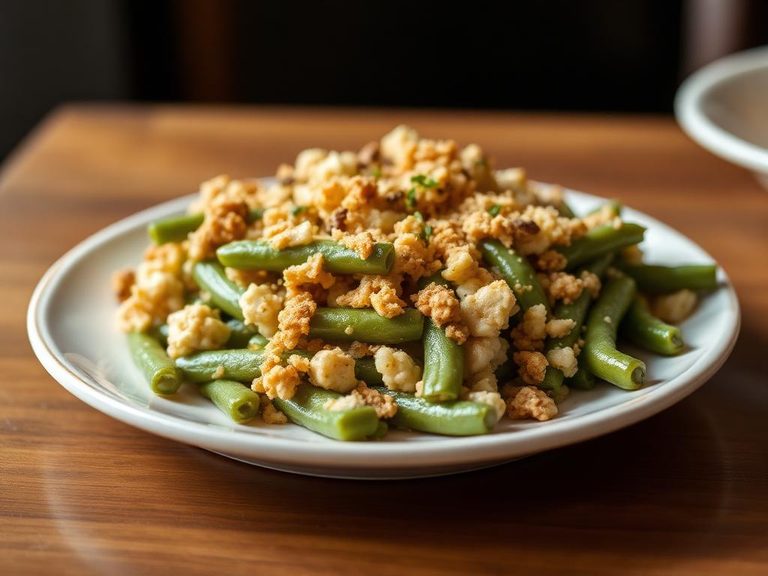
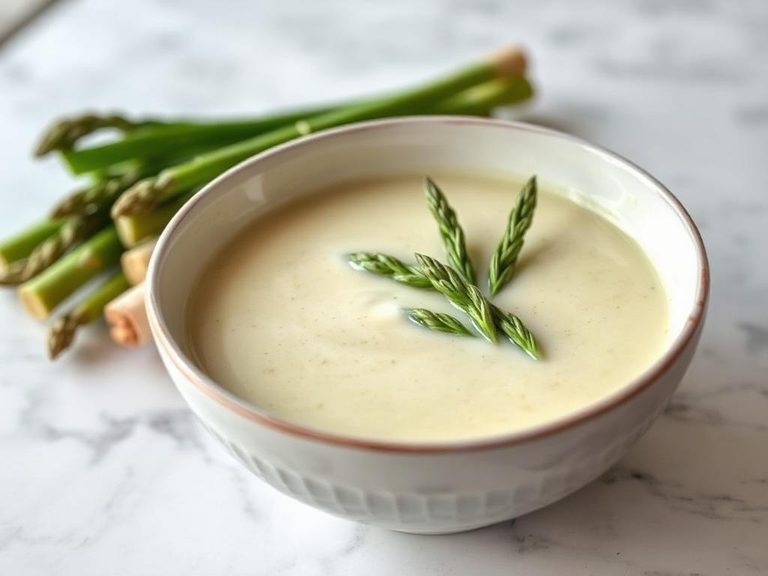
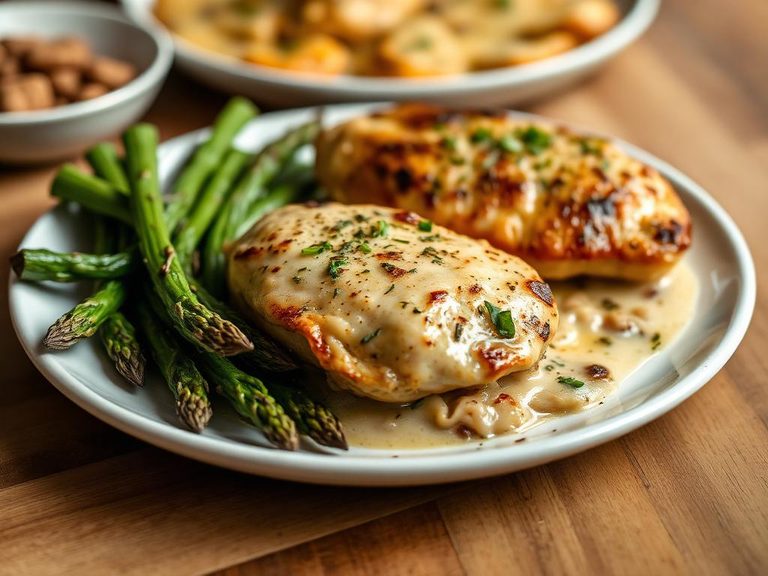
🌍 Where it's eaten
💡 Did you know?
The condensed soup format was popularized by Campbell's in the early 20th century, and cream of asparagus became a staple in mid-century American cuisine, often used in 'convenience cooking' recipes that emphasized quick, one-dish meals.
Full nutrition (USDA data · scales with serving)
| Water | 84.0 g |
| Energy | 69.0 kcal |
| Energy | 289 kj |
| Protein | 1.8 g |
| Total lipid (fat) | 3.3 g |
| Ash | 2.4 g |
| Carbohydrate, by difference | 8.5 g |
| Fiber, total dietary | 0.40 g |
| Total Sugars | 0.72 g |
| Calcium, Ca | 23.0 mg |
| Iron, Fe | 0.64 mg |
| Magnesium, Mg | 3.0 mg |
| Phosphorus, P | 31.0 mg |
| Potassium, K | 138 mg |
| Sodium, Na | 669 mg |
| Zinc, Zn | 0.70 mg |
| Copper, Cu | 0.10 mg |
| Manganese, Mn | 0.30 mg |
| Selenium, Se | 1.9 ug |
| Vitamin C, total ascorbic acid | 2.2 mg |
| Thiamin | 0.04 mg |
| Riboflavin | 0.06 mg |
| Niacin | 0.62 mg |
| Pantothenic acid | 0.11 mg |
| Vitamin B-6 | 0.01 mg |
| Folate, total | 19.0 ug |
| Folic acid | 0.00 ug |
| Folate, food | 19.0 ug |
| Folate, DFE | 19.0 ug |
| Choline, total | 13.0 mg |
| Vitamin B-12 | 0.04 ug |
| Vitamin B-12, added | 0.00 ug |
| Vitamin A, RAE | 26.0 ug |
| Retinol | 5.0 ug |
| Carotene, beta | 256 ug |
| Carotene, alpha | 0.00 ug |
| Cryptoxanthin, beta | 0.00 ug |
| Vitamin A, IU | 441 iu |
| Lycopene | 13.0 ug |
| Lutein + zeaxanthin | 326 ug |
| Vitamin E (alpha-tocopherol) | 0.49 mg |
| Vitamin E, added | 0.00 mg |
| Vitamin D (D2 + D3), International Units | 0.00 iu |
| Vitamin D (D2 + D3) | 0.00 ug |
| Vitamin K (phylloquinone) | 22.0 ug |
| Alcohol, ethyl | 0.00 g |
| Caffeine | 0.00 mg |
| Theobromine | 0.00 mg |
Fat & fatty acid profile (per 100g)
| Fatty acids, total saturated | 0.82 g |
| SFA 4:0 | 0.04 g |
| SFA 6:0 | 0.03 g |
| SFA 8:0 | 0.02 g |
| SFA 10:0 | 0.04 g |
| SFA 12:0 | 0.03 g |
| SFA 14:0 | 0.12 g |
| SFA 16:0 | 0.34 g |
| SFA 18:0 | 0.17 g |
| Fatty acids, total monounsaturated | 0.75 g |
| MUFA 16:1 | 0.04 g |
| MUFA 18:1 | 0.69 g |
| MUFA 20:1 | 0.00 g |
| MUFA 22:1 | 0.00 g |
| Fatty acids, total polyunsaturated | 1.5 g |
| PUFA 18:2 | 1.4 g |
| PUFA 18:3 | 0.04 g |
| PUFA 18:4 | 0.00 g |
| PUFA 20:4 | 0.00 g |
| PUFA 20:5 n-3 (EPA) | 0.00 g |
| PUFA 22:5 n-3 (DPA) | 0.00 g |
| PUFA 22:6 n-3 (DHA) | 0.00 g |
| Cholesterol | 4.0 mg |
Amino acid profile (per 100g)
| Tryptophan | 0.02 g |
| Threonine | 0.06 g |
| Isoleucine | 0.08 g |
| Leucine | 0.13 g |
| Lysine | 0.09 g |
| Methionine | 0.03 g |
| Cystine | 0.02 g |
| Phenylalanine | 0.08 g |
| Tyrosine | 0.06 g |
| Valine | 0.09 g |
| Arginine | 0.07 g |
| Histidine | 0.04 g |
| Alanine | 0.07 g |
| Aspartic acid | 0.14 g |
| Glutamic acid | 0.47 g |
| Glycine | 0.05 g |
| Proline | 0.16 g |
| Serine | 0.08 g |
FAQ
Is canned cream of asparagus soup healthy?
It can be part of a balanced diet, but it's often high in sodium and may contain added sugars. Choosing low-sodium versions and pairing it with fresh vegetables or lean protein can make it a healthier option.
How do I use condensed cream of asparagus soup?
Dilute it with water, milk, or broth to make a soup, or use it as a base for casseroles, sauces, and baked dishes. It's a versatile ingredient that adds creaminess and flavor.
Can I freeze canned cream of asparagus soup?
Yes, you can freeze it, but the texture may change slightly upon thawing. It's best to use it within a few months for optimal quality.
What are the nutritional differences between canned and fresh asparagus soup?
Canned soup is often higher in sodium and may contain additives, while fresh asparagus soup is lower in sodium and retains more of the vegetable's natural nutrients and texture.
Nutrient density (calculated · NRF9.3)
Nutrient Rich Foods index: beneficial nutrients (protein, fiber, vitamins, minerals) minus saturated fat, added sugar & sodium, per 100 kcal.
NRF9.3 index — Fulgoni, Keast & Drewnowski, 2009. Computed from USDA nutrients.
Weight-loss friendliness (composite index)
Energy density 0.69 kcal/g · 11% calories from protein · 0.4 g fiber · 0.7 g sugar per 100 g.
Composite of energy density (Rolls et al., 1999), protein & fiber satiety, minus sugar. A calculated heuristic — ranks satiety-per-calorie, not a clinical measure.
Dietary load (calculated from USDA values)
Potential renal acid load. Positive = acid-forming, negative = alkaline-forming.
Sodium-to-potassium ratio: 4.85 (lower is better — aim for ≤ 1)
Sodium:potassium per WHO potassium guidance. Computed from USDA nutrients.