

Soup, beef broth or bouillon, powder, prepared with water
Whole food · Soups, Sauces, and Gravies
A dehydrated powder that dissolves instantly into a clear, amber broth, delivering a concentrated, savory umami punch with a salty, meaty depth. Nutritionally, it's a lightweight flavor booster, providing minimal calories and macronutrients while serving as a key vehicle for sodium and flavor compounds.
Calorie split: 33% protein · 39% carbs · 28% fat
↓ Full nutrition💚 Why it's loved
People love it for its unparalleled convenience and ability to instantly create a flavorful, comforting base for soups, stews, and sauces. Its savory, meaty essence is a foundational taste in many cuisines, evoking warmth and home cooking.
⚠️ Watch-outs & how to enjoy it better
The primary concern is its very high sodium content, which can contribute to elevated blood pressure if consumed excessively. To counteract this, use it sparingly as a flavor enhancer rather than the primary liquid, and balance it by adding low-sodium vegetables, herbs, and a source of protein or healthy fat to the final dish.
Key benefits
- Extremely low in calories and fat.
- Provides a quick source of sodium for electrolyte balance.
- Adds deep umami flavor to dishes without adding bulk.
- Long shelf life and convenient for quick meal preparation.
- Can enhance the palatability of otherwise bland foods.
🍽️ Popular dishes
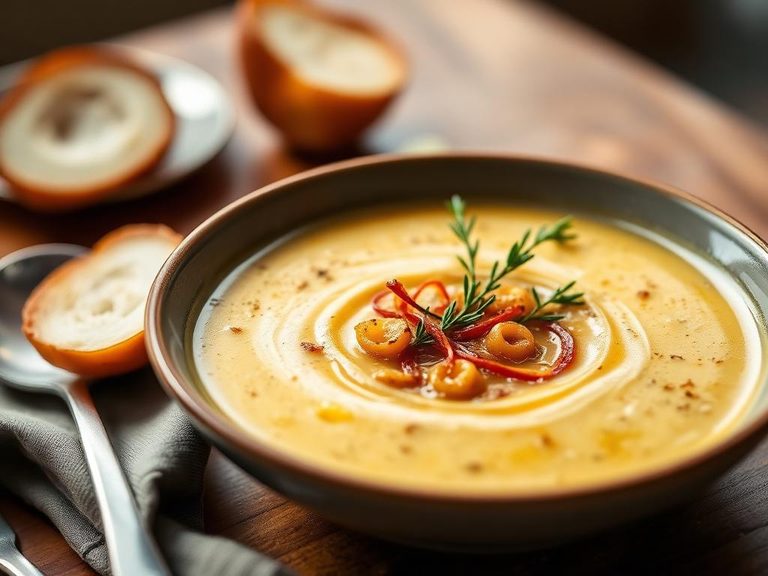
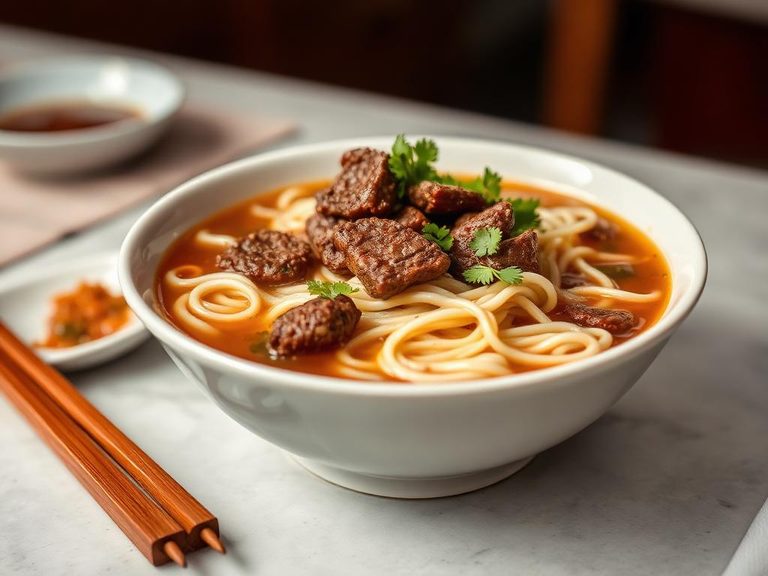
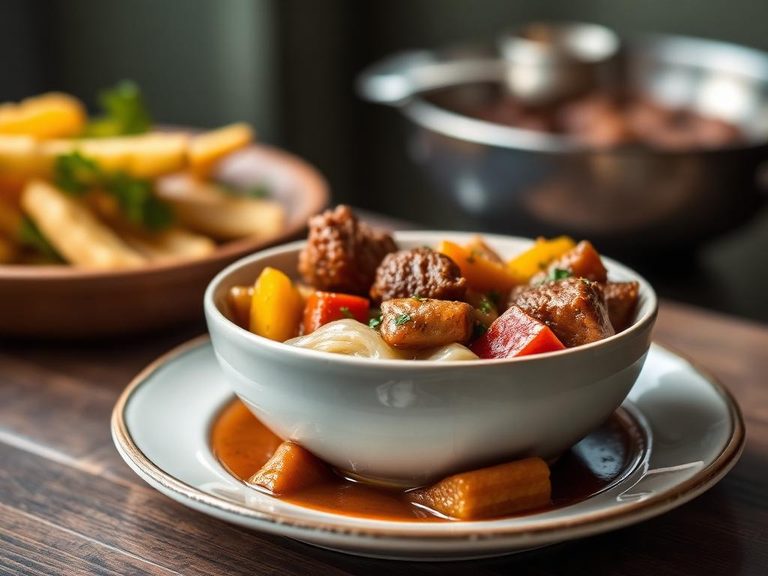
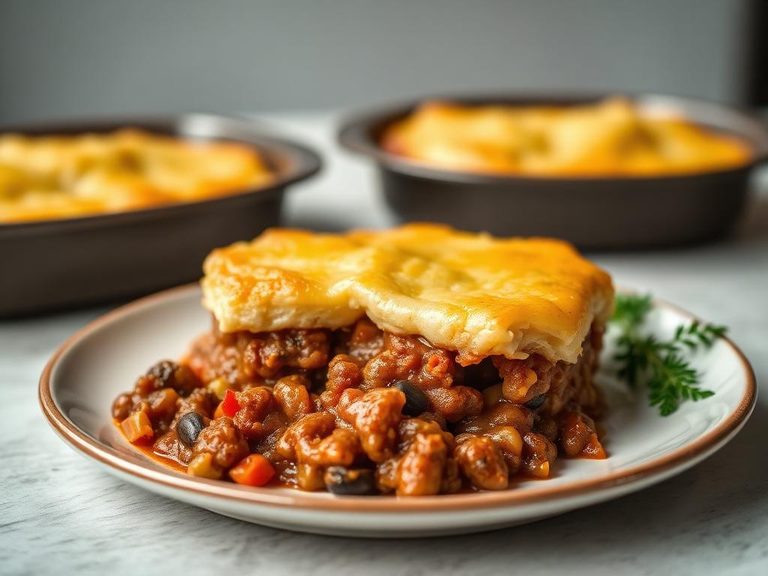
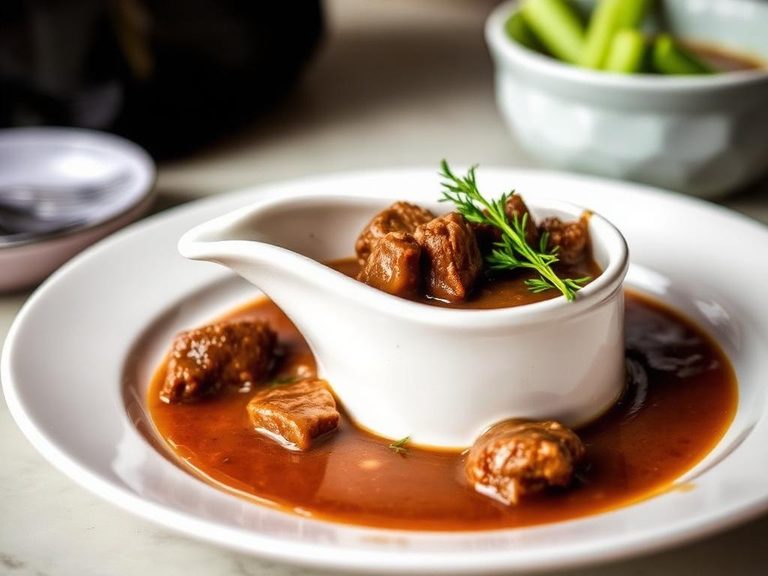
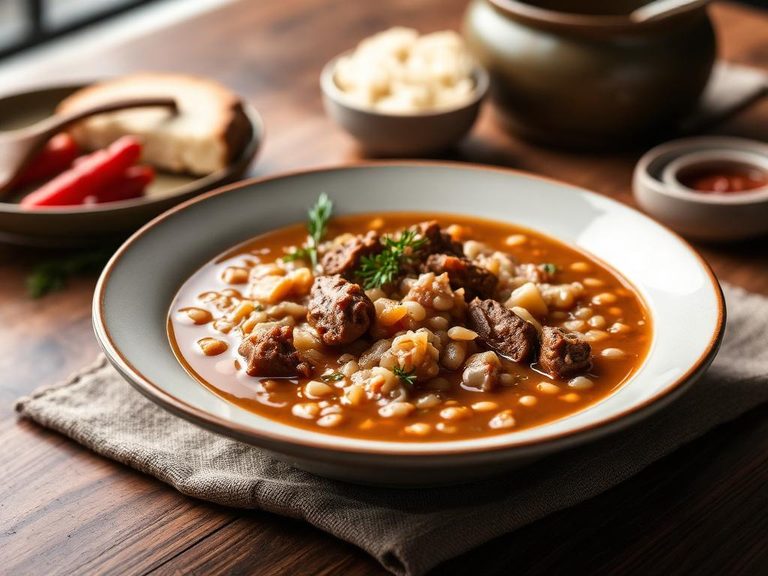
🌍 Where it's eaten
💡 Did you know?
The process of creating bouillon cubes or powders was popularized in the 19th century by companies like Liebig's Extract of Meat Company, which originally marketed a similar product as a nutritious food for the poor and as a field ration for armies.
Full nutrition (USDA data · scales with serving)
| Water | 98.7 g |
| Energy | 3.0 kcal |
| Energy | 11.0 kj |
| Protein | 0.21 g |
| Total lipid (fat) | 0.08 g |
| Ash | 0.77 g |
| Carbohydrate, by difference | 0.25 g |
| Fiber, total dietary | 0.00 g |
| Total Sugars | 0.20 g |
| Calcium, Ca | 4.0 mg |
| Iron, Fe | 0.02 mg |
| Magnesium, Mg | 2.0 mg |
| Phosphorus, P | 3.0 mg |
| Potassium, K | 6.0 mg |
| Sodium, Na | 382 mg |
| Zinc, Zn | 0.01 mg |
| Copper, Cu | 0.01 mg |
| Manganese, Mn | 0.01 mg |
| Selenium, Se | 0.30 ug |
| Vitamin C, total ascorbic acid | 0.00 mg |
| Thiamin | 0.00 mg |
| Riboflavin | 0.00 mg |
| Niacin | 0.05 mg |
| Pantothenic acid | 0.00 mg |
| Vitamin B-6 | 0.00 mg |
| Folate, total | 0.00 ug |
| Folic acid | 0.00 ug |
| Folate, food | 0.00 ug |
| Folate, DFE | 0.00 ug |
| Choline, total | 1.4 mg |
| Vitamin B-12 | 0.01 ug |
| Vitamin B-12, added | 0.00 ug |
| Vitamin A, RAE | 0.00 ug |
| Retinol | 0.00 ug |
| Carotene, beta | 0.00 ug |
| Carotene, alpha | 0.00 ug |
| Cryptoxanthin, beta | 0.00 ug |
| Vitamin A, IU | 0.00 iu |
| Lycopene | 0.00 ug |
| Lutein + zeaxanthin | 0.00 ug |
| Vitamin E (alpha-tocopherol) | 0.01 mg |
| Vitamin E, added | 0.00 mg |
| Vitamin D (D2 + D3), International Units | 0.00 iu |
| Vitamin D (D2 + D3) | 0.00 ug |
| Vitamin K (phylloquinone) | 0.00 ug |
| Alcohol, ethyl | 0.00 g |
| Caffeine | 0.00 mg |
| Theobromine | 0.00 mg |
Fat & fatty acid profile (per 100g)
| Fatty acids, total saturated | 0.04 g |
| SFA 4:0 | 0.00 g |
| SFA 6:0 | 0.00 g |
| SFA 8:0 | 0.00 g |
| SFA 10:0 | 0.00 g |
| SFA 12:0 | 0.00 g |
| SFA 14:0 | 0.00 g |
| SFA 16:0 | 0.02 g |
| SFA 18:0 | 0.01 g |
| Fatty acids, total monounsaturated | 0.03 g |
| MUFA 16:1 | 0.00 g |
| MUFA 18:1 | 0.03 g |
| MUFA 20:1 | 0.00 g |
| MUFA 22:1 | 0.00 g |
| Fatty acids, total polyunsaturated | 0.00 g |
| PUFA 18:2 | 0.00 g |
| PUFA 18:3 | 0.00 g |
| PUFA 18:4 | 0.00 g |
| PUFA 20:4 | 0.00 g |
| PUFA 20:5 n-3 (EPA) | 0.00 g |
| PUFA 22:5 n-3 (DPA) | 0.00 g |
| PUFA 22:6 n-3 (DHA) | 0.00 g |
| Cholesterol | 0.00 mg |
Amino acid profile (per 100g)
Estimated from Soup, bean with pork, canned, condensed — USDA does not publish this profile for Soup.
| Tryptophan | 0.06 g |
| Threonine | 0.24 g |
| Isoleucine | 0.29 g |
| Leucine | 0.48 g |
| Lysine | 0.40 g |
| Methionine | 0.07 g |
| Cystine | 0.07 g |
| Phenylalanine | 0.33 g |
| Tyrosine | 0.18 g |
| Valine | 0.32 g |
| Arginine | 0.31 g |
| Histidine | 0.15 g |
| Alanine | 0.29 g |
| Aspartic acid | 0.66 g |
| Glutamic acid | 1.1 g |
| Glycine | 0.28 g |
| Proline | 0.27 g |
| Serine | 0.29 g |
FAQ
How does beef broth powder differ from a bouillon cube?
They are functionally very similar; both are dehydrated, concentrated forms of beef stock. The main difference is form: powder dissolves faster and is easier to measure precisely, while cubes are pre-portioned. Nutritionally, they are comparable, with high sodium being the key factor.
Can I use this to make a low-sodium broth?
Standard versions are very high in sodium. To make a lower-sodium broth, use a significantly smaller amount of the powder (e.g., 1/4 teaspoon per cup of water) and supplement the flavor with fresh herbs, black pepper, and a splash of low-sodium soy sauce or Worcestershire sauce.
Is this suitable for a vegetarian diet?
No, traditional beef broth powder is made from beef extracts and is not vegetarian or vegan. For a plant-based alternative, look for powders labeled as 'vegetable broth' or 'mushroom bouillon'.
Nutrient density (calculated · NRF9.3)
Nutrient Rich Foods index: beneficial nutrients (protein, fiber, vitamins, minerals) minus saturated fat, added sugar & sodium, per 100 kcal.
NRF9.3 index — Fulgoni, Keast & Drewnowski, 2009. Computed from USDA nutrients.
Weight-loss friendliness (composite index)
Energy density 0.03 kcal/g · 28% calories from protein · 0.0 g fiber · 0.2 g sugar per 100 g.
Composite of energy density (Rolls et al., 1999), protein & fiber satiety, minus sugar. A calculated heuristic — ranks satiety-per-calorie, not a clinical measure.
Dietary load (calculated from USDA values)
Potential renal acid load. Positive = acid-forming, negative = alkaline-forming.
Sodium-to-potassium ratio: 63.67 (lower is better — aim for ≤ 1)
Sodium:potassium per WHO potassium guidance. Computed from USDA nutrients.