

Soup, beef
Common food
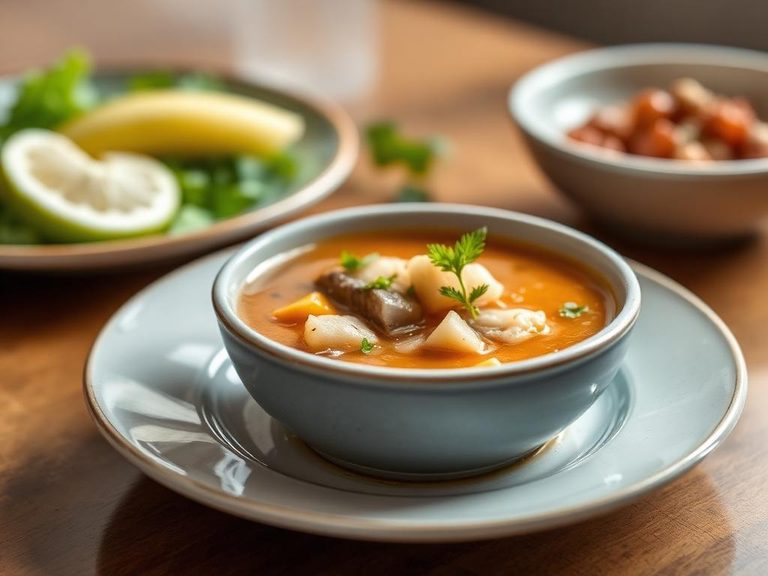
A clear, savory broth simmered with tender chunks of beef, offering a comforting, umami-rich flavor and a light yet satisfying texture. Its nutritional profile is notably lean, providing a solid source of protein with minimal calories and fat per serving.
Calorie split: 27% protein · 34% carbs · 39% fat
↓ Full nutrition💚 Why it's loved
People love beef soup for its deep, comforting flavor and versatility—it's a warming staple across countless cultures, perfect for both a light meal and a hearty base for other ingredients.
⚠️ Watch-outs & how to enjoy it better
Commercial or restaurant versions can be very high in sodium, which may concern those monitoring blood pressure. To counteract this, look for low-sodium broths, rinse canned beef if used, and add fresh herbs, lemon juice, or vinegar to boost flavor without extra salt.
Key benefits
- Excellent source of lean protein for muscle maintenance
- Very low in calories and fat, supporting weight management
- Provides a hydrating base with electrolytes from broth
- Contains minerals like iron and zinc from beef
🍽️ Popular dishes
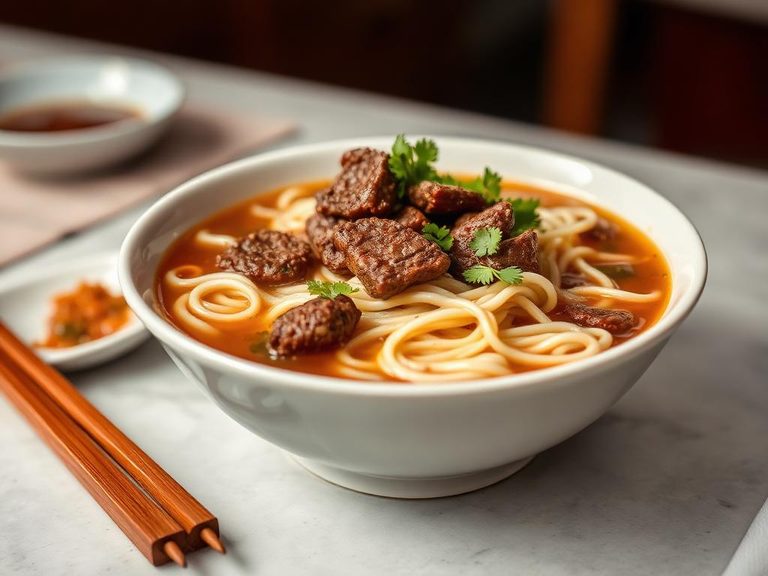
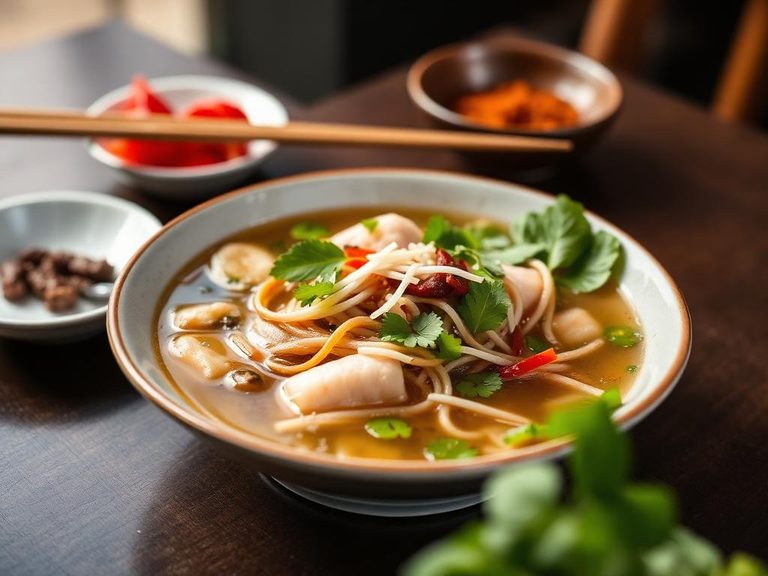
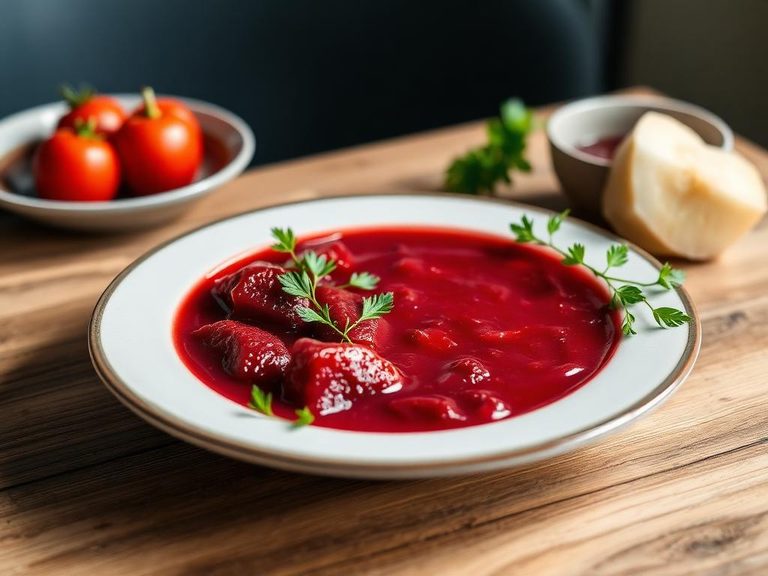
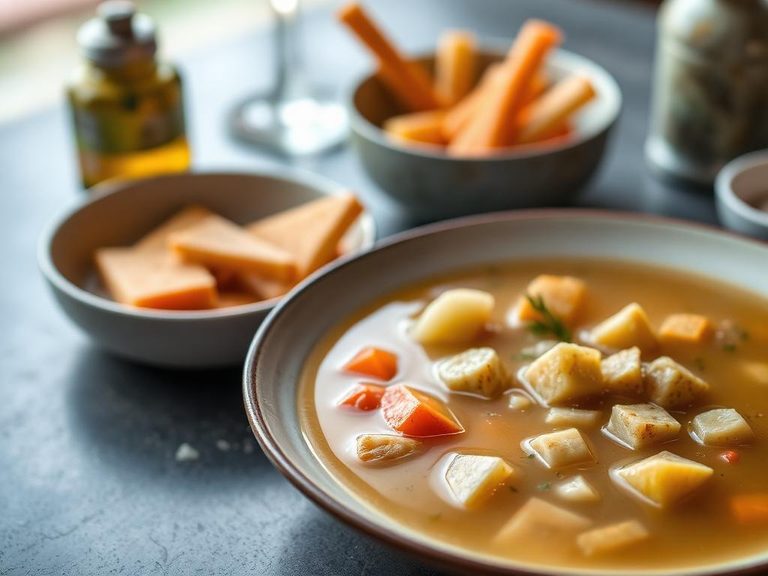
🌍 Where it's eaten
💡 Did you know?
The gelatin that naturally leaches out of beef bones and connective tissue during simmering is what gives a well-made beef soup its characteristic rich mouthfeel and is a sign of a nutritious, collagen-rich broth.
Full nutrition (USDA data · scales with serving)
| Water | 89.6 g |
| Energy | 47.0 kcal |
| Protein | 3.3 g |
| Total lipid (fat) | 2.0 g |
| Carbohydrate, by difference | 4.0 g |
| Fiber, total dietary | 0.80 g |
| Total Sugars | 1.1 g |
| Calcium, Ca | 12.0 mg |
| Iron, Fe | 0.40 mg |
| Magnesium, Mg | 11.0 mg |
| Phosphorus, P | 38.0 mg |
| Potassium, K | 152 mg |
| Sodium, Na | 249 mg |
| Zinc, Zn | 0.75 mg |
| Copper, Cu | 0.04 mg |
| Selenium, Se | 2.5 ug |
| Vitamin C, total ascorbic acid | 6.8 mg |
| Thiamin | 0.03 mg |
| Riboflavin | 0.04 mg |
| Niacin | 0.87 mg |
| Vitamin B-6 | 0.09 mg |
| Folate, total | 11.0 ug |
| Folic acid | 0.00 ug |
| Folate, food | 11.0 ug |
| Folate, DFE | 11.0 ug |
| Choline, total | 13.1 mg |
| Vitamin B-12 | 0.25 ug |
| Vitamin B-12, added | 0.00 ug |
| Vitamin A, RAE | 33.0 ug |
| Retinol | 0.00 ug |
| Carotene, beta | 339 ug |
| Carotene, alpha | 96.0 ug |
| Cryptoxanthin, beta | 4.0 ug |
| Lycopene | 227 ug |
| Lutein + zeaxanthin | 259 ug |
| Vitamin E (alpha-tocopherol) | 0.20 mg |
| Vitamin E, added | 0.00 mg |
| Vitamin D (D2 + D3) | 0.00 ug |
| Vitamin K (phylloquinone) | 13.3 ug |
| Alcohol, ethyl | 0.00 g |
| Caffeine | 0.00 mg |
| Theobromine | 0.00 mg |
Fat & fatty acid profile (per 100g)
| Fatty acids, total saturated | 0.69 g |
| SFA 4:0 | 0.00 g |
| SFA 6:0 | 0.00 g |
| SFA 8:0 | 0.00 g |
| SFA 10:0 | 0.00 g |
| SFA 12:0 | 0.00 g |
| SFA 14:0 | 0.05 g |
| SFA 16:0 | 0.41 g |
| SFA 18:0 | 0.21 g |
| Fatty acids, total monounsaturated | 0.87 g |
| MUFA 16:1 | 0.06 g |
| MUFA 18:1 | 0.77 g |
| MUFA 20:1 | 0.01 g |
| MUFA 22:1 | 0.00 g |
| Fatty acids, total polyunsaturated | 0.20 g |
| PUFA 18:2 | 0.17 g |
| PUFA 18:3 | 0.03 g |
| PUFA 18:4 | 0.00 g |
| PUFA 20:4 | 0.01 g |
| PUFA 20:5 n-3 (EPA) | 0.00 g |
| PUFA 22:5 n-3 (DPA) | 0.00 g |
| PUFA 22:6 n-3 (DHA) | 0.00 g |
| Cholesterol | 9.0 mg |
Amino acid profile (per 100g)
Estimated from Restaurant, Latino, black bean soup — USDA does not publish this profile for Soup.
| Tryptophan | 0.04 g |
| Threonine | 0.17 g |
| Isoleucine | 0.16 g |
| Leucine | 0.32 g |
| Lysine | 0.27 g |
| Methionine | 0.10 g |
| Cystine | 0.04 g |
| Phenylalanine | 0.16 g |
| Tyrosine | 0.13 g |
| Valine | 0.20 g |
| Arginine | 0.35 g |
| Histidine | 0.09 g |
| Alanine | 0.35 g |
| Aspartic acid | 0.38 g |
| Glutamic acid | 0.72 g |
| Glycine | 0.58 g |
| Proline | 0.36 g |
| Serine | 0.20 g |
FAQ
Is beef soup a good source of protein?
Yes, a 100g serving contains about 3.28g of protein, which is significant for a liquid-based food. A typical bowl provides a substantial portion of your daily protein needs.
How can I make beef soup more filling?
Add fiber-rich vegetables like carrots, celery, and potatoes, or include whole grains like barley or noodles. This increases volume, fiber, and complex carbs for sustained energy.
Is the fat in beef soup unhealthy?
At 2.05g per 100g, it is relatively low in fat. The fat present is primarily from the beef itself and can be skimmed off the surface after cooking if desired to further reduce the fat content.
Nutrient density (calculated · NRF9.3)
Nutrient Rich Foods index: beneficial nutrients (protein, fiber, vitamins, minerals) minus saturated fat, added sugar & sodium, per 100 kcal.
NRF9.3 index — Fulgoni, Keast & Drewnowski, 2009. Computed from USDA nutrients.
Weight-loss friendliness (composite index)
Energy density 0.47 kcal/g · 28% calories from protein · 0.8 g fiber · 1.1 g sugar per 100 g.
Composite of energy density (Rolls et al., 1999), protein & fiber satiety, minus sugar. A calculated heuristic — ranks satiety-per-calorie, not a clinical measure.
Dietary load (calculated from USDA values)
Potential renal acid load. Positive = acid-forming, negative = alkaline-forming.
Sodium-to-potassium ratio: 1.64 (lower is better — aim for ≤ 1)
Sodium:potassium per WHO potassium guidance. Computed from USDA nutrients.