

Seaweed, cooked, no added fat
Common food

Photo: Wikipedia
Cooked seaweed is a delicate, oceanic vegetable with a silky, slightly slippery texture and a deep umami flavor that tastes of the sea itself. Nutritionally, it's a low-calorie powerhouse, providing a notable amount of protein for a plant food while being exceptionally rich in minerals like iodine and iron. Its mild, savory profile makes it a versatile ingredient that absorbs surrounding flavors beautifully.
Calorie split: 28% protein · 63% carbs · 9% fat
↓ Full nutrition💚 Why it's loved
People love it for its unique, savory umami depth that adds a complex, oceanic flavor to dishes without overpowering them. It's cherished for its versatility, easily slipping into soups, salads, and rice dishes, and is a cornerstone of many coastal cuisines.
⚠️ Watch-outs & how to enjoy it better
The primary caution is its high iodine content, which can be problematic for individuals with thyroid conditions; portion control is key. Its sodium level can also be high, so those monitoring salt intake should be mindful. To counteract, pair it with potassium-rich foods like avocado or banana, and rinse it thoroughly before cooking to reduce surface salt.
Key benefits
- Excellent source of iodine, essential for thyroid function.
- Very low in calories while providing plant-based protein.
- Contains antioxidants like fucoxanthin and vitamins A, C, and K.
- Rich in minerals such as iron, calcium, and magnesium.
- May support gut health due to its fiber and polysaccharide content.
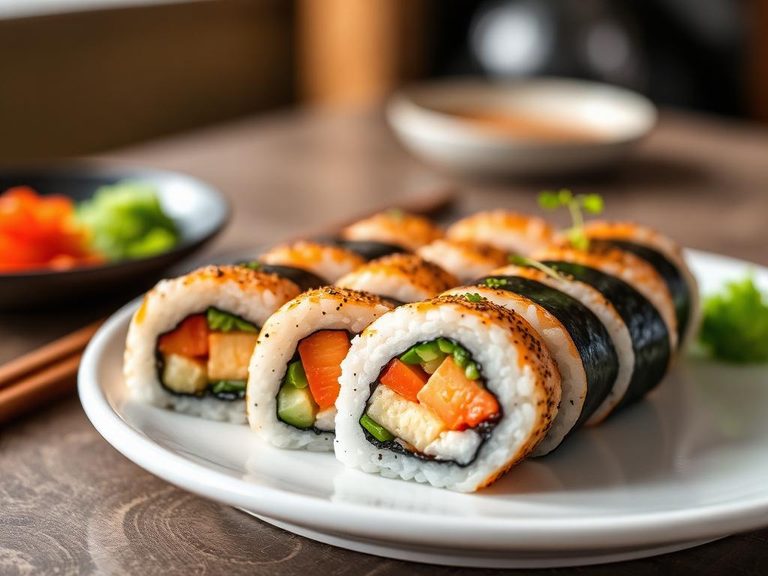
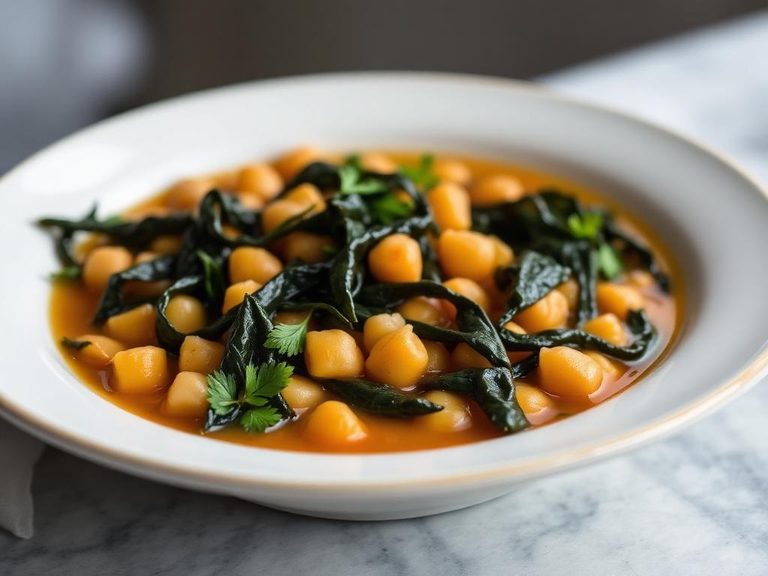
🍽️ Popular dishes
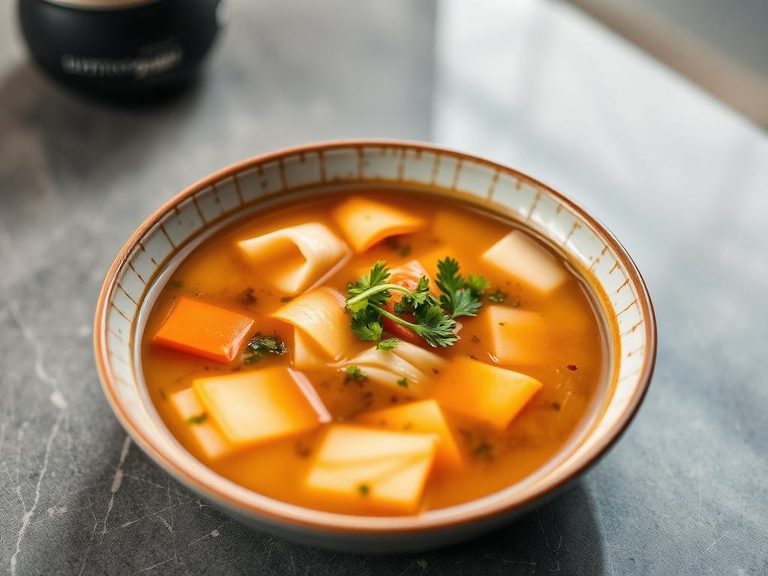
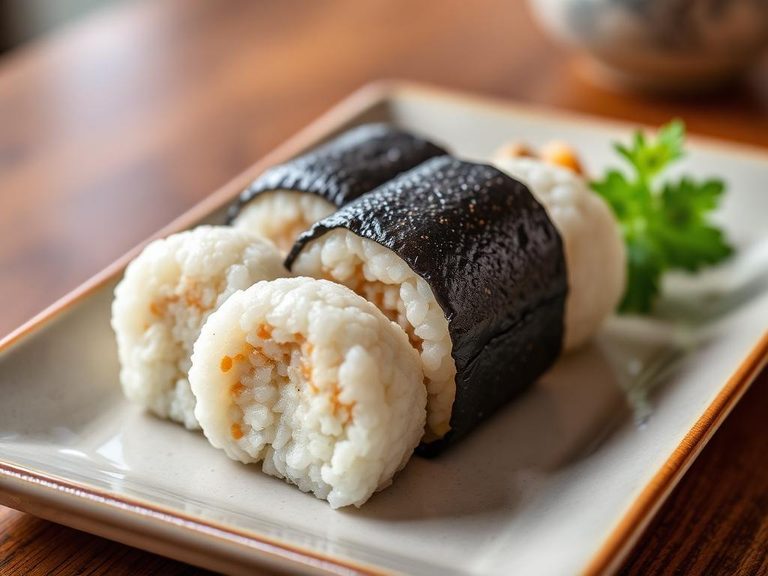
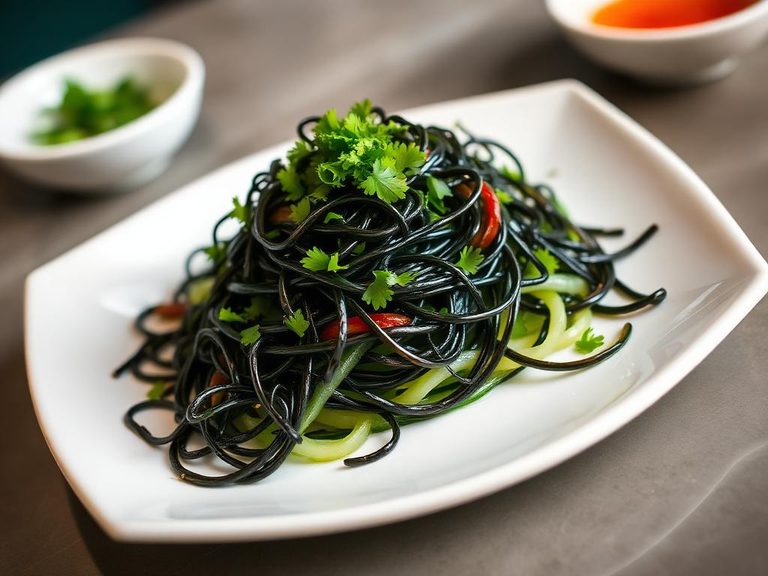
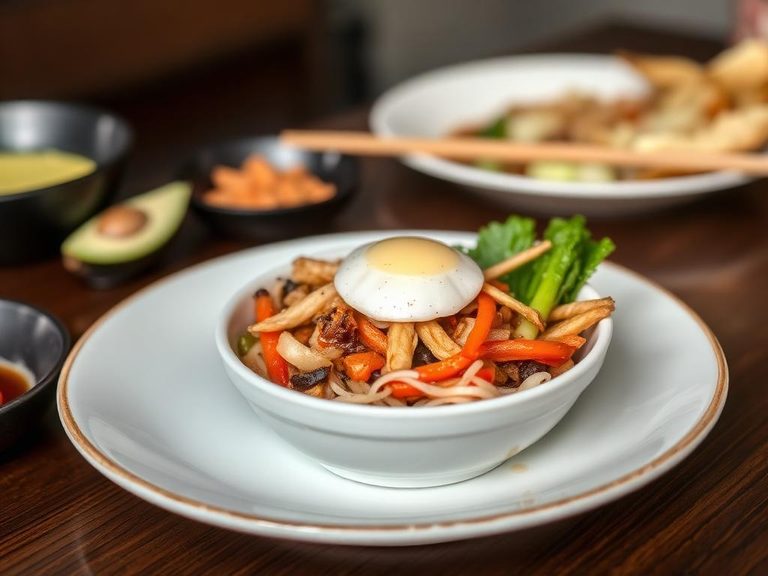
🌍 Where it's eaten
💡 Did you know?
Seaweed is one of the few plant sources that naturally contains vitamin B12, a nutrient almost exclusively found in animal products.
Full nutrition (USDA data · scales with serving)
| Water | 82.2 g |
| Energy | 41.0 kcal |
| Protein | 3.5 g |
| Total lipid (fat) | 0.49 g |
| Carbohydrate, by difference | 7.9 g |
| Fiber, total dietary | 0.70 g |
| Total Sugars | 0.58 g |
| Calcium, Ca | 129 mg |
| Iron, Fe | 2.3 mg |
| Magnesium, Mg | 77.0 mg |
| Phosphorus, P | 60.0 mg |
| Potassium, K | 165 mg |
| Sodium, Na | 384 mg |
| Zinc, Zn | 0.89 mg |
| Copper, Cu | 0.23 mg |
| Selenium, Se | 0.70 ug |
| Vitamin C, total ascorbic acid | 12.8 mg |
| Thiamin | 0.06 mg |
| Riboflavin | 0.26 mg |
| Niacin | 1.1 mg |
| Vitamin B-6 | 0.05 mg |
| Folate, total | 148 ug |
| Folic acid | 0.00 ug |
| Folate, food | 148 ug |
| Folate, DFE | 148 ug |
| Choline, total | 12.4 mg |
| Vitamin B-12 | 0.00 ug |
| Vitamin B-12, added | 0.00 ug |
| Vitamin A, RAE | 90.0 ug |
| Retinol | 0.00 ug |
| Carotene, beta | 1079 ug |
| Carotene, alpha | 0.00 ug |
| Cryptoxanthin, beta | 0.00 ug |
| Lycopene | 0.00 ug |
| Lutein + zeaxanthin | 0.00 ug |
| Vitamin E (alpha-tocopherol) | 0.96 mg |
| Vitamin E, added | 0.00 mg |
| Vitamin D (D2 + D3) | 0.00 ug |
| Vitamin K (phylloquinone) | 25.1 ug |
| Alcohol, ethyl | 0.00 g |
| Caffeine | 0.00 mg |
| Theobromine | 0.00 mg |
Fat & fatty acid profile (per 100g)
| Fatty acids, total saturated | 0.15 g |
| SFA 4:0 | 0.00 g |
| SFA 6:0 | 0.00 g |
| SFA 8:0 | 0.00 g |
| SFA 10:0 | 0.00 g |
| SFA 12:0 | 0.00 g |
| SFA 14:0 | 0.01 g |
| SFA 16:0 | 0.09 g |
| SFA 18:0 | 0.03 g |
| Fatty acids, total monounsaturated | 0.06 g |
| MUFA 16:1 | 0.01 g |
| MUFA 18:1 | 0.04 g |
| MUFA 20:1 | 0.01 g |
| MUFA 22:1 | 0.00 g |
| Fatty acids, total polyunsaturated | 0.13 g |
| PUFA 18:2 | 0.01 g |
| PUFA 18:3 | 0.00 g |
| PUFA 18:4 | 0.00 g |
| PUFA 20:4 | 0.01 g |
| PUFA 20:5 n-3 (EPA) | 0.09 g |
| PUFA 22:5 n-3 (DPA) | 0.00 g |
| PUFA 22:6 n-3 (DHA) | 0.00 g |
| Cholesterol | 0.00 mg |
Amino acid profile (per 100g)
Estimated from Seaweed, Canadian Cultivated EMI-TSUNOMATA, dry — USDA does not publish this profile for Seaweed.
| Tryptophan | 0.16 g |
| Threonine | 0.58 g |
| Isoleucine | 0.56 g |
| Leucine | 0.90 g |
| Lysine | 0.75 g |
| Methionine | 0.25 g |
| Cystine | 0.25 g |
| Phenylalanine | 0.81 g |
| Tyrosine | 0.34 g |
| Valine | 0.66 g |
| Arginine | 0.77 g |
| Histidine | 0.23 g |
| Alanine | 0.81 g |
| Aspartic acid | 1.3 g |
| Glutamic acid | 1.7 g |
| Glycine | 0.67 g |
| Proline | 0.66 g |
| Serine | 0.64 g |
FAQ
Is cooked seaweed the same as dried seaweed sheets?
No, they are different forms. Cooked seaweed is typically rehydrated or fresh, with a soft, slippery texture. Dried sheets (like nori) are crisp and used for wrapping sushi or as a garnish.
Can I eat seaweed every day?
While nutritious, daily consumption is not generally recommended due to high iodine levels. A few servings per week is safe for most people, but those with thyroid issues should consult a doctor first.
How do I reduce the strong ocean taste if I'm new to it?
Rinse it well in cold water, or blanch it briefly in boiling water with a splash of vinegar or lemon juice. Mixing it into milder dishes like rice or soup can also balance the flavor.
Nutrient density (calculated · NRF9.3)
Nutrient Rich Foods index: beneficial nutrients (protein, fiber, vitamins, minerals) minus saturated fat, added sugar & sodium, per 100 kcal.
NRF9.3 index — Fulgoni, Keast & Drewnowski, 2009. Computed from USDA nutrients.
Weight-loss friendliness (composite index)
Energy density 0.41 kcal/g · 34% calories from protein · 0.7 g fiber · 0.6 g sugar per 100 g.
Composite of energy density (Rolls et al., 1999), protein & fiber satiety, minus sugar. A calculated heuristic — ranks satiety-per-calorie, not a clinical measure.
Dietary load (calculated from USDA values)
Potential renal acid load. Positive = acid-forming, negative = alkaline-forming.
Sodium-to-potassium ratio: 2.33 (lower is better — aim for ≤ 1)
Sodium:potassium per WHO potassium guidance. Computed from USDA nutrients.