

Seaweed, dried
Common food

Photo: Wikipedia
Dried seaweed is a paper-thin, umami-rich ocean vegetable that transforms from brittle sheets into silky, savory ribbons when rehydrated or toasted. It delivers a staggering 31.84g of protein per 100g alongside a complex, mineral-laced sweetness, making it a nutritional powerhouse of the sea. Its deep, briny flavor and delicate, crisp texture provide a unique sensory experience that anchors many coastal cuisines.
Calorie split: 34% protein · 56% carbs · 10% fat
↓ Full nutrition💚 Why it's loved
People love it for its intense, savory umami flavor that adds depth to dishes without overpowering them. Its versatility is unmatched, used as a crispy snack, a soup base, or a delicate garnish, deeply woven into the cultural fabric of East Asian and coastal cuisines.
⚠️ Watch-outs & how to enjoy it better
Some may find its strong, briny taste or slimy texture (when wet) off-putting. It can be very high in sodium and iodine, which may concern those with thyroid conditions or high blood pressure; to mitigate this, choose low-sodium varieties, rinse thoroughly, and consume in moderation. Its high fiber content can also cause digestive discomfort for some if not introduced gradually.
Key benefits
- Exceptionally high in plant-based protein (31.84g/100g).
- Rich in essential minerals like iodine, iron, and calcium.
- Low in fat (4.01g/100g) and provides dietary fiber (5.6g/100g).
- Contains antioxidants and unique polysaccharides like fucoidan.
🍽️ Popular dishes
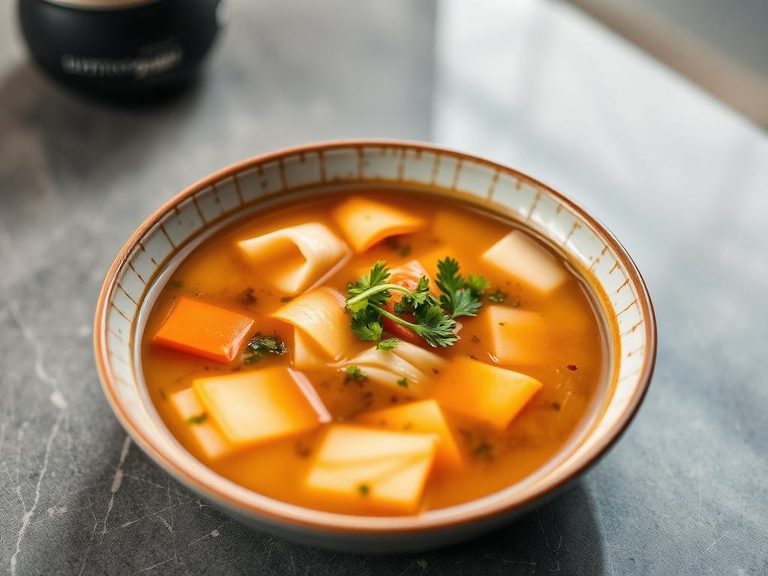
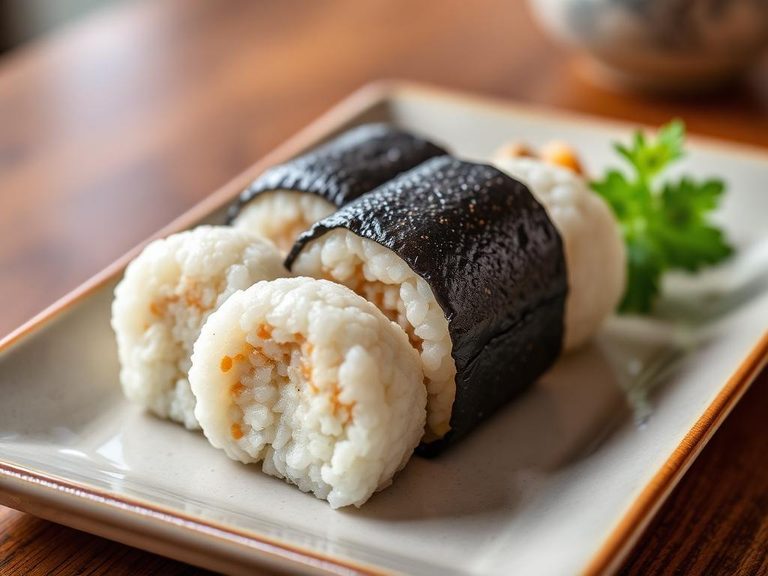
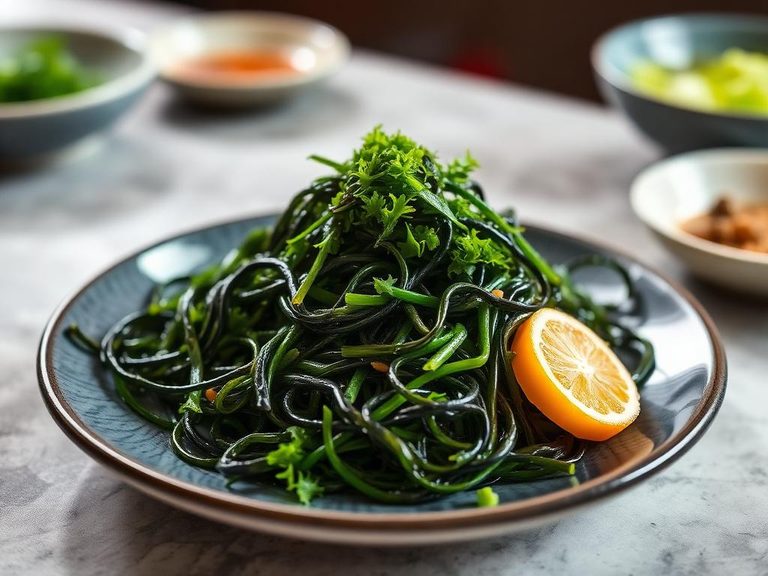
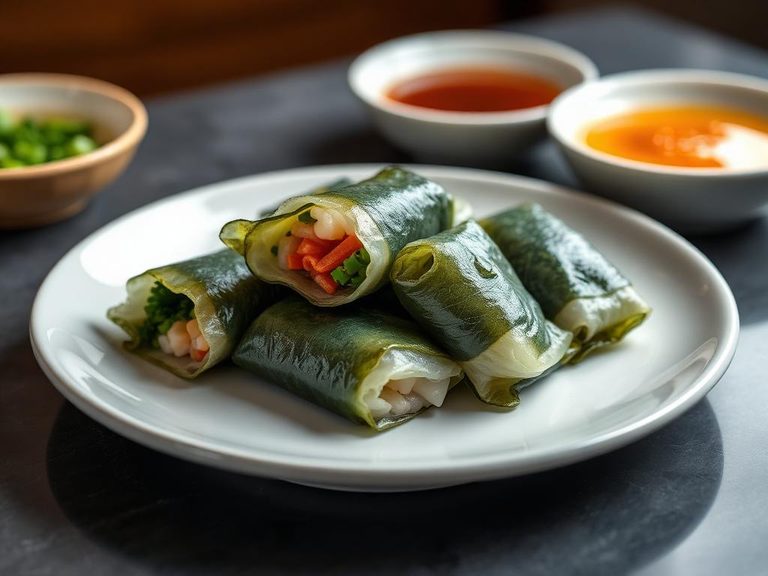
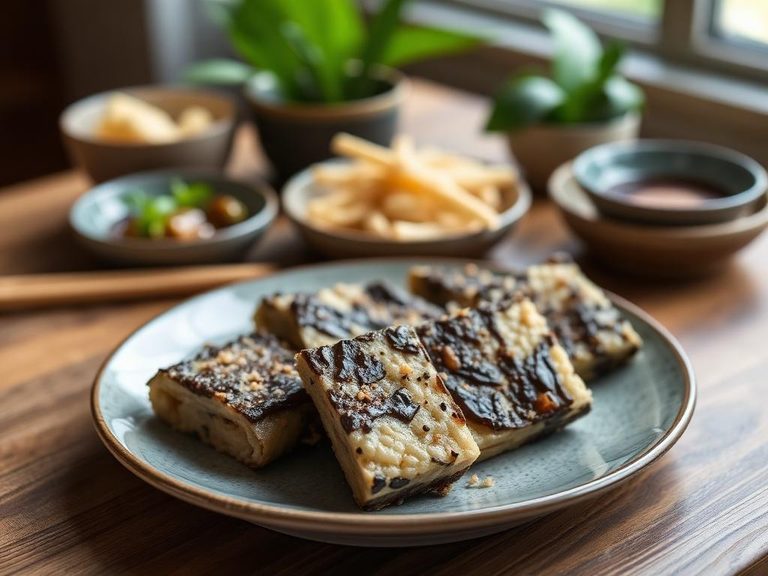
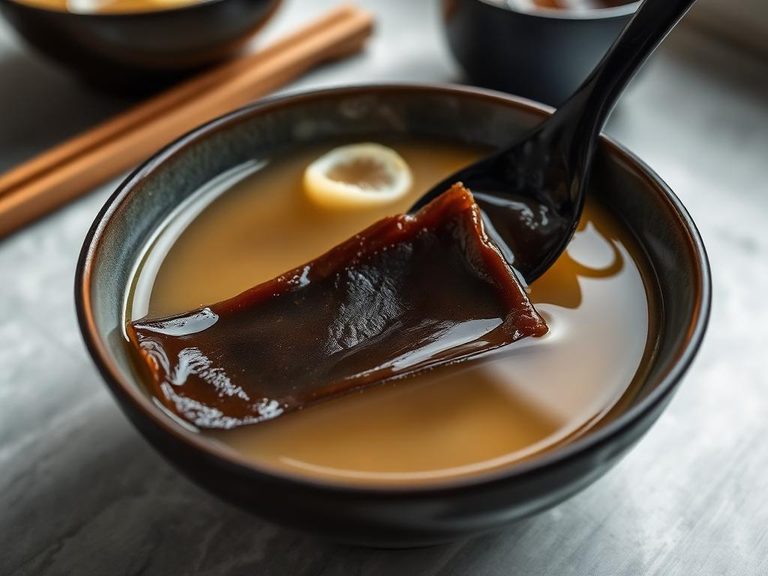
🌍 Where it's eaten
💡 Did you know?
Certain species of dried seaweed, like dulse, are said to taste like bacon when fried, making it a popular vegan bacon substitute.
Full nutrition (USDA data · scales with serving)
| Water | 6.7 g |
| Energy | 298 kcal |
| Protein | 31.8 g |
| Total lipid (fat) | 4.0 g |
| Carbohydrate, by difference | 52.4 g |
| Fiber, total dietary | 5.6 g |
| Total Sugars | 3.0 g |
| Calcium, Ca | 372 mg |
| Iron, Fe | 24.9 mg |
| Magnesium, Mg | 482 mg |
| Phosphorus, P | 85.0 mg |
| Potassium, K | 1244 mg |
| Sodium, Na | 575 mg |
| Zinc, Zn | 3.9 mg |
| Copper, Cu | 3.4 mg |
| Selenium, Se | 7.3 ug |
| Vitamin C, total ascorbic acid | 5.0 mg |
| Thiamin | 1.2 mg |
| Riboflavin | 1.9 mg |
| Niacin | 6.5 mg |
| Vitamin B-6 | 0.33 mg |
| Folate, total | 337 ug |
| Folic acid | 0.00 ug |
| Folate, food | 337 ug |
| Folate, DFE | 337 ug |
| Choline, total | 64.6 mg |
| Vitamin B-12 | 0.00 ug |
| Vitamin B-12, added | 0.00 ug |
| Vitamin A, RAE | 14.0 ug |
| Retinol | 0.00 ug |
| Carotene, beta | 171 ug |
| Carotene, alpha | 0.00 ug |
| Cryptoxanthin, beta | 0.00 ug |
| Lycopene | 0.00 ug |
| Lutein + zeaxanthin | 0.00 ug |
| Vitamin E (alpha-tocopherol) | 5.0 mg |
| Vitamin E, added | 0.00 mg |
| Vitamin D (D2 + D3) | 0.00 ug |
| Vitamin K (phylloquinone) | 25.0 ug |
| Alcohol, ethyl | 0.00 g |
| Caffeine | 0.00 mg |
| Theobromine | 0.00 mg |
Fat & fatty acid profile (per 100g)
| Fatty acids, total saturated | 1.4 g |
| SFA 4:0 | 0.00 g |
| SFA 6:0 | 0.00 g |
| SFA 8:0 | 0.00 g |
| SFA 10:0 | 0.00 g |
| SFA 12:0 | 0.00 g |
| SFA 14:0 | 0.04 g |
| SFA 16:0 | 1.3 g |
| SFA 18:0 | 0.04 g |
| Fatty acids, total monounsaturated | 0.35 g |
| MUFA 16:1 | 0.17 g |
| MUFA 18:1 | 0.18 g |
| MUFA 20:1 | 0.00 g |
| MUFA 22:1 | 0.00 g |
| Fatty acids, total polyunsaturated | 1.1 g |
| PUFA 18:2 | 0.63 g |
| PUFA 18:3 | 0.41 g |
| PUFA 18:4 | 0.00 g |
| PUFA 20:4 | 0.01 g |
| PUFA 20:5 n-3 (EPA) | 0.04 g |
| PUFA 22:5 n-3 (DPA) | 0.00 g |
| PUFA 22:6 n-3 (DHA) | 0.00 g |
| Cholesterol | 0.00 mg |
Amino acid profile (per 100g)
Estimated from Seaweed, Canadian Cultivated EMI-TSUNOMATA, dry — USDA does not publish this profile for Seaweed.
| Tryptophan | 0.16 g |
| Threonine | 0.58 g |
| Isoleucine | 0.56 g |
| Leucine | 0.90 g |
| Lysine | 0.75 g |
| Methionine | 0.25 g |
| Cystine | 0.25 g |
| Phenylalanine | 0.81 g |
| Tyrosine | 0.34 g |
| Valine | 0.66 g |
| Arginine | 0.77 g |
| Histidine | 0.23 g |
| Alanine | 0.81 g |
| Aspartic acid | 1.3 g |
| Glutamic acid | 1.7 g |
| Glycine | 0.67 g |
| Proline | 0.66 g |
| Serine | 0.64 g |
FAQ
Is dried seaweed the same as nori?
Nori is a specific type of edible seaweed (red algae) that is dried into thin sheets, often used for sushi. 'Dried seaweed' is a broader term that can include other varieties like wakame, kombu, and dulse.
How should I store dried seaweed?
Keep it in a cool, dry, airtight container away from light and moisture to maintain its crispness and flavor. Once opened, consume it relatively quickly.
Can I eat dried seaweed raw?
Yes, many types like nori are sold pre-toasted and ready to eat as snacks or wrappers. Others, like kombu, are typically used to make stocks and are not eaten whole.
Why is dried seaweed so high in protein?
Seaweed is a concentrated source of nutrients because the drying process removes water, leaving behind a dense matrix of proteins, minerals, and fiber.
Nutrient density (calculated · NRF9.3)
Nutrient Rich Foods index: beneficial nutrients (protein, fiber, vitamins, minerals) minus saturated fat, added sugar & sodium, per 100 kcal.
NRF9.3 index — Fulgoni, Keast & Drewnowski, 2009. Computed from USDA nutrients.
Weight-loss friendliness (composite index)
Energy density 2.98 kcal/g · 43% calories from protein · 5.6 g fiber · 3.0 g sugar per 100 g.
Composite of energy density (Rolls et al., 1999), protein & fiber satiety, minus sugar. A calculated heuristic — ranks satiety-per-calorie, not a clinical measure.
Dietary load (calculated from USDA values)
Potential renal acid load. Positive = acid-forming, negative = alkaline-forming.
Sodium-to-potassium ratio: 0.46 (lower is better — aim for ≤ 1)
Sodium:potassium per WHO potassium guidance. Computed from USDA nutrients.