

Gim
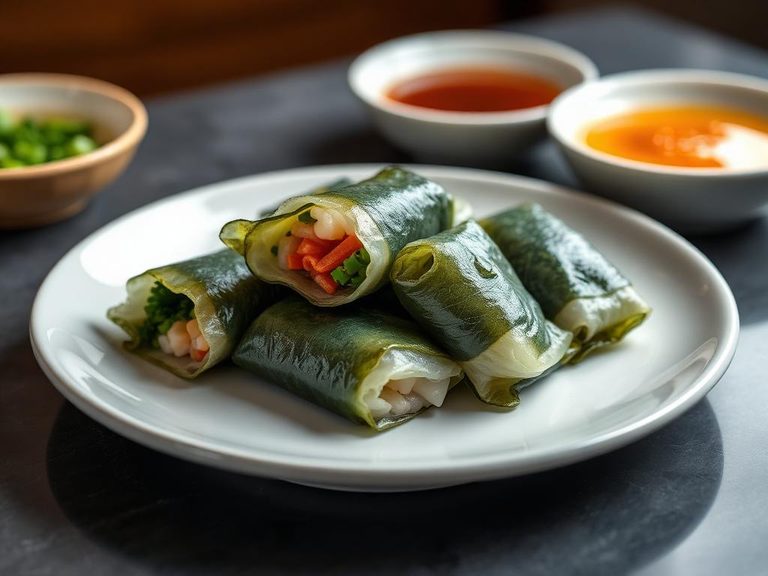
Gimbap (or Kimbap) is a beloved Korean dish consisting of cooked rice and various fillings rolled in dried seaweed (gim) and sliced into bite-sized rounds. It typically features a colorful assortment of ingredients like pickled radish, spinach, carrots, egg, and proteins such as ham, tuna, or beef, all seasoned with sesame oil and salt. This portable, handheld meal is a staple for picnics, lunchboxes, and street food across South Korea.
🍽️ Nutrition at a glance
Gimbap is a balanced meal that provides a good mix of carbohydrates from the rice, protein from the fillings, and healthy fats from the sesame oil and seaweed. A typical serving (about 6-8 pieces) generally ranges from 300 to 500 calories, with key nutrients including fiber, iron, and vitamins A, C, and K from the vegetables and seaweed.
Nutrition breakdown
| Calories | 350 kcal |
| Protein | 8 g |
| Carbs | 55 g |
| Fat | 10 g |
| Fiber | 3 g |
| Sugar | 4 g |
| Sodium | 480 mg |
| Potassium | 250 mg |
| Iron | 3.5 mg |
| Calcium | 45 mg |
| Magnesium | 40 mg |
| Vitamin A | 120 mcg RAE |
| Vitamin C | 3 mg |
| Vitamin B12 | 1.2 mcg |
| Iodine | 150 mcg |
Per 1 roll (approx. 200 g) · estimated, varies by recipe
💡 What's interesting
Culturally, gimbap is often associated with communal gatherings and outdoor activities, symbolizing shared joy and togetherness. Nutritionally, the seaweed wrapper is a standout ingredient, being a rich source of iodine and minerals while adding a unique umami flavor that distinguishes it from other rolled dishes.
🍽️ Related dishes




AI estimate may be inaccurate · Terms