

Korean Gimbap
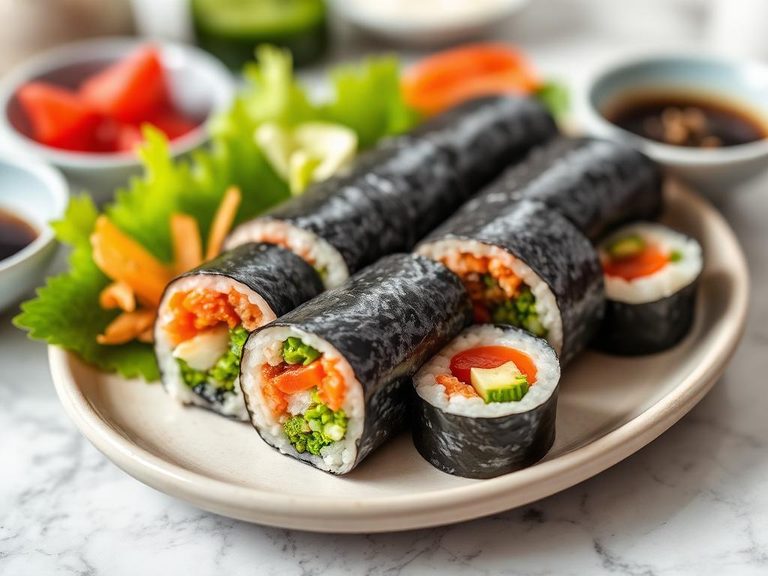
Korean Gimbap, often called 'seaweed rice rolls,' is a beloved Korean dish consisting of cooked rice and various fillings rolled in dried seaweed (gim) and sliced into bite-sized pieces. The fillings typically include ingredients like seasoned vegetables, egg, fish cakes, and proteins such as tuna or beef, creating a colorful and flavorful combination. Originating from Korea, it's a popular portable meal enjoyed for picnics, lunchboxes, and casual dining.
🍳 View the full Korean Gimbap recipe →
🍽️ Nutrition at a glance
Gimbap is generally balanced in macronutrients, offering a good mix of carbohydrates from rice, protein from fillings like egg or fish, and healthy fats from seaweed and sesame oil. It provides key nutrients such as fiber, vitamins A and C from vegetables, and minerals like iron and calcium, with a typical serving containing around 250-350 calories per roll depending on the fillings.
Nutrition breakdown
| Calories | 400 kcal |
| Protein | 12 g |
| Carbs | 55 g |
| Fat | 14 g |
| Fiber | 3 g |
| Sugar | 5 g |
| Sodium | 600 mg |
| Vitamin A | 150 mcg RAE |
| Vitamin C | 10 mg |
| Vitamin K | 25 mcg |
| Thiamin (B1) | 0.2 mg |
| Iron | 2.5 mg |
| Calcium | 60 mg |
| Magnesium | 30 mg |
| Manganese | 1.0 mg |
Per 1 roll (180 g) · estimated, varies by recipe
💡 What's interesting
Culturally, gimbap is a symbol of Korean communal eating and is often shared during outdoor activities or family gatherings, reflecting the importance of togetherness in Korean cuisine. Nutritionally, the use of seaweed adds a unique umami flavor while contributing iodine and antioxidants, making it a wholesome and visually appealing dish that's both satisfying and nutritious.
🍽️ Related dishes
AI estimate may be inaccurate · Terms