Sushi Rolls (Maki)
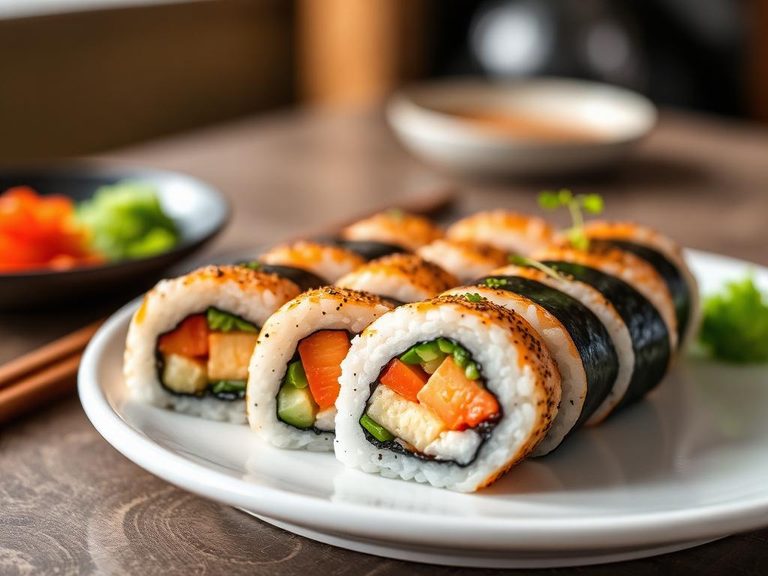
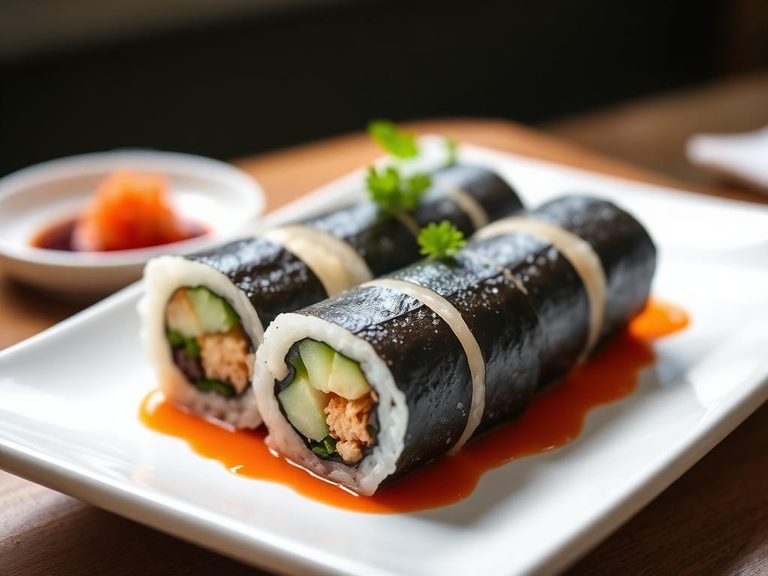
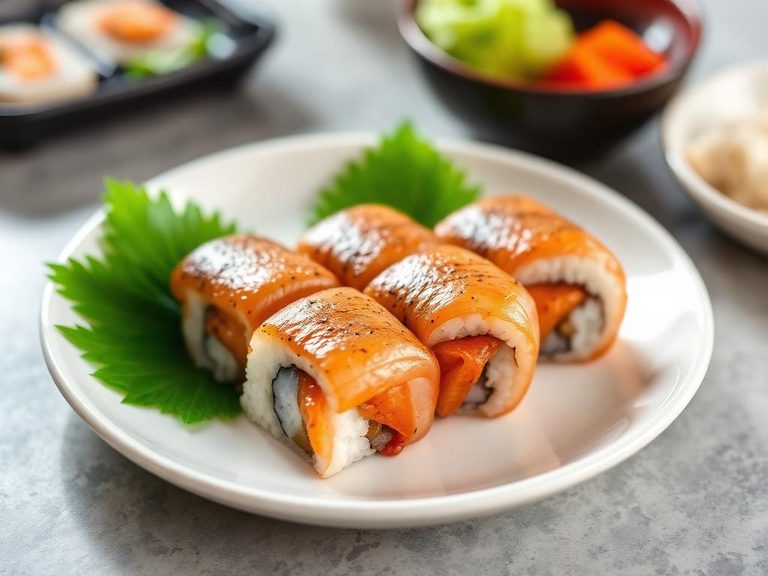
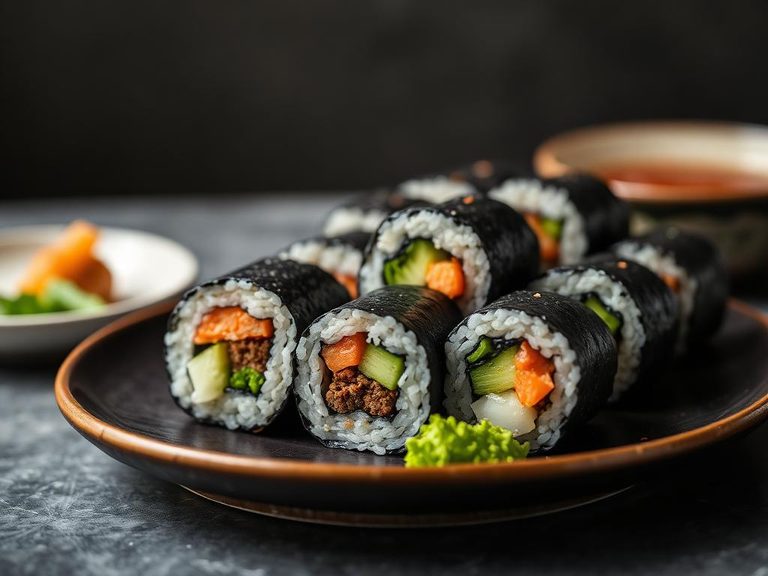
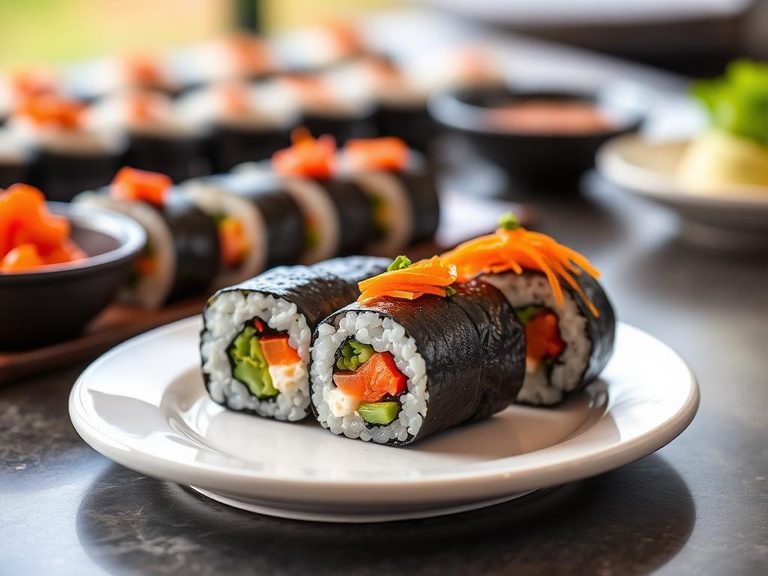
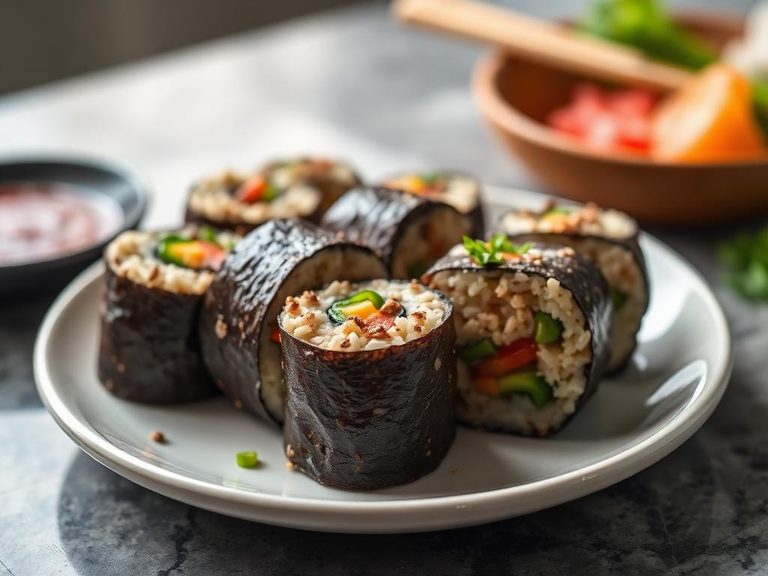
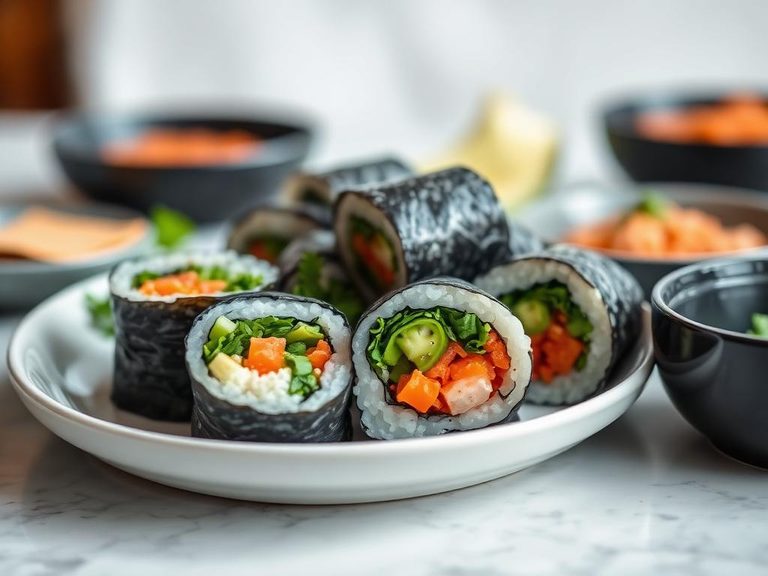
Sushi rolls, or maki, are a classic Japanese dish where vinegared rice and various fillings—like fresh fish, vegetables, or egg—are wrapped in seaweed (nori) and sliced into bite-sized pieces. They range from simple cucumber rolls to elaborate dragon rolls, often served with soy sauce, wasabi, and pickled ginger. Originating in Japan, maki has become a global favorite, adapted with local ingredients worldwide.
🍽️ Nutrition at a glance
Maki rolls are generally moderate in carbohydrates from the rice, with protein from fish or tofu and healthy fats from ingredients like avocado or salmon. They provide key nutrients like omega-3 fatty acids, vitamins, and minerals, with a typical serving (6-8 pieces) ranging from 300 to 500 calories depending on fillings.
Nutrition breakdown
| Calories | 250 kcal |
| Protein | 9 g |
| Carbs | 38 g |
| Fat | 6 g |
| Fiber | 2 g |
| Sugar | 4 g |
| Sodium | 500 mg |
| Potassium | 200 mg |
| Vitamin B12 | 1.2 mcg |
| Niacin (B3) | 3 mg |
| Phosphorus | 150 mg |
| Selenium | 15 mcg |
| Manganese | 1 mg |
| Copper | 0.3 mg |
| Iron | 1.5 mg |
Per 6 pieces (170 g) · estimated, varies by recipe
💡 What's interesting
Culturally, maki embodies the Japanese principle of 'washoku' (balanced meals), emphasizing harmony in flavor, texture, and presentation. Nutritionally, it's unique for combining seaweed—a rich source of iodine and antioxidants—with lean proteins, making it a nutrient-dense yet light option.